
Under the arcades near the cathedral, a mariachi trumpet starts up and a vendor hands over a paper boat of tejuino, the cold fermented corn drink that cools the afternoon. Guadalajara is the capital of Jalisco, a big, confident city of plazas, murals, crafts towns and tequila country. It suits travelers who like to eat well, wander old streets and take easy day trips.
What are the best things to do in Guadalajara?
The best of Guadalajara is the historic center on foot, followed by a craft town, a tequila day and a lot of eating. These are the essentials:
- Walk the historic center, from the twin-spired cathedral to the Teatro Degollado.
- See Orozco’s murals at the Hospicio Cabañas, a UNESCO World Heritage Site.
- Browse the huge Mercado San Juan de Dios for food, leather and crafts.
- Spend an afternoon among the potters and glassblowers of Tlaquepaque.
- Take a day trip to the town of Tequila and tour a distillery.
- Eat a torta ahogada, the city’s signature sandwich.
- Stay out for mariachi in the plazas after dark.
Sights and landmarks in Guadalajara
The cathedral and the historic center
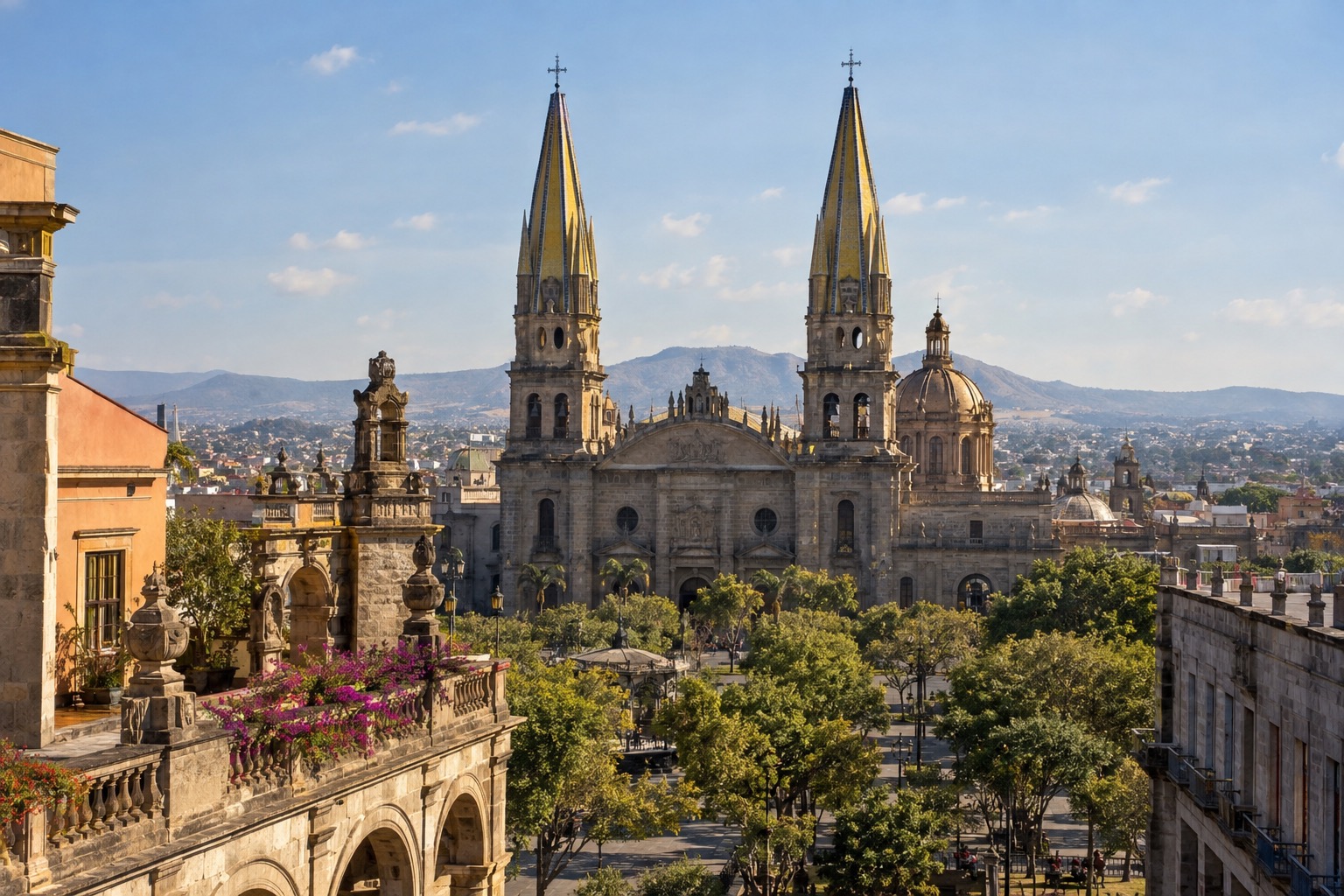
The cathedral, with its twin yellow-tiled spires, anchors the Plaza de Armas and is the landmark you steer by all day. Inside, the cool, dim nave is a welcome pause from the sun, and the surrounding plazas are laid out so that you can circle the whole cluster on foot in a leisurely morning.
Facing the cathedral stands the Teatro Degollado, the city’s historic opera house, with a neoclassical facade and a lavishly decorated hall. Even a look from the steps is worthwhile. Near the cathedral, the Rotonda de los Jaliscienses Ilustres honors local heroes among its statues and columns, and the Plaza Tapatía then carries on east toward the Hospicio Cabañas, a pedestrian stroll with fountains and street performers.
Hospicio Cabañas
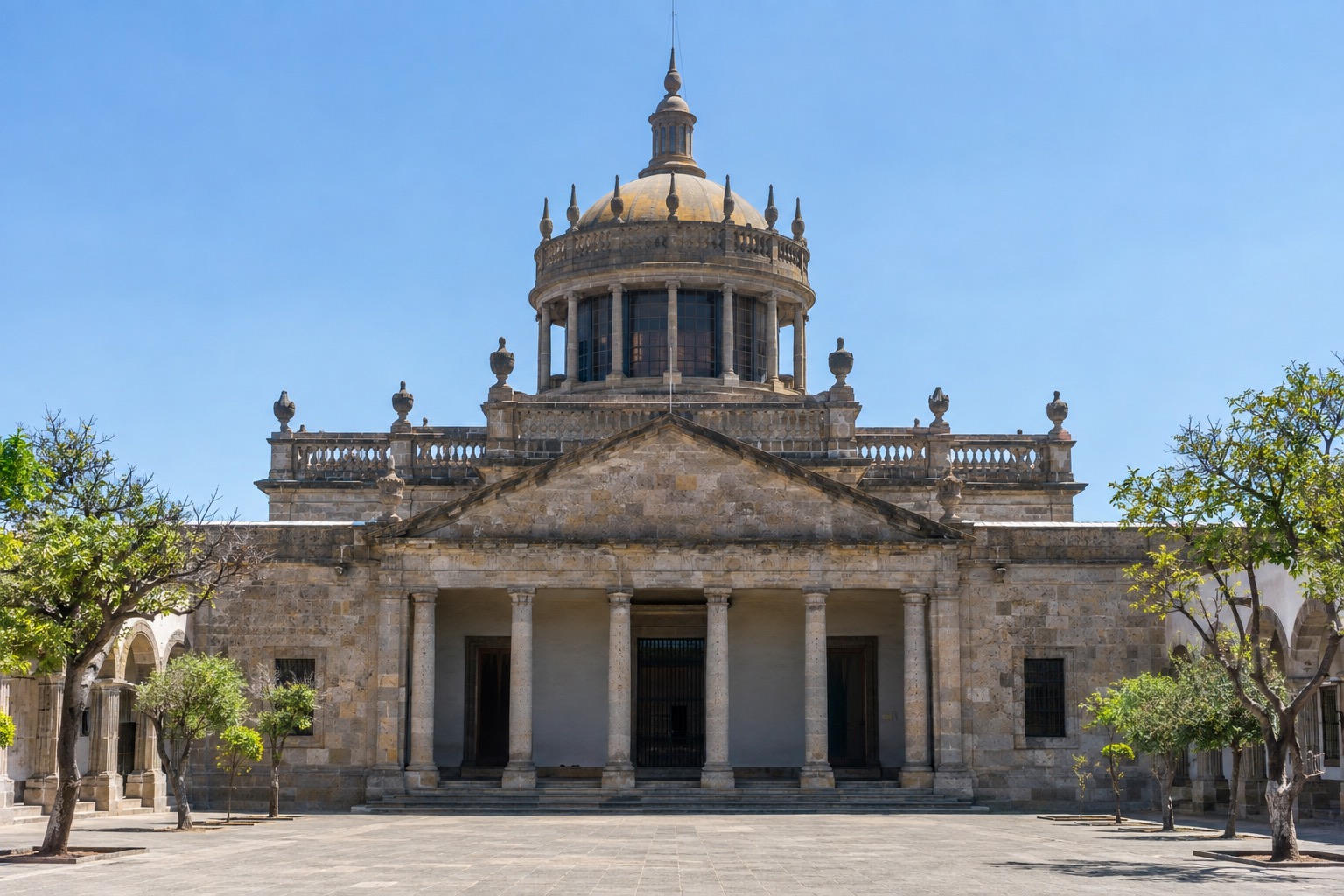
Designed by Manuel Tolsá in the Neoclassical style, the Hospicio Cabañas was inscribed as a UNESCO World Heritage Site in 1997. It is a low, sprawling complex of courtyards, now home to the Instituto Cultural Cabañas, and it feels more like a calm village of arcades than a single building.
The reason to come is the chapel, painted by José Clemente Orozco in the late 1930s. His swirling, fiery figures cover the dome and walls, and the best way to see them is to lie back or tilt your head slowly. Give it a leisurely visit, then rest in the courtyards, which are shady and quiet. It is a highlight for anyone curious about Mexican muralism.
Museo Regional and the market
The Museo Regional de Guadalajara, in the historic center, tells the story of western Mexico through archaeology, colonial art and regional history. It suits a rainy hour or a break from walking.
The Mercado San Juan de Dios, also called Mercado Libertad, is a large covered market spread over several floors, with stalls for food, leather and crafts. Wander it for the noise, the piles of fruit and the cooks calling out lunch specials.
| Site | Open | Admission |
|---|---|---|
| Museo Regional de Guadalajara | Tuesday to Sunday, 9 a.m. to 4 p.m. | 210 pesos general; 105 pesos for Mexican nationals and foreign residents |
Outdoor things to do in Guadalajara
Plaza Tapatía and the plazas
The Plaza Tapatía links the cathedral area to the Hospicio Cabañas and is the city’s best open-air walk. Fountains, benches and buskers fill the pedestrian way, and families gather here on weekends.
Pleasant in the morning, when the air is cool and the light is soft, it also stays lively into the evening. Pause at one of the side plazas for a coffee and watch the city go by.
Markets and crafts in the open air
Tonalá, next to Tlaquepaque, holds a large pottery and crafts market on Thursdays and Sundays. Stalls spill into the streets with painted ceramics, glassware and carved wood, and the bargaining is half the fun.
Tlaquepaque, just south of central Guadalajara, is calmer and lined with shaded galleries and pedestrian lanes. Spend a few hours going from workshop to workshop and stop for lunch in a courtyard.
Day trips from Guadalajara
Tequila
The town of Tequila sits in the agave fields west of Guadalajara, where the region’s namesake spirit is distilled. Blue agave stretches across the hills in tidy rows, and the town’s streets smell faintly of cooking agave.
Several distilleries can be toured, and you see the piñas being roasted, the stills and the aging rooms, with tastings along the way. Go early so the day is unhurried, and pace the tastings. It suits adults who enjoy a cultural outing with a glass at the end.
Tlaquepaque and Tonalá
These two crafts towns are the easiest outing, close to the city. Tlaquepaque is known for pottery, blown glass and mariachi plazas, and Tonalá for its big market on Thursdays and Sundays.
Plan Tlaquepaque for a long lunch and gallery browsing, and add Tonalá if your trip lands on a market day. Bring room in your bag for breakable souvenirs.
What to eat in Guadalajara
The torta ahogada is the dish of the city: a crusty bread roll filled with pork and drowned in a spicy tomato sauce, eaten with a fork and plenty of napkins. Carne en su jugo, a beef and bacon broth with beans, is the other local pillar.
Birria, the slow-cooked goat or beef stew, is a Jalisco classic, served with tortillas and lime. Tejuino, a cold corn drink with lime and salt, cools the street, and in tequila country you can sip tequila or a tequila-and-grapefruit paloma.
For variety, head to the Mercado San Juan de Dios, where counters serve everything from tacos to sweets. Sweet tooths should look for jericalla, a custardy local dessert.
Things to do in Guadalajara at night
Evenings in Guadalajara belong to the plazas, where mariachi groups play and the cathedral glows against the sky. Tlaquepaque is especially atmospheric, with music spilling out of restaurants and courtyards.
The Teatro Degollado hosts performances, and cantinas around the center offer tequila and live music. For something quieter, stroll the Plaza Tapatía as the lights come on and the crowds thin.
Things to do in Guadalajara with kids
Children usually enjoy the open, car-free plazas, where they can run around while adults rest. Fountains, street performers and mariachi bands keep them entertained between sights.
Tlaquepaque is a good family outing, with glassblowers to watch and pottery to admire. Pace the day with shade breaks and plenty of water, and save the tequila day for the adults. Distances in the city are manageable, but the sun is strong, so hats help.
Good to know before you go
The U.S. State Department rates the state of Jalisco at Level 3, Reconsider Travel.
The historic center is best explored on foot, and taxis or ride-hailing cover the longer hops to Tlaquepaque and Tonalá. Pesos are the currency you will want for markets and street food.
Sources
- UNESCO World Heritage Centre, Hospicio Cabanas Guadalajara (whc.unesco.org/en/list/815), checked September 29, 2026
- INAH, Museo Regional de Guadalajara (inah.gob.mx/museos/museo-regional-de-guadalajara), checked September 29, 2026
- US Department of State, Mexico Travel Advisory (travel.state.gov), advisory of May 29, 2026, checked September 29, 2026
To plan your stay
- Best Time to Visit Guadalajara: Weather by Month, Rainy Season, Crowds and Festivals
- Where to Stay in Guadalajara: Historic Center, Colonia Americana, Providencia and Tlaquepaque
- Guadalajara Airport to City: Taxi Times, Neighborhoods and Tlaquepaque
- Know Before You Go to Guadalajara: Money, Getting Around, Etiquette and Local Tips