
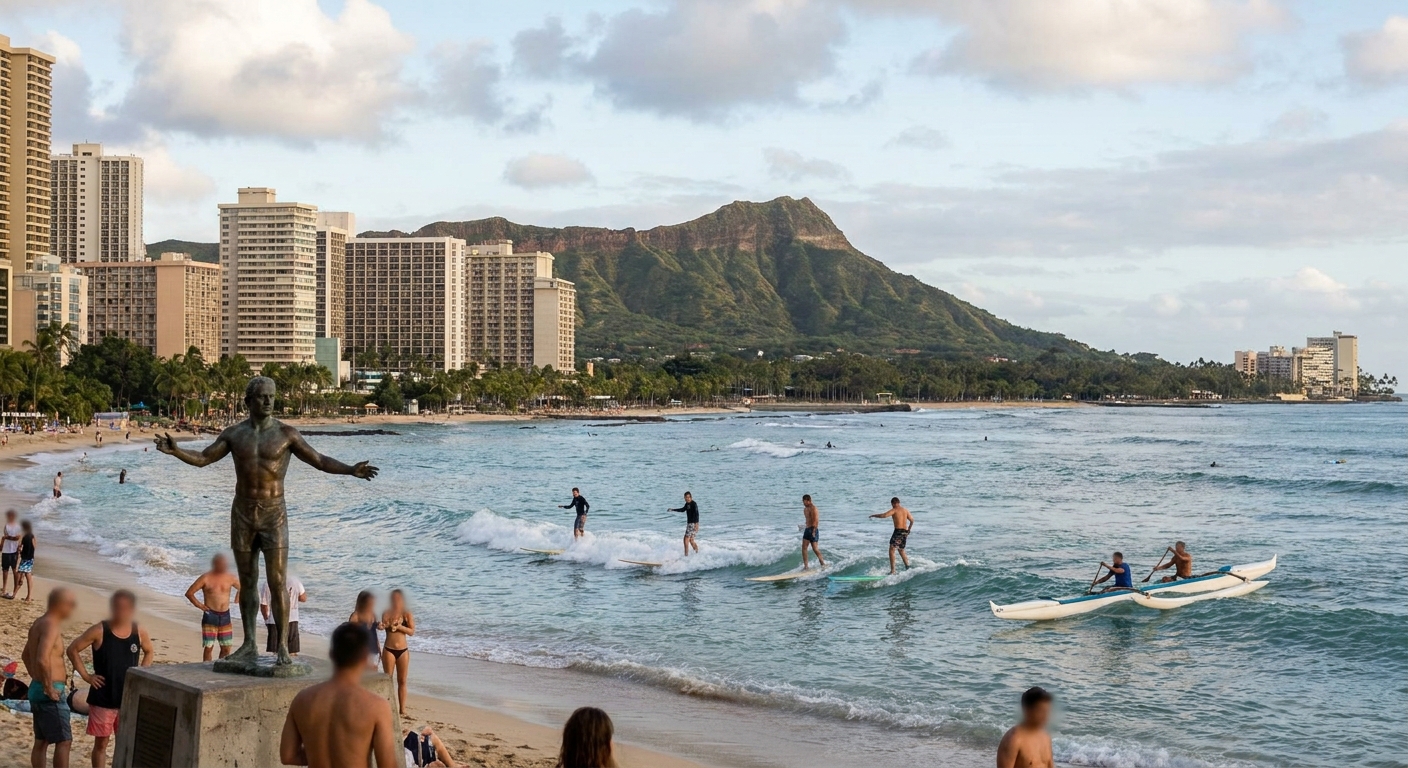
Early in the morning, surfers paddle out over the soft, rolling waves while joggers pass Duke Kahanamoku’s bronze statue, his arms stretched wide and lei draped around them. By evening the torches are lit along Kalakaua Avenue and ukulele music drifts from open-air bars. Waikiki is Honolulu’s beachfront resort district, a lively and walkable place for first-time visitors, families and anyone who wants the ocean and the city side by side.
Where is Waikiki and what is it like?
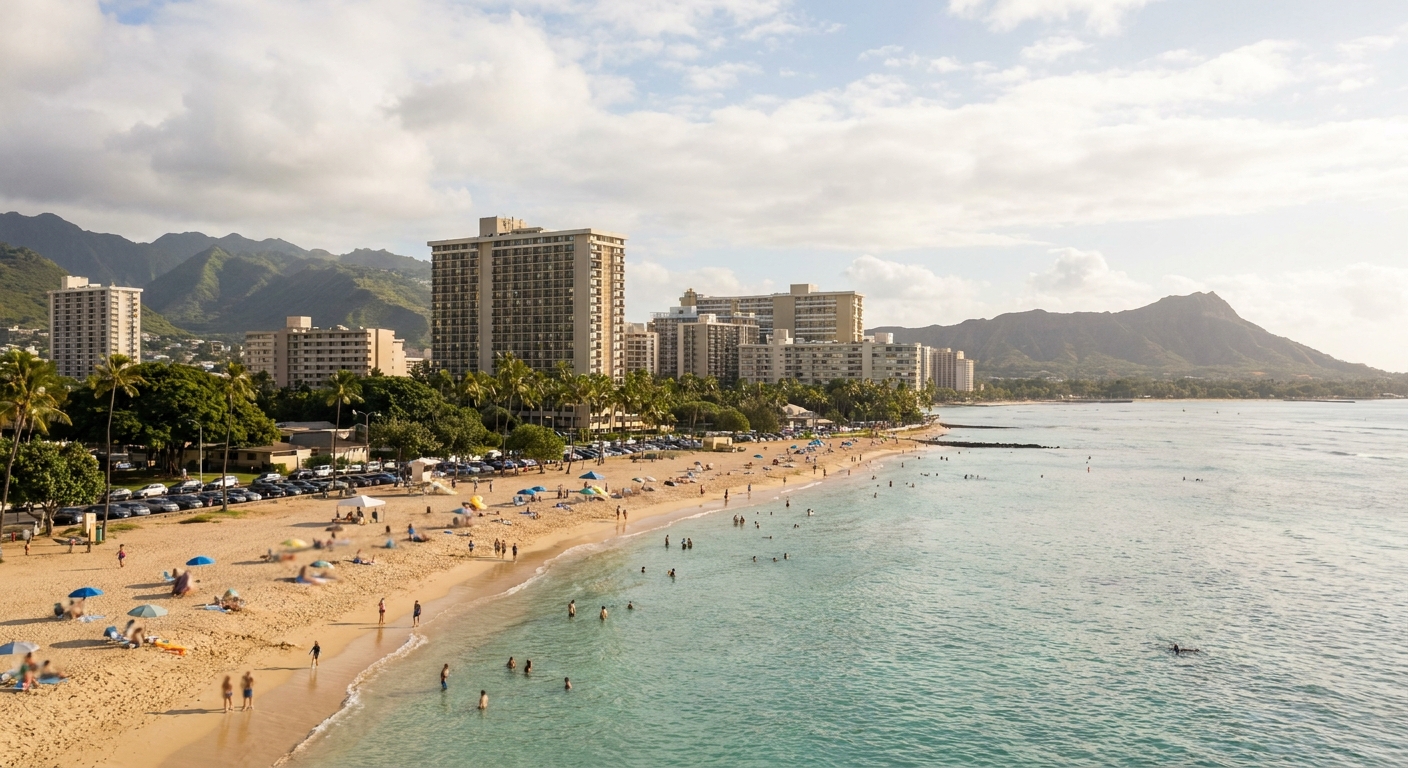
Waikiki is a narrow strip of beach and high-rises on the south shore of Oahu, in Honolulu, with Diamond Head rising at one end and the Ala Moana area and Downtown at the other. It is a dense resort neighborhood where everything sits close together, and every hotel room is only a couple of blocks from the water.
The district was once a retreat for Hawaiian royalty, and the first hotel, the Moana Surfrider, opened on the shore in 1901. That history still shows in the old beachfront buildings, and the Waikiki Historic Trail marks its stops with surfboard-shaped markers you can follow on foot.
The pace is busy and social. Shopping and dining line Kalakaua and Kuhio Avenues, the sidewalks fill at sunset, and the beach is rarely empty. If you want a quiet, wild stretch of coast, you will find it elsewhere on the island. If you like having cafés, shave ice, surf shops and the sea within a short walk, Waikiki is easy to love.
What is there to do in Waikiki?
Learn to surf or ride an outrigger canoe
Waikiki is where modern surfing found its ambassador. Duke Kahanamoku, an Olympic gold medalist in swimming, taught visitors to surf here, and his statue is one of the district’s landmarks. The gentle, rolling waves are where most first-time surfers and outrigger canoe riders get started, and lesson stands are set up all along the beach.
Mornings tend to be the friendliest time on the water, before the beach fills up. Beginners can stand up on their first ride in a single lesson, and watching from the sand is a pleasant pastime too. Check the posted warnings and the day’s surf and currents before you go in, and swim near a lifeguard where one is on duty, since conditions change from morning to afternoon.
Hike Diamond Head
The crater behind Waikiki is the most popular outing on the island. The summit trail is short but steady, climbing through the crater floor and up old military stairways and tunnels to a lookout over Waikiki’s coastline and the blue water beyond. Plan on an hour and a half to two hours round trip, and bring water and a hat, because there is little shade.
Non-residents need reservations for both entry and parking, so it helps to sort that out before you go. Early starts are cooler and give softer light for photos.
| Site | Open | Admission |
|---|---|---|
| Diamond Head State Monument | 6 a.m. to 6 p.m. (last entry 4:30 p.m.) | $5 per person, $10 per vehicle, reservations required for non-residents |
Kapiolani Park, the zoo and the aquarium
At the Diamond Head end of Waikiki, Kapiolani Park offers wide lawns, big shade trees and a break from the crowds on Kalakaua Avenue. The Honolulu Zoo is here, and across the avenue on the shore sits the Waikiki Aquarium, a good rainy-day stop or a calm hour with children.
Locals picnic and play ball on the grass, especially on weekends. It is an easy walk from most hotels, and a quieter way to see another side of the neighborhood.
Walk, shop and eat along Kalakaua and Kuhio
The evening is Waikiki’s other main attraction. Stroll Kalakaua Avenue past open-air shops, then turn inland toward Kuhio Avenue for casual restaurants, plate lunches, poke and shave ice. Many visitors simply wander with no plan until the sun goes down over the water.
What sets Waikiki apart from the rest of Oahu is how easy all of this is without a car. Beach, surf, dinner and a sunset walk fit into a single day within a few blocks.
How many days do you need in Waikiki?
A long weekend covers the essentials, though a week lets you use Waikiki as a comfortable base for the whole island.
In three or four days you can take a surf lesson, hike Diamond Head at sunrise, spend an afternoon in Kapiolani Park and still have evenings for the beach and the avenues. That is enough to feel the place without rushing.
With more time, the rest of Oahu is within reach by car or bus. Downtown Honolulu is a short drive away, while Pearl Harbor and Hanauma Bay take about half an hour each. Ko Olina is farther west, and Haleiwa on the North Shore is around an hour away. Each makes an easy day trip, with a return to Waikiki for dinner.
Where to stay in Waikiki
The beachfront along Kalakaua Avenue suits travelers who want to step from the lobby onto the sand and be close to the busiest stretch of dining and shopping. It is lively into the evening, so light sleepers may prefer a higher floor.
One street inland, around Kuhio Avenue, the feel is more residential and relaxed, with casual restaurants and easy access to the bus. The Diamond Head end near Kapiolani Park is calmer and good for families who want green space. Wherever you stay, the ocean is only two or three blocks away. Hotel bills carry Hawaii’s state transient accommodations tax and Oahu’s county tax on top of the room rate.
How do you get to Waikiki and get around?
Most visitors arrive at Honolulu’s airport (HNL) from the mainland, and Waikiki is about a half-hour drive away, traffic permitting. TheBus W Line also runs from the airport through Downtown, Kakaako and Ala Moana Center and ends in Waikiki. It comes every 10 to 15 minutes in the daytime and less often after 7 p.m. Luggage should be limited to one medium suitcase and one small carry-on that fit at your seat.
Once you are in Waikiki, walking covers nearly everything. For longer outings, TheBus is the simple option, and HOLO cards are sold at ABC Stores around the district. Taxis and rideshares fill in the gaps, and a rental car is only really useful for island-wide days out.
| TheBus fare | Amount |
|---|---|
| Adult single fare (2.5 hours of transfers) | $3.00 |
| Daily cap | $7.50 |
| 3-day pass | $20 |
| 7-day pass | $35 |
| HOLO card | $2 |
When is the best time to visit Waikiki?
April, May, September and October are hard to beat. Afternoons are warm in the mid-80s, rain is rare, and the beach is sunny almost every day. June through August are the driest and hottest months, with only a day or two of rain, which suits families on school vacation but means more crowds.
From November to March the days are a little cooler, around the low 80s, and showers come more often, though Waikiki sits on the dry, leeward side of Oahu and the rain usually passes quickly. Winter is also when big surf hits the North Shore and when humpback whales are in Hawaiian waters. The Honolulu Marathon takes over the streets in December.
The Central Pacific hurricane season runs from June 1 to November 30. The busiest weeks are mainland spring break, the summer vacation weeks and the winter holidays, when rooms fill and the beach is most crowded.
Good to know before you go
Waikiki is a U.S. destination, so there is no passport or visa to think about, and you pay in dollars. Box jellyfish can reach the south shore on dates the Waikiki Aquarium publishes as a calendar, but they can appear on any day, so obey warning signs and swim at guarded beaches. If you meet a sea turtle on the sand or in the water, keep at least 10 feet away.
Sources
- Hawaii Tourism Authority, Go Hawaii, Waikiki (gohawaii.com/islands/oahu/regions/honolulu/waikiki), checked September 25, 2026
- Hawaii DLNR, Division of State Parks, Diamond Head State Monument, checked September 25, 2026
- Hawaii DOT Airports, HNL, The Bus and Skyline ; HVCB, map Driving Times from Waikiki (2010), checked September 25, 2026
- TheBus, fares effective January 7, 2024 ; HOLO, For Visitors, checked September 25, 2026
- Hawaii Department of Taxation, Announcement 2025-03 ; City and County of Honolulu, OTAT FAQ, checked September 25, 2026
- Waikiki Aquarium, Box Jellyfish Calendar, checked September 25, 2026
- NOAA Fisheries, Viewing Marine Wildlife in Hawaii, checked September 25, 2026
- NWS Honolulu / Central Pacific Hurricane Center, « 2026 Central Pacific Hurricane Season Outlook », weather.gov/hfo/hurricaneOutlook2026, checked September 24, 2026
- NOAA NCEI, monthly normals 1991-2020, station USC00519397, checked September 8, 2026
All our pages
When to go
- Best Time to Visit Waikiki: Weather by Month, Crowds, Swimming and Events
- Waikiki in January: Weather, Winter Swells, Whale Season and What to Do
- Waikiki in February: Weather, Winter Swells, Whale Season and What to Do
- Waikiki in March: Weather, Swimming, Things to Do and a Two-Day Plan
- Waikiki in April: Weather, Swimming, Things to Do and a Two-Day Plan
- Waikiki in May: Weather, Swimming, Lei Day and a Two-Day Plan
- Waikiki in June: Weather, Swimming, Kamehameha Day and Things to Do
- Waikiki in July: Weather, Swimming, Fireworks and What to Do
- Waikiki in August: Weather, Swimming, Things to Do and a Two-Day Plan
- Waikiki in September: Weather, Swimming, Things to Do and a Two-Day Plan
- Waikiki in October: Weather, Swimming, Things to Do and a Two-Day Plan
- Waikiki in November: Weather, Swimming, Things to Do and a Two-Day Plan
- Waikiki in December: Weather, Winter Surf, Holiday Lights and What to Do