
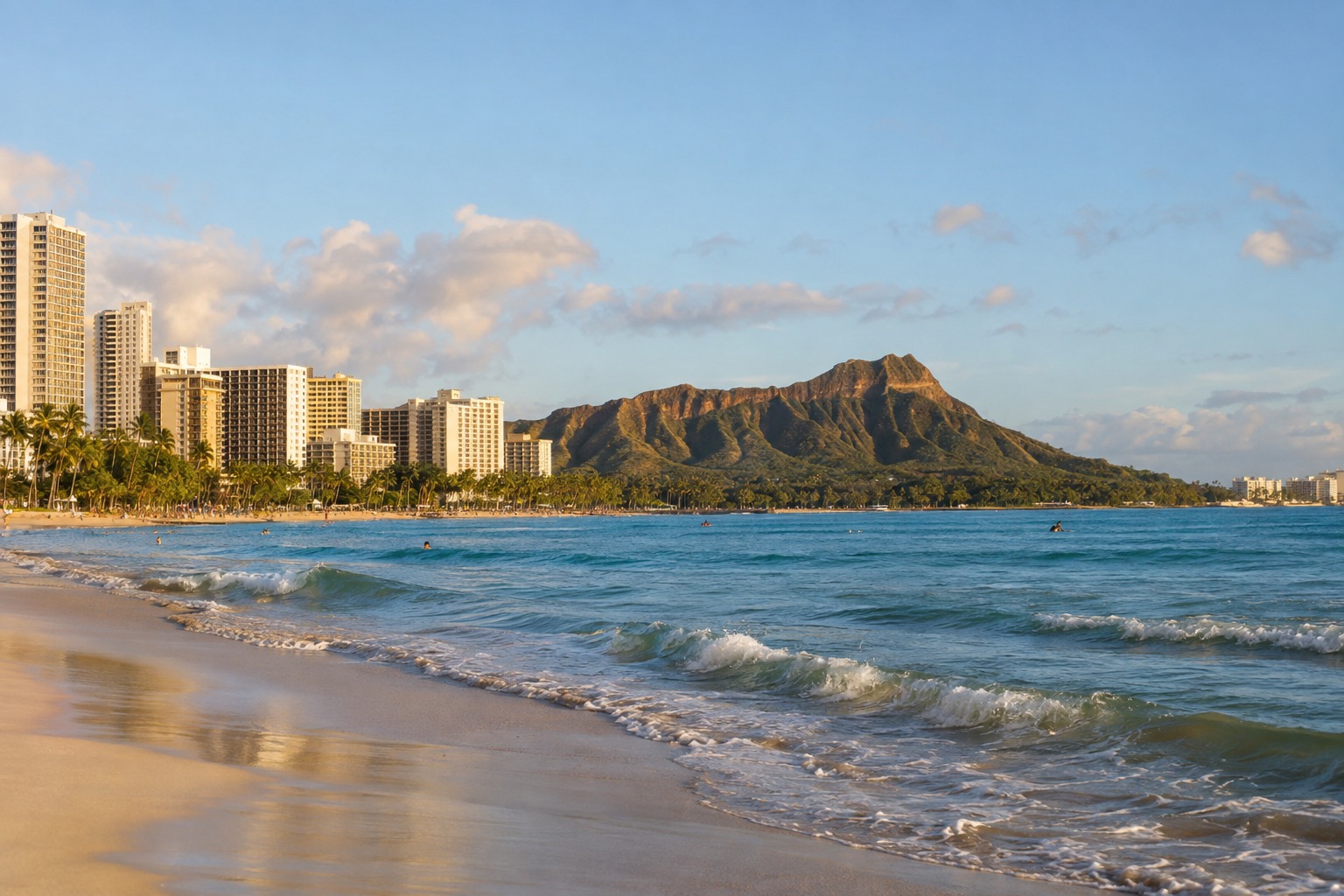
On a July evening the sand in front of the big hotels is still warm, outrigger canoes are being hauled up after the last paddle, and ukulele music drifts from an open-air bar as the sky turns orange behind Diamond Head. Families on summer break fill the beach, surf instructors line up longboards, and the Friday night fireworks pop over the water. July in Waikiki is the heart of the drier, hotter half of the year, made for long days in the ocean and long dinners outside.
What is the weather like in Waikiki in July?
July in Waikiki is hot, bright and almost always dry, with a steady trade wind that keeps the heat comfortable in the shade.
| Month | Average high (°F) | Average low (°F) | Rain days | Sea (°F) |
|---|---|---|---|---|
| June | 86.5 | 73.4 | 1.0 | 78.4 |
| July | 87.1 | 74.5 | 1.5 | 79.3 |
| August | 88.2 | 74.8 | 1.7 | 79.6 |
Mornings start warm and clear, and the best hours for walking the length of Kalakaua Avenue or climbing a hill are the early ones, before the sun gets high. By midday the light is strong and flat, the sand is hot underfoot, and most people retreat to an umbrella, a shaded lanai or a cool museum. Late afternoon softens everything, and the trade wind often picks up just when you want it.
Rain is a small matter here. Waikiki rests on Oahu’s leeward, sunny side, so when a shower passes through it stays short, typically a fast sprinkle of drops from a cloud that drifts over from the mountains, and within minutes it is dry again. If you want real rain, you would find it on the windward side and up in the Koolau valleys, not on the beach.
Evenings stay warm enough for shorts, sandals and a table outside, with no need for a sweater. Pack for sun first: a hat, sunglasses and light, breathable clothes. The sea runs warm, and the long summer daylight leaves you plenty of time after dinner to wander.
Can you swim in Waikiki in July?
The ocean is usually warm enough for a long swim, and according to the marine data, the sea sits in the upper 70s, making July one of the best months to be in it, though conditions change from day to day and beach to beach.
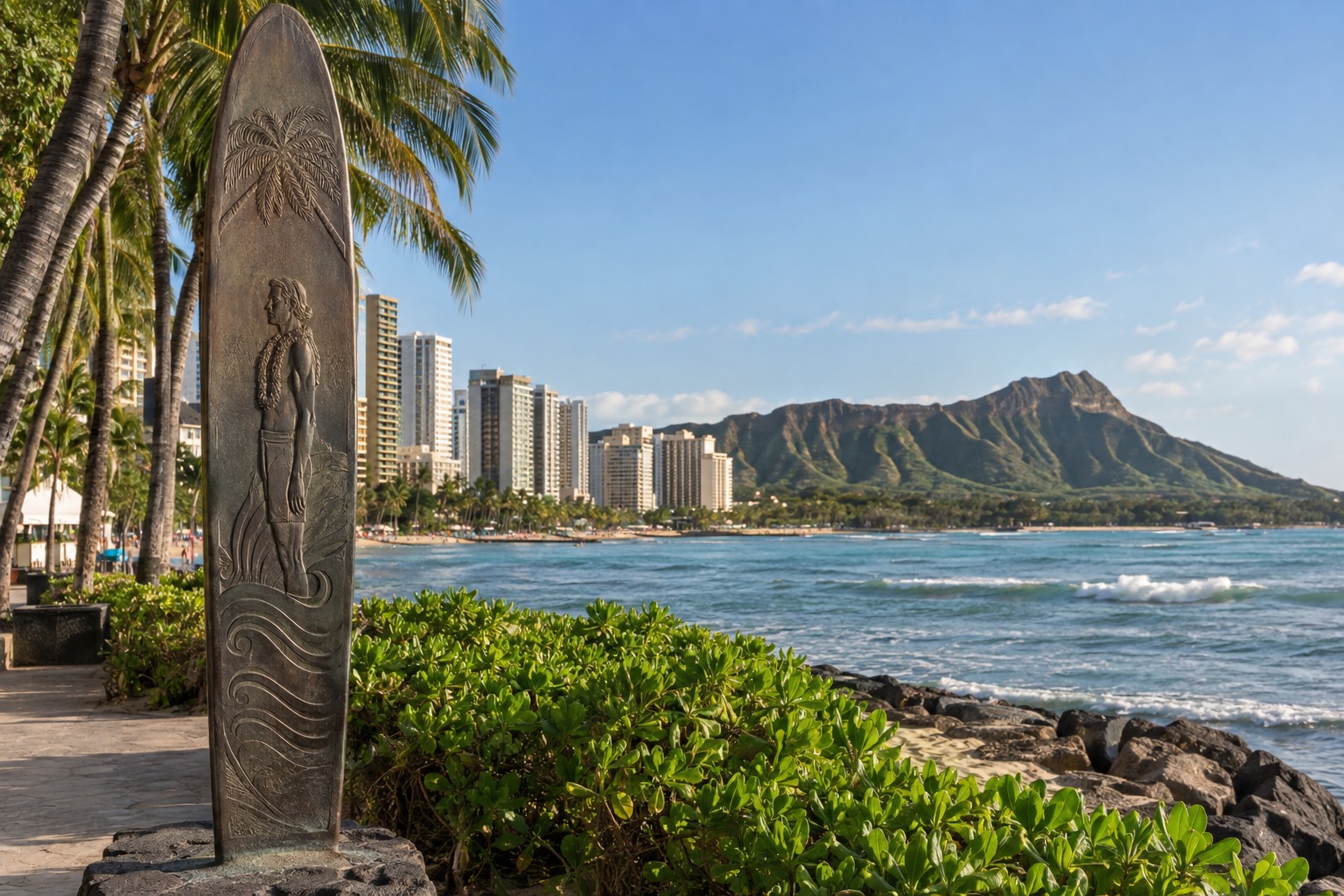
Summer swells arrive on the south shore, so Waikiki gets its famous rolling waves for beginner surfers, usually gentle and long. Queens and Canoes, off the Duke Kahanamoku statue end of the beach, are the classic spots for first-time longboard lessons. Near the Kuhio Beach walls, families usually claim the calmer, more sheltered stretches, since the water there tends to be quieter, even if conditions shift from day to day.
Snorkelers do best in the morning, when the water is clearer and fewer people are splashing around. Bring a rash guard, a mask and a reusable water bottle, and mind the sun on your back while floating.
Always check the flags and talk to the lifeguards before going in, because south swells can bring stronger sets and currents at times. On dates it estimates and shares as a calendar, the Waikiki Aquarium notes that box jellyfish likewise arrive on Oahu’s south shore. Any day may bring them, so follow posted warnings and choose beaches with lifeguards.
What to do in Waikiki in July
July is a summer-camp, family-vacation month, and the whole neighborhood feels like a beach party that never quite ends. The big July date is Independence Day on July 4, when the beach fills with picnickers by late afternoon and fireworks light the sky over the water. The regular Friday night fireworks over the beach also continue through the summer, and you can watch them from the sand or from a hotel lanai.
Days here run on a simple rhythm: ocean in the morning, shade at midday, shopping and strolling later. Hawaiian culture shows up in free hula performances, lei making, ukulele lessons and torch-lighting ceremonies at hotels and open-air stages, and many of them are easy to drop in on while you walk. Locals eat shave ice from small stands, so grab one at the hottest hour.
Surfing, paddling and the beach itself
Waikiki is the place where modern surfing grew up, and July’s south swells make it a good month for a first lesson. Instructors paddle you out, push you into a long, slow wave and cheer when you stand. Outrigger canoe rides are another favorite: you sit in a Hawaiian-style canoe and catch rolling swells back toward shore.
The best time is early, around the first hours of the morning, when the beach is quieter and the light is soft. Evening sessions are lovely too, with the sun low behind the hotels. Bring a rash guard and sunscreen, and listen to your instructor about where to stay. It suits beginners, families with older kids and anyone who wants to try something new without a long trip.
Diamond Head and the hills
The hike up Diamond Head crater gives the best view back over Waikiki, the coast and the open sea. The trail is exposed, so in July go as early as you can, and carry water. Diamond Head State Monument requires reservations, which you handle ahead of the visit through the state system.
Afterward, the neighborhoods behind the crater have breakfast spots and coffee shops where you can refuel. The hike suits anyone in reasonable shape who does not mind stairs and a steady uphill. Wear real shoes, not flip-flops, and plan something easy for the afternoon.
Museums, markets and evening Waikiki
When the sun is too strong, duck into the Waikiki Aquarium by the shore, where you can see Hawaiian reef fish, monk seals and jellyfish up close. It makes a good midday stop with kids, and an easy way to learn about the animals you might meet in the water.
Evenings are for shopping along Kalakaua, open-air markets, live music and dinner by the water. Try poke bowls, plate lunch, kalua pork, loco moco and fresh fish at casual spots, then finish with a scoop of local-flavor ice cream or a fruit-topped shave ice. Many restaurants have open-air seating, and the warm night air is part of the meal.
A two-day itinerary for Waikiki in July
Day 1 is about the beach and the shore. Start at sunrise, which comes early in July, with a coffee on the sand and a quiet swim while the beach is nearly empty. Book a surf lesson or an outrigger ride for the early morning, then have a long breakfast at a café on Kalakaua with acai bowls or Hawaiian-style pancakes.
Midday, retreat from the strongest sun with a visit to the Waikiki Aquarium, then a plate lunch at a casual counter. In the afternoon, rest, swim again, or stroll the shops and open-air stages.
Stay for sunset, which comes late in the evening, and eat dinner outdoors, ideally on a night when the fireworks go off over the water. If a shower rolls in, shelter in a mall or a lobby café and wait it out.
Day 2 starts early with the Diamond Head hike, to get ahead of the heat and catch the view in clear morning light. Be back down by late morning for a cold drink and a shave ice, then head to a shaded lunch spot away from the beach strip.
In the afternoon, visit Kapiolani Park, a big green space with shade trees, picnickers and locals playing music or kicking a ball around. It is a quieter side of Waikiki and a good place to nap. For the evening, pick a different restaurant for local seafood, then walk the beach one last time as the lights come on. If it rains, spend the afternoon in a museum, spa or covered market.
Is Waikiki busy in July?
Yes, July is one of the busiest months, with school-vacation families filling the hotels and the beach from morning to evening.
The week around Independence Day is especially full, and the sand around the Duke statue and the main beach stretches can feel packed by mid-morning. Restaurants with ocean views fill early for dinner, rental cars are in demand, and popular lessons and tours sell out ahead. The quieter hours are the early morning and the late evening, when the crowds thin out.
As a habit, book rooms and cars early for the holiday week and the peak weeks of summer break, and a bit later for the weeks that fall outside school breaks. Reserve dinner tables for the evenings you care most about, and book surf lessons and boat outings a few days ahead. Diamond Head requires a reservation, so plan that visit before you arrive.
If crowds bother you, move your beach time to early morning and head for the quieter ends of the shoreline. The busy feeling is part of the charm for many visitors, with music, kids and cheerful chaos from sunrise to the last fireworks.
What to pack for Waikiki in July
Think sun, salt and warm evenings, and keep luggage light.
- Swimsuits and a rash guard, for long days in the water and the sun on your back
- Mineral sunscreen, because the sun is strong and Hawaii regulates certain sunscreen ingredients
- A wide-brim hat and sunglasses for the midday glare
- Sturdy sneakers for the Diamond Head trail, not flip-flops
- A reusable water bottle for hot mornings on the trail
- Pack something light for breezy evenings and restaurants with air conditioning.
Good to know before you go
July falls inside the Central Pacific hurricane season, which runs from June 1 to November 30, so keep an eye on forecasts before and during the trip. Hotel stays carry taxes that add to the bill, so factor them into your budget. For getting around, Waikiki is very walkable, and many visitors skip a rental car for the days they spend in the neighborhood.
| Fee | Amount | Who pays |
|---|---|---|
| State transient accommodations tax | 11% | Hotel guests |
| Oahu county tax | 3% | Hotel guests |
Waikiki in July vs June and August
Moving the trip earlier to June gives you slightly cooler air and a sea just a touch less warm, with a hair less rain. The crowds are a little lighter before school lets out everywhere, so rooms are easier to find and the beach has more elbow room. You also miss the Fourth of July fireworks atmosphere.
Going later to August brings the hottest air and the warmest water of the three months, with a little more rain, though still brief showers. Summer family travel stays strong into the month, and the beach still feels full. Some families head home as school starts, so the last weeks can feel a bit calmer.
Choose June if you want a quieter beach and slightly gentler heat. Choose July if the holiday atmosphere and the fireworks are part of the plan. Choose August if you want the warmest swimming and do not mind the heat.
Is July a good time to visit Waikiki?
Yes, July suits beach lovers, families on school break and first-time surfers who want warm water and long, sunny days.
Travelers who want a quiet, empty shoreline or who dislike heat and crowds may prefer another month. Everyone else will find the sea usually calm and clear, though conditions change from day to day and beach to beach, plus bright mornings and warm evenings built for dinner outside. On arrival, sort out the Diamond Head reservation first, then book your surf lesson and a table for the night you want the best view. What stays with you from July here is the evening: warm sand, the last surfers paddling in, and the fireworks bursting over the water while the whole beach looks up.
Sources
- NOAA NCEI, monthly normals 1991-2020, station USC00519397, checked September 8, 2026
- Open-Meteo Marine API, average 2015-2024, checked September 8, 2026
- sunrise-sunset.org, sunrise and sunset calculated for the 15th of the month, checked September 8, 2026
- Hawaii Department of Taxation, Announcement 2025-03 ; City and County of Honolulu, OTAT FAQ, checked September 25, 2026
- Waikiki Aquarium, Box Jellyfish Calendar, checked September 25, 2026
- NWS Honolulu / Central Pacific Hurricane Center, « 2026 Central Pacific Hurricane Season Outlook », weather.gov/hfo/hurricaneOutlook2026, checked September 24, 2026