
Somewhere between the first cup of coffee and the tenth open browser tab, nearly every Hawaii plan stalls on the same question: which island? For a first vacation, Oahu or Maui is the easy answer. The Big Island suits anyone who wants to stand beside an active volcano, and Kauai suits people who would rather hike green cliffs than shop in town.
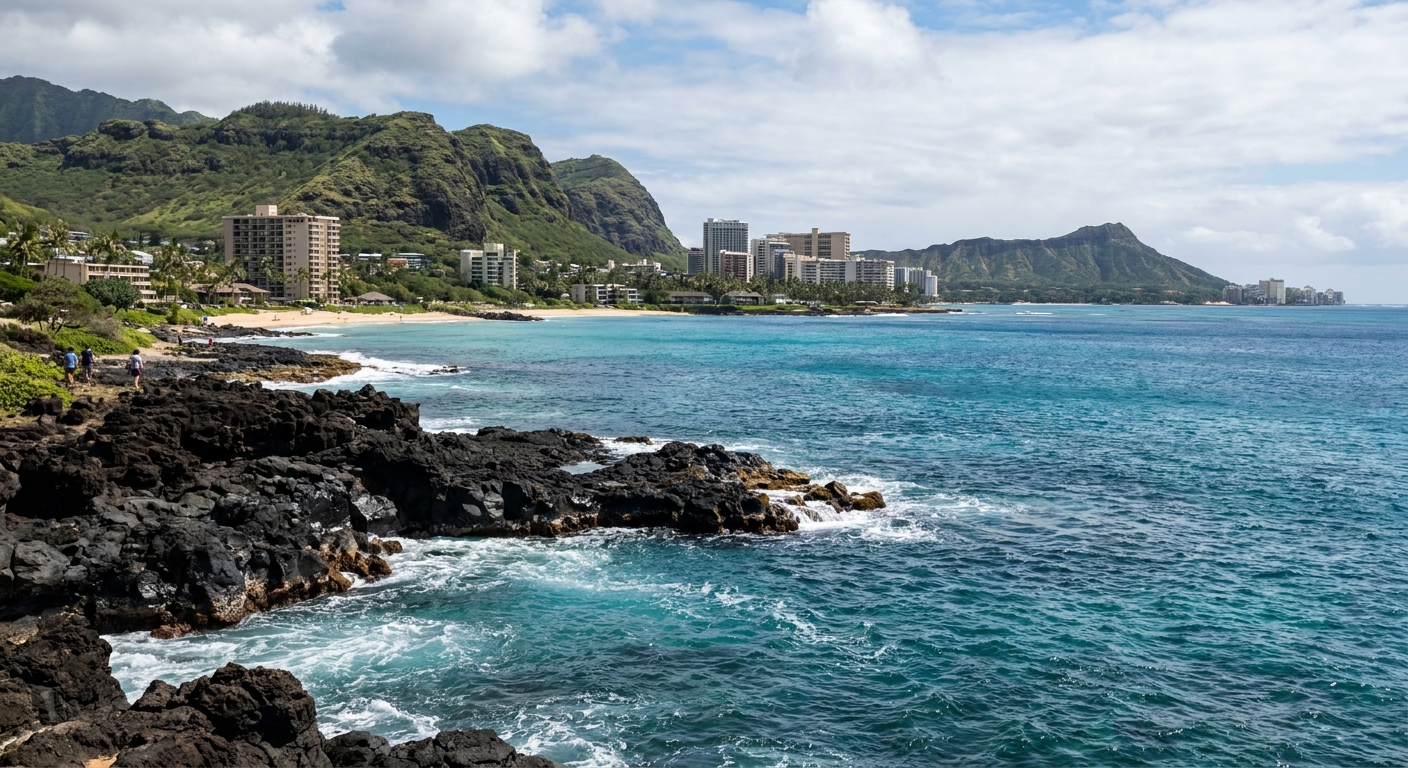
Which Hawaiian island should I visit first?
Oahu or Maui is the usual first choice, because both give you beaches, good food and plenty to do without much planning. Oahu is where the city is: Honolulu, Waikiki, Pearl Harbor, Diamond Head and the surf coast of the North Shore. It is the island with the most life after dark and the most variety in restaurants, and it is by far the one most visitors land on.
Maui is the pick for a slower, resort-style first trip: a summit sunrise, a winding road along a wet coast, and long beach days on the dry side. Kauai and the Big Island reward a second visit, or a first one for travelers who already know they want hiking and volcanoes over city and shopping.
Visitors stay close to nine days on average, which is enough to do one island well, or two if you keep the pace relaxed. Spreading the same days over three or four islands mostly means time in airports.
| Island | Visitors in 2025 |
|---|---|
| Oahu | 5,679,047 |
| Maui | 2,516,163 |
| Hawaii Island (Big Island) | 1,752,589 |
| Kauai | 1,419,943 |
| Lanai | 43,945 |
| Molokai | 30,239 |
Which Hawaiian island has the best weather?
The leeward, dry coasts have the best weather, and that means Kona on the Big Island, the Maui resort coast, and Honolulu and Waikiki on Oahu. The rule on every island is the same: air pushed up a windward slope drops its rain there, while the sheltered side stays sunny. So the better question is which side of the island you sleep on.
Rain is the clearest difference. In January, Kona sees under two rainy days, Honolulu a little over three, Maui four and Kauai more than four, while Hilo has nearly ten and gets almost eight inches of rain. In August the dry side is drier still: Honolulu, Maui and Kona each have barely more than a day with measurable rain, and Hilo has more than eighteen.
| Place | January high (°F) | January rain days | August high (°F) | August rain days |
|---|---|---|---|---|
| Honolulu | 80.5 | 3.3 | 88.8 | 1.2 |
| Maui | 82.2 | 4.0 | 89.9 | 1.3 |
| Kauai | 78.6 | 4.4 | 85.2 | 5.3 |
| Kona | 81.4 | 1.8 | 87.3 | 1.4 |
| Hilo | 78.7 | 9.6 | 82.9 | 18.2 |
Winter trade winds can pause for stretches, and those gray spells are felt more on the wetter slopes. Kauai’s north shore around Princeville and Hanalei is lush because it is wet, while Poipu on the south shore is the sunnier base. Up high it is another climate altogether, and Haleakala and Waimea Canyon sit at a cool 60s in January.
Oahu vs Maui for a first trip
Choose Oahu if you want a city with a beach, and Maui if you want the beach to be the whole point. Oahu packs in history and variety: a morning at Pearl Harbor, a hike up Diamond Head, shave ice in Waikiki, then a drive to the North Shore for food trucks and, in winter, huge surf. Everything is close together, which suits short trips and families who like options.
Maui is calmer and more spread out. Days tend to run to a resort beach in Wailea or Kaanapali, a drive along the Road to Hana, and a pre-dawn trip up a volcano. The roads are slower and the towns smaller, so it suits couples and anyone who prefers to unpack once and relax.
| Site | Open | Admission |
|---|---|---|
| Diamond Head State Monument (Oahu) | 6:00 a.m. to 6:00 p.m., last entry 4:30 p.m. | Non-residents $5 entry plus $10 per vehicle for parking, reservation required |
| Pearl Harbor National Memorial (Oahu) | Fee free | Parking $7 per day, paid through a mobile app |
| Haleakala National Park (Maui) | Open through the day and early morning | $30 per private vehicle |
Diamond Head is a short but steep trail with a big view over Waikiki, and the effort is modest compared with the reward. Plan on one or two hours for it. Haleakala is the other half of the comparison, a summit where the sun comes up above the clouds.
Which Hawaiian island has volcanoes to visit?
The Big Island is the one for volcanoes: it holds Kilauea and Hawaii Volcanoes National Park, where you walk crater rims and lava landscapes. Maui has its own giant, the dormant Haleakala, whose summit at sunrise is one of the most famous scenes in the islands. Only these two parks carry the National Park title in Hawaii.
Hawaii Volcanoes National Park on the Big Island
This is a whole day of craters, steam vents, lava fields and rainforest, with the rim at a cool, damp height compared with the beach towns. Many visitors base themselves on the sunny Kona side or in rainy Hilo and drive over, so allow for a full day and bring layers, since the weather up there changes quickly.
The entrance fee is $30 per private vehicle, with young visitors 15 and under free. A visit pairs well with the waterfalls around Hilo or the summit of Mauna Kea, which round out a Big Island trip nicely.
Haleakala National Park on Maui
Haleakala rewards people who set an alarm. The summit sunrise draws crowds before dawn, and the high crater feels like another planet, much colder than the beach you left behind. Entry is $30 per private vehicle, and anyone driving in during the pre-dawn hours needs a separate sunrise reservation. If getting up that early does not appeal, the park is just as striking later in the day, with fewer people on the overlooks.
Which Hawaiian island is the least crowded?
Lanai and Molokai are the least crowded by a wide margin, with few hotels, little traffic and no city, followed among the larger islands by Kauai. Together the two small islands drew only a sliver of the visitors that Oahu did in 2025. They suit travelers who want quiet and are happy with simple plans.
Kauai is the green, relaxed choice if you want real scenery without the bustle of Oahu: the Na Pali cliffs, Waimea Canyon and a slower pace everywhere. Timing helps too, since summer and the end-of-year holidays fill the islands, while September was noticeably quieter than July or December.
How many Hawaiian islands can you visit in one trip?
Most trips work best with one or two islands, and three is a stretch unless you have well over a week. Short inter-island flights link them, but each hop costs a morning or an afternoon once you count the airport.
There is no car ferry, so every island you add also adds a rental car and a new base. A common pairing is Oahu with one neighbor, for a few days of city followed by a few days of quiet. Many visitors see more than one island, so the combination is well worn.
Good to know before you go
Visitors spent about $259 per person per day on average in 2025, so the island you pick shapes the budget as much as the flight does. The Central Pacific hurricane season runs from June 1 to November 30, and high elevations such as Haleakala are far colder than the coast.
Sources
- NWS Honolulu (HFO), « Climate of Hawaii » summary, weather.gov/hfo/climate_summary, checked September 24, 2026
- National Park Service, state « Hawaii », nps.gov/state/hi, checked September 24, 2026
- National Park Service, nps.gov/state/hi, checked September 24, 2026
- National Park Service, Haleakala « Fees & Passes », nps.gov/hale/planyourvisit/fees.htm, checked September 24, 2026
- National Park Service, Hawaii Volcanoes « Fees & Passes », nps.gov/havo/planyourvisit/fees.htm, checked September 24, 2026
- National Park Service, Pearl Harbor « Fees & Passes », nps.gov/perl/planyourvisit/fees.htm, checked September 24, 2026
- Hawaii DLNR Division of State Parks, « Diamond Head State Monument », dlnr.hawaii.gov/dsp, checked September 24, 2026
- Hawaii Department of Taxation, Announcement No. 2025-03 (June 9, 2025), files.hawaii.gov/tax/news/announce/ann25-03.pdf, checked September 24, 2026
- DBEDT (Hawaii Department of Business, Economic Development & Tourism), press release « Visitor Spending Increased in December 2025 », dbedt.hawaii.gov/blog/26-04, checked September 24, 2026
- DBEDT, press release December 2025, dbedt.hawaii.gov/blog/26-04, checked September 24, 2026
- DBEDT, press releases monthly July (blog/25-34), September (blog/25-42) and December 2025 (blog/26-04), checked September 24, 2026
- NOAA NCEI, monthly normals 1991-2020, station USW00022521, checked September 8, 2026
- NOAA NCEI, monthly normals 1991-2020, station USW00022516, checked September 8, 2026
- NOAA NCEI, monthly normals 1991-2020, station USW00022536, checked September 8, 2026
- NOAA NCEI, monthly normals 1991-2020, station USW00021510, checked September 8, 2026
- NOAA NCEI, monthly normals 1991-2020, station USW00021504, checked September 8, 2026
- NOAA NCEI, monthly normals 1991-2020, station USC00511004, checked September 8, 2026
- NOAA NCEI, monthly normals 1991-2020, station USC00511303, checked September 8, 2026
- NOAA NCEI, monthly normals 1991-2020, station USC00513099, checked September 8, 2026
- NWS Honolulu / Central Pacific Hurricane Center, « 2026 Central Pacific Hurricane Season Outlook », weather.gov/hfo/hurricaneOutlook2026, checked September 24, 2026
To plan your stay
- Best Time to Visit Hawaii: Seasons, Weather by Island, Whales and Crowds
- Things to Do in Hawaii: Volcano Sunrises, Snorkeling Bays, Pearl Harbor and What to Eat
- Where to Stay in Hawaii: Choosing an Island, Oahu to Kauai Bases and the Hotel Tax
- Know Before You Go to Hawaii: Agriculture Form, Sunscreen Law, Reservations and Taxes