
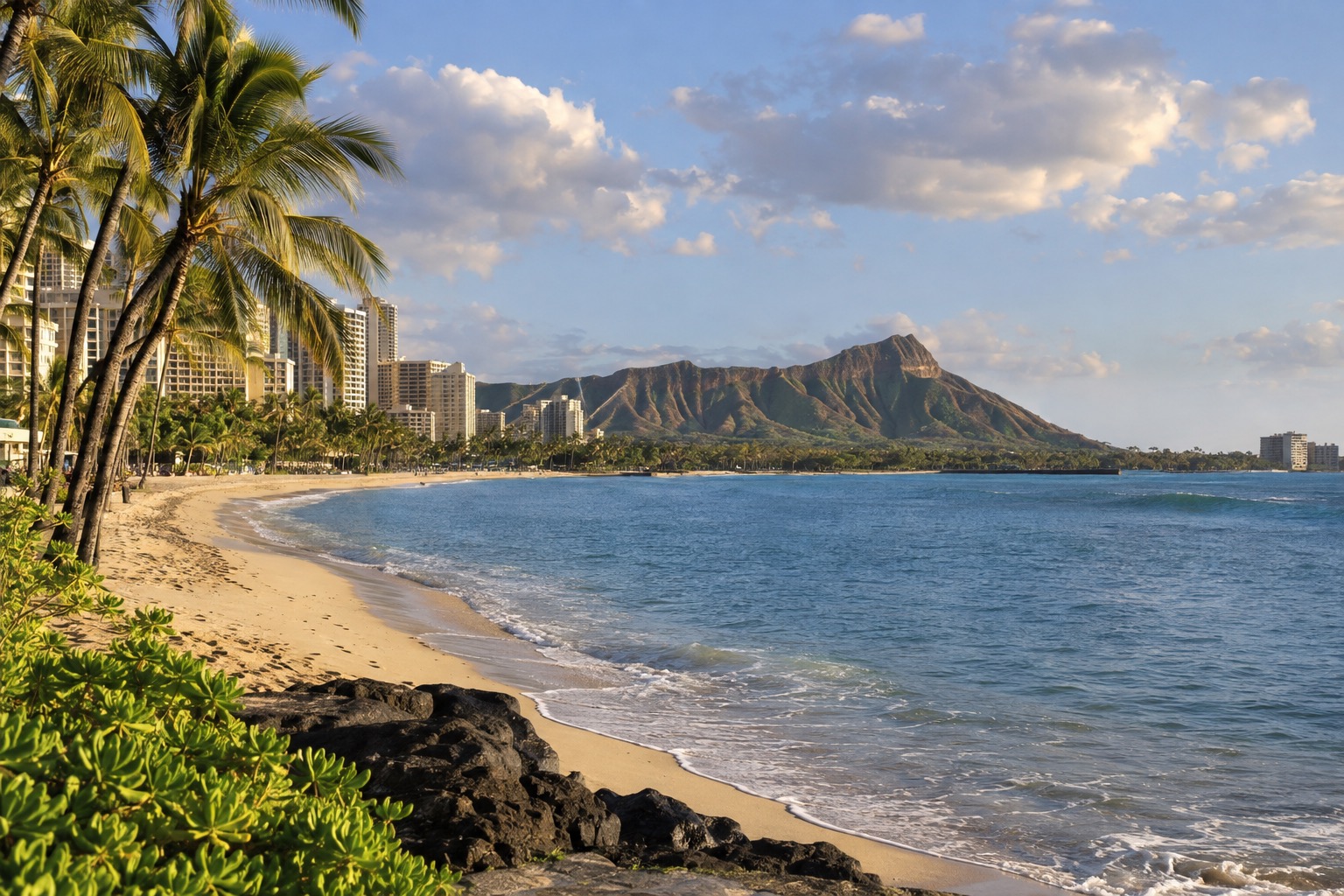
On a January morning in Waikiki, the first surfers paddle out past the break while joggers circle the base of Diamond Head and the smell of coffee drifts from the open-air cafés along Kalakaua Avenue. The trade winds keep the air soft, the palms rustle, and the light turns the sand a pale gold well before the crowds arrive. It is a month of winter swells, humpback whales offshore and the long holiday glow that lingers after New Year’s, with a beach town that feels both festive and unhurried.
What is the weather like in Waikiki in January?
Waikiki in January is warm and mostly sunny, with a light jacket needed only for the odd breezy evening and short showers that pass quickly. Waikiki sits on the leeward, dry side of Oahu, which is why the beach stays bright while the mountains behind town often wear a gray cap of cloud.
| Month | Average high (°F) | Average low (°F) | Rain days | Sea (°F) |
|---|---|---|---|---|
| December | 81.6 | 68.8 | 4.5 | 78.1 |
| January | 80.5 | 66.0 | 4.2 | 77.3 |
| February | 80.8 | 66.3 | 3.5 | 76.1 |
Mornings are soft and a little cool, ideal for a walk along the shoreline or a climb up a trail before the sun gets strong. By midday the sun is high and the beach is at its brightest, and afternoons are warm enough for shorts and a swimsuit without feeling heavy. Evenings cool down enough that a thin layer feels good at an open-air table.
Rain arrives as brief showers carried in on the trade winds, often a rainbow rising over the Koolau mountains afterward. Only a handful of days in the month bring any measurable rain, and a real downpour that lasts is uncommon in town. If you want wetter, greener scenery, it is a short drive toward the windward side, where the clouds linger.
Daylight lasts about eleven hours in mid-January, so the sun sets early enough to make a beach dinner a late-afternoon affair. Sunscreen still matters even on cloud-dappled days, because the winter sun here is stronger than most mainland visitors expect.
Can you swim in Waikiki in January?
Yes, the water is warm enough for a comfortable swim, though it feels a touch cooler than in summer, so a long float may call for a few minutes of adjusting. The sea sits in the upper 70s, pleasant after a morning in the sun.
Waikiki faces south, so the big winter surf that hits the North Shore mostly misses it. The beaches here usually stay gentle, and the breakwater-sheltered corners near Kuhio Beach are a favorite for families and nervous swimmers. Waves can still build on some days, especially off the surf breaks where boards line up, so the lifeguard towers and the posted flags are the final word on any given morning.
Snorkelers do best in the early hours before the crowd, bringing their own mask or renting on the beach. Surf lessons run all month, and the slow, rolling waves suit beginners on longboards. Box jellyfish reach Oahu’s south shore on estimated dates that the Waikiki Aquarium publishes as a calendar, and they can appear on any day, so obey warning signs and swim at guarded beaches.
What to do in Waikiki in January
January is the heart of humpback whale season in Hawaiian waters, and a boat trip from the harbor nearby gives you a real chance of seeing breaches and tail slaps. Even from the shore you may spot spouts on a clear day, particularly from the slopes of Diamond Head or a high hotel lanai. Sightings are never guaranteed, but this is among the best times to look.
The month also carries the energy of the winter surf season. While the biggest waves break on the North Shore, many visitors make a day of driving there to watch surfers take on huge swells from the sand, then return to Waikiki for sunset. The mood in town is relaxed, with ukulele music drifting from hotel courtyards and a weekly fireworks show that lights the beach at the end of the week.
Diamond Head and the shoreline walks
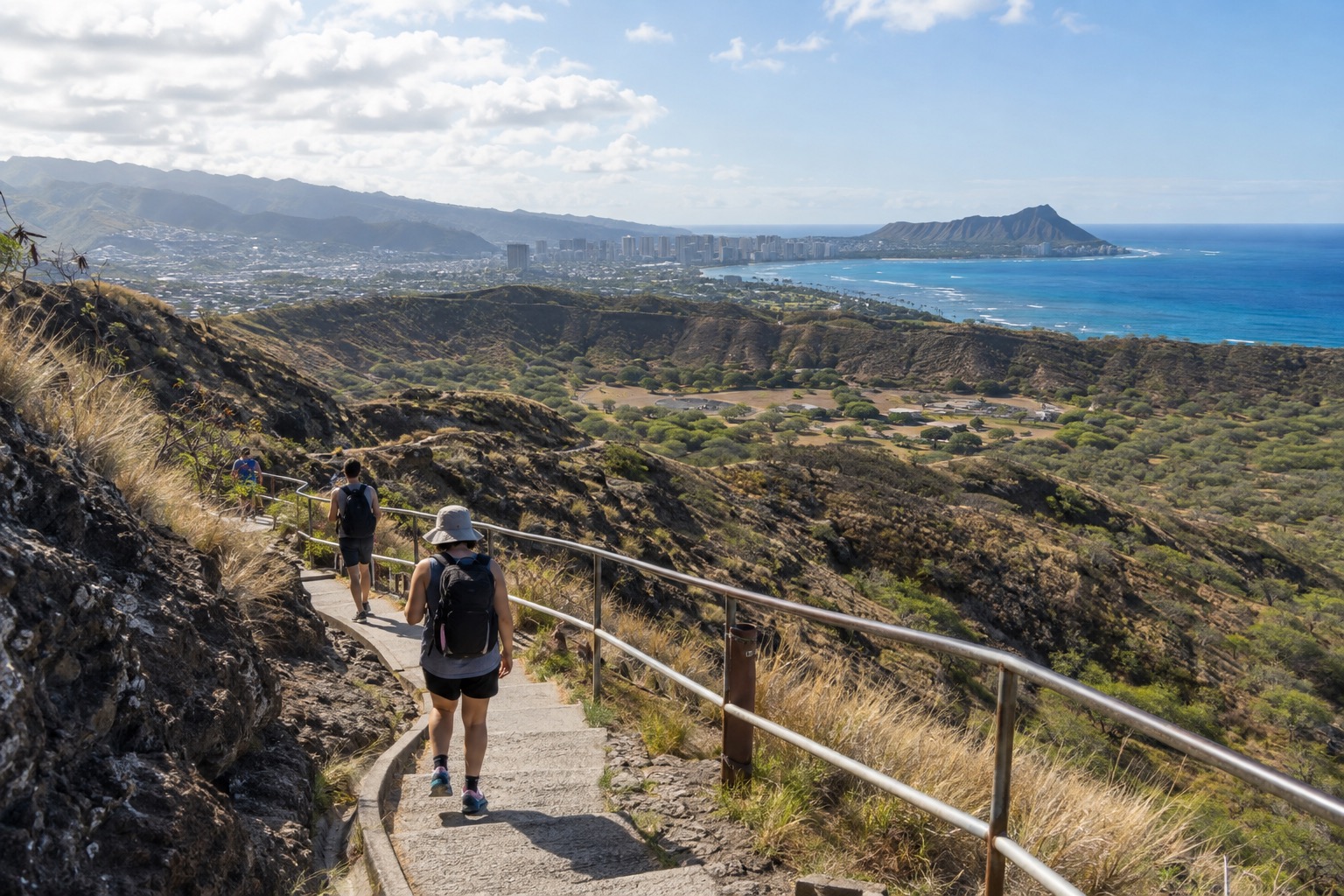
The crater of Diamond Head rises at the eastern end of the beach, and its summit trail rewards walkers with a sweeping view back across the hotels and the blue water. January’s cooler mornings make the climb far more pleasant than in summer. Go early, bring water, and expect a steady line of hikers on the stairs and through the old military tunnel.
Reservations are required for out-of-state visitors, so plan this before you arrive rather than on the day. At the base, the neighborhood of Kapahulu offers a handful of casual spots for a plate lunch or shave ice after the descent.
Beach days, surf lessons and sunset
A classic Waikiki day starts on the sand with a surf lesson or an outrigger canoe ride, both of which run through winter. The rolling waves are forgiving for beginners, and instructors work close to shore. Between rides, shade is easy to find under the trees near the Duke Kahanamoku statue, a favorite meeting spot.
As the afternoon fades, the beach fills with people waiting for the sun to drop behind the horizon. Hotels along the shore set tables on open terraces, and a mai tai or a cold glass of fresh pineapple juice makes a fine companion. Torches flicker along the beachfront walkway as the light goes.
Food, shopping and indoor stops
Winter is a good time to settle into the local table: poke bowls, loco moco, kalua pork, and shave ice with azuki beans are all easy to find within a short walk. Food halls and small family restaurants sit just off the main avenue, and many hotels host luau evenings with hula and fire dancers.
When a shower rolls in, the Waikiki Aquarium, the shops along Kalakaua and the cultural demonstrations in the open-air plazas keep the day going. A short drive away, the Honolulu museums and the royal palace of the old kingdom offer a quieter, more historical side of the island.
A two-day itinerary for Waikiki in January
Day 1 begins at dawn on the sand, when the light is soft and the water still. Walk the shoreline toward the Duke statue, then have a slow breakfast at one of the beachfront cafés. Spend the late morning on a surf lesson or in the water, and retreat to the shade for a plate lunch when the sun is highest.
In the afternoon, stroll the shops along Kalakaua and the cultural stage at the open-air plazas, then settle on a terrace to watch the sunset, which comes early in January. Dinner can be a casual poke bowl or a table at a hotel restaurant with live music. If rain arrives, the aquarium and the covered shopping centers are easy fallbacks.
Day 2 starts with the Diamond Head trail while the air is cool, so reserve your slot ahead of time. Come down for shave ice or a late breakfast in nearby Kapahulu, then head back to the hotel for a swim and a rest through the warmest hours.
In the afternoon, consider a whale-watching cruise from the harbor, since January is peak season for humpbacks and the late light is lovely on the water. Return for an early dinner, perhaps a luau with hula and music, and end the evening with a quiet walk along the beachfront as the torches glow.
Is Waikiki busy in January?
Yes, Waikiki is busy in the first days of January as holiday visitors linger, then it settles into a steadier winter rhythm. Families on school break fill the beaches early in the month, and the seasonal draw of warm weather for mainland travelers keeps hotels lively.
Restaurant tables at sunset are the first thing to go, so booking dinner a few days ahead is a good habit, and earlier still for the holiday week. Rental cars and rooms are easiest to find if you book well in advance for the opening days of the month and a bit later for the quieter weeks that follow. Late in January the pace eases, and the beaches feel more open.
Sports events, conferences and surf competitions can fill the neighborhood on certain weekends, so it is worth looking at the calendar when you choose dates. The Diamond Head trail requires a reservation for out-of-state visitors, and it is the booking that most often runs short, so sort it before anything else.
What to pack for Waikiki in January
Pack light, warm-weather clothes with one layer for breezy evenings and a plan for a passing shower.
- Swimsuit and rash guard, for long water sessions and a strong winter sun
- Mineral sunscreen, since the sun is strong even on cloudy days
- A light rain jacket, for the brief showers that pass through
- A sweater or thin jacket, for cooler evenings on an open-air terrace
- Sturdy sneakers, for the Diamond Head trail
- A reusable water bottle, for morning hikes and long beach days
Good to know before you go
January falls outside the official hurricane season, which runs from June 1 to November 30. The month does bring higher surf on some shores, so follow lifeguard signs. Hotel bills carry two taxes, and it helps to know them before you compare room rates.
| Fee | Amount | Who pays |
|---|---|---|
| State transient accommodations tax | 11% | Hotel guests |
| Oahu county tax | 3% | Hotel guests |
Waikiki in January vs December and February
Moving the trip to December brings a slightly warmer sea and the full festive atmosphere of the holidays, with lights, events and bigger crowds. Rooms fill early and prices reflect holiday demand, so it suits travelers who want the celebration and can book far ahead.
February is a touch drier, with a bit fewer rainy days, and the sea is a little cooler. Whales remain around, the holiday crowds have thinned, and rooms are easier to find. It suits travelers who want quieter beaches and a calmer rhythm while still catching the winter season.
January sits between the two, with the lingering holiday mood at the start and the easing of the pace by the end. Choose December for the festivities, February for the calm, and January if you want a bit of both, especially if you can travel in the second half of the month.
Is January a good time to visit Waikiki?
Yes, January is a good time for beach lovers, whale watchers and anyone who wants warm weather in the middle of winter. Families, couples and solo travelers all find a place here, and the sea is comfortable for a swim on most days.
It suits those who enjoy a lively but relaxed town, with early-morning hikes and sunset dinners. Travelers who want a very quiet beach in the first week, or who dislike showers drifting in from the mountains, may prefer to shift to a later month.
On arrival, reserve your Diamond Head slot and look at the calendar for the aquarium’s jellyfish dates, then head to the sand. What makes January in Waikiki special is the mix of winter whales offshore, golden light on the water and a beach town that feels both festive and unhurried.
Sources
- NOAA NCEI, monthly normals 1991-2020, station USC00519397, checked September 8, 2026
- Open-Meteo Marine API, average 2015-2024, checked September 8, 2026
- sunrise-sunset.org, sunrise and sunset calculated for the 15th of the month, checked September 8, 2026
- Hawaii Department of Taxation, Announcement 2025-03 ; City and County of Honolulu, OTAT FAQ, checked September 25, 2026
- Waikiki Aquarium, Box Jellyfish Calendar, checked September 25, 2026
- NWS Honolulu / Central Pacific Hurricane Center, « 2026 Central Pacific Hurricane Season Outlook », weather.gov/hfo/hurricaneOutlook2026, checked September 24, 2026