
On a July evening in Waikiki, the sun drops behind the Waianae range and the beach turns copper while outrigger canoes slide back to shore. The year here has two moods: a hot, dry summer with the trade winds doing the work, and a softer, wetter winter when the crowds from the mainland arrive in force. Waikiki is a narrow strip of sand and towers, and the month you pick changes how it feels.
When is the best time to visit Waikiki?
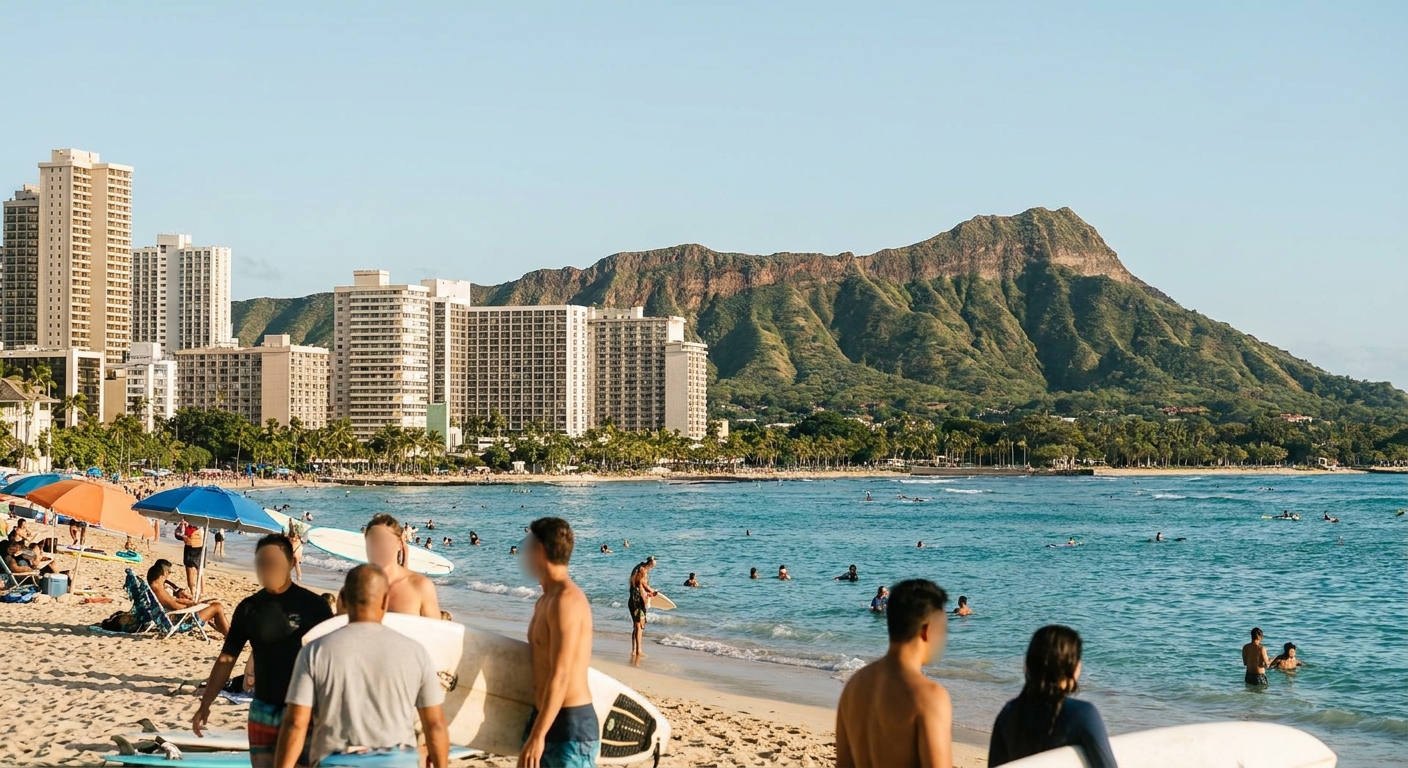
The best time is April, May, September and October for most travelers, when the days are warm and sunny, the rain is light and the beach is not at its busiest.
For beach and sea, the summer months from June to September bring the warmest water and the driest sky, and the south shore tends to have gentle rolling waves that suit first-time surfers and canoe riders. For sightseeing, spring and fall are kinder, because a walk up Diamond Head or a stroll along Kalakaua Avenue is far less punishing than in the heat of August. Waikiki: Out-of-state visitors need a reservation for Diamond Head, booked in advance on the state parks reservation site, and arrival is within the first 30 minutes of the reserved time.
For a quieter, easier trip, look at late April, May, and the weeks after Labor Day through early November. Rooms are easier to find and the sand has space on it. Winter has its charm too, with softer air and the occasional rainbow over the Koolau mountains, but it is also the time most of the mainland comes to escape the cold.
Families should know that March is loud: spring break fills the pools, the sidewalks and the restaurants with students and big groups. Summer is the classic family season, with school out and the water warm, so expect company on the beach and plan the busiest outings for early morning.
Waikiki weather by month
Waikiki stays warm all year, and the differences between months are small but real.
| Month | Average high (°F) | Average low (°F) | Rain (in) | Rain days | Sea (°F) |
|---|---|---|---|---|---|
| January | 80.5 | 66.0 | 2.38 | 4.2 | 77.3 |
| February | 80.8 | 66.3 | 2.03 | 3.5 | 76.1 |
| March | 81.2 | 67.8 | 3.18 | 4.6 | 76.0 |
| April | 83.0 | 69.7 | 1.17 | 2.6 | 76.7 |
| May | 84.7 | 71.2 | 1.02 | 2.7 | 77.0 |
| June | 86.5 | 73.4 | 0.59 | 1.0 | 78.4 |
| July | 87.1 | 74.5 | 0.69 | 1.5 | 79.3 |
| August | 88.2 | 74.8 | 0.73 | 1.7 | 79.6 |
| September | 88.0 | 74.1 | 1.02 | 2.3 | 80.5 |
| October | 86.8 | 73.1 | 2.24 | 2.9 | 80.7 |
| November | 83.8 | 71.5 | 2.57 | 4.5 | 79.0 |
| December | 81.6 | 68.8 | 3.03 | 4.5 | 78.1 |
The year splits in two. From May to October the air is hot and showers are rare and brief, the kind you barely notice.
From November to April the days are a little cooler and the rain comes more often, usually as passing showers that clear fast, with the odd gray day when a front moves through. Evenings stay mild enough for dinner outside in every month, and a light layer is all you need after dark in winter.
When is Waikiki cheapest and least crowded?
Waikiki is quietest in late April and May, and again from September to early November, once the summer family rush has ended and before the winter holidays begin.
The peaks are easy to spot. Spring break in March packs the district, Easter week is busy, and summer from June through August is thick with families. The heaviest stretch of all runs from Christmas through New Year, when rooms fill up early and the beach in front of the big hotels is shoulder to shoulder. Visitors from Japan and other parts of Asia also add to the crowds around their own holiday weeks.
In the quiet months you can find rooms more easily, the lines at surf lesson stands are short, and you can find a patch of sand without much effort. Sunset on Kuhio Beach feels less like a show and more like an evening.
Which months should you avoid in Waikiki?
No month is truly a bad one, but a few have drawbacks worth knowing before you book.
The Central Pacific hurricane season runs from June 1 to November 30. Hawaii is only rarely hit, and the season covers months that are otherwise lovely, but it is the official window for tropical systems, and a plan with flexible dates makes sense in those months.
August and September are the hottest, with afternoons that can feel heavy on the pavement of Kalakaua Avenue, so sightseeing is best in the morning. From December to March the south shore sees more rain days, though the showers are usually short. Winter also brings big surf to the north shores of Oahu, which matters if you plan day trips to Haleiwa, less so for Waikiki itself.
When can you swim in Waikiki?
You can swim in Waikiki all year, because the sea never gets truly cold.
Winter water is pleasantly cool at first, then comfortable after a few minutes. By late summer and early fall it feels like the warmest of the year, which is why September and October are favorites for long swims. Summer often brings gentler conditions to the south shore, since swells come from the south then, while winter can deliver larger waves and stronger currents even in this spot, so before entering the water locals check the posted warnings along with that day’s surf and currents, and they swim near a lifeguard only at a location where one is on duty.
Box jellyfish reach the south shore on estimated dates that the Waikiki Aquarium posts in a calendar, and a few days after a full moon is when people most often hear about them. Sea turtles also come close to shore, and NOAA asks for at least 10 feet between you and a turtle, on the sand and in the water.
Festivals and events in Waikiki through the year
Winter: surf, whales and the holidays
Winter is the season of big waves on the North Shore, and the surf world drifts across the island for contests that fill the beaches of Haleiwa and Waimea Bay. Waikiki itself stays gentler, but the buzz carries into the bars and surf shops along Kalakaua Avenue. Humpback whales also pass through the islands in winter, and on a clear day you may spot spouts from the shore or from a boat leaving the harbor.
In December the Honolulu Marathon fills the streets before dawn, and hotels glow with decorations. The holiday season has a Hawaiian twist, with Santa arriving by outrigger and carols with ukulele. Rooms book up early, so this is the month to plan ahead.
Spring and early summer: Lei Day and Kamehameha Day
May 1 is Lei Day, and the islands celebrate with flower garlands, hula and music. In Waikiki you see leis everywhere, from street vendors to hotel lobbies, and the day has a gentle, local feel rather than a tourist spectacle. It is a lovely moment to see how seriously people take the art of the lei.
On June 11, Kamehameha Day honors the king who united the islands. Honolulu hosts a parade with floral floats and riders on horseback draped in leis, and it usually passes through town and ends near Kapiolani Park. Arrive early for a good spot, and expect warm sun and cheerful crowds.
Fall: Ironman season and mellow evenings
October brings the Ironman World Championship to the Big Island, and many visitors pair a Waikiki stay with a flight over to Kona to watch. On Oahu, the fall months are calm and golden, with warm seas and beaches that have thinned out after summer.
Evenings are a good time for the free hula shows and torch-lighting ceremonies that happen on the beach in the late afternoon, and for a walk along the Waikiki Historic Trail. Fall is the season when the district feels most like a neighborhood again.
Sources
- NOAA NCEI, monthly normals 1991-2020, station USC00519397, checked September 8, 2026
- Open-Meteo Marine API, average 2015-2024, checked September 8, 2026
- sunrise-sunset.org, sunrise and sunset calculated for the 15th of the month, checked September 8, 2026
- Hawaii Tourism Authority, Go Hawaii, Waikiki (gohawaii.com/islands/oahu/regions/honolulu/waikiki), checked September 25, 2026
- Hawaii DLNR, Division of State Parks, Diamond Head State Monument, checked September 25, 2026
- Hawaii DOT Airports, HNL, The Bus and Skyline ; HVCB, map Driving Times from Waikiki (2010), checked September 25, 2026
- TheBus, fares effective January 7, 2024 ; HOLO, For Visitors, checked September 25, 2026
- Hawaii Department of Taxation, Announcement 2025-03 ; City and County of Honolulu, OTAT FAQ, checked September 25, 2026
- Waikiki Aquarium, Box Jellyfish Calendar, checked September 25, 2026
- NOAA Fisheries, Viewing Marine Wildlife in Hawaii, checked September 25, 2026
- NWS Honolulu / Central Pacific Hurricane Center, « 2026 Central Pacific Hurricane Season Outlook », weather.gov/hfo/hurricaneOutlook2026, checked September 24, 2026