
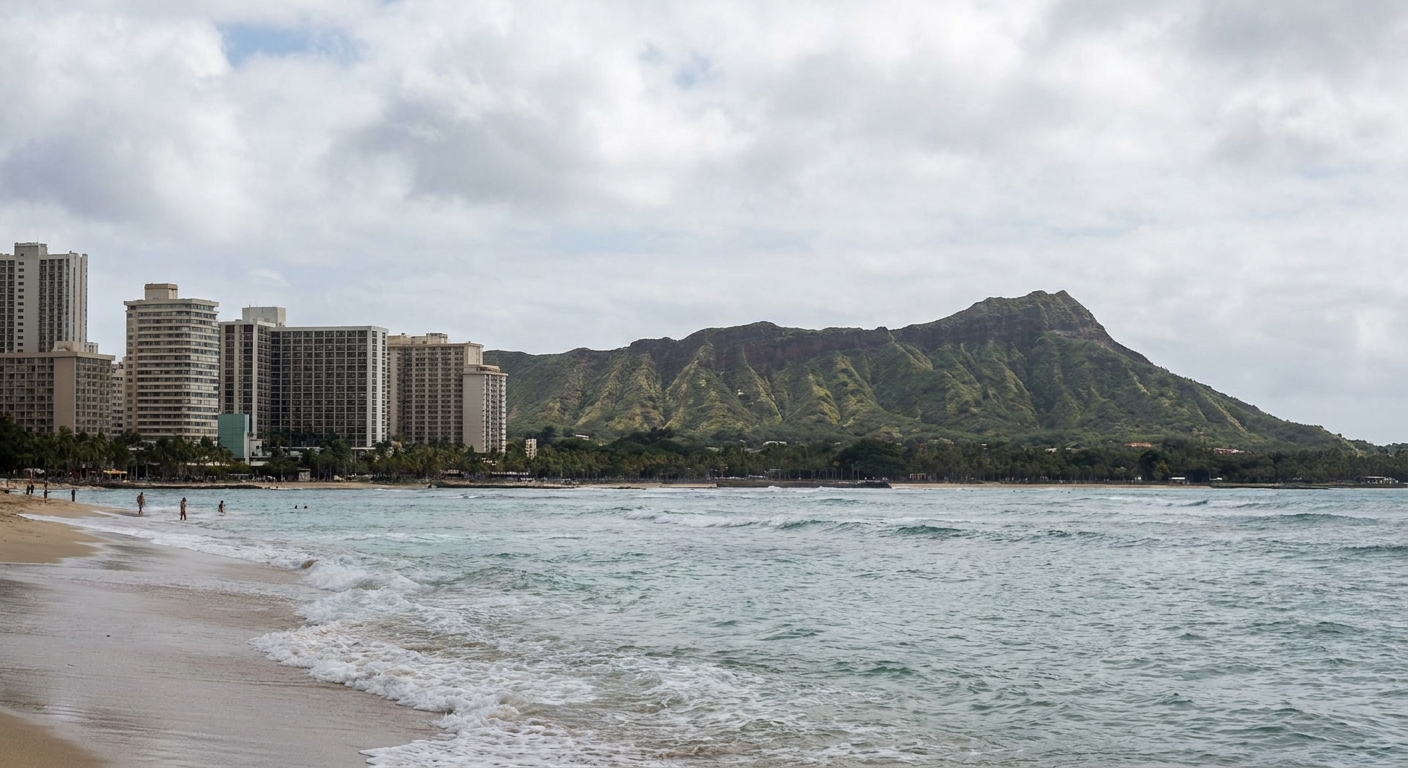
Early on a March morning, Waikiki Beach belongs to outrigger paddlers, joggers along Kalakaua Avenue and a few surfers drifting out toward the long, gentle breaks off Queens. A gentle breeze blows, sunlight paints Diamond Head’s slopes in gold, and the shave ice stands have yet to draw their midday visitors. March is an easygoing stretch of the Hawaiian winter, with warm days, a sea that invites you in and a calendar that is busy without being frantic.
What is the weather like in Waikiki in March?
Warm and mostly sunny, with a few passing showers: March in Waikiki feels like a mild early summer day that never quite gets hot.
| Month | Average high (°F) | Average low (°F) | Rain days | Sea (°F) |
|---|---|---|---|---|
| February | 80.8 | 66.3 | 3.5 | 76.1 |
| March | 81.2 | 67.8 | 4.6 | 76.0 |
| April | 83.0 | 69.7 | 2.6 | 76.7 |
Mornings are fresh enough that a walk along the Ala Wai canal or a coffee on a lanai feels comfortable without sunscreen sweat. By midday the sun is strong and the beach is at its liveliest. Afternoons stay pleasant, and the trade winds keep the shade comfortable even when the sand is hot.
Rain in Waikiki is a matter of quick showers, usually sweeping down from the Koolau mountains behind the city, soaking the street for ten minutes and moving on with a rainbow in its wake. Real gray days are the exception, and the wetter side of the island, the windward coast and the mountain valleys, catches far more rain than the beachfront does. Waikiki sits on the dry, leeward side, which is why it stays sunny while the hills above are often in cloud.
Evenings stay mild enough for dinner outside in a short-sleeved shirt, though a light layer helps once the breeze picks up after sunset. You get just over twelve hours of daylight, which leaves room for a whole beach day plus a sunset walk.
Can you swim in Waikiki in March?
Yes, the water is comfortable for a long swim, a touch cooler than in summer but never cold, and most people stay in for an hour or more.
Winter sends its big surf to the north shores of Oahu, while the south shore, where Waikiki sits, usually sees smaller, gentler waves. That makes the beaches in front of the hotels, with their sandy bottoms and long, rolling breaks, a good place for beginner surf lessons and stand-up paddling.
Families often favor the sheltered stretch near the Kuhio Beach walls, where the water tends to be quieter, while snorkelers head to the rocky edges and look for reef fish. Conditions change from day to day, so the beach signs and the lifeguards decide, and a red flag means stay out.
The Waikiki Aquarium puts out a calendar of predicted dates for box jellyfish arriving on Oahu’s south shore, but any day can bring them. Obey the warning signs and swim at guarded beaches. Bring a rash guard if you burn easily, a mask if you like to peer at fish, and a mineral sunscreen.
What to do in Waikiki in March
March fills the calendar with local color. Spring breaks begin to bring families, the humpback whale season is winding down offshore, and the island feels cheerful rather than crowded. Hula halau rehearse for spring events, and the Merrie Monarch hula festival in Hilo, held the week after Easter, sometimes lands in early spring and sets the whole state talking about dance. Check dates, because Easter moves every year.
Early in the month, whales may still be seen from the shore or on a boat out of the harbor, a pleasure that fades as the weeks go on. Look for spouts and the white flash of a tail, and remember that sightings are a chance, never a promise. Sea turtles also surface along the reef now and then, and they are protected, so enjoy them from a respectful distance.
Diamond Head at sunrise
The crater rim is the classic walk above Waikiki, a steady climb along a switchbacked path through dry scrub and old military tunnels to a lookout over the coast. The view sweeps from the high-rises to the open Pacific, and in March the air is clear and cool early in the day. The rewards are the broad light and the sense of the whole shoreline unrolling below.
Go early, before the sun climbs, wear shoes with a grip, and carry water. The park requires a reservation for some visitors, so check the state parks page before you set out. Afterward, head back down for breakfast in Kapahulu, where bakeries and plate-lunch counters wait.
Waikiki Beach and the surf lessons
A surf lesson on a gentle south shore wave is the most Waikiki thing you can do. Instructors stand on the sand with long boards, walk beginners out past the break and push them into soft, rolling waves that carry them almost to shore. Lessons suit children, nervous swimmers and anyone who wants a first ride, and the water in March is warm enough to enjoy it.
Prefer to watch? Sit under a palm near the Duke Kahanamoku statue, where leis often hang from the bronze arms, and watch outrigger canoes glide in. Late afternoon is the quietest time for photos, and the setting sun turns the water to copper.
Food, markets and the evening scene
Eat the way locals do: poke by the pound, a plate lunch with two scoops of rice and macaroni salad, a shave ice with azuki beans underneath, and a malasada still warm from the fryer. Farmers markets near the edge of Waikiki and in Kapiolani Park sell tropical fruit, fresh bread and flowers, and they are pleasant places to stroll on a Saturday morning.
At night, Kalakaua Avenue comes alive with street performers, torch lighting along the beachfront and live music drifting from hotel bars. Many resorts offer a luau, and a Hawaiian music set at sunset is a gentle way to end a beach day. Beyond the beach, the Waikiki Aquarium, the Honolulu Zoo and the long green lawns of Kapiolani Park round out a family day, and the park is a favorite spot for kite flying when the trade winds blow.
A two-day itinerary for Waikiki in March
Day 1. Start at dawn on the beach, when the sand is cool and the water is glassy, and take a sunrise walk to the Duke Kahanamoku statue. Breakfast comes at a casual café with acai bowls or banana pancakes, then a morning surf lesson while the waves are small and the crowd is thin. Spend midday in the shade, with lunch at a poke counter or a plate-lunch window.
In the afternoon, rent a paddleboard or sit under an umbrella, then walk the length of Kalakaua Avenue to browse the shops. As the day winds down, find a spot on the sand for sunset, when the sky turns orange over the Pacific. Dinner is a seafood restaurant with an open-air terrace, followed by live music.
Day 2. Climb Diamond Head early, with water and a hat, and be back down before the sun is at full strength. Brunch in Kapahulu is the reward, with bakeries and lunch counters in a neighborhood where locals eat. Spend the afternoon at the Waikiki Aquarium and strolling Kapiolani Park, where families picnic under old trees.
If rain rolls in, shift indoors to the Honolulu Museum of Art, the Bishop Museum or one of the big shopping centers, then return to the beach once the shower passes. End the evening with a sunset cocktail and a slow walk along the shore.
Is Waikiki busy in March?
Fairly busy, with a rhythm that follows school breaks: some weeks feel full, others feel relaxed.
Spring break brings mainland families, especially around the Easter weeks, and hotels and restaurants fill up in step. Between those weeks the beach is quieter, the lines at breakfast spots are shorter, and rooms are easier to find. Conference weeks and cruise days can also swell the crowds along Kalakaua Avenue, though the beach still has room to spread out.
Book rooms and rental cars early for the holiday weeks, and a little later for the quieter stretches. Dinner tables at popular spots near the water are worth reserving, especially on weekends. Diamond Head and other busy state parks ask for reservations from some visitors, so confirm the rules on the official park pages before you go, and plan the climb for the early hours. A car is not essential in Waikiki, since the beach, restaurants and shops are within walking distance, and buses and rideshares cover the rest.
What to pack for Waikiki in March
Pack light, breathable clothes, and one layer for the breeze and for the cool of an air-conditioned restaurant.
- Swimsuits and a rash guard, for long hours in the water and strong midday sun.
- A hat, sunglasses and mineral sunscreen, since even when clouds are out the sun still packs a punch.
- A light rain jacket, for the quick showers that sweep down from the mountains.
- Sturdy sandals or sneakers with grip, for the Diamond Head trail.
- A light sweater, for breezy evenings and chilly restaurants.
- A reusable water bottle, for hikes and long beach days.
Good to know before you go
March sits outside the official hurricane season, which runs from June 1 to November 30. There is no passport or visa to think about, and the walkable layout of Waikiki means a rental car is optional. Reserve the popular hikes and tours first, then fill in the rest.
| Fee | Amount | Who pays |
|---|---|---|
| State transient accommodations tax | 11% | Hotel guests |
| Oahu county tax | 3% | Hotel guests |
Waikiki in March vs February and April
Moving the trip earlier to February brings a slightly cooler feel and a bit less rain, with whales at their most active offshore and the winter surf at its peak on the north shores. The south shore stays gentle, and the beach is a little quieter outside the holiday weeks. If whale watching is high on your list, that is the month to choose.
Going later to April means warmer air, fewer showers and a sea a touch warmer, along with the end of the whale season and, depending on Easter, a wave of spring break and festival visitors. The hula festival in Hilo often falls around then, and the days feel more summery.
Choose February for whales and a cooler feel, March for a balance of warm sea and moderate crowds, and April for the driest and warmest days. Anyone traveling with children tied to school calendars should pick the weeks that fit and book early.
Is March a good time to visit Waikiki?
Yes, especially for beach lovers, first-time surfers and families who want warm water and long days without the peak-season push.
It suits anyone who likes a mix of sun and the occasional shower, and who wants to hike Diamond Head in comfortable air. Travelers who want guaranteed dry weather or a deserted shoreline might prefer a later month, and anyone chasing big-wave surf should look to the north shore rather than Waikiki.
On arrival, sort out the reservations that matter, then head to the sand for the first sunset. What makes March in Waikiki special is the way the last whales of the season, the gentle south shore waves and the warm trade winds all overlap in the same few weeks.
Sources
- NOAA NCEI, monthly normals 1991-2020, station USC00519397, checked September 8, 2026
- Open-Meteo Marine API, average 2015-2024, checked September 8, 2026
- sunrise-sunset.org, sunrise and sunset calculated for the 15th of the month, checked September 8, 2026
- Hawaii Department of Taxation, Announcement 2025-03 ; City and County of Honolulu, OTAT FAQ, checked September 25, 2026
- Waikiki Aquarium, Box Jellyfish Calendar, checked September 25, 2026
- NWS Honolulu / Central Pacific Hurricane Center, « 2026 Central Pacific Hurricane Season Outlook », weather.gov/hfo/hurricaneOutlook2026, checked September 24, 2026