
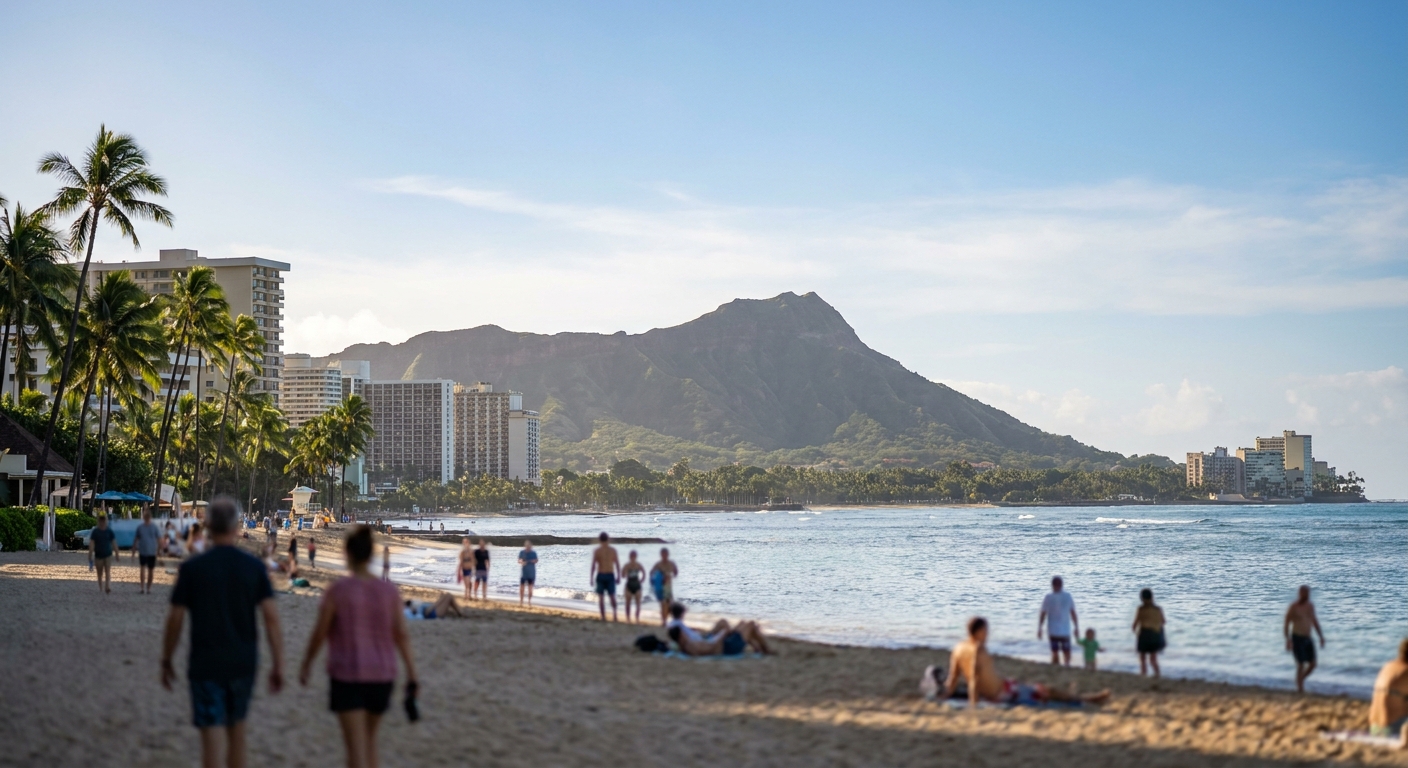
On a June morning in Waikiki, the surf instructors are already wading out with their longboards while the sun climbs over Diamond Head and the first plate lunches get packed for the beach. Plumeria drops on the sidewalks of Kalakaua Avenue, ukulele music drifts from open-air lounges, and the trade winds keep the heat friendly. June is warm, bright and mostly dry here, a month for long beach days, evening strolls and the summer rhythm of the island.
What is the weather like in Waikiki in June?
June in Waikiki is warm, sunny and very dry, with a steady trade-wind breeze that keeps the afternoons comfortable on the beach.
| Month | Average high (°F) | Average low (°F) | Rain days | Sea (°F) |
|---|---|---|---|---|
| May | 84.7 | 71.2 | 2.7 | 77.0 |
| June | 86.5 | 73.4 | 1.0 | 78.4 |
| July | 87.1 | 74.5 | 1.5 | 79.3 |
Waikiki’s spot on Oahu’s leeward side, where the sun shines, is the reason rainfall remains so scarce. A shower, when one comes, is a brief passing cloud that often leaves a rainbow over the Koolau mountains behind the hotels. Most days you can plan the beach, the hike and the dinner outside without a second thought, and the wetter windward coast around Kailua is a short drive away if you want to see where the clouds go.
Mornings are the softest hours, bright and breezy, perfect for a walk along the sand or a climb up Diamond Head before the sun gets strong. By midday the light is high and sharp, and the sun is strong enough that shade, a hat and a long pause in the afternoon make sense. Evenings stay warm enough for shorts and a light shirt, and tables on open terraces fill up as the sky turns orange.
Dress in breathable cotton, swimwear under everything, and keep a thin layer for air-conditioned restaurants. Daylight is long this month, so the sun sets late and the evenings feel generous.
Can you swim in Waikiki in June?
In June, yes, the ocean is warm enough for a long, comfortable swim, and most people remain in the water for as long as they please.
This is the south shore, and summer is its good season: swells arrive from the south and are usually gentle near the shore, which is why Waikiki is the place to learn to surf. The long, rolling waves off Canoes and Queens beaches suit beginners on big boards and outrigger canoe rides, while the sheltered corner by the Duke Kahanamoku Beach lagoon is often calm enough for families with small children. Snorkelers tend to head toward the rocky edges and the Kapahulu groin area, where reef fish are common, though conditions change from day to day.
Sea conditions are never a promise, so look at the beach signs and flags and ask the lifeguards before you go in. A calendar of likely box jellyfish arrival dates on Oahu’s south shore comes from the Waikiki Aquarium. They may show up whenever, so follow posted warnings and stay in areas watched by lifeguards. Bring mineral sunscreen, a rash guard and reef shoes if you plan to walk over rocks.
What to do in Waikiki in June
The big date of the month is Kamehameha Day on June 11, a state holiday honoring the king who united the islands. In Honolulu it is marked with a floral parade and a ceremony, and statues of the king are draped in long leis, especially the one downtown across from Iolani Palace. Waikiki feels the holiday too, with hula, music and families picnicking along the beach.
June also belongs to summer in the water. Surf lessons are at their friendliest, paddleboards glide across the flat stretches, and catamarans head out toward the sunset with mai tais and slack-key guitar. On land, the evening scene runs from free hula shows on the lawn to torch-lighting along the beachfront, and the street performers add to the festive mood.
Surfing, paddling and canoe rides
Surfing began here as a royal pastime, and the beach boys of Waikiki still teach it from stands along the sand. In June the south swell is often soft and long, so lessons lean toward standing up on your first or second try. Early morning is best, before the beach fills and the wind picks up.
If you prefer to stay seated, an outrigger canoe ride lets you catch the same waves with a local crew steering. Paddleboarding suits calmer days inside the lagoon edges. Everyone ends up soaked and smiling, so keep your phone in a dry bag and bring a towel.
Diamond Head at sunrise or late morning
The crater that anchors every Waikiki view is also a hike, a steady climb to a lookout over the coastline, the high-rises and the open Pacific. It is short but sunny, with little shade, so early start times matter in summer. Go for the sweep of the view, from the surfers at Waikiki to the lighthouse along the coast.
Diamond Head State Monument needs a reservation for non-residents, so book before you go as the rules require. Wear sturdy shoes, bring water and carry a hat. It suits most walkers who can manage stairs and a gradual slope.
Food, shave ice and sunset
Eating in Waikiki in June means plate lunches with kalua pork, fresh poke from a counter, loco moco for a late breakfast and shave ice in rainbow colors with a scoop of ice cream underneath. Fruit stands and market stalls fill with tropical bites, and the beachfront bars pour mai tais and fresh pineapple drinks as the sun drops.
For a quieter taste of the city, head to the Kapahulu side for small local restaurants, or to the farmers markets that run on certain days. Sunset is the daily gathering, when people spread out along the sand, and torches and hula add to the scene along Kuhio Beach.
A few other year-round stops fit nicely into a June stay: the Waikiki Aquarium, the Honolulu Zoo at the edge of the park, and the shops of Kalakaua Avenue. The International Market Place is good for a browse in the shade, and the beachfront walk is the easiest of all, with plenty of benches and trees.
If a rare shower does arrive, museums, aquarium visits and covered markets keep the day moving. Hotels often offer lei-making and ukulele lessons, which are a pleasant way to wait out a cloud.
A two-day itinerary for Waikiki in June
Day 1 starts early, with a swim or a surf lesson at Waikiki Beach while the water is smooth and the sun still gentle. After a late breakfast of acai bowls or loco moco, walk the length of Kalakaua Avenue and rest in the shade during the hottest hours. Sunrise comes early in June, and daylight lasts more than thirteen hours, so there is plenty of time for everything.
In the afternoon, visit the Waikiki Aquarium or relax in the sand, then take a paddleboard out as the wind softens. For evening, pick a beachfront restaurant for sunset, then stroll past the torches and hula along the water. A rain card here is simple: the aquarium and the shops are close at hand.
Day 2 begins with the Diamond Head hike at the earliest hour your reservation allows, before the crater heats up. Come back down for a big plate lunch or a poke bowl in Kapahulu, then spend the afternoon at the zoo or in the park nearby, where the trees give shade.
Late in the day, join a sunset catamaran sail or an outrigger canoe ride, and finish with dinner in the quieter streets behind the main strip. If the weather turns, a museum in Honolulu or a lei-making class keeps the plan intact.
Is Waikiki busy in June?
Yes, Waikiki is busy in June, because summer vacation brings families from the mainland and the beach stays full from morning to dusk.
School breaks put many families on the sand, and the weeks around Kamehameha Day feel especially lively. Restaurant tables at sunset go quickly, rental cars are in demand, and popular activities such as sailing trips and surf lessons fill earlier in the day. Booking far in advance is the surest way to land a room during the holiday weeks, while waiting a bit longer suits the month’s calmer stretches.
Some things need reservations regardless of the crowd, and Diamond Head is the main one for non-residents. Book it as soon as your dates are set, then add sunset dinners and boat trips. Early mornings stay calmer on the beach and on the trails, and the neighborhoods away from Kalakaua Avenue are noticeably quieter.
What to pack for Waikiki in June
Pack light, breathable clothes and plan around sun, salt water and a few evening outings.
- Mineral sunscreen and a wide-brimmed hat, since the midday sun is strong.
- A rash guard and swimsuits, for long days in the water.
- Reef shoes, for rocky entries and slippery spots.
- Sturdy sneakers, for the Diamond Head climb.
- A light layer, for air-conditioned restaurants and breezy sails.
- A refillable water bottle, for hot walks.
Good to know before you go
June is the start of the Central Pacific hurricane season, which runs from June 1 to November 30. Waikiki is easy to explore on foot, with buses and rideshares for longer trips, and a rental car is more useful for the rest of Oahu than for the beach strip itself. Reserve Diamond Head and any boat trips first.
| Fee | Amount | Who pays |
|---|---|---|
| State transient accommodations tax | 11% | Hotel guests |
| Oahu county tax | 3% | Hotel guests |
Waikiki in June vs May and July
Moving the trip earlier to May brings a slightly cooler sea and a bit more rain, though still very little. The beaches are somewhat less crowded, and rooms are easier to find before school lets out. Kamehameha Day and the summer festival mood have not yet arrived.
July is a touch warmer, with the sea at its pleasantly warm summer level and the beaches at their liveliest. Crowds grow with the peak of family vacations, and early booking becomes more important. The nights are warm and the evening scene is at full volume.
Choose May if you want a gentler pace and easier reservations. Choose June for the balance of warm water, long days and the Kamehameha Day celebrations. Pick July if the hottest sea and the liveliest crowds are what you came for.
Is June a good time to visit Waikiki?
Yes, June suits beach lovers, first-time surfers, families on summer break and anyone who wants dry weather with a warm sea.
It is less ideal for travelers who want empty beaches or the easiest hotel rates, and for those hoping for big winter waves, since those belong to the north shore in another season. If crowds trouble you, start your days early and keep sunset for the quieter corners.
On arrival, secure your Diamond Head reservation and look at the beach signs before your first swim. Then settle into the month’s rhythm: a morning surf, a shaded lunch and a sunset with the torches lit along the water, with Kamehameha Day leis hanging on the statues across Honolulu.
Sources
- NOAA NCEI, monthly normals 1991-2020, station USC00519397, checked September 8, 2026
- Open-Meteo Marine API, average 2015-2024, checked September 8, 2026
- sunrise-sunset.org, sunrise and sunset calculated for the 15th of the month, checked September 8, 2026
- Hawaii Department of Taxation, Announcement 2025-03 ; City and County of Honolulu, OTAT FAQ, checked September 25, 2026
- Waikiki Aquarium, Box Jellyfish Calendar, checked September 25, 2026
- NWS Honolulu / Central Pacific Hurricane Center, « 2026 Central Pacific Hurricane Season Outlook », weather.gov/hfo/hurricaneOutlook2026, checked September 24, 2026