
A soft gold light strikes the face of Diamond Head as February morning arrives in Waikiki, where the earliest surfers paddle out beyond the break at Canoes. Joggers pass along Kalakaua Avenue, the smell of coffee and fresh malasadas drifts from the side streets, and far offshore a humpback may slap its tail against the water. It is a green, mild, unhurried month on Oahu’s south shore, with winter swells on the horizon and sunshine on the sand.
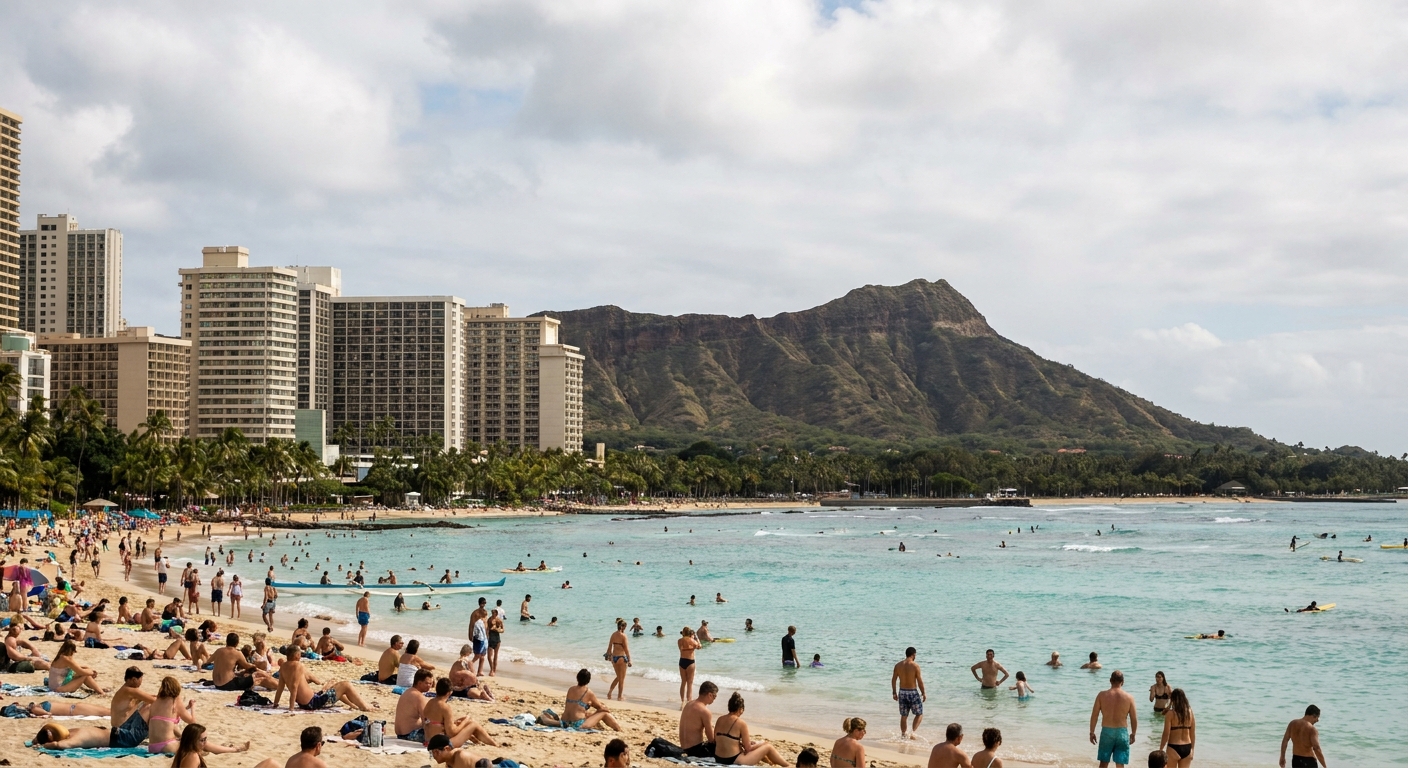
What is the weather like in Waikiki in February?
February in Waikiki brings warmth and plenty of sunshine, an occasional brief shower, reliable trade winds, and nights when you will want a light extra layer.
| Month | Average high (°F) | Average low (°F) | Rain days | Sea (°F) |
|---|---|---|---|---|
| January | 80.5 | 66.0 | 4.2 | 77.3 |
| February | 80.8 | 66.3 | 3.5 | 76.1 |
| March | 81.2 | 67.8 | 4.6 | 76.0 |
Days are comfortable for walking, swimming and sitting at a beachfront table without wilting. Mornings start fresh, and by midday the sun is strong enough that sunscreen and a hat matter, even when the trade winds keep the air feeling gentle. Daylight lasts a little over eleven hours in mid-month, so there is time for a full beach afternoon and still a sunset walk.
Because Waikiki lies on Oahu’s dry, leeward side, the rain that does arrive usually shows up as quick passing showers, driven in from the mountains behind the city, and they’re gone in minutes. Only a few days in the month bring any real rain, and a soaking day is rare. The wetter weather collects on the windward coast and in the Koolau mountains, which is worth remembering if a hike up a valley is on your list.
Evenings are mild enough for dinner outside, though a light sweater or a thin jacket feels good once the breeze picks up along the water. Shorts and sandals work for nearly everything. The sea is a little cooler than in summer but still pleasant for most people.
Can you swim in Waikiki in February?
Sure, you can swim for a long time in that warm water, but when the trade winds blow, a few minutes may be needed by some to get used to it.
February is winter on Oahu, and the big swells land mostly on the north shore. Waikiki faces south and is often sheltered from them, which is why surf schools and beginners gather here, at spots like Canoes and Queens.
Still, south swells and wind chop can come through at any time, so how the water looks on the day is what counts. Check the beach signs and flags, and follow what the lifeguards say before you go in.
Families often favor the protected stretches near the walls and groins, while snorkelers tend to look for calmer mornings before the wind rises. On dates the Waikiki Aquarium puts out in calendar form, box jellyfish may show up along Oahu’s south shore.
Any day can bring them, so swim where lifeguards are posted and follow what the warning signs say. Bring a rash guard or a light shirt if you tend to chill, and a reusable water bottle for the beach.
What to do in Waikiki in February
February is humpback whale season in Hawaiian waters, and Waikiki’s position on the south shore makes it a fine place to look for them. Whale-watching boats leave from the harbors nearby, and on a clear morning you can sometimes spot spouts from the sand or from the top of Diamond Head. Sightings are a chance, never a promise, but the odds are good in winter.
The month also has a festive feel. Chinese New Year often falls in February, and Honolulu’s Chinatown, a short ride from Waikiki, tends to fill with lion dances, firecrackers and market stalls. The Honolulu Festival and other community events show up around this time of year too, so look at local listings once you arrive. Valentine’s Day brings couples to the beachfront restaurants, and sunset tables fill early.
Diamond Head at first light
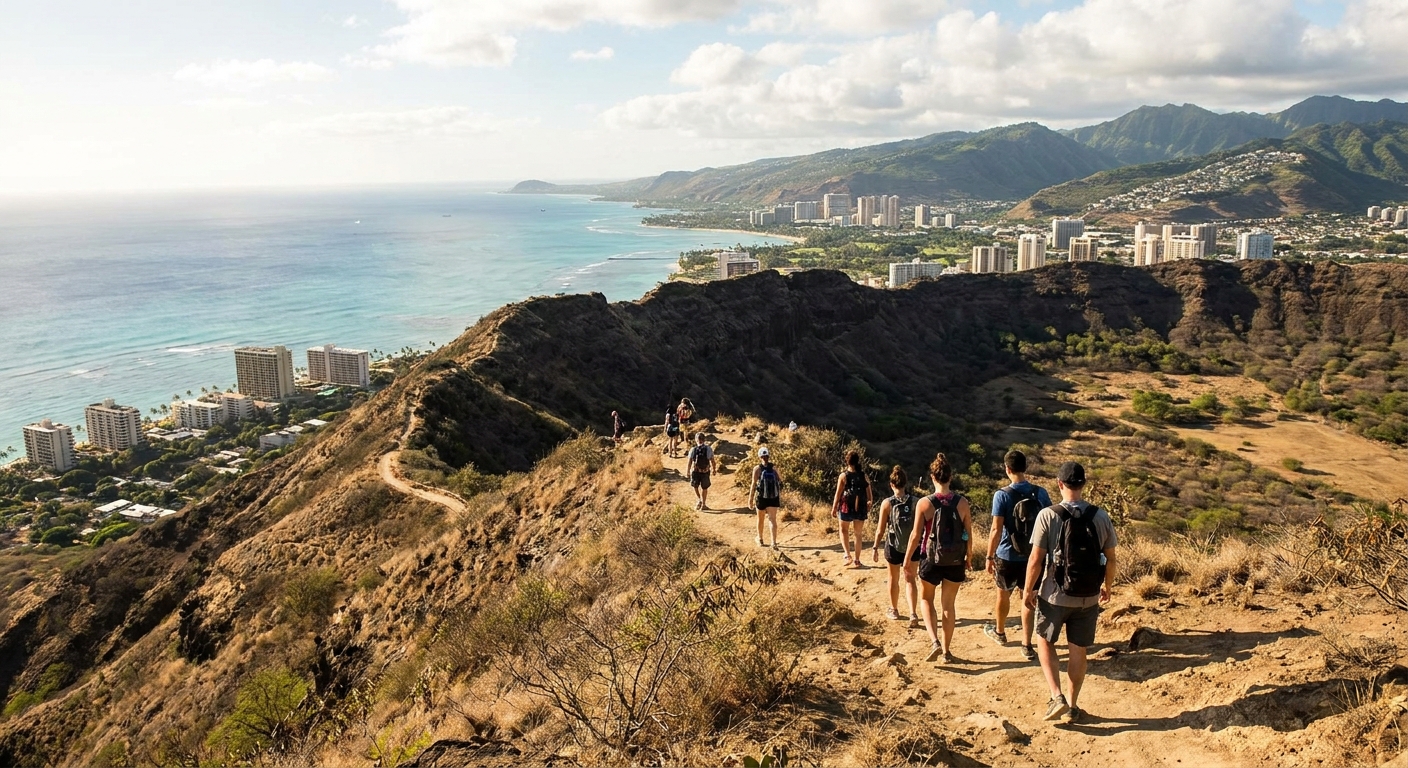
The crater rim is the classic morning outing, and February is a good month for it because the air is cooler and the grass on the slopes is green. The path climbs through a tunnel and up stairs to a lookout over Waikiki, the coast and the Pacific. It suits anyone who is comfortable on a steady uphill walk with some stairs, and it is not a good fit for very small children or anyone with trouble on steps.
Go early, when the light is soft and the sun is not yet hot on the exposed trail. Wear real shoes, carry water and keep a hat on. Reservations are required for Diamond Head State Monument, so sort that out before you leave your hotel.
Surf, paddle and sand
Waikiki is where modern surfing was popularized, and February is a pleasant time for a first lesson. The waves on the south shore are usually gentler than the north shore giants, and instructors work with beginners right in front of the hotels. Outrigger canoe rides and stand-up paddle rentals are also on offer along the beach.
If you would rather watch, take a seat on the Duke Kahanamoku statue side of the beach in the late morning. In winter, the best surfers head north, and some visitors rent a car or take a bus to Waimea Bay and the North Shore to see the giant swells. Treat those beaches as spectator spots, since the winter surf there is powerful and the sign and lifeguard rules come first.
Eating your way through the month
Food in Waikiki runs from plate lunches and poke bowls to shave ice and fine dining. Try a loco moco for a late breakfast, grab a poke bowl at a market counter, and finish an afternoon with shave ice topped with azuki beans or condensed milk. Malasadas, the warm Portuguese doughnuts, make a good snack on the walk back from the beach.
In the evening, open-air restaurants along the water serve fresh fish, and many hotels have live Hawaiian music and hula on their lawns. Free hula shows and torch-lighting ceremonies often take place on the beachfront in the late afternoon, which makes for an easy, cheerful end to the day.
If the sky turns gray, the Waikiki Aquarium, the Honolulu Museum of Art and the shops of the International Market Place keep you busy indoors. Bishop Museum, with its Hawaiian collections, is another good choice for a rainy afternoon.
A two-day itinerary for Waikiki in February
Day 1. Start at dawn on the sand, when the beach is quiet and the water is smooth for a walk or a swim. Have breakfast at a café on Kalakaua, then head to Diamond Head for the early climb before the sun climbs too. Come back for a late lunch, a poke bowl or a plate lunch eaten in a shady spot.
In the afternoon, take a surf lesson or a canoe ride, then rest on the beach as the light softens. For sunset, walk to the end of the Kuhio Beach promenade, where the torches are lit and hula often starts. Dinner can be at an oceanfront restaurant, with Hawaiian music in the background.
Day 2. Begin with a whale-watching cruise in the morning, since the sea tends to be easier before the wind builds. After you return, walk through the Waikiki Aquarium and the nearby park along the shore. Lunch can be a casual stop in the streets behind the beach.
In the afternoon, shop at the International Market Place or ride into Chinatown for a look at the markets and, around Chinese New Year, the celebrations. If rain arrives, move the plan indoors to the Honolulu Museum of Art. End with a dinner of fresh fish and a slow walk back along the lit promenade.
Is Waikiki busy in February?
Yes, Waikiki is lively in February, with winter visitors from the mainland filling the hotels and beaches, though it is calmer than the late-December holiday weeks.
Presidents’ Day weekend tends to bring a surge of domestic travelers, and Valentine’s Day makes dinner reservations harder to get. Conferences and sports events can also fill rooms in the middle of the week. Beaches get crowded in the afternoon, while early mornings stay peaceful. Outside those peaks, you can often find a table without much planning.
Book hotels and rental cars early for the holiday weekend, and a little later for the quiet weeks around it. Dinner tables at popular places are worth reserving ahead on Valentine’s Day. Diamond Head State Monument requires a reservation, so take care of it before you go.
What to pack for Waikiki in February
Pack light, with a layer for the evenings and a few things for the water and the trail.
- Swimsuits and a rash guard, for the sea and the sun.
- Mineral sunscreen and a hat, since the midday sun is strong.
- A light sweater or jacket for breezy evenings.
- Sturdy sneakers for the Diamond Head trail.
- A compact rain shell for passing showers.
- A reusable water bottle for hot walks.
Good to know before you go
February falls outside the Central Pacific hurricane season, which runs from June 1 to November 30. Winter does bring big surf to north shores, so keep beach plans on the south side flexible. Getting around Waikiki is easy on foot, and buses and rideshares connect it to the rest of Oahu. Hotel bills carry two taxes.
| Fee | Amount | Who pays |
|---|---|---|
| State transient accommodations tax | 11% | Hotel guests |
| Oahu county tax | 3% | Hotel guests |
Waikiki in February vs January and March
Moving earlier, to January, brings slightly warmer water and a little more rain. The holiday crowds thin out after the new year, and the whale season is in full swing. North shore surf is often at its biggest in these weeks, which draws spectators and surfers.
Moving later, to March, brings a touch more warmth and a bit more rain, with the sea about the same. Spring break travelers begin to arrive, so rooms and flights tilt toward busier. The whale season is winding down as the month goes on, and the winter swells ease.
If whales and a lively winter mood matter most, February and January are the better choices. If you prefer slightly warmer evenings and do not mind more visitors, March works. For a balance of dry days, calm crowds and winter atmosphere, February sits comfortably in the middle.
Is February a good time to visit Waikiki?
Yes, February suits travelers who want warm days, a green island and the chance to see whales without the crowds of the holidays or spring break.
It is a fine month for first-time visitors, couples, surfers and anyone who enjoys a mix of beach time and light hiking. It is less ideal for people who want a hot, still summer sea or who expect a guaranteed dry day. A few showers will pass through, and the water asks for a moment of courage.
On arrival, reserve your Diamond Head slot first, then choose a whale-watching morning. After that the days arrange themselves around the beach, the food and the sunsets. February in Waikiki is a month of golden mornings, humpback spouts on the horizon and hula under the torches at dusk.
Sources
- NOAA NCEI, monthly normals 1991-2020, station USC00519397, checked September 8, 2026
- Open-Meteo Marine API, average 2015-2024, checked September 8, 2026
- sunrise-sunset.org, sunrise and sunset calculated for the 15th of the month, checked September 8, 2026
- Hawaii Department of Taxation, Announcement 2025-03 ; City and County of Honolulu, OTAT FAQ, checked September 25, 2026
- Waikiki Aquarium, Box Jellyfish Calendar, checked September 25, 2026
- NWS Honolulu / Central Pacific Hurricane Center, « 2026 Central Pacific Hurricane Season Outlook », weather.gov/hfo/hurricaneOutlook2026, checked September 24, 2026