
Long before dawn, headlights wind up the switchbacks of Haleakala while the resort coasts still sleep, and by the time the sun clears the clouds the whole summit is glowing orange. Later the same day you can be barefoot on a crescent of golden sand, shave ice in hand, watching the sunset from a lanai. Maui is the island that blends volcano, rainforest and beach, and it suits couples, families and anyone who wants a real vacation with room for adventure.
Where is Maui and what is it like?
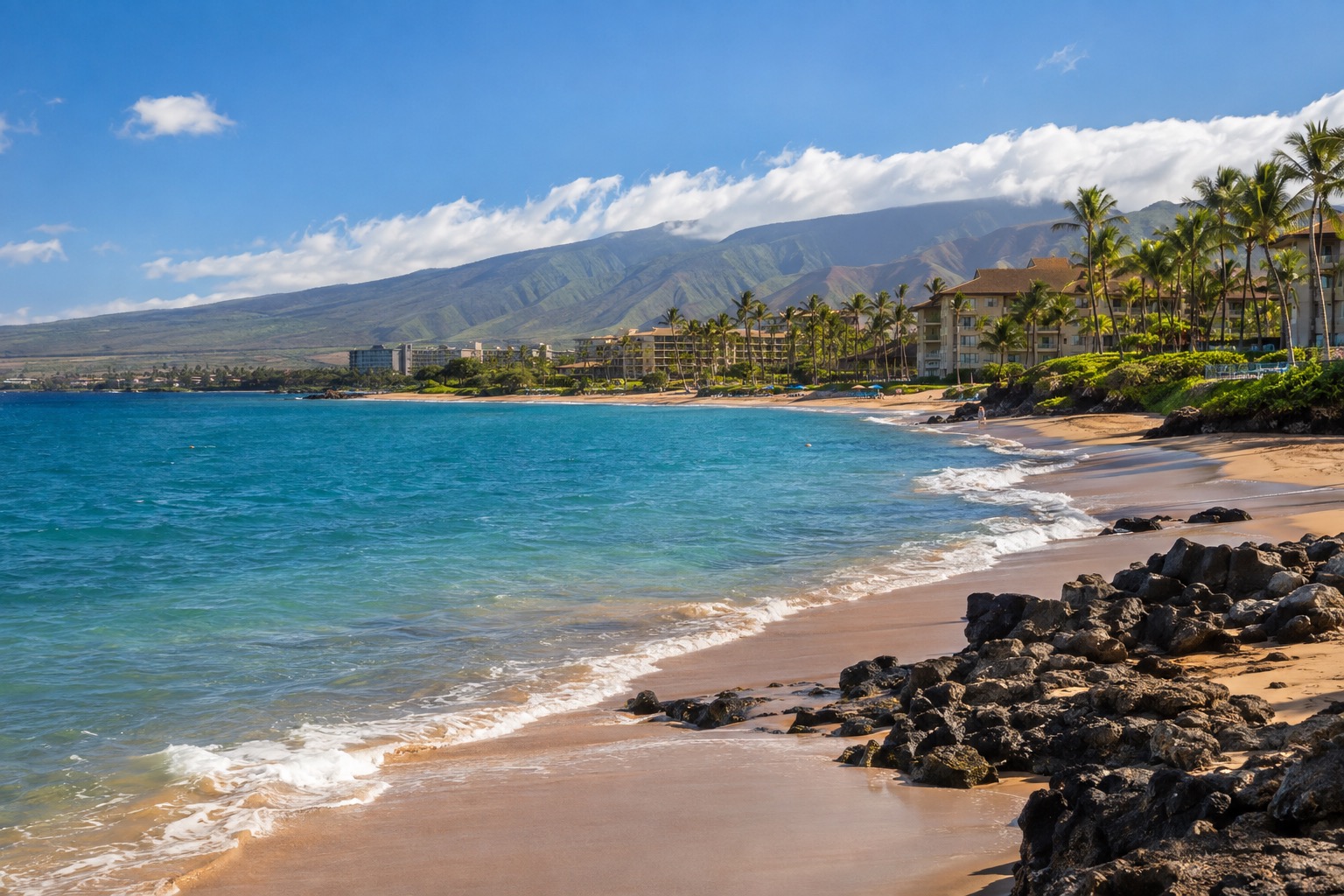
Maui is the second most visited island in Hawaii, a hill-and-valley island in the middle of the chain, with Molokai and Lanai just across the water. Two volcanoes are joined by a flat central isthmus, and Kahului, the airport town, sits on that neck of land. Haleakala rises over everything and shapes the weather, the views and the mood.
The resort coasts are on the dry, sunny leeward side. West Maui holds Kaanapali and Kapalua, and South Maui holds Kihei, Wailea and Makena. The windward east coast toward Hana is the opposite: green, wet, thick with ferns and waterfalls. Between them sit Upcountry ranch land, cool and breezy, and the old plantation town of Wailuku.
The pace is slower than Oahu and the crowds are thinner, though the popular beaches and the Hana road can feel busy at peak hours. Maui rewards people who like to be outdoors early and relax in the afternoon. If you want nightlife and big-city shopping, you may find the evenings quiet.
What is there to do in Maui?
Maui packs more variety into a short drive than most of its neighbors: a summit above the clouds, a rainforest highway, reef snorkeling and a historic valley. The big reasons to come each fill a day, and many travelers combine two or three of them.
Haleakala summit and sunrise
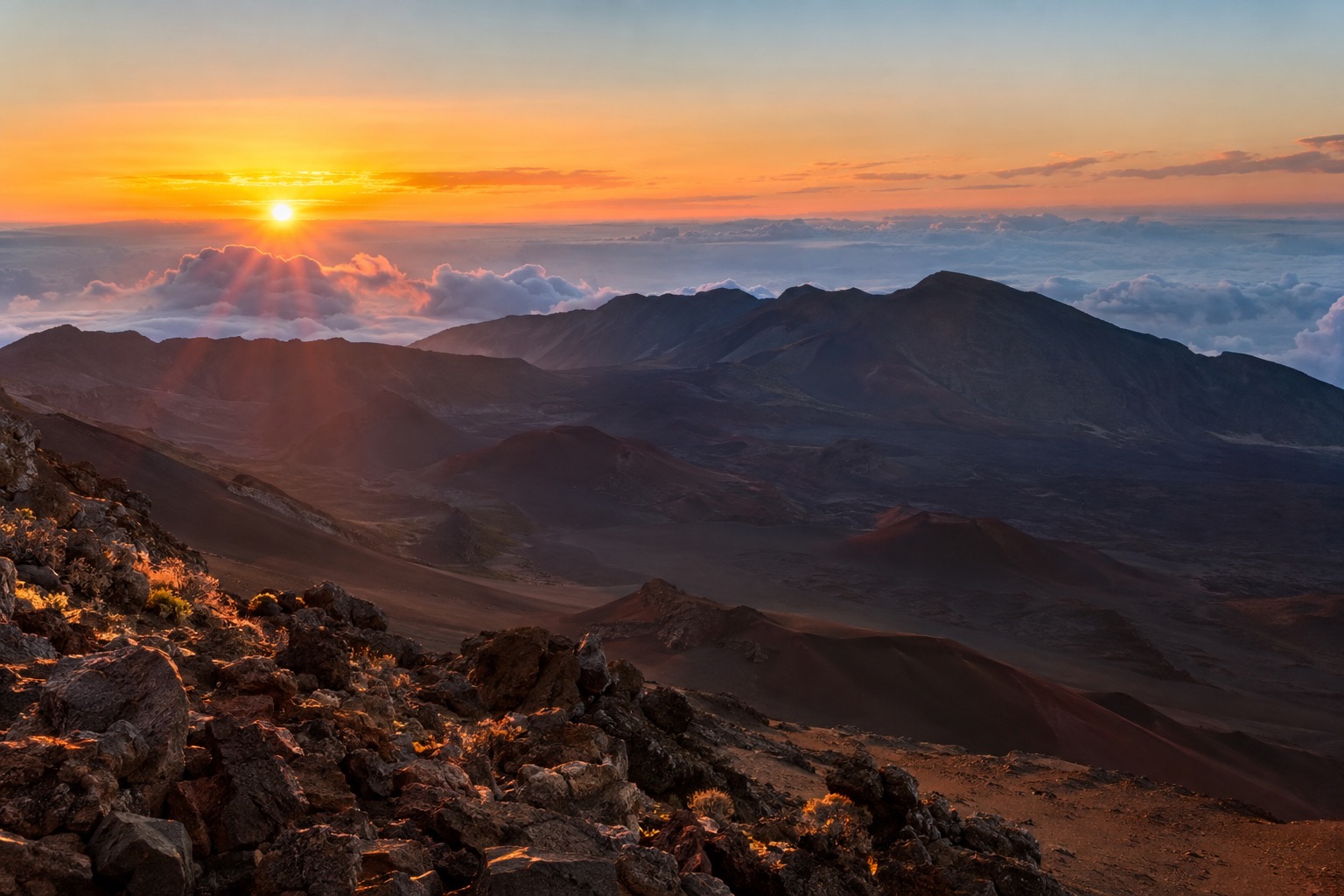
The summit of Haleakala, called Puuulaula, is the highest point on Maui. The landscape up there looks more like Mars than the tropics, with red and gray cinder and clouds drifting beneath your feet. Most people come for sunrise, and for that time a reservation is required for every vehicle. Sunset and stargazing are quieter alternatives.
The drive from Kahului takes the better part of two hours, so a sunrise visit means leaving in the middle of the night. It is far colder than the beach and often below freezing, so bring layers, and remember that neither gas nor food is sold in the park. Fill up the tank and pack snacks before you climb.
The Road to Hana
The Hana Highway is a slow ribbon of one-lane bridges, hairpin turns, waterfalls and roadside banana bread stands. It takes a good half day each way, and the drive is the point, so go early and stop often. It suits travelers who enjoy scenery over speed, and less so anyone who gets carsick.
Hana itself is a sleepy town with a couple of small shops and a historic hotel. Many visitors continue to the Kipahulu district of Haleakala National Park for the trail to Waimoku Falls and a look at the Pools of Oheo, which are closed to entry. Black sand at Waianapanapa State Park makes another favorite stop, and it needs a reserved time slot.
Beaches, snorkeling and the sea
Kaanapali is a long white-sand stretch where, at sunset, a cliff diver lights torches along Black Rock and leaps into the water. South Maui has a string of crescent beaches in Wailea, and Makena offers the wide, wild sweep of Big Beach, where the shore break can be very dangerous. Always check the lifeguard signs and flags before you go in.
For snorkeling, boats head out to Molokini, the half-moon rim of a sunken volcanic crater with clear water and plenty of fish. It is a protected marine preserve, so landing on the islet is not allowed. In winter, humpback whales cruise the channel between the islands. Pack a mineral sunscreen, which is the kind that is gentle on the reef.
Iao Valley and Wailuku
Iao Valley is a deep green cleft in the West Maui mountains, with the pinnacle of the Iao Needle rising from the valley floor. A short paved path leads to lookouts over the stream. The valley is also where Kamehameha I’s forces defeated the Maui army in a famous battle, so it carries real weight as a historic place.
It makes an easy, rainy-day-friendly half day, paired with a stroll through Wailuku’s old storefronts and local lunch spots. The weather is often misty and cool compared with the coast.
| Site | Open | Admission |
|---|---|---|
| Haleakala National Park | Sunrise reservation required from 3 a.m. to 7 a.m. | $30 per vehicle, valid three days for summit and Kipahulu; $1 sunrise reservation |
| Iao Valley State Monument | 7 a.m. to 6 p.m. | $5 entry and $10 parking; advance reservation required for out-of-state visitors |
| Waianapanapa State Park | 7 a.m. to 6 p.m. | $5 per person and $10 per vehicle for non-residents, with a chosen time slot |
How many days do you need in Maui?
A week is the sweet spot, though a long weekend gives a taste. With three or four days you can settle into one coast, spend a morning at Haleakala and see Iao Valley, with the rest of the time on the sand.
With more time, add the Road to Hana, a boat trip to Molokini and an evening on Front Street in Lahaina area. In winter, a whale-watching cruise fits easily into an open morning. A longer stay also leaves room for slow days in Upcountry, with its cool air and farm stands.
Where to stay in Maui
Kaanapali and Kapalua on the west side suit resort lovers and couples who want long beaches, golf and sunset views. Wailea and Makena in the south are polished and quiet, with calm crescent coves and large hotels. Kihei is the casual, budget-friendlier choice, with condos, cafés and a lively beach strip close to the airport.
Hana and the east side suit travelers who want to be away from it all, in a small town with a historic hotel and a state park with cabins and camping. Upcountry offers cooler nights and farm-country charm, handy for early starts at the volcano. Rebuilding continues in Lahaina, so check mauirecovers.org for current updates and stay off private property and out of fenced areas.
How do you get to Maui and get around?
Most visitors fly into Kahului Airport on the central isthmus, either directly from the mainland or by a short inter-island hop. From there Kihei and Wailea are roughly half an hour away, Lahaina, Kaanapali and Kapalua about 45 minutes to an hour, and Hana a few hours along the winding highway. Traffic can stretch these times.
A rental car is the usual way to see Maui, since distances are long and the best sights are scattered. There is no car ferry between the islands, so each island means its own rental. Maui Bus runs a couple of routes from the airport, and luggage is limited to one medium bag on board, so it works best for light travelers staying in town.
When is the best time to visit Maui?
April, May and early June are a good bet: warm, dry and generally less crowded than winter. September and October are also warm and often sunny, with some of the hottest days of the year, so beaches are most inviting then. Winter from December to March brings more showers, especially on the windward side, but it is also whale season, peaking in the first months of the year.
The busiest stretches are the winter holidays, spring break and the summer family weeks, when rooms and rental cars fill early. The Central Pacific hurricane season runs from June 1 to November 30. Big winter surf can make north and west shores rough, while south and west-facing beaches are often gentler.
Good to know before you go
There is no passport, visa or currency to worry about, and a few basic habits go a long way: dress for the cold on the summit, respect closed trails and sacred sites, and keep your distance from turtles, monk seals and whales. Stay more than 100 yards from humpbacks. Lodging and transit costs add up, and the main ones are here.
| Fee | Amount | Who pays |
|---|---|---|
| Hawaii state transient accommodations tax | 11% | Hotel and short-term rental guests |
| Maui County transient accommodations tax | 3% | Hotel and short-term rental guests |
| Maui Bus fare | $2.00 per boarding, $4.00 day pass | Bus riders |
Sources
- DBEDT, press release « Visitor Spending Increased in December 2025 », dbedt.hawaii.gov/blog/26-04, checked September 24, 2026
- Hawaii Visitors and Convention Bureau, map Driving Times from Kahului Airport (gohawaii.com/sites/default/files/maui_drive_map.pdf, edition 2010), checked September 25, 2026
- Hawaii DOT Airports, OGG, Maui Bus (airports.hawaii.gov/ogg/getting-to-from/ground-transportation/maui-bus), checked September 25, 2026
- County of Maui, Maui Bus Fixed Route Program (mauicounty.gov/609), , checked September 25, 2026
- NPS, Haleakala National Park, Fees & Passes (nps.gov/hale/planyourvisit/fees.htm), checked September 25, 2026
- NPS, Haleakala National Park, pages Fees & Passes and Sunrise (nps.gov/hale/planyourvisit/sunrise.htm), checked September 25, 2026
- NPS, pages Puuulaula (nps.gov/places/puuulaula.htm) and Summit District, checked September 25, 2026
- Hawaii DLNR, Division of State Parks, Iao Valley State Monument (dlnr.hawaii.gov/dsp/parks/maui), checked September 25, 2026
- Hawaii Tourism Authority, Go Hawaii, Hana (gohawaii.com/islands/maui/regions/east-maui/hana), checked September 25, 2026
- Hawaii DLNR, Division of State Parks, Waianapanapa State Park, checked September 25, 2026
- Hawaii DLNR, Division of Aquatic Resources, Maui – Molokini Shoal MLCD, checked September 25, 2026
- NOAA, Hawaiian Islands Humpback Whale National Marine Sanctuary, pages Responsible Recreation and About, checked September 25, 2026
- County of Maui, Mineral Only Sunscreen Maui County (mauicounty.gov/2483), relayed by Maui Now, September 20, 2022, checked September 25, 2026
- Hawaii Department of Taxation, Announcement 2025-03 ; County of Maui, TAT Announcement 2021-01 (mauicounty.gov/2537), checked September 25, 2026
- County of Maui, Office of Recovery, « Lahaina's Front Street scheduled to reopen on Aug. 1, 2026 » (mauicounty.gov newsflash 19055, mauirecovers.org), checked September 25, 2026
- Hawaii DLNR, Division of State Parks, Makena State Park (dlnr.hawaii.gov/dsp/parks/maui/makena-state-park), checked September 25, 2026
- Hawaii Tourism Authority, Go Hawaii, Kaanapali Beach (gohawaii.com/islands/maui/regions/west-maui/kaanapali-beach), checked September 25, 2026
- Hawaii Tourism Authority, Go Hawaii, Wailea (gohawaii.com/islands/maui/regions/south-maui/wailea), checked September 25, 2026
- NPS, Haleakala National Park, pages Kipahulu District and Fees & Passes, checked September 25, 2026
- NWS Honolulu / Central Pacific Hurricane Center, « 2026 Central Pacific Hurricane Season Outlook », weather.gov/hfo/hurricaneOutlook2026, checked September 24, 2026
- NOAA NCEI, monthly normals 1991-2020, station USW00022516, checked September 8, 2026
All our pages
When to go
- Best Time to Visit Maui: Weather by Month, Whale Season, Crowds and Beaches
- Maui in January: Humpback Whales, Weather and What to Do
- Maui in February: Humpback Whales, Weather and What to Do
- Maui in March: Humpback Whales, Weather and What to Do
- Maui in April: Late-Season Whales, Warm Beaches and Easy Days
- Maui in May: Weather, Swimming, Lei Day and a Two-Day Plan
- Maui in June: Weather, Sea Conditions and What to Do
- Maui in July: Weather, Ocean Conditions and What to Do
- Maui in August: Weather, Beaches, Things to Do and a Two-Day Plan
- Maui in September: Weather, Warm Seas, Quiet Beaches and What to Do
- Maui in October: Weather, Warm Seas and What to Do
- Maui in November: Weather, Early Whale Season and What to Do
- Maui in December: Whale Season, Weather, Swimming and What to Do
Things to do
- Things to Do in Maui: Haleakala Sunrise, Road to Hana, Beaches and Whale Season
- Day Trips from Maui: Haleakala Sunrise, the Road to Hana, Iao Valley and Molokini