
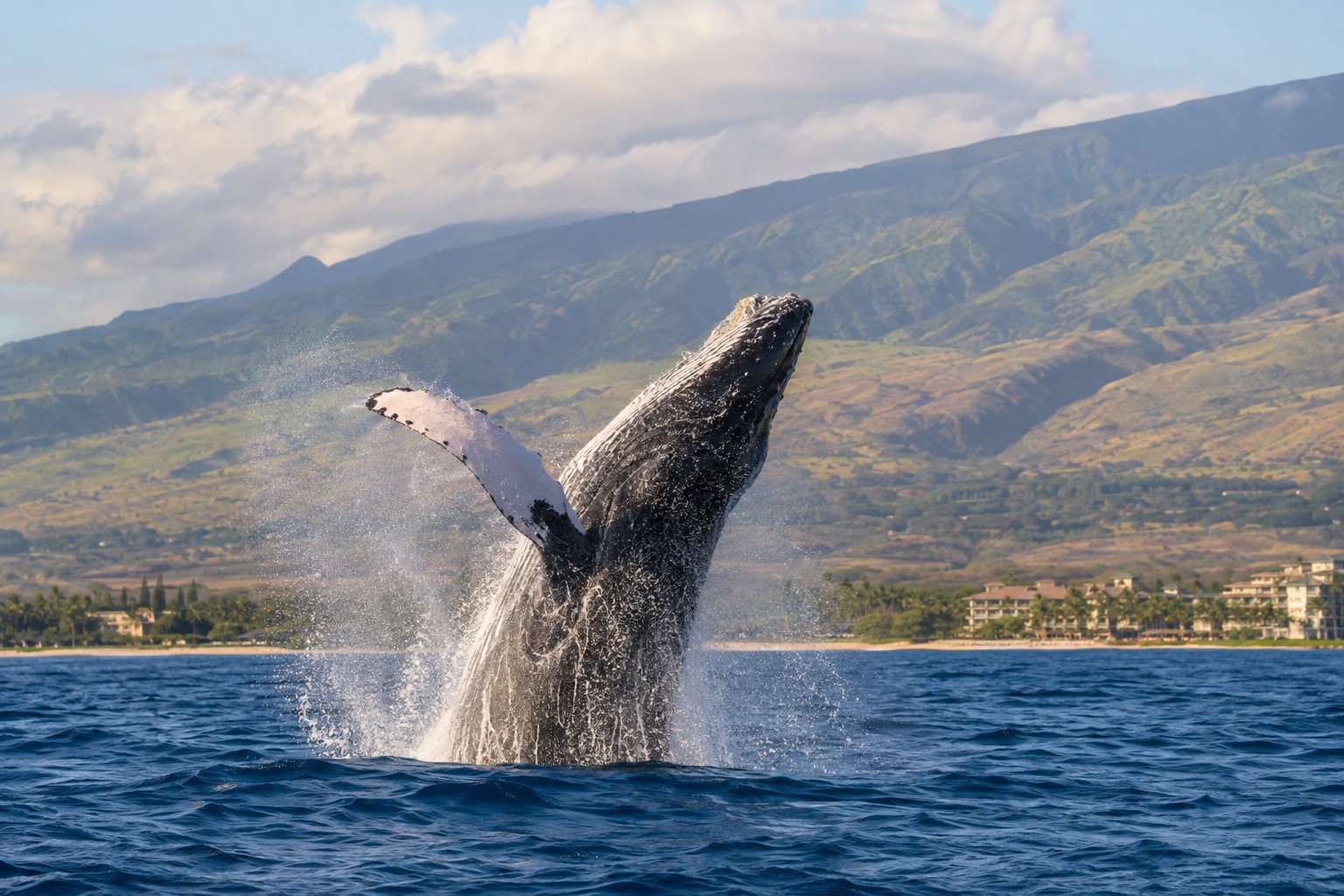
In November, the trade winds still rustle the dry golden grass on the slopes above Kihei, and the first humpback whales begin to slip into the channel between Maui and Lanai. Mornings on the beach are soft and bright, the summer crowds have thinned, and the holiday rush has not yet arrived. It is a gentle month on the island for beach days, drives to the green side and the start of whale watching.
What is the weather like in Maui in November?
November in Maui is warm and mostly sunny, a little softer and a little wetter than October, with the first hints of the winter season arriving by the end of the month.
| Month | Average high (°F) | Average low (°F) | Rain days | Sea (°F) |
|---|---|---|---|---|
| October | 88.7 | 70.1 | 1.6 | 79.5 |
| November | 85.8 | 68.4 | 3.0 | 78.6 |
| December | 83.3 | 65.9 | 4.2 | 78.1 |
Afternoons on the dry, leeward coast around Wailea, Kihei and Kaanapali are warm enough for a long beach day, and the evenings are mild enough to eat outside in a T-shirt. Up in the mountains the story changes. Upcountry towns such as Makawao and Kula feel cool by dusk, and the summit of Haleakala is cold and often windy, so a layer is useful if you drive up.
Rain comes in short passing showers rather than gray days. It falls mostly on the windward side, the green stretch around Hana, Haiku and the slopes facing the trade winds, and it often arrives in the night or early morning, then clears to blue. The dry coast sees only a few of these showers, usually a brief shower with a rainbow behind it. Plenty of days pass without a drop on the beach.
Compared with summer, daylight shrinks to roughly eleven hours by mid month, which means the sun sets early behind Lanai and the West Maui Mountains. The light is lovely for photographs, low and golden by late afternoon. The sea stays pleasantly warm, only a shade cooler than in October.
Can you swim in Maui in November?
Absolutely, the water remains comfortable for an extended snorkel or swim, and the majority of folks go in without a wetsuit.
As winter approaches, the surf starts to shift to the north-facing shores. Beaches such as Honolua Bay and the coast near Paia can see bigger swells, and this is when surfers begin to watch the forecasts.
The south and west-facing beaches of Wailea, Makena, Kihei and Kaanapali are usually the gentler choice in this season, with water that is often calm in the morning before the afternoon breeze picks up. No one can predict exactly how any beach will act from one day to the next, so check the flags and the signs, and speak with the lifeguard before entering the water.
Snorkelers do well in the early hours, when the water is usually clearer and the wind has not yet started. Families with small children tend to prefer the wide sandy beaches on the south side, while strong swimmers can head to the north and east for waves. Bring a rash guard for long days in the sun, and keep your distance from sea turtles, monk seals and the reef, which is alive and easily damaged.
What to do in Maui in November
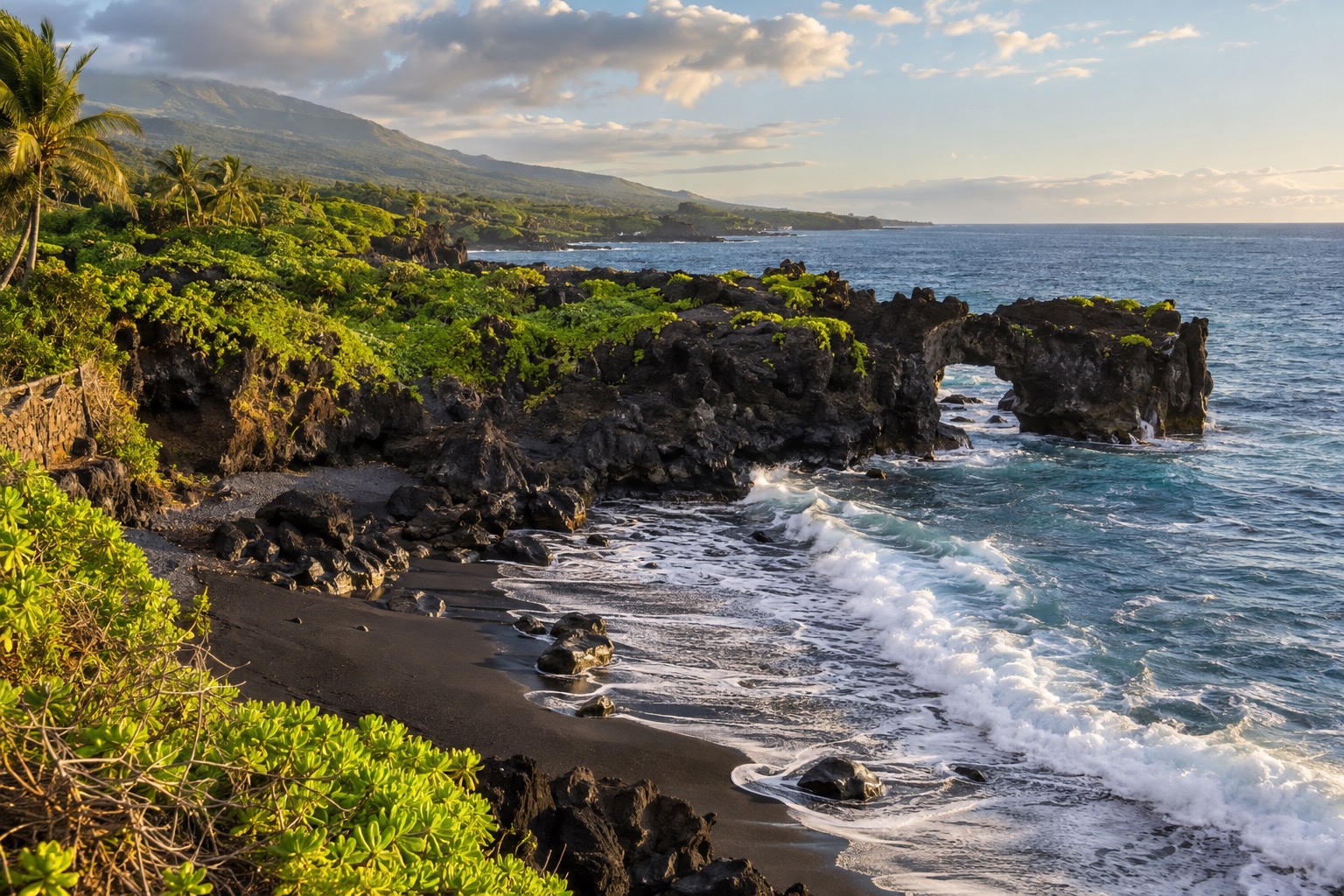
November on Maui is a month of beginnings. The whale season opens, the winter surf starts to rise on the north shore, and the island settles into its cooler, greener months.
The mood is relaxed, with locals reclaiming their favorite beaches and the farmers’ stands filling with papaya, bananas, avocados and citrus. Thanksgiving gives the end of the month a family feel, and restaurants across the island put out special menus, often with a local twist such as kalua turkey or haupia pie.
Humpback whales return to the channel
November marks a soft start to the season, since humpback whales typically appear in Hawaii between November and April and are most numerous from January through March. A national marine sanctuary takes in the waters separating Maui, Lanai, Molokai and Kahoolawe, and whales travel to this protected channel to mate and calve. In early weeks you may spot a blow or a tail from the shore, most often from the coast near Lahaina and Wailea, and the lookouts along the road to Maalaea are good places to scan the horizon.
Whale-watching boats leave from Maalaea and Kaanapali, and mornings are usually the calmest on the water. Sightings are a chance, not a promise, and numbers build as winter deepens. Whether you are on a boat or a kayak, stay more than 100 yards away from the whales. A pair of binoculars and a seat on a hotel lanai with a coffee is also a very good way to look.
Beach days on the south and west coasts
Wailea and Makena are the classic November beach days. Polo Beach and Wailea Beach are wide and golden, with a walking path along the shore that links the resorts, and Big Beach at Makena is a long open stretch that suits walkers, though its shore break can be strong. Little Beach, just beyond, is popular at sunset, and in the afternoons you will often see local families settling in with coolers and folding chairs.
Farther north, Kaanapali and Kapalua offer calmer coves, with black lava rock at Black Rock for snorkeling in the morning, when the water is usually easier. Between swims, a shave ice from a roadside stand or a plate of fish tacos from a food truck in Kihei makes a satisfying lunch. Afternoons are a good time for a long nap under a kiawe tree.
The green side: Paia, Hana and the north shore
The north shore around Paia is where the winter swell announces itself. Hookipa Beach is a famous spot for windsurfers and surfers, and in November you can watch from the lookout above the beach as sails and boards cut across the water. Paia itself is a small town of surf shops, galleries and cafes, good for a slow breakfast of banana pancakes or a fresh poke bowl.
The road to Hana winds along the wet windward coast through bamboo, ferns, waterfalls and one-lane bridges, and it is at its greenest after rain. Plan to start early, stop at the banana bread stands and fruit stalls, and expect the occasional shower. This is a drive for people who enjoy the journey rather than the destination, and for anyone who likes lush scenery, though it is not ideal for those who dislike curves.
Upcountry farms and Haleakala
Cool, breezy and quiet, Upcountry Maui is the right place on a day when you want a break from the sun. Kula has flower farms and vegetable farms, Ulupalakua has a ranch and a winery, and Makawao is a former paniolo town with bakeries, shops and a cowboy history that still shows in its wooden storefronts. A fresh malasada or a warm loaf of bread is a good reason to stop.
The slopes of Haleakala rise above it all, and the summit is cold, windy and sometimes in cloud, so dress warmly if you drive up. The crater landscape of red and gray cinders looks like another planet, and at night the stars are bright when the sky is clear. It is the right outing for those who like quiet, big views and cool air, and a good counterweight to a week of beaches.
A two-day itinerary for Maui in November
Day 1 belongs to the dry south and west coasts. Start early with coffee and a pastry, then head to the water while the sea is at its calmest, snorkeling along the lava rocks at Kaanapali or on the shore at Wailea. By late morning the sun climbs and the breeze begins, so move to the shade for lunch at a beachfront cafe or a plate lunch from a food truck in Kihei.
In the afternoon, walk the coastal path at Wailea, then drive to Makena for the long beach and a late swim if the waves look gentle. Sunset comes early in November, so find a spot facing west by late afternoon, where the sun sinks behind Lanai and the sky turns orange.
Dinner can be fresh fish at a restaurant in Wailea or Kihei, with a table outside if the evening is mild. If it rains, the shops and galleries of Wailea or a cooking class are good indoor options.
Day 2 turns to the north and the hills. Leave early for Paia, have breakfast in town, and watch the surfers and windsurfers at Hookipa from the lookout. Then take the drive up through Makawao and Kula, where the air is cooler and the views stretch down to the coast. Stop for lunch at a farm stand or a small cafe, and wander through the shops and flower farms.
If the day stays clear, continue up the mountain for views of the crater before the light fades and the temperature drops. If clouds roll in, stay Upcountry and visit the winery at Ulupalakua, which makes a good rain card, with a tasting and a long lunch under a roof. Return to the coast for a casual dinner of poke, noodles or a burger, and an early night.
Is Maui busy in November?
Maui is moderately busy in November, noticeably quieter than summer and the winter holidays, with a rush that arrives only around Thanksgiving week.
Early in the month, beaches have room to spread out, restaurants can often seat you without a long wait, and the roads, including the one to Hana, are less crowded than in peak season. Many visitors are couples, retirees and families on short trips, along with the first of the winter regulars who come for the whales and the warm weather while the mainland cools down. Conferences and some business travel fill resorts on certain weekdays.
The week of Thanksgiving is different. Families travel, hotels and condos fill up, and rental cars can get scarce, so book rooms and a car early for those dates and for the start of December.
For the quiet first weeks, you can plan later and have more choice, though popular restaurants and whale-watching boats are still worth reserving a few days ahead. Hawaii residents also travel between the islands on the holiday weekend, which adds to the feel of a busy week. If you plan to visit a park, a trail or a boat trip that requires a reservation, check the official notices for the current rules before you go, as these change and can fill quickly in busy weeks.
What to pack for Maui in November
Pack for warm beach days with a few layers for the mountains and the occasional shower.
- Pack a light rain jacket for the road to Hana and the windward side, where rain showers move through.
- A warm layer or fleece, because Upcountry evenings and the summit of Haleakala are cold.
- Mineral sunscreen and a hat, since the sun is strong even on cooler days.
- A rash guard and snorkel gear, for long mornings in the water.
- Sturdy sandals or shoes with grip, for lava rock, wet trails and waterfalls.
- Binoculars, for early whale sightings from the shore.
Good to know before you go
The Central Pacific hurricane season runs from June 1 to November 30, so November is its final month, and it is worth watching the forecast as you would in any island destination. Thanksgiving week is the busiest time on the roads and at the airport, so give yourself extra time. The simplest way to get to the beaches, the north shore and Upcountry is with a rental car, and daylight is the best time to drive the coastal roads, since that is also when the views look their finest.
Hotel stays on Maui carry taxes that are added to the room rate.
| Fee | Amount | Who pays |
|---|---|---|
| Hawaii state transient accommodations tax | 11% | Guests staying in hotels and other lodging on Maui |
| Maui County transient accommodations tax | 3% | Guests staying in hotels and other lodging on Maui |
Maui in November vs October and December
Going a month earlier brings the last of the summer feel. October is a touch hotter and drier, the sea is at its warmest, and the beaches are generally calmer, but the whales have not yet arrived, and you miss the first signs of the winter swell. It suits swimmers and snorkelers who care more about water than wildlife, and anyone who wants the most reliable sunshine.
Going a month later puts you in the winter season. December is cooler and wetter, with more showers on the green side, and the north shore surf grows large. Whale sightings become more frequent, the island lights up with holiday decorations, and the crowds and rates rise sharply around Christmas and New Year’s. It suits people who want whales, festive lights and a winter escape, and who can book early.
November sits between the two. Travelers who want a quiet beach week with warm water and the first whales should stay with it, especially the first half of the month. Those who want guaranteed heat and calm seas should look at October, while whale lovers and families on holiday breaks might shift toward December.
Is November a good time to visit Maui?
November is indeed a great month to be on Maui for couples, families, beach lovers and anyone who likes a laid-back island where the water holds a few surprises.
It suits people who want warm days, a sea that is still inviting and a calmer pace than summer or the winter holidays. It is also a good choice for those who like to mix beach time with drives to the green coast and the cool hills. Travelers who need dependable sun every single day, or who plan to visit during Thanksgiving week, should plan more carefully and book early.
On arrival, spend the first morning on a south-side beach, where the water is usually gentlest, and let the trade winds settle your pace. Then pick a clear day for the mountains and the north shore. A distant spout against the light is a sight you can see throughout the winter whale season.
Sources
- NOAA NCEI, monthly normals 1991-2020, station USW00022516, checked September 8, 2026
- Open-Meteo Marine API, average 2015-2024, checked September 8, 2026
- sunrise-sunset.org, sunrise and sunset calculated for the 15th of the month, checked September 8, 2026
- NOAA, Hawaiian Islands Humpback Whale National Marine Sanctuary, pages Responsible Recreation and About, checked September 25, 2026
- Hawaii Department of Taxation, Announcement 2025-03 ; County of Maui, TAT Announcement 2021-01 (mauicounty.gov/2537), checked September 25, 2026
- NWS Honolulu / Central Pacific Hurricane Center, « 2026 Central Pacific Hurricane Season Outlook », weather.gov/hfo/hurricaneOutlook2026, checked September 24, 2026