
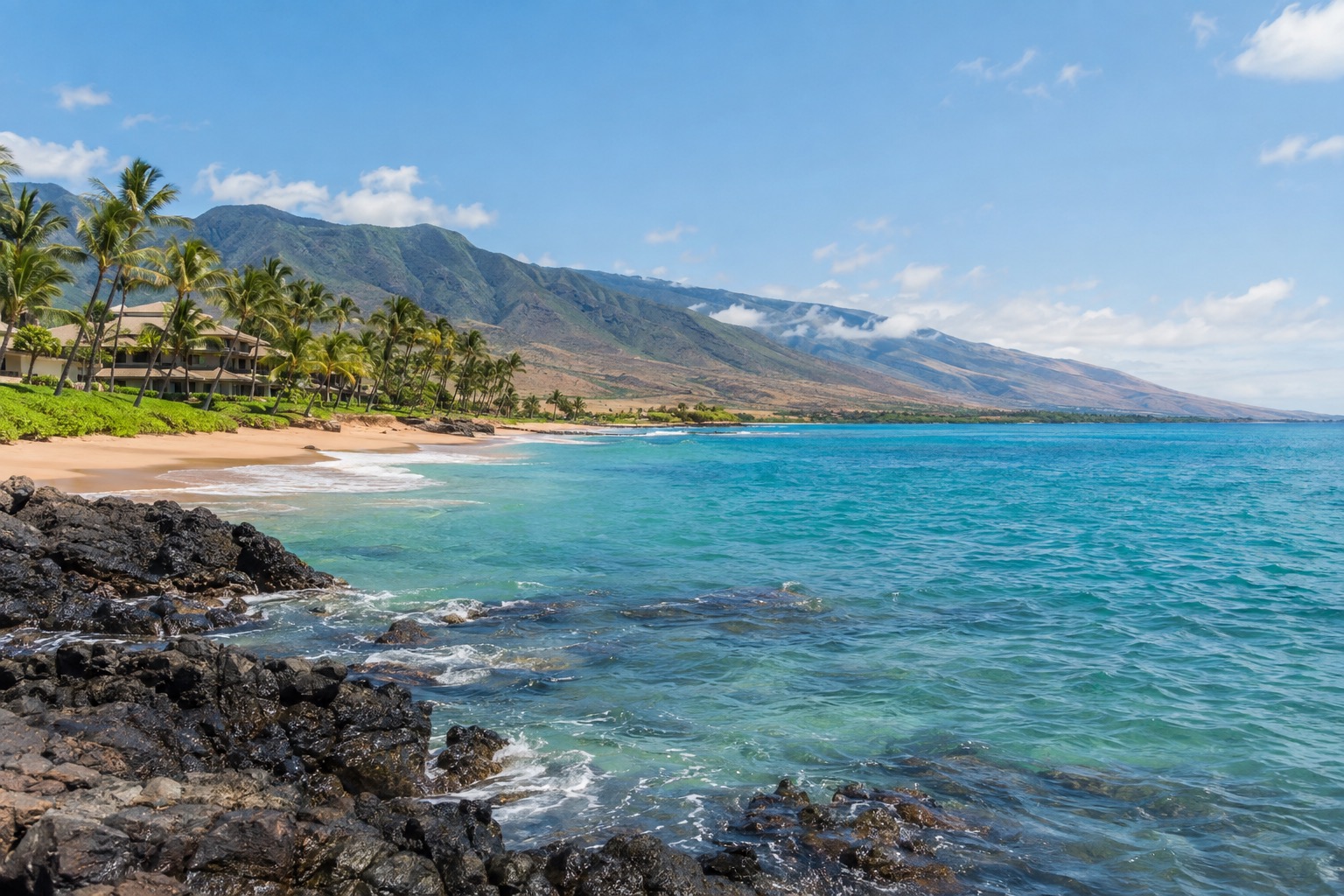
On a September morning in Maui, the beach in Wailea is nearly empty at eight o’clock, a few early swimmers float past the lava rocks, and the smell of coffee and sunscreen drifts from the walking path. The summer family rush has gone home with the start of school, the trade winds blow softly, and the sea has had months to warm up. This is Maui for travelers who want hot beach days, open tables and an island that feels like it is exhaling.
What is the weather like in Maui in September?
Hot, sunny and dry on most of the island, with a rain shower being the exception rather than the rule. The table puts September next to the months on either side.
| Month | Average high (°F) | Average low (°F) | Rain days | Sea (°F) |
|---|---|---|---|---|
| August | 89.9 | 72.3 | 1.3 | 79.3 |
| September | 90.0 | 71.2 | 1.0 | 79.8 |
| October | 88.7 | 70.1 | 1.6 | 79.5 |
What this means on the ground is simple. Mornings start warm and bright, with the sun already strong by nine, so the beach, the snorkel mask and the sunscreen come first. By early afternoon the leeward coast (Kihei, Wailea, Kaanapali) is at its hottest, which is the hour for a long lunch in the shade, a pool, or a drive up into the cooler hills.
Rain, when it comes, is a short passing shower that drifts in on the trade winds and is gone before you finish your coffee. Most of it lands on the windward side, near Hana, Haiku and the mountain’s slopes, plus the upcountry heights in the afternoon. The sunny south and west shores often stay dry for days at a time.
Most September evenings let you have dinner outside in a T-shirt, but bring something light for when the breeze off the water picks up. The light turns gold early and the sunsets over Lanai and Molokai are long and slow. Rooms with air conditioning or a good fan are welcome at night, since the air stays soft rather than cool.
Can you swim in Maui in September?
Because the sea is warm, you can stay in it a long while with no wetsuit, and for most people snorkeling in a regular swimsuit feels just fine. The water holds the heat of the summer, so getting in feels like a pleasure rather than a decision.
Conditions depend on the shore. In late summer the south and west coasts can see swells coming up from the Southern Hemisphere, which sometimes brings bigger waves and a stronger shore break to south-facing beaches, while the north shore is usually quieter than in winter.
Wailea, Kihei and Kaanapali are the beaches most visitors choose. Mornings are often the calmest hours, before the wind picks up, and that is also when the reef is clearest for a mask and fins.
On the south side, the waves are gentler and better suited to learning for surfers, while families usually prefer those long, sandy stretches that have lifeguard towers. Nervous swimmers should stay close to shore and ask the lifeguard how the day looks.
The flags and beach signs decide where it is wise to go in, whatever the water looks like from the sand. Bring a rash guard for long snorkeling sessions, and use only mineral sunscreen, which is the only kind sold in the county without a prescription.
What to do in Maui in September
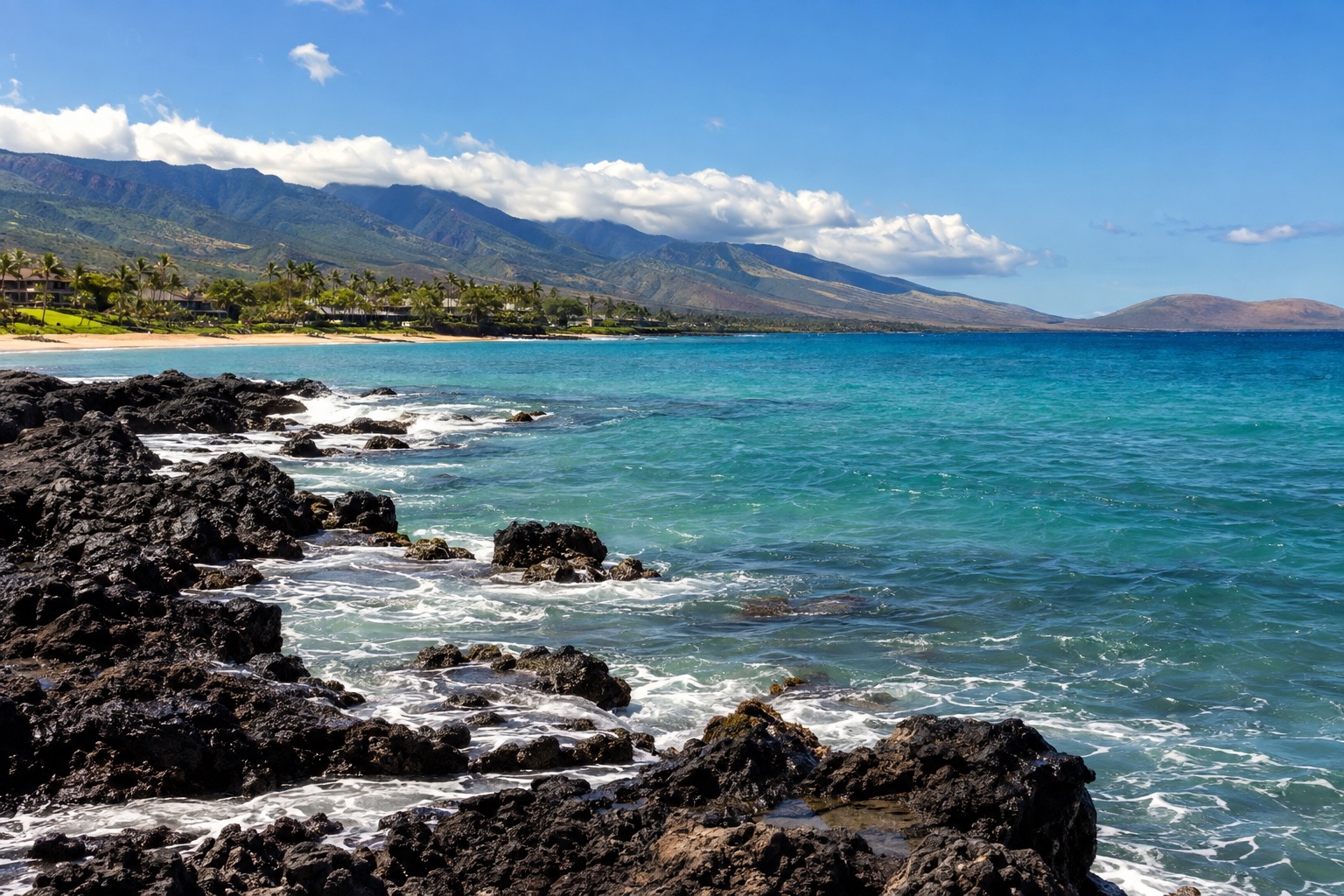
September has no giant festival that takes over the island, and that is part of its charm. Instead, the month belongs to the sea, the farms and the slow rhythm of a place between seasons. Beach mornings, a drive through green country, a plate lunch eaten on a picnic table, and an evening with a view are the backbone of a good week.
Local life shows up in small places. Farm stands sell pineapple and papaya, Upcountry cafés pour Maui-grown coffee, and shave ice stands do steady business in the afternoon heat. Poke counters in Kihei and Kahului are a fast, good lunch to eat on the sand. The Labor Day weekend at the start of the month brings local families to the beaches, and then the pace drops.
The road to Hana
Almost everyone wants to take this curvy route beside the windward shore, home to single-lane bridges, falls that show up past a curve, banana bread stalls and coves of black sand. It starts at Paia, a surf town with good breakfast spots, and passes through rainforest where the air smells of wet earth and ginger.
September works well for this since rain comes and goes quickly and the falls keep flowing. Leave early, take your time, and plan to turn it into a full day, with swimsuit and towel in the car for a quick dip when a pool looks inviting and the signs say it is fine. The windward side is the wet side, so a light rain jacket earns its space.
It suits patient travelers who like to stop often. Drivers who get carsick or dislike narrow roads may prefer a different day, and it is best to start with a full tank and a few snacks, since the stops are small and the stretches between them are long.
Snorkeling the south and west coasts
On the leeward side the water is warm, the mornings are quiet and the reefs and lava rock points are alive with fish. Makena, Wailea and the coves along Kaanapali are the stretches visitors know best. You may see parrotfish, butterflyfish and, with some luck, a green sea turtle gliding by, though wildlife is never a promise.
Go in the morning, when the wind is lightest and the visibility tends to be best. Keep your hands and feet off the reef, and keep a respectful distance from turtles and any monk seal resting on the sand, as both are protected. A boat trip to Molokini crater is another way to reach clear water if you like to snorkel from a deck.
This is a good fit for families with older kids, couples and first-time snorkelers who like calm hours. If the surf is up at a beach, the lifeguard will say so, and there is usually a gentler cove nearby.
Upcountry farms and Iao Valley
When the beach heat builds, the drive up to Kula and Makawao feels like a change of climate. The air is cooler, the hills are green, and there are lavender fields, protea farms, ranch towns and cafés with a view back down to the coast. It is an easy half day, good for a long lunch and a stroll.
Iao Valley, near Wailuku, is a deep green gorge under the West Maui mountains, with a short paved path to a lookout over the Iao Needle. Clouds gather early in the afternoon, so a morning visit gives the clearest view. It is also the best rainy-day outing, since the valley is lovely under a soft gray sky. Wear shoes with grip, since the paths can be damp.
Haleakala’s summit is much colder than the beaches, so anyone heading up should bring a warm jacket even on a hot day below. Oceanside, evening is the time for a mai tai on a terrace, a luau under the stars, or a walk along a quiet beach as the sky turns orange.
A two-day itinerary for Maui in September
Day 1 belongs to the leeward coast. Start at the beach in Wailea or Makena by eight, when the water is calm and the sand is nearly empty, and snorkel along the rocks before the sun climbs. Have a late breakfast in Kihei, then rest in the shade or by a pool during the hottest hours, which is the smart way to deal with a September sun.
In the afternoon, once the light softens, walk the shoreline path in Wailea or browse the shops and galleries nearby. Eat poke or fish tacos at an easygoing spot near the beach, then settle in for sunset. Since daylight lasts just over twelve hours, the night arrives at a convenient time for dinner once the show ends.
Rain card: if a shower rolls in, spend the morning in a museum, a coffee farm tasting room or a spa, and go back to the beach once the clouds break, which is usually quickly. Day 2 heads north and up the hill. Begin in Paia with a coffee and a pastry, then continue to the Upcountry for a farm stop in Kula, a walk through Makawao and a late lunch at a ranch-town café with a view. The air is cooler there, and the heat of the shore is easy to forget.
Come down in the afternoon and visit Iao Valley before the clouds thicken, or take a slow wander through Wailuku’s old streets with their small shops and bakeries. Finish at Hookipa, where windsurfers and surfers play at the end of the day and turtles sometimes rest on the sand. Dinner in Paia, with open windows and a warm breeze, closes the day.
If it rains, the Upcountry is the place to be, with covered cafés, craft shops and a distillery or two to wait out a shower. Paia’s boutiques and cafés are also good cover while the weather moves through.
Is Maui busy in September?
No, it is one of the calmer stretches of the year, after the summer family weeks and before the winter holiday rush. Beaches have room, trails are quieter and restaurants are easier to get into, especially on weeknights.
The first weekend, around Labor Day, still brings a crowd of mainland visitors and local families, so it is the one stretch that fills up early. After that, the island settles down. Resort areas like Wailea and Kaanapali stay lively but not crowded, and some travelers find rooms at easier rates than in peak weeks, though prices still vary by property.
Rental cars are usually easier to find than in summer or around the winter holidays, but it is still sensible to reserve before you fly, since Maui has no public transit that replaces a car for most trips. Book flights and lodging early if your dates include the holiday weekend, and a little later for the quiet middle and end of the month.
Dinner reservations are worth making for popular spots on Friday and Saturday nights, and for sunset tables by the water. Boat tours and luaus fill more slowly than in peak months, but the best times still go first. Popular snorkel cruises and a Hana drive are best planned a few days ahead rather than on the morning itself.
What to pack for Maui in September
Light clothes, sun protection and one layer for the mountains cover almost everything you will do.
- Mineral sunscreen, the only kind sold in Maui County without a prescription, and strong sun calls for plenty of it
- A rash guard and a snorkel mask, for long hours in warm water without sunburn
- A light rain jacket, for the shower on the Hana road or in the valleys
- A warm fleece or sweatshirt, for the cold summit and the Upcountry evenings
- Sturdy sandals or water shoes, for lava rock and wet trails
- A hat and sunglasses, because the midday glare on the water is bright
Good to know before you go
September falls inside the Central Pacific hurricane season, which runs from June 1 to November 30, so it makes sense to keep an eye on the forecast and choose flexible bookings. Getting around is simplest with a rental car, and booking one early pays off. Two taxes apply to hotel stays, detailed below.
| Fee | Amount | Who pays |
|---|---|---|
| State transient accommodations tax | 11% | Guests staying in hotels and similar lodging |
| Maui County transient accommodations tax | 3% | Guests staying in hotels and similar lodging |
Maui in September vs August and October
Going a month earlier puts you in the last weeks of summer vacation, when families fill the beaches and the rooms are busier. The weather is nearly the same, as is the sea, but the island feels livelier and lines at popular spots are longer. It suits travelers with school-age children who have no choice.
A month later brings a touch more cloud and a few more showers, with the sea still warm and the sun still strong. The island stays relatively quiet until the holiday season builds, and the first signs of autumn show in the light, which turns softer and lower. October also brings the Ironman crowd to the Big Island, but Maui itself remains calm.
Choose September if you want the best balance of warm water, dry weather and open space. Choose August if your schedule is fixed by school, and October if you want a similar mood with a little more flexibility on dates and a slightly cooler edge to the evenings.
Is September a good time to visit Maui?
Yes, particularly for beach lovers, snorkelers, couples and anyone who likes a quiet island with reliable sun. Families without school constraints will find it relaxed, and travelers who dislike crowds will feel the difference right away.
It is less ideal for whale watchers, who should come in winter, and for anyone hoping for big-wave surf on the north shore, which belongs to the cooler months. If you dislike heat, the leeward coast at midday will feel strong, though the pool and the mountains offer relief.
On arrival, pick up your rental car, stock up on water, mineral sunscreen and snacks, and head to a south-shore beach for a first swim before settling in. That early plunge sets the pace for the rest of the stay. September in Maui is the month when the water is warm, the sand has room, and the island seems to belong to the people who are actually there.
Sources
- NOAA NCEI, monthly normals 1991-2020, station USW00022516, checked September 8, 2026
- Open-Meteo Marine API, average 2015-2024, checked September 8, 2026
- sunrise-sunset.org, sunrise and sunset calculated for the 15th of the month, checked September 8, 2026
- County of Maui, Mineral Only Sunscreen Maui County (mauicounty.gov/2483), relayed by Maui Now, September 20, 2022, checked September 25, 2026
- Hawaii Department of Taxation, Announcement 2025-03 ; County of Maui, TAT Announcement 2021-01 (mauicounty.gov/2537), checked September 25, 2026
- NWS Honolulu / Central Pacific Hurricane Center, « 2026 Central Pacific Hurricane Season Outlook », weather.gov/hfo/hurricaneOutlook2026, checked September 24, 2026