
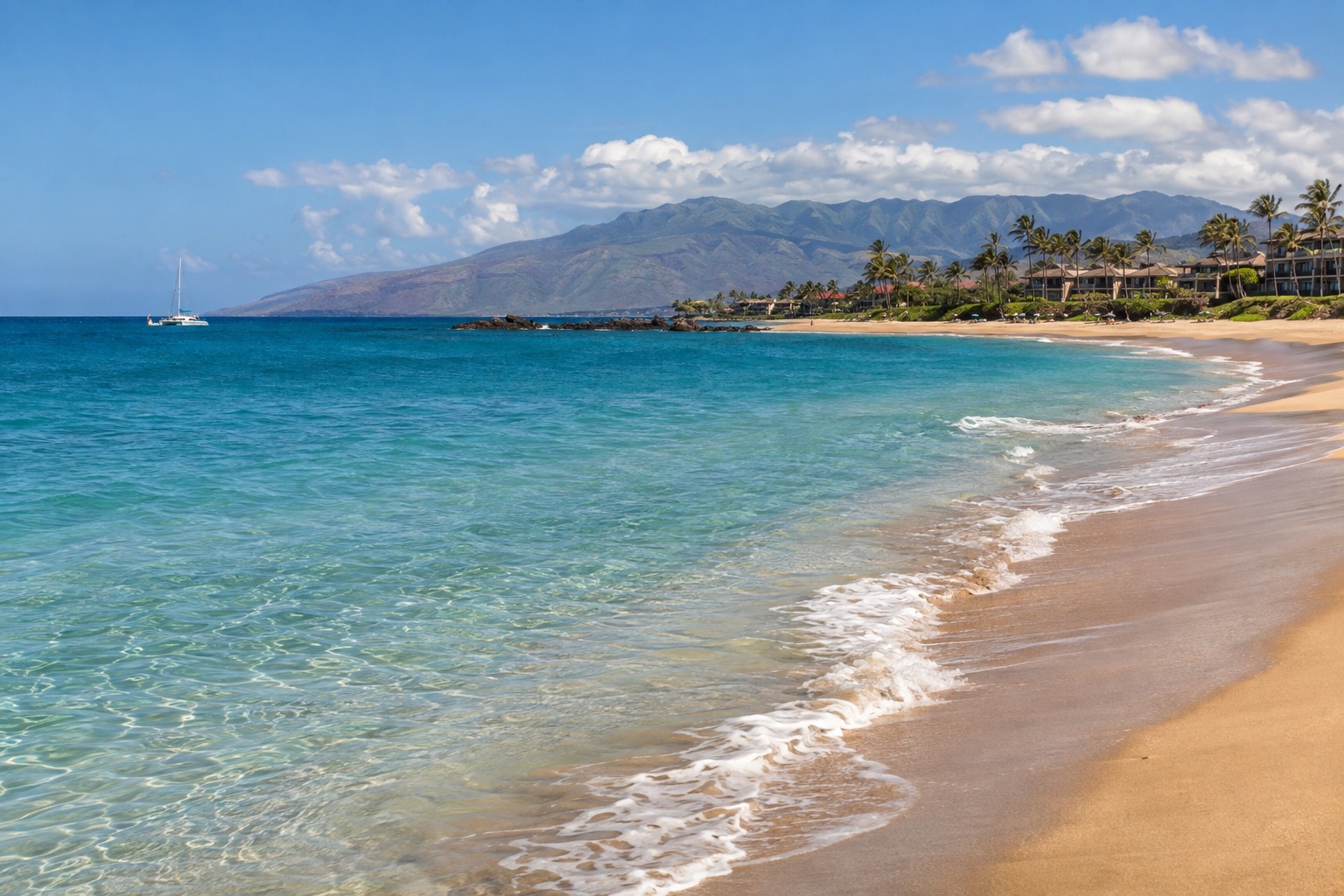
On a July morning in Maui, the trade winds rustle the palms along the Kihei shoreline, surfboards lean against truck beds at the boat ramp, and the smell of sunscreen and fresh malasadas drifts across the parking lots. Fruit stands open along the roads and families spread towels on the sand before the sun climbs. July is a dry, sunny, summer-vacation month on the island, with warm water, long days and a cheerful, busy mood.
What is the weather like in Maui in July?
July in Maui is hot, sunny and mostly dry, with steady trade winds taking the edge off the afternoons. The table sets it beside the months on either side.
| Month | Average high (°F) | Average low (°F) | Rain days | Sea (°F) |
|---|---|---|---|---|
| June | 88.3 | 70.3 | 0.4 | 77.8 |
| July | 89.2 | 71.8 | 1.5 | 79.1 |
| August | 89.9 | 72.3 | 1.3 | 79.3 |
Mornings start warm and bright, ideal for the beach, a hike or a snorkel trip before the heat builds. By early afternoon the leeward coasts around Wailea, Kihei, Kaanapali and Lahaina feel properly hot, and shade, a cold drink and a dip in the water become the plan. The wind usually picks up in the afternoon, which keeps things comfortable on the sand but can make the north and central shores breezy.
Rain is rare on the dry side of the island. When it comes, it is usually a brief passing shower, and the wetter windward slopes near Hana and the upcountry forests are the places most likely to catch one. Pack for sun first, and treat a shower as a ten-minute pause rather than a ruined day.
In July, you can eat dinner outdoors in a T-shirt or a light layer since the evenings remain mild, and with daylight stretching well past that meal, the days feel long. Up at the top of Haleakala, the weather is a whole different story, and since dawn there is cold, you should pack a genuine jacket for the trip. Under the sun the light is strong and white at midday, then turns golden and soft on the western beaches toward evening.
Can you swim in Maui in July?
Yes, the water is warm enough for long swims and unhurried snorkeling, and most people stay in without a wetsuit. In summer the south and west shores are usually the gentler side of the island, while the north shore tends to be quieter on the surf front than in winter but can still be lively.
Beaches in Wailea, Kihei and Kaanapali are the usual picks for families and nervous swimmers, with sand that slopes gradually and water that is often mellow in the morning. Snorkelers head to rocky points and reef edges where fish and sometimes turtles show up, and Molokini trips leave early before the wind rises. Surfers find beginner-friendly breaks near Lahaina and Kihei.
Conditions change with the swell and the tide, so no beach is calm every day. Check the beach signs and flags, and listen to the lifeguards where they are posted. Bring mineral sunscreen, since Maui County allows only mineral sunscreens with zinc oxide or titanium dioxide to be sold without a prescription, and keep your feet and hands off the reef.
What to do in Maui in July
July is a beach-and-outdoors month, and the Fourth of July sets the tone. Towns like Lahaina, Kihei and Makawao hold parades, fireworks and community gatherings, and local families fill the parks with coolers and folding chairs. Check what is planned for the week you go, since schedules vary from year to year.
Food leans toward the casual and cold: shave ice in a rainbow of syrups, poke bowls eaten on a seawall, fish tacos, and plate lunches from roadside trucks. Fruit stands along the Hana and upcountry roads sell what is ripe, and a fresh coconut or a cold pineapple slice is a good midday stop. Evenings are for sunset dinners on open-air terraces, and many resorts hold a luau with hula and an imu-cooked feast.
The Road to Hana
This winding drive along the windward coast fills a whole day, with waterfalls, roadside banana bread, black-sand beaches and bridges that narrow to one lane. July is a good month for it because the rain is lighter than in the wetter half of the year, though the jungle side can still produce a shower. Start early and fill the tank before you leave.
Plan stops rather than racing to the end. A short walk to a waterfall, a swim only where conditions look gentle and the locals are in the water, and a stop at a lava-rock beach make a better day than hurrying. The drive suits patient drivers, and passengers who get carsick may want to sit up front.
Haleakala at sunrise or in the afternoon
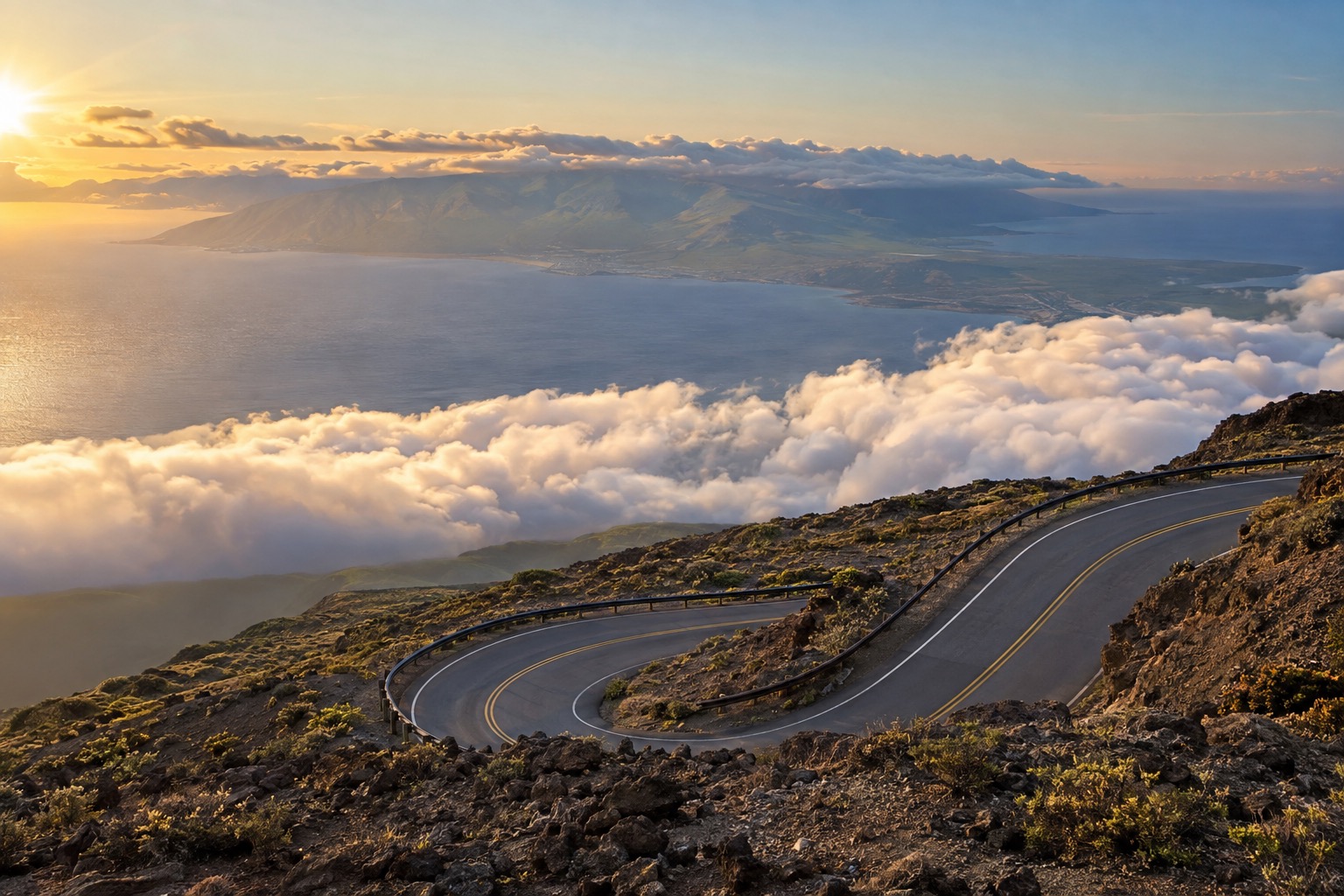
The volcano summit rises above the clouds, with a crater that looks more like another planet than a Hawaiian island. The top stays cold even in summer, so bring layers, and sunrise is the visit everyone knows. The sky can be clear or cloud-wrapped, so treat it as a chance, not a promise.
If you do not want a predawn alarm, the afternoon and sunset light on the crater is also memorable, and stargazing after dark can be rewarding when the sky is clear. Sunrise visits need a reservation, so sort that out before you plan the rest of your day around it. Pair the descent with a stop in upcountry towns like Kula for coffee or a farm stand.
On the water: snorkeling, whales and sunsets
Summer is boat season. Morning snorkel cruises out to Molokini and the south coast run when the wind is lightest, and afternoon sunset sails off Lahaina and Kaanapali catch the golden hour. Humpback whales are a winter story and are not the reason to go out in July, but turtles often appear near the reef, and dolphins sometimes ride the bow.
Stand-up paddleboarding and kayaking are easiest at first light, before the trade winds build. Lessons for beginners are widely offered along the Kihei and Lahaina shores. Give plenty of space to protected turtles and monk seals that are resting on the sand.
On a hot afternoon, retreat upcountry to Makawao for its galleries and paniolo history, to a lavender or flower farm, or to a tasting room, where the air is cooler. Whichever you pick, take shade and water with you.
A two-day itinerary for Maui in July
Day 1 belongs to the south and west coasts. Begin with an early snorkel or a paddle off Kihei or Wailea while the water is still and the air is soft, then have a long breakfast of local fruit and coffee. By late morning the heat is up, so spend midday under a beach umbrella or wander the shops and galleries of Lahaina.
In the afternoon, drive up to Kaanapali for a swim and a walk along the beach path, then settle into a seat facing the water for sunset, which comes late in July. Dinner is a casual seafood place or a luau. If a shower turns up, which is unlikely on this side, a museum, a bookstore or a farm-to-table lunch makes a good indoor pause.
Day 2 heads for the cool of the mountain and the green of the upcountry. Start with Haleakala, either at dawn with a reservation or later in the day, and bring a jacket. Then roll down through Kula and Makawao for lunch and a wander among the shops and farm stands.
Spend the afternoon at Paia and the north shore, where the town has surf shops, cafés and a laid-back feel, and the beaches often look livelier than the south. Finish with shave ice and an early dinner in town. On a wetter day, galleries, a distillery tour or a coffee tasting keep the plan going indoors.
Is Maui busy in July?
Yes, July is one of the busier months, with mainland families on school break filling beaches, rental cars and restaurant tables. The Fourth of July week is the peak, with the island at its liveliest and the most crowded.
Resort areas like Wailea and Kaanapali stay full, and popular snorkel boats and luaus sell out. Rental cars are the first thing to disappear, so book them early alongside rooms, especially for the holiday week. Later weeks of the month are a little easier but still lively.
Quieter corners remain, such as early mornings on any beach, upcountry towns, and the less-visited stretches of the east coast. Dinner tables at popular restaurants are best reserved ahead, and sunset spots fill early. The Haleakala sunrise and some state parks need reservations, so make those once your dates are set. Booking a few weeks to a few months ahead is a good habit for July, and earlier still for the Fourth.
What to pack for Maui in July
Pack light, sun-ready clothes, plus one warm layer for the mountain and the evening wind.
- Mineral sunscreen, since Maui County restricts what can be sold, and a wide-brimmed hat for the strong midday sun
- A rash guard or light long-sleeve shirt for long snorkels
- A fleece or jacket for Haleakala, which is cold before sunrise
- Water shoes for lava-rock entries and rocky shorelines
- Pack a light rain jacket for the showers that roll through the Hana side.
- A reusable water bottle for hot hikes and long drives
Good to know before you go
The Central Pacific hurricane season runs from June 1 to November 30, so July falls inside it. Keep an eye on forecasts as you would anywhere in the tropics. Book rental cars and the Haleakala sunrise first, then build the rest of the plan around them. Roads like the one to Hana are slow, so do not pack the day too tightly.
| Fee | Amount | Who pays |
|---|---|---|
| State transient accommodations tax | 11% | Hotel guests |
| Maui County transient accommodations tax | 3% | Hotel guests |
Maui in July vs June and August
June is a little cooler and the sea a touch fresher, with an easier pace before school-break crowds peak. It suits travelers who want similar sunshine with slightly more room at the beach and a bit more flexibility on rooms and cars.
August is hotter and the water is as warm as it gets, though showers remain few. Crowds stay thick through the early part of the month, then begin to thin as school calendars on the mainland start up again, so late August can feel calmer.
Choose July if the Fourth of July atmosphere and fixed family vacation dates matter to you. Shift to June for a quieter feel, or to late August for the warmest sea with fewer visitors around.
Is July a good time to visit Maui?
Yes, July suits beach lovers, families and anyone who wants reliable sun, warm water and long days. It is a hard month to beat for snorkeling, paddling and sunset dinners outdoors.
Travelers who dislike crowds, want winter whale-watching, or prefer cooler air may be happier in another month. On arrival, line up the reservations that matter first, namely the rental car and the Haleakala sunrise, then fill in beaches and meals around them. What stays with you from July on Maui is the rhythm of the days: an early swim in glassy water, a hot, bright midday in the shade, and a long golden evening with the trade winds fading over the western sea.
Sources
- NOAA NCEI, monthly normals 1991-2020, station USW00022516, checked September 8, 2026
- Open-Meteo Marine API, average 2015-2024, checked September 8, 2026
- sunrise-sunset.org, sunrise and sunset calculated for the 15th of the month, checked September 8, 2026
- County of Maui, Mineral Only Sunscreen Maui County (mauicounty.gov/2483), relayed by Maui Now, September 20, 2022, checked September 25, 2026
- Hawaii Department of Taxation, Announcement 2025-03 ; County of Maui, TAT Announcement 2021-01 (mauicounty.gov/2537), checked September 25, 2026
- NWS Honolulu / Central Pacific Hurricane Center, « 2026 Central Pacific Hurricane Season Outlook », weather.gov/hfo/hurricaneOutlook2026, checked September 24, 2026