
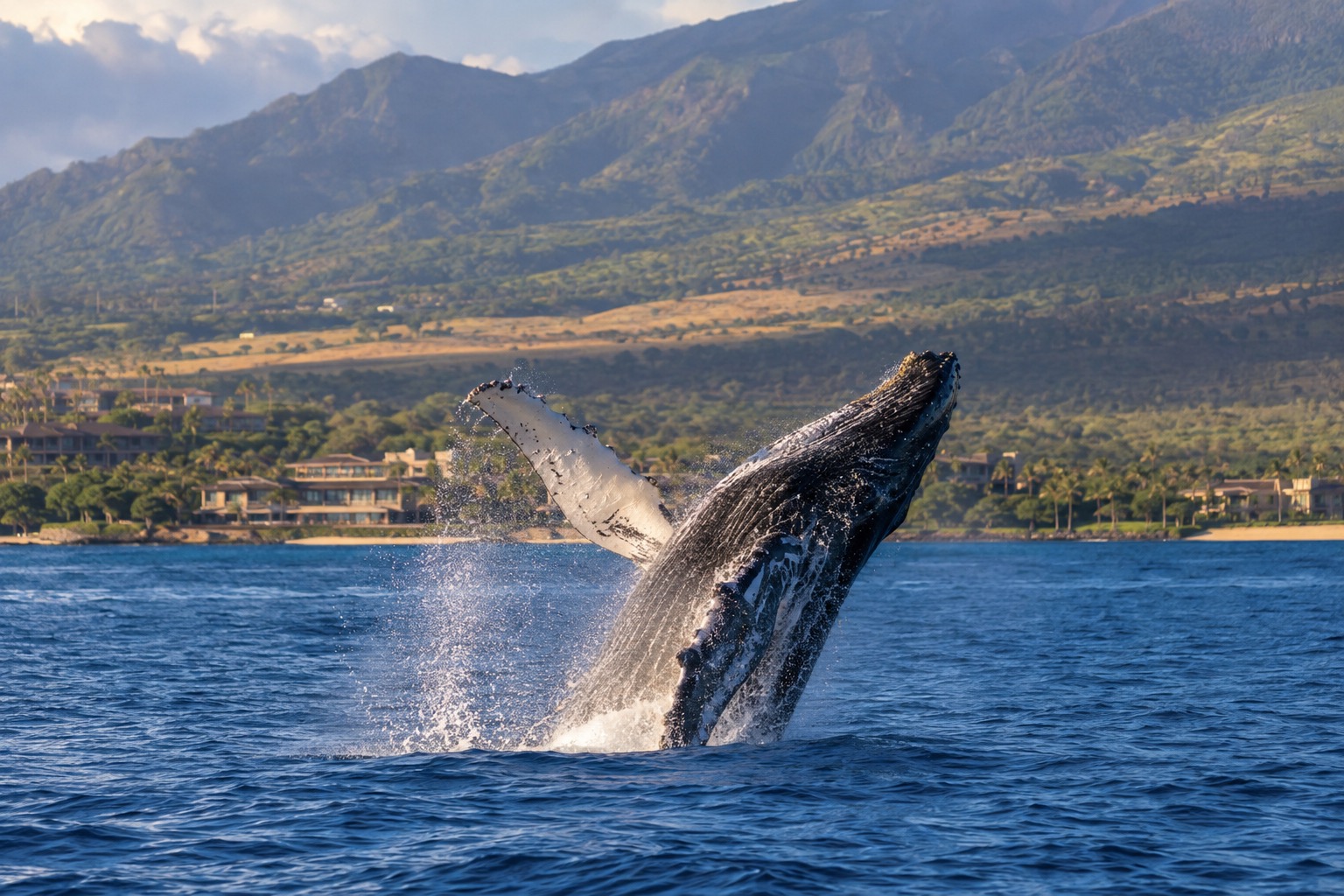
In January, a humpback’s tail slaps the water off Lahaina while people on the seawall stop mid-bite and point. Mornings smell of coffee and sunscreen, the trade winds rustle the palms, and the green slopes of West Maui are at their lushest. It is the month of whale season on the island, with warm afternoons and a holiday crowd that thins as the weeks pass.
What is the weather like in Maui in January?
January in Maui is warm and mostly sunny, with short passing showers and evenings that call for a light layer.
| Month | Average high (°F) | Average low (°F) | Rain days | Sea (°F) |
|---|---|---|---|---|
| December | 83.3 | 65.9 | 4.2 | 78.1 |
| January | 82.2 | 63.6 | 4.0 | 77.6 |
| February | 82.2 | 63.8 | 3.8 | 76.1 |
Days on the dry, leeward coast (Kihei, Wailea, Kaanapali) are sunny and comfortable, warm enough for the beach by mid-morning and never oppressive. Rain comes as brief showers that drift in on the trade winds, usually leaving a rainbow behind. Few days are truly gray.
The wet side is a different story. The windward coast around Hana and the slopes above Haiku catch most of the rain, and the road to Hana can be misty and slick. The summit of Haleakala is far colder than the beach, and the sunrise there is a winter-jacket affair.
Daylight lasts a bit over eleven hours, so plan beach time for the morning and early afternoon, then use the golden hour for a walk. Evenings cool enough for long pants or a light sweater, especially if you eat outside near the water.
Can you swim in Maui in January?
Yes, the sea is warm enough for a long swim, though it is a touch cooler than in December, so some people want a rash guard for extended snorkeling.
Winter swells build on the north and west-facing shores, so beaches such as Ho’okipa and Honolua Bay often have big surf that suits experienced surfers and watchers, not casual swimmers. The south and leeward shores of Kihei, Wailea and Makena are usually gentler, and morning is typically the calmest part of the day before the wind picks up.
Snorkelers head to the south coast and to boat trips toward Molokini, while families tend to favor the wide, sandy stretches in Kihei and Wailea. Nervous swimmers can stay in the shallows and enjoy the view. Waves, currents and marine life can change quickly, so check the beach signs and flags and follow the lifeguards. Bring a mask, a rash guard and mineral sunscreen.
What to do in Maui in January
The big event of the month is the whales. Humpbacks are generally seen in Hawaii from November through April, peaking from January through March, and the sanctuary covers the Maui Nui waters between Maui, Lanai, Molokai and Kahoolawe. You may spot spouts and breaches from the shore at Lahaina, Olowalu and the Makena coast, and boats are required to stay more than 100 yards away.
The calm channel between Maui and Lanai is where many whale-watching cruises head, and the sightings are chances, not promises. Mornings tend to be the quietest on the water. Bring binoculars and patience, and watch for the telltale blow on the horizon.
A morning on Haleakala
The volcano is the island’s great outing, and January suits it because the air is clear on many mornings. You climb through ranchland and cloud to a summit that feels like another planet, with red and orange cinder fields falling away below you. The sunrise is spectacular but cold, so dress like it is winter.
If you go for sunrise, the park requires a reservation, and daytime visits give you the same crater views in warmer light. Afterward, the upcountry towns of Makawao and Kula are good for coffee, a farm stand and a slow lunch. Weather up high shifts quickly, so a layer and a rain shell are wise.
The road to Hana
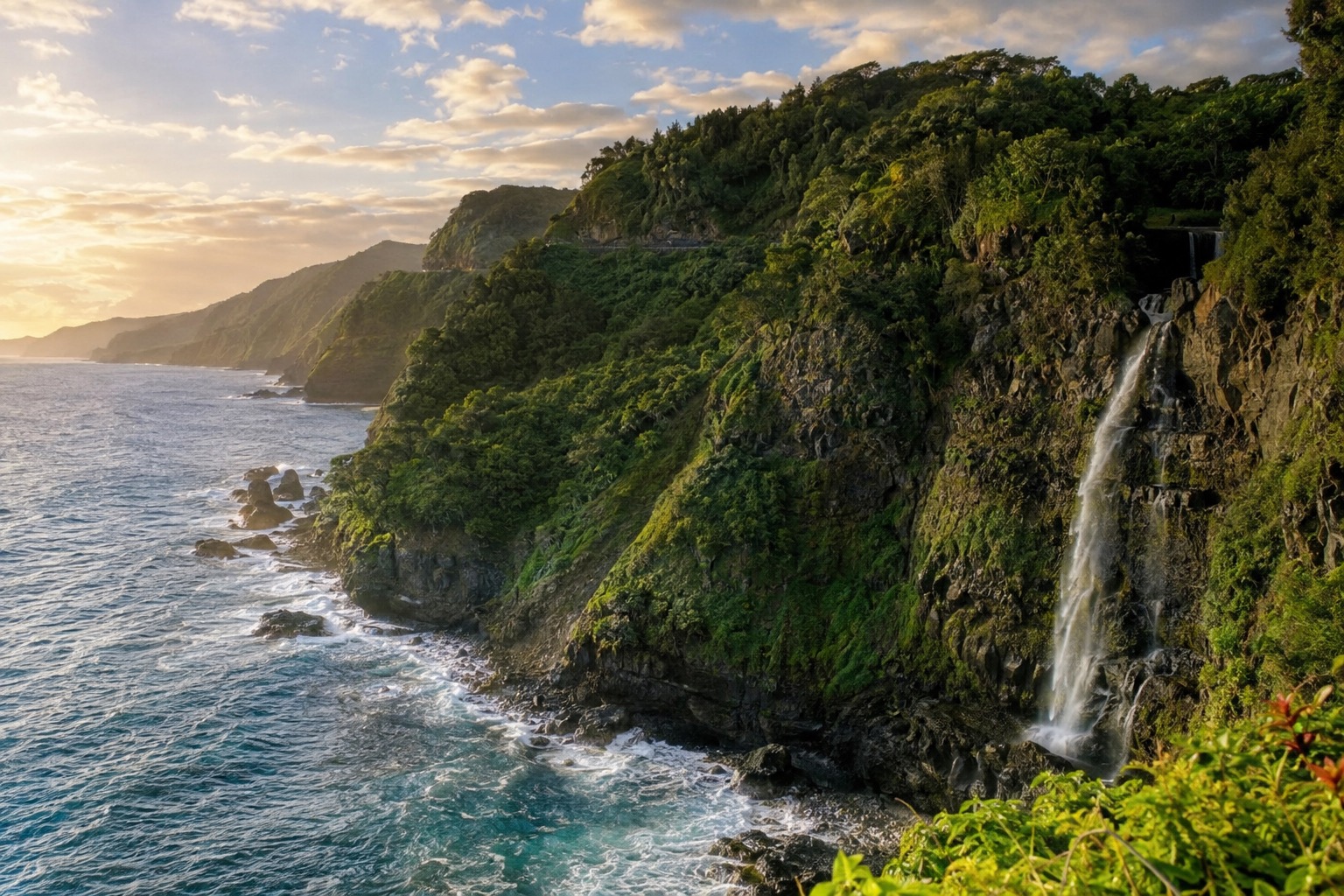
This is a full day of curves, one-lane bridges, waterfalls and banana bread stands. January is wetter on the windward side, which means the falls run full and the jungle is brilliant, though stops can be muddy. Leave early and pull over to let faster cars pass.
Highlights include the bamboo forest, black sand at Waianapanapa and the pools beyond Hana. Waianapanapa State Park uses reservations, so book it in advance. Stay out of rivers and pools if the rain has been heavy, and do not trespass on private land.
Lahaina, Paia and the food of the island
Paia is the surfer’s town on the north shore, with fish tacos, acai bowls and shops. In January, the waves at Ho’okipa are a show, and windsurfers and surfers fill the water on big days. Watch from the beach and give them room.
Across the island, the west side restaurants serve poke, fresh ono and mahi-mahi, and shave ice is welcome after a hot afternoon. Fruit stands along the roads sell pineapple and papaya. Many travelers pair a sunset dinner with a whale-spotting walk along the shore.
Smaller pleasures fill the gaps: a snorkel off Kapalua, a luau evening with hula and kalua pork, a stroll through a farmers market, or a slow afternoon at a beachside bar in Wailea. When a shower comes through, it usually passes within the hour.
A two-day itinerary for Maui in January
Day 1 starts with an early breakfast and a drive up Haleakala for the crater views, before clouds build. Come down by late morning and stop in Kula or Makawao for lunch and a browse of the galleries. By mid-afternoon you are ready for the sea, so head to Kihei or Wailea for a swim and a snorkel when the water is typically calmest.
Sunset is the time to be on the shore, scanning the horizon for whales. Dinner is a casual plate of fresh fish at a harbor-side spot. If rain turns up, swap the beach for a museum, a market or a coffee farm.
Day 2 is the road to Hana, so leave at first light to beat the traffic and the afternoon showers. Take it slowly through the waterfalls, the bamboo forest and the black sand beach, eating from fruit and banana bread stands along the way.
Return in the late afternoon, with the winter light going gold over the coast, and finish in Paia for tacos and a look at the surf. If the weather is wet on the windward side, spend the day on the dry coast with a whale-watching cruise and a long lunch.
Is Maui busy in January?
Yes, the first part of January is busy with holiday visitors, and the crowds ease noticeably in the second half of the month.
The winter holidays fill the resorts at Kaanapali, Wailea and Kapalua, and rental cars and restaurant tables are hardest to find in the first week or so. Later in the month, things quiet down, though whale season keeps tours and sunset dinners busy. Beaches are rarely empty, but you can find room if you go early.
Book rooms and cars early for the holiday weeks, and a little later for the quiet stretch that follows. Popular dinner spots fill up, so reserve a table for the evenings you care about most. Whale cruises are best arranged a few days ahead.
Two things need reservations in advance: sunrise at Haleakala and Waianapanapa State Park on the road to Hana. Follow the rule of each park as it is posted, and plan those days first, then fit everything else around them.
What to pack for Maui in January
Think summer clothes with a few winter layers, since the beach and the volcano are very different climates.
- A warm jacket and long pants, for the cold summit of Haleakala at sunrise.
- A light rain shell, for passing showers on the Hana side.
- Swimsuits and a rash guard, since the water is a bit cooler than in fall.
- Mineral sunscreen and a hat, because the sun is strong even in winter.
- Binoculars, for spotting whales from the shore.
- Sturdy sandals or water shoes, for slippery trails and rocky entries.
Good to know before you go
January falls outside the Central Pacific hurricane season, which runs from June 1 to November 30. Winter’s main hazard is surf on north and west shores, so watch the signs. Roads are narrow on the Hana side, and a rental car is the easiest way to get around, so reserve early for the holidays. Hotel stays carry two taxes, set out here.
| Fee | Amount | Who pays |
|---|---|---|
| State transient accommodations tax | 11% | Hotel guests |
| Maui County transient accommodations tax | 3% | Hotel guests |
Maui in January vs December and February
Moving a month earlier, to December, gives you slightly warmer water and air, but it brings the heaviest holiday crowds and the highest demand for rooms. Whales are arriving rather than at their peak. The mood is festive, with lights and decorations, but the island is full.
Moving to February keeps the whales at their best, since the peak runs through March, and the crowds settle into a calmer rhythm. The sea is a degree or two cooler, and rain is about the same. Rooms and tables are generally easier to find.
Choose December if you want the holiday atmosphere and the warmest swim. Choose January for a balance of whales and fading crowds, and February if whales and a quieter island matter most. Late January is a sweet spot for many travelers.
Is January a good time to visit Maui?
Yes, especially for travelers who want whales, warm days and green landscapes, and who do not mind a cooler sea or a shower now and then.
Whale lovers, hikers, photographers and couples will find it rewarding. Surfers and big-wave watchers will enjoy the north shore. Travelers who want flat, glassy water at every beach, or who dislike any rain, may prefer the summer months.
On arrival, sort out the reservations for Haleakala sunrise and the Hana-side state park first, then pick a whale cruise for a calm morning. January in Maui is the month when you can watch a humpback breach from the beach in the afternoon and then eat fresh fish with your feet in the sand.
Sources
- NOAA NCEI, monthly normals 1991-2020, station USW00022516, checked September 8, 2026
- Open-Meteo Marine API, average 2015-2024, checked September 8, 2026
- sunrise-sunset.org, sunrise and sunset calculated for the 15th of the month, checked September 8, 2026
- NOAA, Hawaiian Islands Humpback Whale National Marine Sanctuary, pages Responsible Recreation and About, checked September 25, 2026
- Hawaii Department of Taxation, Announcement 2025-03 ; County of Maui, TAT Announcement 2021-01 (mauicounty.gov/2537), checked September 25, 2026
- NWS Honolulu / Central Pacific Hurricane Center, « 2026 Central Pacific Hurricane Season Outlook », weather.gov/hfo/hurricaneOutlook2026, checked September 24, 2026