
Rain taps on a tin roof, a rooster calls from somewhere behind the ginger, and a plate lunch is being packed at a roadside stand while the clouds slide down the green slope toward the sea. Hana sits at the far end of one of the most famous drives in Hawaii, on the wet eastern side of Maui. It is a place for travelers who want to slow down and let the island set the pace.
Where is Hana and what is it like?
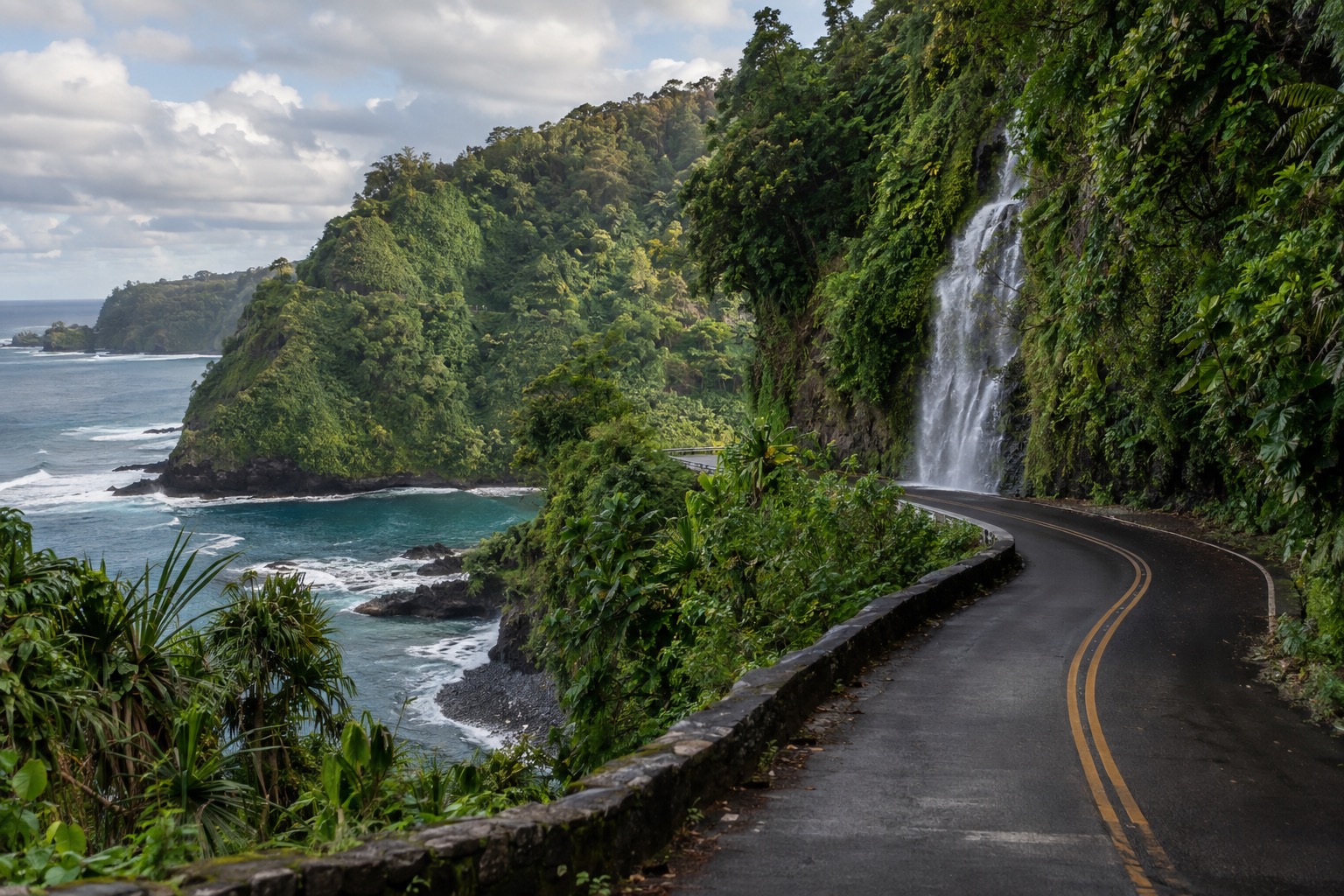
Hana lies on the remote windward coast of east Maui, past the town of Haiku and the long curves of the Hana Highway, with the slopes of Haleakala rising behind it and the open Pacific in front. It is a tiny village rather than a resort town, ringed by rainforest, sea cliffs and black and red sand coves.
The shops are few: Hasegawa General Store and the Hana Ranch Store cover most daily needs, and the Hana-Maui Resort is the historic hotel. Evenings are quiet, with no nightlife to speak of, just the sound of rain and tree frogs.
Travelers who like a slow rhythm, waterfalls and long days outdoors fall for it quickly. Those who want shopping, big restaurant choices or Wailea-style beach resorts will find it too far from everything.
What is there to do in Hana?
Most people come for the drive itself, then stay for the beaches and the green valleys at the end. Hana is different from its neighbors on Maui because it is not a place you pass through on the way to a resort. The road is the first reason to come, and what waits at the end of it is the rest.
The Road to Hana
The Hana Highway winds from Kahului along the coast through bamboo, banyan trees and stream crossings, with 620 curves and 59 bridges built in the early twentieth century. The Hana Belt Road is listed on the National Register of Historic Places, and many of those bridges are one lane wide, so the pace is slow and the stops are the point.
Driving time from Kahului Airport is about two and a half hours without stopping, and most travelers take far longer because of waterfalls, banana bread stands and lookouts. The state tourism authority encourages visitors to do the road with a permitted tour led by professional guides, a good option for anyone who would rather not drive the curves. Start early, bring snacks and let the passenger enjoy the view.
Waianapanapa State Park
Just outside town, Waianapanapa holds Pailoa black sand beach, a natural stone arch, blowholes in the lava rock and the ancient coastal Piilani Trail heading toward Hana. The sand is dark and coarse, the sea is deep blue, and the contrast with the green cliffs is striking. It suits walkers and photographers more than swimmers, since surf on this coast can be strong and conditions change from morning to afternoon, so read the posted warnings and the day’s surf and currents before going in the water, and swim near a lifeguard only where one is on duty.
The park requires reservations for non-residents, who choose a time slot, so plan this stop before you leave. Morning light is soft on the sand, and the short walks along the lava coast can be done in an hour or two.
| Site | Open | Admission |
|---|---|---|
| Waianapanapa State Park | Daily, 7 a.m. to 6 p.m. | $5 per person and $10 per vehicle for non-residents |
Kipahulu and the Pools of Oheo
The Kipahulu District of Haleakala National Park lies 12 miles past Hana town, where the road gets narrower and greener. A trail leads toward 400-foot Waimoku Falls, tumbling down a cliff wall at the end of a bamboo forest. The Pools of Oheo are closed to entry for safety reasons, but you can see them from the Kuloa Point Trail, which makes a pleasant short walk by the sea.
The park’s $30 vehicle fee is valid for three days and covers both Kipahulu and the summit of Haleakala, handy if you are also planning a sunrise or stargazing trip. Go in the morning if you can, and bring a rain jacket, since showers come quickly on this side of the island.
Hamoa Beach and Hana town
South of Hana town, Hamoa Beach is a crescent of pale sand backed by sea cliffs, once called the most beautiful beach in the Pacific by the author James Michener. The waves here can be lively, so watch the water and follow the signs before getting in.
In town, a stop at the general store for snacks and a slow walk to the harbor round out the day. Mineral sunscreen is the rule on Maui, since only zinc oxide or titanium dioxide products can be sold or distributed without a prescription, so pick one up before you come to protect the reef.
How many days do you need in Hana?
One night is the minimum that makes sense, and two or three nights is better, because the drive in and out takes much of a day. With a single night you can do the road, Waianapanapa and a beach, and leave early the next morning for Kipahulu or the return.
With two or three nights, the pace changes: a morning at Hamoa, a walk to Waimoku Falls, a slow afternoon at the black sand beach and an evening with nothing planned. Travelers with more time often add a Haleakala summit visit from the Kahului side, which the national park fee already covers.
Where to stay in Hana
Lodging in Hana is small in scale: the historic Hana-Maui Resort in town, a scattering of vacation rentals and inns in the surrounding hills, and camping or cabins at Waianapanapa State Park for those who want to wake up beside the black sand beach. The park option suits adventurous travelers, and cabins there must be booked well ahead.
Staying in town puts you close to the shops and the harbor, while the countryside rentals offer more privacy and a jungle setting. Since services are few, most visitors stay at least one night to enjoy the quiet.
How do you get to Hana and get around?
Most visitors arrive by car from Kahului Airport on the Hana Highway, a 52-mile drive that takes two to four hours depending on how many stops you make. The road is narrow, with many one-lane bridges, so leave plenty of daylight for the return.
Once in Hana, you will want a vehicle to reach the beaches, Waianapanapa and Kipahulu, since sights are spread along the coast. Travelers who prefer not to drive can join a permitted guided tour, which the state tourism authority encourages for the road.
When is the best time to visit Hana?
The drier, sunnier months from May to October are the easiest for the road, the beaches and the waterfalls. Even then, Hana is a rainforest coast, and showers can pass through at any time of day, so a light rain jacket is useful year-round.
From November to April the weather is wetter and cooler, and Hana gets about twice the January rain of dry South Maui, with more waterfalls running and a lusher look. Winter also brings bigger surf on exposed shores, and the Central Pacific hurricane season runs from June 1 to November 30.
Crowds are heaviest during mainland spring break, summer family weeks and the winter holidays, when the road fills up with rental cars. Early starts help in any season.
Good to know before you go
Hana is a small community with few services, so fill up the gas tank in Kahului or Pukalani, bring snacks and water, and stay on marked trails. Respect private land and the sacred places of the coast, and keep off the reef and the stones of any temple. Waianapanapa and Haleakala National Park each have their own entry rules, so reserve where required.
Sources
- Hawaii Tourism Authority, Go Hawaii, Hana (gohawaii.com/islands/maui/regions/east-maui/hana) ; HVCB, map Driving Times from Kahului Airport (2010), checked September 25, 2026
- Library of Congress, HAER HI-75 Hana Belt Road ; Hawaii DOT, Hana Belt Road Historic District (hidot.hawaii.gov, appendix E vol. 3), checked September 25, 2026
- Hawaii DLNR, Division of State Parks, Waianapanapa State Park (dlnr.hawaii.gov/dsp/parks/maui/waianapanapa-state-park), checked September 25, 2026
- NPS, Haleakala National Park, pages Kipahulu District and Fees & Passes, checked September 25, 2026
- NOAA NCEI, normals 1991-2020, stations USC00511125 (Hana AP) and USC00515842 (Makena), via PLAN-HAWAII.md §1
- County of Maui, Mineral Only Sunscreen, relayed by Maui Now, checked September 25, 2026
- NWS Honolulu / Central Pacific Hurricane Center, « 2026 Central Pacific Hurricane Season Outlook », weather.gov/hfo/hurricaneOutlook2026, checked September 24, 2026
All our pages
When to go
- Best Time to Visit Hana: Weather by Month, Crowds, Swimming and Festivals
- Hana in January: Weather, Winter Swells and What to Do on the Road to Hana
- Hana in February: Weather, Sea, Waterfalls and a Two-Day Plan
- Hana in March: Rain, Waterfalls, Black Sand and the Road to Hana
- Hana in April: Weather, Beaches, Waterfalls and a Slow Two Days on the Coast
- Hana in May: Lei Day, Waterfalls, Warm Seas and Rain on the Windward Side
- Hana in June: Weather, Beaches, Road to Hana and a Two-Day Plan
- Hana in July: Weather, Beaches, the Rainforest Road and Crowds
- Hana in August: Weather, Swimming, Things to Do and a Two-Day Plan
- Hana in September: Weather, Black Sand Beaches, Waterfalls and the Road Itself
- Hana in October: Weather, Waterfalls, Road to Hana Drives and Fruit Stands
- Hana in November: Weather, Swimming and Things to Do on the Road to Hana
- Hana in December: Weather, Winter Swells, Waterfalls and a Two-Day Plan