
On a Wailea morning, the sprinklers tick over the lawns, joggers pad along the coastal path, and the first snorkelers wade into the clear water off a crescent of pale sand. Behind them, Haleakala rises in a soft haze. This is South Maui’s polished resort coast, a place of long beach days, good golf and quiet evenings, made for couples, families and anyone who wants the sun to be reliable.
Where is Wailea and what is it like?
Wailea sits on the dry, sunny southwest side of Maui, just south of Kihei and just north of Makena, with Haleakala climbing behind it and the small islands of Molokini and Kahoolawe out on the horizon. It is a planned resort community, spread over 1,500 acres, about three times the size of Waikiki, and it feels more like a landscaped coastline than a town.
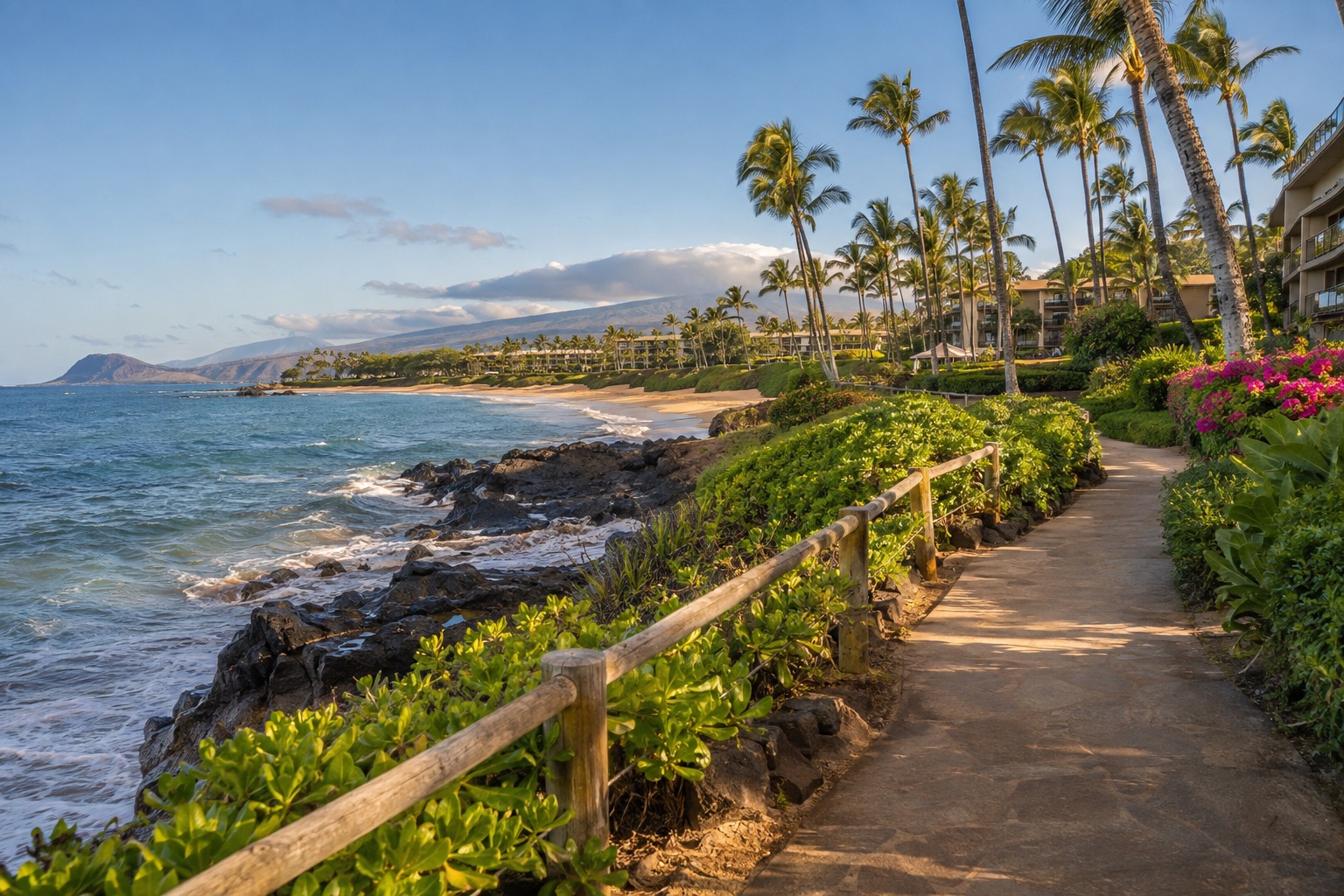
The pace is unhurried. Five crescent beaches, including Wailea Beach, Polo Beach and Ulua Beach Park, are strung along a paved coastal path that links the hotels, so you can stroll from one to the next at sunset. Travelers who like a lively town center or a rugged, off-the-grid mood may find it too tidy. Those who want calm, space and easy beach access tend to love it.
What is there to do in Wailea?
Beach days along the shore
The beaches are the reason most people come. Wailea Beach is the wide, golden one in front of the big hotels, with room to spread out and a morning swim before the sun climbs. Ulua Beach Park, a little farther along, is a favorite for snorkeling near the rocks on its edge. Polo Beach is quieter and feels more local.
Every beach in Hawaii is public up to the shoreline, reached through marked public access points, so you do not need to stay at a hotel to enjoy them. Go early for parking and the softest light, and like locals do, read the posted warnings and the day’s surf and currents before you get in, swimming near a lifeguard only where one is on duty, since surf changes with the season.
Snorkeling at Molokini
Molokini is the crescent rim of an extinct volcanic crater sitting a few miles off the coast, and it is one of Maui’s classic boat outings. Its inner cove slopes down gently and the water is often very clear, so snorkelers drift over reef fish and coral from the boat. The islet is a Marine Life Conservation District, landing on it is prohibited, and you reach it only by boat.
Boats leave early, which suits the calmer morning water and the light. The outing fits travelers who are comfortable in open water. In winter, humpback whales often appear on the crossing, and boats keep their distance from them.
Golf and the coastal path
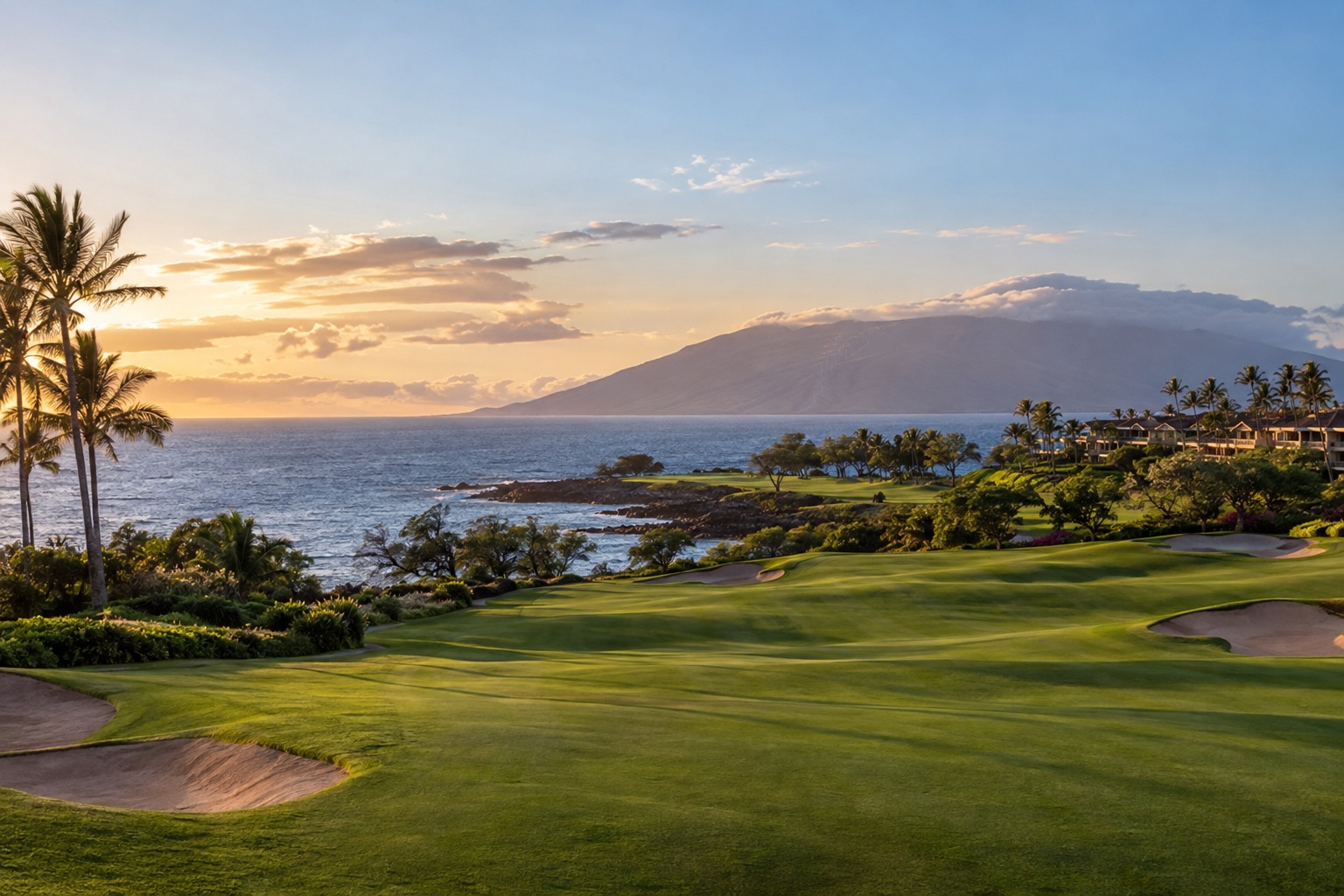
Golfers have 54 holes to choose from across the Blue, Gold and Emerald courses, with ocean views and the mountain as a backdrop. Early tee times beat the heat and the afternoon breeze.
For everyone else, the paved shoreline path is the simplest pleasure in Wailea. Walk it at dawn or just before sunset, when the light turns the lava rock gold and, in the right months, whales spout offshore. It passes beaches, gardens and small coves, and it is easy for families with strollers.
Makena, just to the south
Makena State Park lies just south of Wailea and is a natural change of scene from the resort strip. It holds Big Beach (Oneloa), a long, broad sweep of sand backed by dunes, and Little Beach beside it.
Non-residents pay $5 per person and $10 per vehicle. Big Beach is open from 5 a.m. to 7 p.m., until 7:45 p.m. in summer, which makes it a good place for a sunset.
Big Beach is wild and open rather than sheltered. The state warns that the shore break can be very dangerous, so most visitors enjoy it by walking the sand, wading at the edge and watching the waves. Go late in the afternoon for the light, and bring water and shade, since there is little of either on the beach itself.
How many days do you need in Wailea?
A long weekend is enough to feel Wailea, and a week lets you settle into its rhythm. In a short stay, give a morning to a beach, a day to the Molokini boat and an evening to the coastal path and a long dinner.
With more time, add Makena for a sunset, a round of golf and a slow day doing nothing by the water. Day trips open up too. Haleakala is under two hours away for a sunrise or sunset above the clouds, and Hana is about two and a half hours by road, best treated as a full day out. On recreation.gov, book a sunrise reservation for each vehicle in advance, because the park checks it at the gate between 3 a.m. and 7 a.m.
Where to stay in Wailea
Most visitors stay right on the shore, in the resorts and condominium complexes that front the beaches and the coastal path. Beachfront properties suit couples and families who want to step from the room to the sand, while the rooms and condos set back toward the golf courses are quieter and often give you a mountain view.
Kihei, just to the north, is the more casual alternative, with a livelier mix of restaurants and shops, and it is still a short drive from Wailea’s beaches. Resort stays in Wailea carry the state’s 11% transient accommodations tax plus Maui County’s 3%.
How do you get to Wailea and get around?
Wailea is about 35 minutes by road from Kahului Airport, traffic permitting, and Kihei is about 25 minutes along the way. Most visitors arrive by rental car, taxi or shuttle straight from the airport.
Once you are in Wailea, you can do a lot on foot, since the paved coastal path links the hotels and beaches. A car helps for Makena, Haleakala and Hana, and for dinners beyond the resort strip.
When is the best time to visit Wailea?
The best months are April, May, October and November, when afternoons are warm, in the low to mid 80s, rain is rare and the winter crowds have not yet arrived or have already gone. June through September are the hottest and driest stretch, with highs in the upper 80s and very few rain days, ideal for beach people who love heat.
Winter is cooler, with highs around 80, and a few more showers, though Wailea stays on the sunny side of the island. It is also whale season, with humpbacks generally seen from November through April and peaking from January through March, which draws many visitors. Expect the busiest weeks around the winter holidays, and again in summer when families travel. The Central Pacific hurricane season runs from June 1 to November 30, so summer and fall fall inside it, though many travelers visit then without trouble.
Good to know before you go
Wailea is a U.S. destination, so there is no passport or visa to worry about. Maui County allows only mineral sunscreens, made with zinc oxide or titanium dioxide, to be sold without a prescription, so pack a reef-friendly bottle. Keep a respectful distance from whales and sea turtles, stay off the reef and follow the signs at each beach.
| Fee | Amount | Who pays |
|---|---|---|
| Makena State Park entry | $5 per person | Non-residents |
| Makena State Park parking | $10 per vehicle | Non-residents |
Sources
- Hawaii Tourism Authority, Go Hawaii, Wailea (gohawaii.com/islands/maui/regions/south-maui/wailea), checked September 25, 2026
- Hawaii DLNR, Division of State Parks, Makena State Park (dlnr.hawaii.gov/dsp/parks/maui/makena-state-park), checked September 25, 2026
- Hawaii DLNR, Division of Aquatic Resources, Maui – Molokini Shoal MLCD, checked September 25, 2026
- HVCB, map Driving Times from Kahului Airport (edition 2010), checked September 25, 2026
- NOAA, Hawaiian Islands Humpback Whale National Marine Sanctuary, checked September 25, 2026
- County of Maui, Mineral Only Sunscreen, relayed by Maui Now, checked September 25, 2026
- Hawaii Department of Taxation, Announcement 2025-03 ; County of Maui, TAT Announcement 2021-01, checked September 25, 2026
- NWS Honolulu / Central Pacific Hurricane Center, « 2026 Central Pacific Hurricane Season Outlook », weather.gov/hfo/hurricaneOutlook2026, checked September 24, 2026
- NOAA NCEI, monthly normals 1991-2020, station USC00515842, checked September 8, 2026
All our pages
When to go
- Best Time to Visit Wailea: Weather, Whale Season, Crowds and Swimming
- Wailea in January: Humpback Whales, Weather, Beaches and What to Do
- Wailea in February: Humpback Whales, Weather, Beaches and What to Do
- Wailea in March: Humpback Whales, Weather, Beaches and What to Do
- Wailea in April: Weather, Whales, Beaches and What to Do
- Wailea in May: Weather, Beaches and What to Do
- Wailea in June: Weather, Calm Water and What to Do
- Wailea in July: Weather, Beaches, Whale-Free Water and a Two-Day Plan
- Wailea in August: Warm Seas, Dry Sunshine and What to Do
- Wailea in September: Weather, Swimming and What to Do
- Wailea in October: Calm Resort Beaches, Warm Sea and Quiet Evenings
- Wailea in November: Whale Season Begins, Beach Days and a Two-Day Plan
- Wailea in December: Weather, Whale Season, Beaches and a Two-Day Plan