
On a March morning in Hana, the clouds drift down the slopes of Haleakala and hang over the pastures, and a shower can pass over the bay and be gone before your coffee cools. The air smells of wet earth, ginger and salt, and the roadside waterfalls run full. Hana is a small, quiet town at the far end of a famously winding road on Maui, and March gives it green hillsides, soft light and a calm pace for anyone willing to slow down.
What is the weather like in Hana in March?
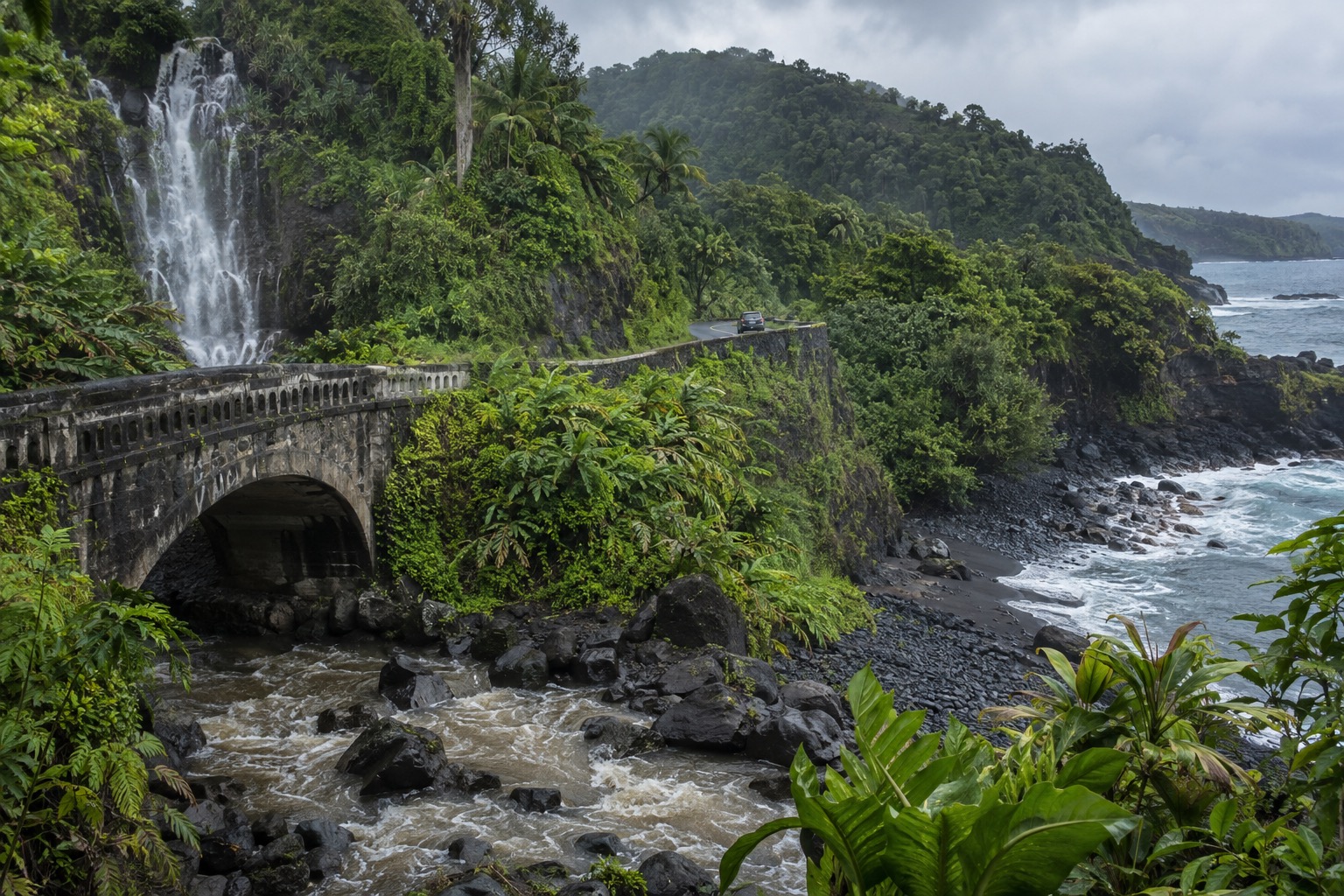
Come March, Hana feels warm and gentle, the air easy on the skin, the ocean still inviting, and rain showers drifting in and out from morning to night, because this side of Maui is the damp, windward one.
| Month | Average high (°F) | Average low (°F) | Rain (inches) | Sea (°F) |
|---|---|---|---|---|
| February | 77.3 | 65.0 | 5.45 | 76.4 |
| March | 77.5 | 65.7 | 8.46 | 75.8 |
| April | 78.2 | 67.4 | 5.00 | 76.2 |
March is the wettest of the three months, and you can feel it. Hana sits where the trade winds push moist air against the mountain, so rain tends to arrive as passing showers, sometimes heavy, followed by sun and a faint steam rising off the road. Mornings are often the clearest stretch, and afternoons can turn gray, though nothing is fixed. A typical day brings both.
Temperatures barely change from day to night. Afternoons are warm enough for shorts and a T-shirt, and evenings stay mild enough that you can sit outside on a porch without a jacket, though a light layer feels good once the breeze picks up. Daylight lasts a little over twelve hours in mid-March, which gives you a full day for the road and the trails, with dusk arriving early evening.
The light in March is one of its charms. After a shower the hills turn an almost electric green, rainbows are common over the bay, and the lava rock shines dark and wet. Wear quick-drying clothes and shoes you do not mind getting muddy, because trails and sidewalks stay damp even when the sky clears. The water offshore is pleasant rather than cold.
Can you swim in Hana in March?
In March the water is warm enough for a real swim, pleasant for a long soak and for snorkeling with no shivers, but it all depends on the day and the beach.
Winter swells from the north can still reach this coast at the start of spring, so waves are sometimes lively, and Hana’s beaches are mostly open to the ocean rather than tucked in sheltered coves. Hamoa Beach, a crescent of pale sand framed by cliffs, is a local favorite for swimming and bodyboarding when the surf is gentle, and it can be rough when it is not.
Koki Beach nearby is better known for its red cliff and for surfers than for quiet swimming. Hana Bay, with its small pier and sheltered feel, is where families often wade and paddle.
At Waianapanapa State Park, the black sand beach is striking to walk and photograph, but the water there often has strong currents and shore break, so many visitors look rather than swim. Let the beach signs, the flags and any lifeguard on duty decide where you go in.
Nervous swimmers and young children do best in the calmest corner of Hana Bay or simply paddling at the water’s edge. Bring a rash guard, water shoes for the rocky entries and a towel you can leave in the car after a shower.
What to do in Hana in March
March is a month of greenery and flowing water, so the best plans are the ones that celebrate both: waterfalls, rainforest trails, roadside fruit stands and slow afternoons on the coast. Humpback whales spend the winter around Maui, and early in March you may still spot spouts and breaches from the cliffs and the shore, though sightings are never guaranteed. Prince Kuhio Day, a state holiday at the end of the month, honors a Hawaiian prince and is celebrated with community events, so you may find a few places closed or running a gentler schedule around it.
Food in Hana is simple and local. Roadside stands sell banana bread still warm from the oven, fresh fruit and coconut candy, and small kitchens and food trucks serve plate lunches, fish tacos and shave ice. Hasegawa General Store, a landmark in town, sells everything from snacks to slippers and is worth a stop for the atmosphere alone.
The Road to Hana and its waterfalls
The Hana Highway is the reason most visitors come. It twists along the northeast coast of Maui through rainforest, crossing narrow one-lane bridges and curving around bays, with waterfalls at the roadside and scenic pullouts where you can stretch your legs. In March the streams are usually full after the winter rains, so the falls tend to look their best, and the greenery is thick enough to feel like a tunnel in places.
Take it slowly and treat the drive as the activity rather than the way to get somewhere. Stop at small stands for fruit and bread, and pull over only where it is clearly safe.
The road can be slick after rain, so early starts help, both for lighter traffic and for the clearer mornings that often come before the afternoon clouds. It suits patient drivers and passengers who enjoy views, and less so anyone prone to motion sickness. Bring snacks and water, since services thin out past the last villages.
Waianapanapa and the black sand coast
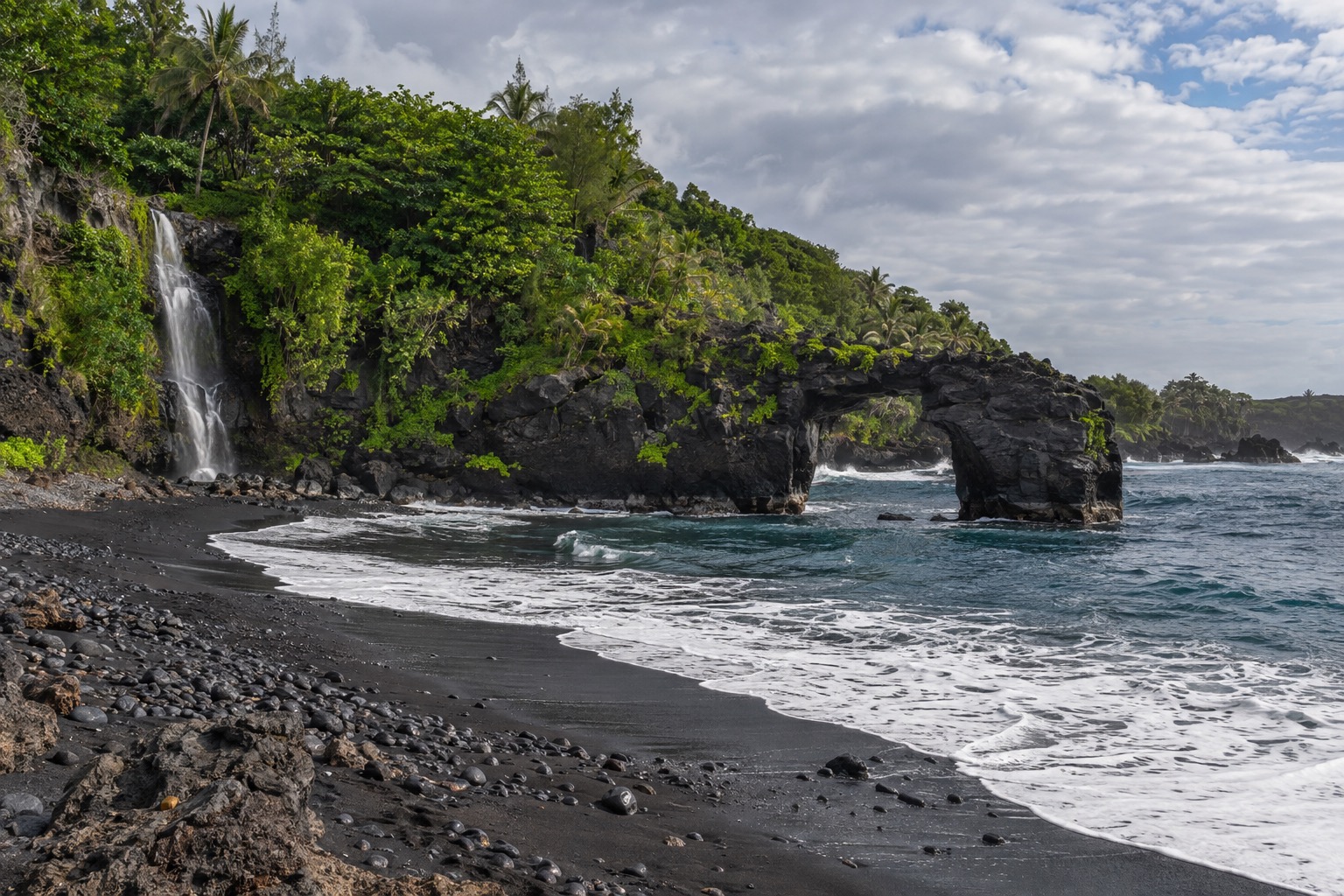
Just outside town, Waianapanapa State Park is a dramatic stretch of coast, with a black sand beach, sea arches, lava tubes and a coastal path shaded by hala trees. The contrast of dark volcanic sand, turquoise water and green jungle is striking, and the wet March weather often makes the colors deeper. Stay on the paths, keep off fragile rock and remember that this is a place with deep cultural meaning for Native Hawaiians.
The best moments are early in the day, when light is soft and the beach is not yet busy. A walk along the coastal trail reveals blowholes, sea stacks and old Hawaiian sites, and on days with big waves the spray shoots high above the rocks. It suits photographers, walkers and anyone who likes a landscape with a story. Wear shoes with grip, because the lava is sharp and slippery.
Kipahulu and the Pipiwai Trail
South of town, the Kipahulu district of Haleakala National Park is where the road meets pools, cliffs and a rainforest trail. The Pipiwai Trail climbs through a bamboo forest, where the stalks knock together in the wind, and passes a banyan tree before reaching a tall waterfall. In March the stream is often strong, and the forest can be muddy and cool even on a warm day.
Go in the morning, when the air is cooler and the light filters through the bamboo, and treat the trail as a half-day outing. Streams in this area can rise quickly after rain, so keep out of flowing water and follow park signs. It suits active families with older children and anyone who likes hiking with a payoff at the end. Wear sturdy shoes, carry a rain jacket and bring plenty of water.
In town again, the district’s history comes through at the little Hana Cultural Center and Museum, while a stroll past the quiet streets, the church, and the bay leaves you feeling that this is a place running on its own clock. On wet afternoons, a slow lunch, a visit to a gallery or a long conversation at a food truck is exactly what Hana is for.
A two-day itinerary for Hana in March
Day 1 is for the coast and the town. Start early at Waianapanapa while the light is soft and the beach is quiet, and walk the coastal trail before the clouds gather.
Come back toward town for a plate lunch at a food truck or a simple café, then spend the afternoon at Hana Bay and Hasegawa General Store, browsing and watching the water. If the weather is clear, finish at Hamoa Beach for a late swim, remembering to check the flags first.
As evening comes, the town grows quiet. Plan dinner early, since options are limited and many places close at a gentle hour, and watch the sky over the bay as the last light turns pink. If a heavy shower arrives, the Hana Cultural Center and the small galleries make a good rain card.
Day 2 belongs to Kipahulu. Leave early for the national park, hike the Pipiwai Trail in the cooler morning air and take your time at the waterfall at the end. Afterward, stop at a roadside stand for fruit or banana bread, then spend the afternoon at the pools and cliffs if conditions are safe and the park signs allow.
On the way back, linger at the pullouts you skipped earlier, especially the ones with waterfalls close to the road. Dinner can be a simple meal with fish or local vegetables. If rain sets in, switch to a slow drive, a long lunch and a stop at a bookshop or craft stand, and let the day take its own shape.
Is Hana busy in March?
Hana is moderately busy in March, since the road draws visitors all year, though the town itself stays small and quiet compared with the resort areas of Maui.
March brings spring break travelers from the mainland, so the busiest stretches fall around school breaks, and the popular stops along the highway, the black sand beach and the Kipahulu trail see most of their visitors in the middle of the day. Early mornings and late afternoons are calmer, and the evenings in town are very quiet. Lodging in Hana is limited, with small inns, vacation rentals and a few boutique stays, so rooms fill faster than the size of the town suggests.
Book a room early if your dates match spring break weeks, and a little later if you are traveling in the quieter parts of the month. Rental cars across Maui are in demand in the same weeks, so reserve the car along with your flight.
Restaurants and food trucks in Hana keep short hours, so plan lunch and dinner rather than hoping for a table at the last minute. For parks, trails and any site that asks for reservations, look at the official pages before you go, since requirements can change.
What to pack for Hana in March
Pack for warm, damp days that move quickly between sun and shower, with plenty of layers that dry fast.
- A light rain jacket, for the showers that pass over the coast and the trails.
- Shoes with good grip, for muddy paths and slick lava rock.
- Swimwear, a rash guard and water shoes, for rocky entries to the sea.
- Because the sun beats down hard whenever the clouds break, bring a hat and mineral sunscreen.
- Insect repellent, for the forest trails after rain.
- A dry bag or zip bags, to protect your phone and camera.
- Snacks and a refillable bottle, because stops are few along the road.
Good to know before you go
March falls outside the official hurricane season, which runs from June 1 to November 30, but rain and high surf can still shape a day, so keep your plans flexible. Cell service can be patchy on the Hana Highway, so download maps before you leave and fill the tank before the drive.
Hana has few shops and restaurants, so buy supplies for the road and expect an early evening. Respect private property, stay on marked paths and treat sacred places with care, including the stones of old Hawaiian sites.
Hana in March vs February and April
Moving the trip to February brings a similar feel, with a sea that is a touch warmer and noticeably less rain, though winter surf is usually bigger and humpback whales are more likely to be seen from the coast. Spring break crowds are not yet in play, so rooms can be easier to find.
April is a little warmer and also drier than March, the evenings feel softer, and the whales are mostly on their way back north, so sightings become rarer. The roadside waterfalls may carry less water, though the trails are friendlier underfoot. Easter and spring holidays can bring their own busy week, depending on when they fall.
Stay with March if you love lush scenery and strong waterfalls, and do not mind a few showers. Shift to February if whales matter most, and to April if you want the best chance of dry trail days and warmer evenings.
Is March a good time to visit Hana?
Absolutely, March suits travelers drawn to lush scenery, rushing falls and a laid-back pace, and who do not mind that rain comes with the territory.
Hikers, photographers, road trip lovers and anyone who enjoys a quiet town will be happy here. Travelers who want guaranteed sun, a long beach day or a lively nightlife should choose one of the dry, leeward resort areas of Maui instead. On arrival, start with the coast and the trail while the weather is clear, and keep the roadside stops and the town for the changeable hours.
What is special about March in Hana is the water: streams rushing under old bridges, rain bright on the leaves, and a bay that glows after every shower. The hills are at their greenest, the sea is warm and the whales may still be passing offshore, so even a wet afternoon feels like part of the place.
Sources
- NOAA NCEI, monthly normals 1991-2020, station USC00511125, checked September 8, 2026
- Open-Meteo Marine API, average 2015-2024, checked September 8, 2026
- sunrise-sunset.org, sunrise and sunset calculated for the 15th of the month, checked September 8, 2026
- NOAA NCEI, normals 1991-2020, stations USC00511125 (Hana AP) and USC00515842 (Makena), via PLAN-HAWAII.md §1
- NWS Honolulu / Central Pacific Hurricane Center, « 2026 Central Pacific Hurricane Season Outlook », weather.gov/hfo/hurricaneOutlook2026, checked September 24, 2026