
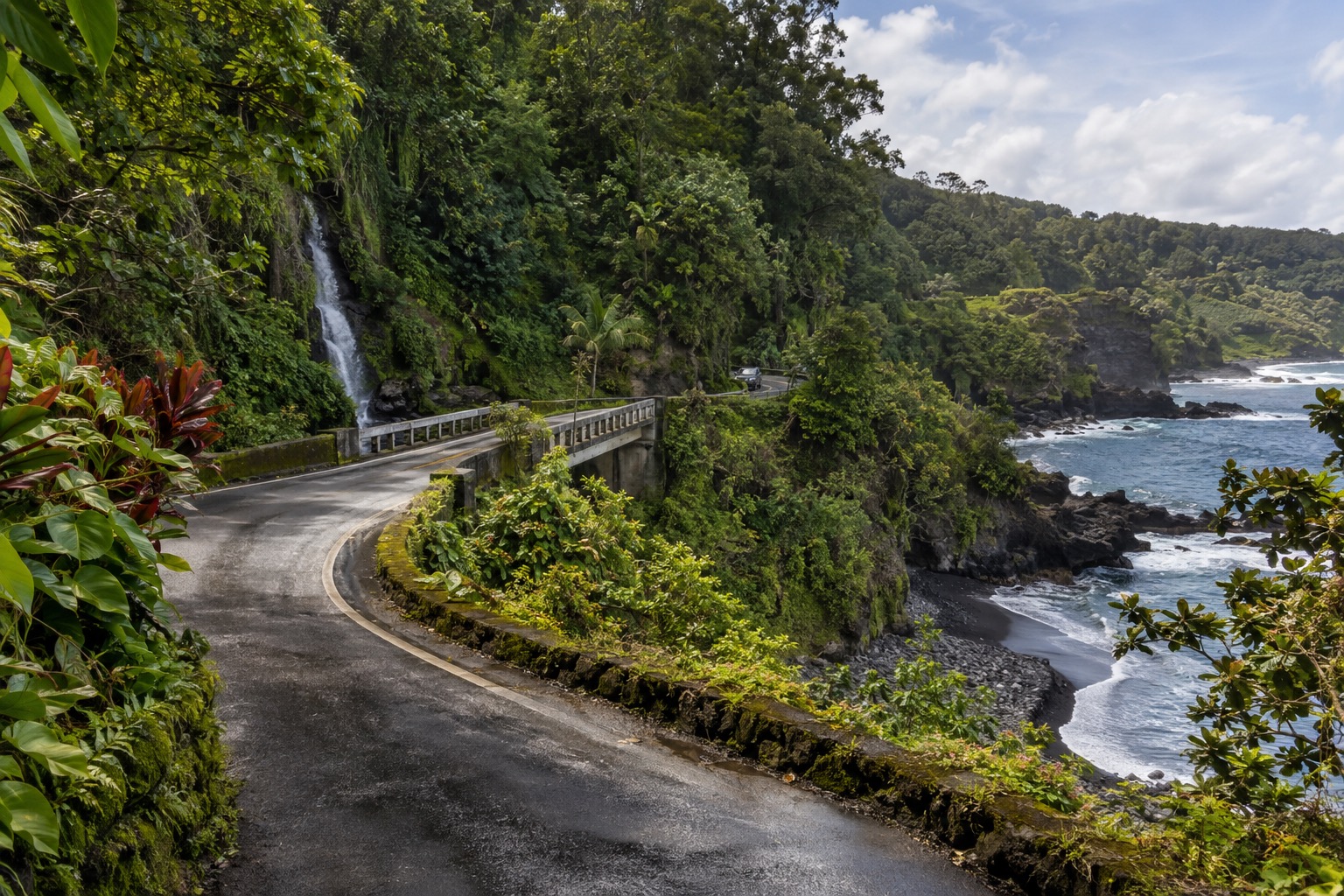
In April the road into Hana is a ribbon of wet green, with ginger and wild hibiscus along the shoulder, waterfalls still running from the winter rains, and roadside stands selling banana bread warm from the oven. The town itself is a handful of shops, a ballpark, a bay and a lot of quiet. In April, Hana feels like warm rain, cool pools, and a couple of slow days on the wet, wild east side of Maui.
What is the weather like in Hana in April?
Warm, soft and still damp: April in Hana is a month of comfortable T-shirt days, passing showers and a sky that changes every hour. Winter’s heaviest rains have eased, though this is a windward coast and the clouds never really leave.
| Month | Average high (°F) | Average low (°F) | Rainfall (inches) | Sea (°F) |
|---|---|---|---|---|
| March | 77.5 | 65.7 | 8.46 | 75.8 |
| April | 78.2 | 67.4 | 5.00 | 76.2 |
| May | 79.7 | 68.4 | 5.43 | 76.9 |
Mornings start mild and a little humid, often with the sun lighting up the hills before a cloud drifts in. Showers tend to be short and come off the ocean on the trade winds, so a gray patch can pass in minutes and leave the air smelling of wet earth. Afternoons are the warmest stretch, pleasant rather than hot, and the shade under the banyan and breadfruit trees is rarely needed for long.
Rain here is not an exception, it is the character of the place. The wetter slopes above town and the rainforest along the coast stay lush because of it, while the dry, sunny south side of Maui lies on the other side of the mountain. Evenings are mild enough to sit outside in a light layer, and nights cool just enough that a thin sweater feels good after dinner.
Dress for showers and sun in the same hour: a light rain jacket, quick-drying clothes and sandals with a grip. The light is soft and silvery on cloudy mornings and turns golden late in the day, a good time for photographs of the coast and the sea cliffs.
Can you swim in Hana in April?
Yes, the water is warm enough for a relaxed swim, pleasantly cool when you first step in and easy to stay in once you are moving. The sea off Hana sits in the mid-70s, so most people can snorkel or paddle without a wetsuit.
What decides a swim here is the surf rather than the temperature. Hana faces the open ocean on the windward side, and the swells and currents can change from one day to the next.
Small, sheltered spots such as Hana Bay and the curve of Koki Beach look inviting, and Hamoa Beach is a long, pretty crescent with a lot of local use, but on any beach the lifeguards, the flags and the posted signs have the last word. Nervous swimmers and families with small children often prefer to wade at the edge and watch the waves before going further.
Bring a mask and snorkel if you like to look at fish when the water is clear, water shoes for rocky entries, and mineral sunscreen. The reef is alive, so stay off it, and give any turtle or monk seal resting on the sand plenty of room.
What to do in Hana in April
April has no single headline event in Hana, and that is part of its charm. The town goes about its own business: fishermen at the bay, kids at the ballfield after school, church bells on Sunday, a stand at the corner selling fruit. When Easter falls in the month, families gather for picnics and the island’s attention turns toward the Merrie Monarch hula festival in Hilo the week after, which people here often watch on television from home.
The season suits the outdoors. The waterfalls are still full after the winter, the trails are green, and the heat is not heavy enough to wear you out by lunch. Food follows the same easygoing pattern: plate lunches, fish tacos, banana bread, fresh coconut and tropical fruit from roadside stands, plus a simple dinner in town or at a lodge, since restaurants in Hana are few and tend to be small.
The Road to Hana and its waterfalls
Most visitors come by the Hana Highway from Paia and Kahului, a winding road of one-lane bridges, hairpin curves and rainforest walls. It is the journey that matters. Plan to stop at the small waterfalls, the bamboo groves and the lookouts over the sea, and keep the driving relaxed because the road asks for patience, not speed.
April’s water volume makes the falls look their best, especially after a night of rain, and the lighter crowds of a non-holiday week make the pullouts easier. Start early so that the stops feel unhurried and the drive back is in daylight. It suits anyone who likes to stop and look, and less so anyone prone to carsickness. Bring snacks and cash for the roadside stands.
Beaches, black sand and the Hana coast
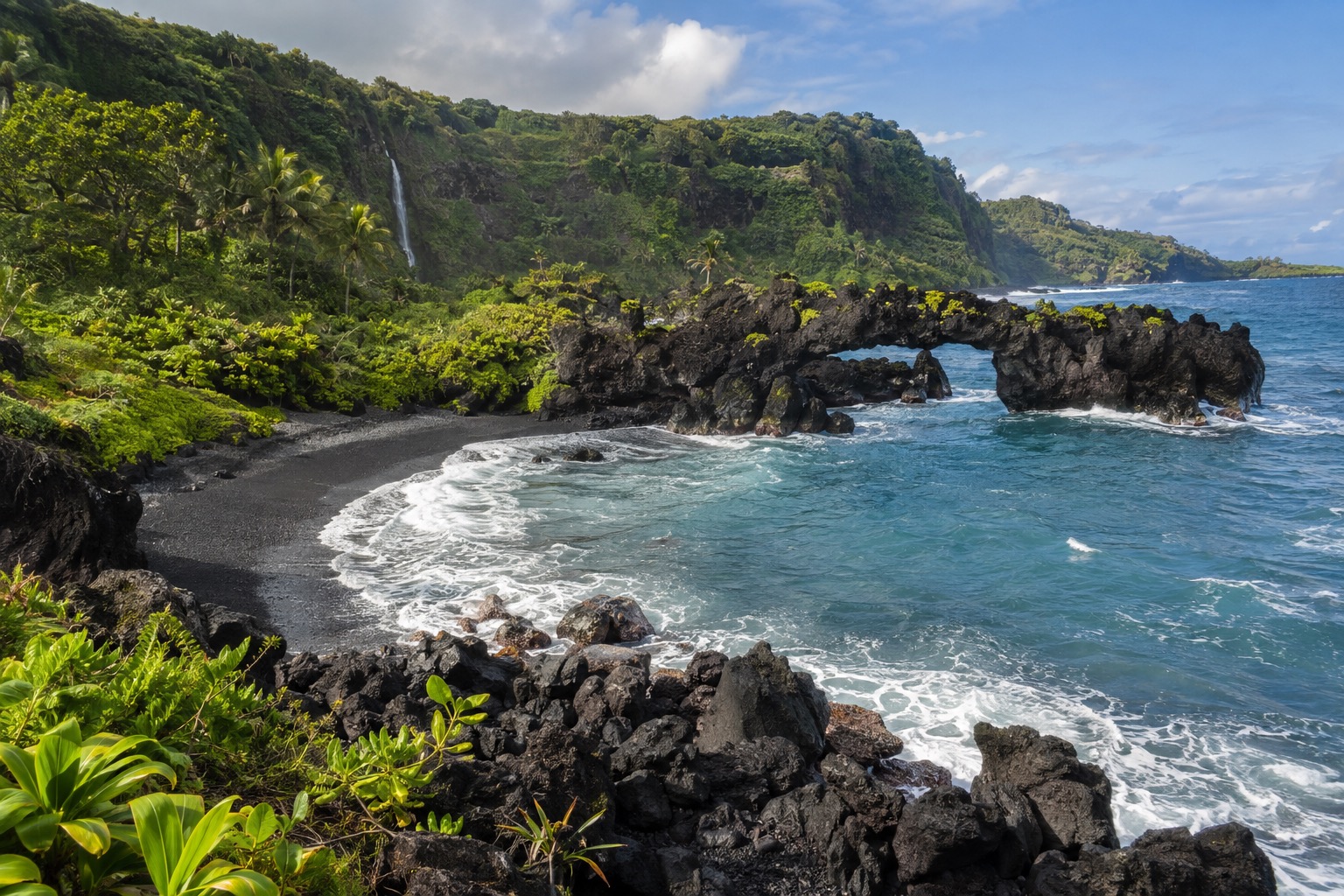
The coast around Hana is a collection of small, distinct places. Waianapanapa is known for its black sand, sea caves and a lava shoreline with a coastal path through hala trees, a dramatic spot when the surf is up and the sky is moody. Hamoa Beach is the one people talk about for its wide arc of pale sand, and Koki Beach next door has a red hill rising behind it.
Go in the morning when the light is clear and the sand is quiet, then come back for sunset if the clouds break. A towel, a picnic from the general store and a patient eye on the waves are the only equipment you need. These beaches are for lingering, reading and watching surfers, more than for a long swim.
Kipahulu and the quiet south side
Beyond Hana town, the road continues to Kipahulu, the coastal section of Haleakala National Park. Here the landscape is a sequence of pools, ocean cliffs and, for those who walk the Pipiwai trail, a bamboo forest that rattles in the wind and leads to a tall waterfall. In April the stream flow is generous and the forest is at its greenest.
Give this place a good portion of a day, with comfortable shoes and a rain layer, since showers are part of the experience. It suits hikers, photographers and anyone who prefers a walk to a beach, and it is a good reward for the last stretch of the drive.
Back in town, two smaller visits fit between the big ones. Hana Bay is a calm place to watch outrigger canoes and local fishermen, and the Hasegawa General Store is a landmark for snacks, drinks and a sense of how the community runs. Kahanu Garden, a botanical garden by the sea, is a gentle place to look at breadfruit trees and the great stone temple nearby, from the outside and with respect for the site.
A two-day itinerary for Hana in April
Day 1. Leave Paia or Kahului early, before the road fills, and let the drive be the morning. Stop at a waterfall or two, buy banana bread from a roadside stand, and reach Hana by midday. Daylight lasts a little past twelve and a half hours in mid-April, so there is no need to rush, but the afternoon light is lovely and the day is long enough for everything.
After lunch at a plate lunch counter or food truck, walk Hana Bay, then head to Koki and Hamoa for the afternoon. Wade, read and watch the surf. Save the evening for a simple dinner and an early night, since Hana quiets down fast and the stars over the coast are worth a few minutes outside.
Day 2. Rise early and drive on to Kipahulu while the air is cool and the trail is quiet. Walk the Pipiwai trail through the bamboo and see the waterfall at the end, then spend the middle of the day by the pools and the sea cliffs. Take lunch with you or pick it up in town, since the options along the way are limited.
In the afternoon, return toward Hana for Waianapanapa and its black sand shoreline, and finish with a last stop at Kahanu Garden or the general store. When the rain takes hold, move to a gentler pace: a leisurely lunch, time in a gallery or a neighborhood shop, a drive to watch the waterfalls running fuller, and dinner early ahead of the trip back.
Is Hana busy in April?
Moderately, with a calm that surprises people who expect the Hana Highway to be a parade. April sits between the winter holidays and the summer family weeks, so the crowds are real but not overwhelming, and the town keeps its unhurried feel.
Spring break weeks bring families from the mainland, and Easter, when it falls in the month, adds a busier stretch at the beaches and viewpoints. Day-trippers from the resort areas fill the pullouts and parking areas between mid-morning and mid-afternoon, which is one more reason to start early or stay late. At the end of the day, the town goes quiet.
Lodging in Hana is limited, and small inns, cottages and vacation rentals are the usual choice. Book early for the holiday weeks and for any trip that hinges on a specific place, and a few weeks ahead can be enough for quieter stretches of the month.
Rental cars across Maui are in demand around spring break, so reserve the car with the room. Restaurant tables are rarely a problem, but small places may close early, so plan dinner before dark. If a park, trail or boat on your list requires a reservation, check the official notice for it before you travel, because rules can change and it is better to learn them at home than at the gate.
What to pack for Hana in April
Pack for warm, damp days that turn from sun to shower and back, with real walking on wet ground.
- A light rain jacket, because showers pass quickly but often.
- Shoes with grip for muddy trails and slippery rocks near waterfalls.
- Quick-drying shirts and shorts that dry between showers.
- Mineral sunscreen and a hat for the bright hours between clouds.
- Water shoes and a mask for rocky beaches and clear mornings.
- Insect repellent for the forest trails.
- A small dry bag for your phone and camera.
Good to know before you go
April falls outside the official hurricane season, which runs from June 1 to November 30 in the Central Pacific. The practical issues are the road and the pace. Fill the gas tank before leaving the Kahului side, bring snacks and water, and allow a full day for the highway rather than treating it as a quick drive.
Along the coast your phone signal may vanish, so get your maps before you go, and honor what this place asks: treat private land with respect, remain on trails that are marked and let sacred sites stay just as you found them. Many small businesses in Hana close early, so lunch and groceries are best planned before late afternoon.
Hana in April vs March and May
Moving a month earlier brings a wetter Hana. March is the rainier of the three, the trails are muddier and the clouds linger longer, though the waterfalls are at their loudest and the winter surf can still be big on exposed beaches. The sea is a shade cooler and the crowds of spring break are often at their height. If you want drama and don’t mind rain, March has it.
A month later, May is a touch warmer and slightly drier, with the sea warmer still and the first signs of the summer pattern. The holiday-week rush gives way to quieter days before the school break begins, so rooms and tables are easier to find, and the beaches feel gentler as the winter swells ease. The falls are a little less full, but the days are longer and more reliably bright.
Choose April for a balance: warm sea, softer rain than March, and a road that is busy but manageable. Shift earlier for roaring waterfalls and moody skies, later for the easiest beach days and the calmest pace. Anyone tied to school calendars should keep to April or May, and anyone who wants maximum quiet is best served by a midweek stay.
Is April a good time to visit Hana?
Yes, especially for travelers who like green landscapes, waterfalls and slow days more than a polished resort scene. April gives you warm water, soft light and trails that are lush without being at their wettest, and a town that still feels like itself.
It suits hikers, photographers, couples and families with older children who enjoy a road trip. It is less ideal for anyone who needs guaranteed dry weather, who dislikes winding roads or who wants a lively nightlife. Those travelers will be happier on the sunny south and west sides of Maui, with Hana as a day trip or not at all.
On arrival, start with the easy things: a walk on Hana Bay, a plate lunch, a look at the sea from the beach of your choice. Let the first evening be quiet and plan the big outings, Kipahulu and the coast, for the following morning when the light is fresh. What makes April special in Hana is its in-between mood: the last of the winter rain still feeding the falls, the sea warming toward summer, and a town that waits at the end of the road with banana bread, black sand and an open sky.
Sources
- NOAA NCEI, monthly normals 1991-2020, station USC00511125, checked September 8, 2026
- Open-Meteo Marine API, average 2015-2024, checked September 8, 2026
- sunrise-sunset.org, sunrise and sunset calculated for the 15th of the month, checked September 8, 2026
- NOAA NCEI, normals 1991-2020, stations USC00511125 (Hana AP) and USC00515842 (Makena), via PLAN-HAWAII.md §1
- NWS Honolulu / Central Pacific Hurricane Center, « 2026 Central Pacific Hurricane Season Outlook », weather.gov/hfo/hurricaneOutlook2026, checked September 24, 2026