
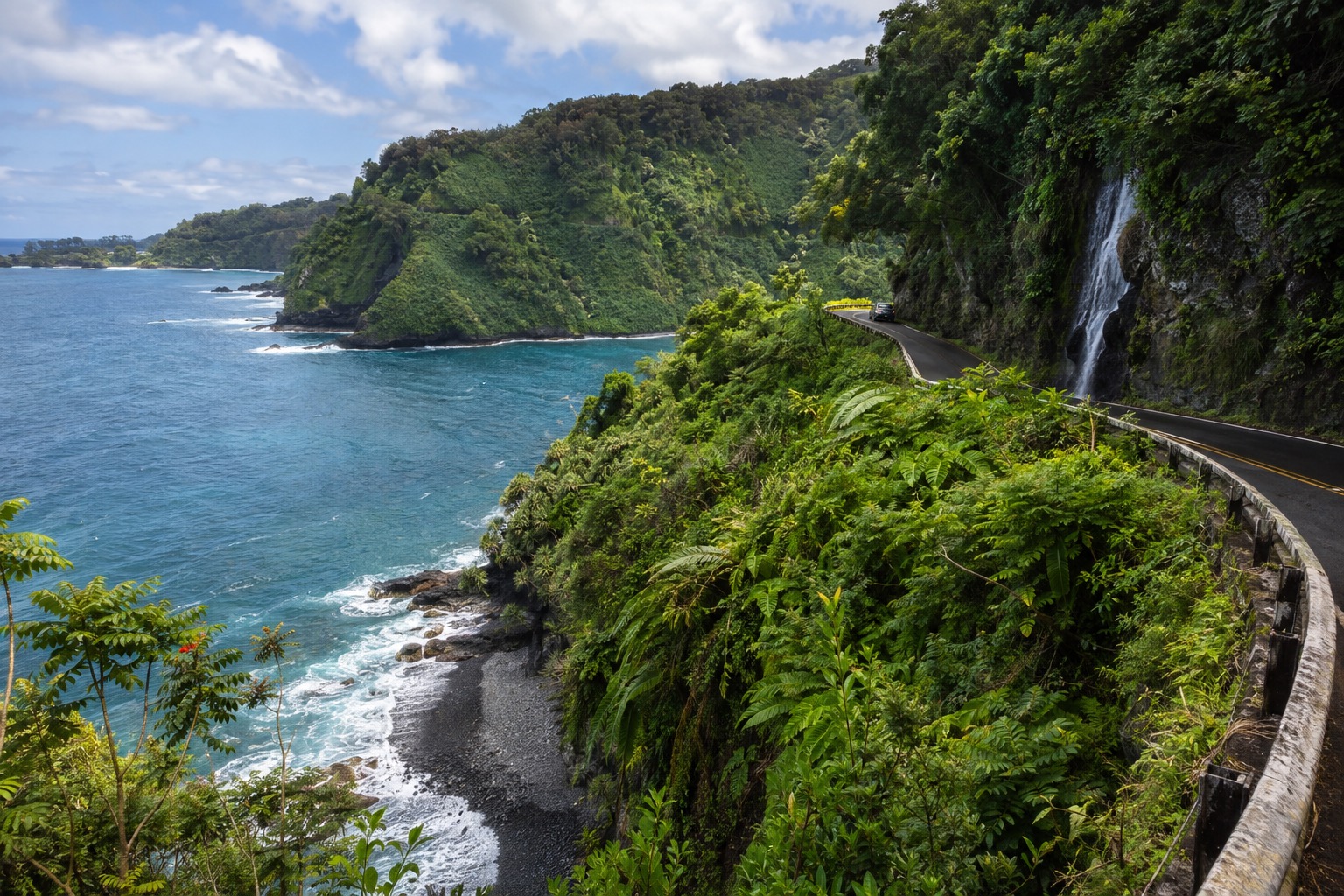
In September, the road to Hana is lined with fruit stands, and the smell of warm banana bread drifts out of roadside shacks while rain drips off the leaves of the rainforest. The town itself is slow and quiet, with roosters in the yard, a few pickups outside the general store and the bay shining at the end of the street. Early fall on this wet, green east coast of Maui suits travelers who want waterfalls, sea swims and long days with nothing scheduled.
What is the weather like in Hana in September?
September in Hana is warm, soft and green, with sunny stretches broken by passing showers, much like the summer just ended.
| Month | Average high (°F) | Average low (°F) | Rain (inches) | Sea (°F) |
|---|---|---|---|---|
| August | 82.9 | 71.7 | 5.99 | 79.5 |
| September | 82.5 | 70.3 | 6.12 | 80.2 |
| October | 81.9 | 70.5 | 6.88 | 80.1 |
Because Hana is located on Maui’s windward side, moisture is driven by the trade winds into the slopes of Haleakala, and rain occurs here much more frequently than at the Wailea or Kihei resorts. That rain usually comes as short, heavy showers that pass in minutes, often at night or in the early morning, and then the sun returns and the wet road steams. Plan for a shower or two on any given day and you will rarely be bothered.
Mornings are fresh and bright, with the best light on the cliffs and the bay. By midday it is warm and humid enough that a walk in the forest leaves your shirt damp, though the breeze off the water helps. Evenings stay mild, so you can sit outside after dark in a T-shirt, perhaps with a light layer if the wind picks up.
Days are a little over twelve hours long, which gives time for a full outing without racing the dusk. Dress in quick-drying fabrics, expect mud on the trails after rain, and keep a light rain jacket within reach rather than at the bottom of the bag.
Can you swim in Hana in September?
You can take a long, comfortable swim because the water is warm, and it pays to pack a mask and snorkel, but conditions vary by day and by beach.
Hana faces the open Pacific on the windward coast, so the water is not the sheltered lagoon of a resort beach. In late summer and early fall the swell on this side is usually smaller than in winter, yet shore break, currents and rough days still occur.
Hana Bay, with its sandy edge and a pier and park nearby, tends to be gentler. Hamoa Beach, a wide crescent that locals love, has real waves that suit bodysurfers more than nervous swimmers.
If you have little ones in tow, or you are not a confident swimmer, keep near the shoreline, take a few minutes to study the ocean before you step in, and obey the posted signs and whatever lifeguard is on duty. Many of these beaches have no lifeguard at all, so the decision is yours. Pack a rash guard for sun protection and water shoes for stony entries, and apply mineral sunscreen, the sole type Maui County permits to be sold without a prescription.
What to do in Hana in September
September is a month of fruit and quiet in Hana. The summer family rush has ended, the roadside stands still sell bananas, papayas and coconut candy, and the rain keeps every waterfall running. There is no need to chase a festival here. The pleasure is in an unhurried day of beaches, green trails and a good plate lunch.
Eating is simple and local. Banana bread from a roadside stand is the classic snack, and you may find fresh coconut, lilikoi and mango-style fruit on offer too. In town, plate lunches, kalua pork, poke and shave ice are the staples, and the small general store is where locals pick up supplies. Bring a cooler for fruit and a few dollar bills for honor-system stands.
Waianapanapa and Hana Bay
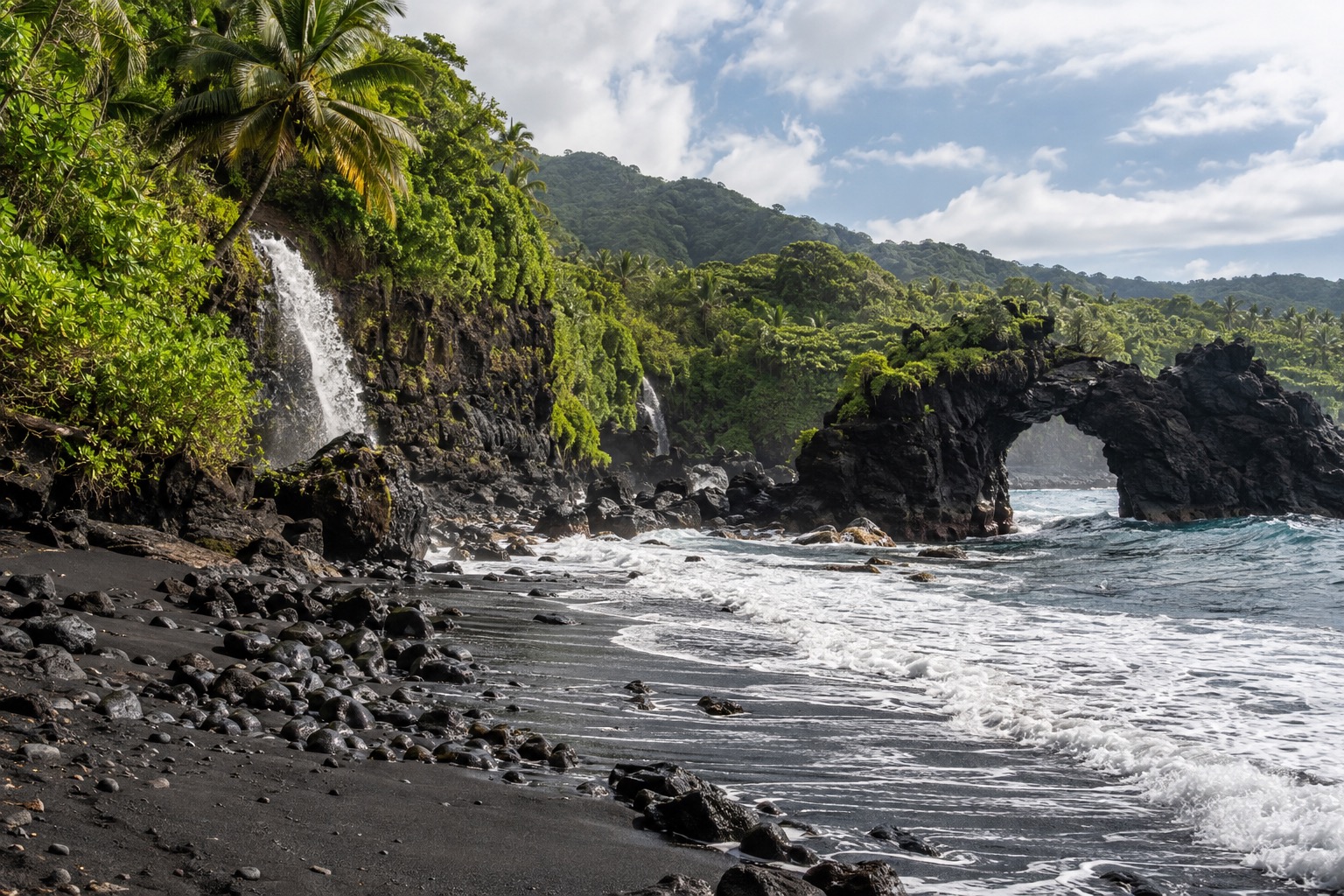
Waianapanapa State Park is the black sand beach everyone pictures, with dark volcanic pebbles, green jungle at its edge, sea arches and lava rock cut by waves. A coastal path runs along the cliffs, past blowholes and caves that fill when the swell is up. It lies a short drive from town on the way in or out, and early morning is the best time, when the light is soft and the crowds are thin.
The color of the sand is striking against the surf, but this is a place to look and walk rather than swim, since waves here can be heavy and the currents strong. Wear shoes with grip, because the lava rock is sharp and slippery after a shower. Afterward, drive back into Hana Bay for a calmer stretch, where you can wade, watch local kids fish from the pier and picnic in the shade.
Kipahulu and the Pipiwai Trail
Past Hana, the road runs on to the Kipahulu district of Haleakala National Park, where streams drop through the forest to the sea. A dense bamboo grove is where the Pipiwai Trail ascends, the stalks clacking in the breeze, before finishing at Waimoku Falls, a slender ribbon falling down a high cliff. It takes a good part of a day with stops, so go early.
The trail suits most walkers with decent shoes, but rain makes the boardwalks and stones slick and the path muddy. In September the falls often run strongly, and the cool shade under the bamboo is welcome in the humid afternoon. Bring water and a snack, wear something that can get wet, and treat the stream pools as scenery unless a ranger says otherwise. Check the park notices before driving out.
Hamoa, Koki and the quiet coast
South of town, Hamoa Beach is a favorite for lying out, reading and watching surfers and bodyboarders in the shore break. Koki Beach, close by, has a red-brown cliff behind it and often draws local surfers when the swell is up. Both are better for sitting and watching than for casual swimming, and you should read the sea before stepping in.
A short way along are smaller stops. Kahanu Garden holds breadfruit trees and a large stone temple, a Hawaiian sacred site that deserves quiet respect, so do not climb on the stones. The Palapala Hoomau church, where aviator Charles Lindbergh is buried, sits in a peaceful spot above the sea, and there is no hurry here, just wind and ocean light.
Other good stops along the Hana Highway include the little waterfalls beside the road, the rainbow eucalyptus trees whose bark peels in streaks of green, orange and purple, and the Keanae Peninsula, where taro patches and a small village face the surf. Rain is common on the road, so drive carefully, pull over to let faster locals pass and never block a one-lane bridge.
A two-day itinerary for Hana in September
Day 1. Start early on the highway to catch the road before the traffic, stopping for banana bread and the Keanae Peninsula on the way. Reach Hana by late morning, with showers likely to pass quickly. Have a plate lunch in town, then spend the afternoon at Waianapanapa, walking the coastal path in the softer light.
Late in the afternoon, settle into Hana Bay for a gentle wade and watch the light fade over the water. Dinner is simple, at a small restaurant or a food truck, and the town goes quiet soon after dark. If the rain turns steady, spend the afternoon in the town’s small shops, galleries and cultural center instead, then try again at the beach when it clears.
Day 2. Drive out early to Kipahulu and walk the Pipiwai Trail before the humid heat builds, taking time at the bamboo forest. Eat a picnic lunch near the park after the falls, then head back toward Hana by early afternoon so the winding road is not tackled tired or in the dark.
Spend the afternoon at Hamoa or Koki, watching the surf from the sand and swimming only if the water looks calm. Visit Kahanu Garden or the Lindbergh church on the way back. In a downpour, the trail is a poor idea, so linger over a long lunch, browse a local gallery and save the beach for the evening break in the clouds.
Is Hana busy in September?
Hana is quieter in September than in midsummer, although the road is never truly empty, since day-trippers from the resort areas come out whatever the month.
The school-vacation crowd has gone home by now, so rooms and rental cars are easier to find than in July. The highway fills mostly in the middle of the day, when tour vans and rental cars reach the same stops at the same hour. Leave early or stay overnight, and you will have beaches and trails almost to yourself in the morning and late afternoon.
Hana has few places to stay and few places to eat, so even a quieter month rewards booking ahead. Lodging, small restaurants and any tour fill faster than the town’s size suggests, so reserve your room early and arrive for dinner on the early side. Fall weeks around holiday weekends bring a little more traffic, while ordinary weekdays stay calm.
Some popular sites on Maui, such as state parks and national park areas, use their own entry or reservation systems that change from time to time, so look at the official park pages before you go. The September rhythm is easy otherwise, with open tables, empty stretches of sand and room to stop wherever the light is good.
What to pack for Hana in September
Pack for warm, damp days that mix beach, forest and long drives, and keep a small day bag ready to carry the wet things.
- A light rain jacket, for the short showers that cross the coast at any hour.
- Trail shoes with real grip, since the Pipiwai Trail and the lava rock at Waianapanapa are slick when wet.
- Mineral sunscreen and a rash guard, for strong sun between the clouds.
- Water shoes, for rocky beach entries and stream crossings.
- Bug spray, for the evenings and the damp forest.
- A small cooler and cash, for roadside fruit and banana bread.
Good to know before you go
September falls inside the Central Pacific hurricane season, which runs from June 1 to November 30, so keep an eye on the forecast and leave room in your plans for a change. Fill the tank and buy food and supplies before you head to Hana, since services in town are limited. The road is narrow, winding and often wet, so allow generous time and drive in daylight when you can.
Hana in September vs August and October
Moving earlier to August brings the summer family weeks, with more cars on the road, fuller rooms and a livelier feel at the beaches. The sea is nearly as warm and the weather very similar, so the difference is mainly crowds. If you want the same warmth with fewer people, September is the calmer of the two.
Moving later to October, the rain tends to rise a little as the wetter season approaches, so showers may be longer and the trails muddier. The sea stays warm and the days shorten slightly, but the road and the beaches often remain quiet. Waterfalls can look their best as the rain returns, which pleases photographers more than sunbathers.
Families tied to school schedules will find August easier, and those who like lush scenery over sun should consider October. For a good mix of warm water, green hillsides, manageable crowds and relaxed bookings, September is the steady middle, and the simplest choice for a first visit.
Is September a good time to visit Hana?
Yes, September is a good time to visit Hana for anyone who wants a slow, green, unhurried stay and does not mind a passing shower.
It suits hikers, beach-sitters, photographers and travelers who like to stop at every fruit stand. For anyone who counts on dry weather around the clock, or who is looking for nightlife, resort pools and a big restaurant scene, Hana is a poorer fit, because it has hardly any of those things. Those travelers will be happier on the dry leeward coast of Maui.
On arrival, drive the road early, take your first walk at Waianapanapa while the morning light is soft, and keep the rest of the day loose. The September version of Hana is warm sea, dripping forest, a bag of banana bread on the passenger seat and a bay where nothing much is happening, which is exactly the point.
Sources
- NOAA NCEI, monthly normals 1991-2020, station USC00511125, checked September 8, 2026
- Open-Meteo Marine API, average 2015-2024, checked September 8, 2026
- sunrise-sunset.org, sunrise and sunset calculated for the 15th of the month, checked September 8, 2026
- NOAA NCEI, normals 1991-2020, stations USC00511125 (Hana AP) and USC00515842 (Makena), via PLAN-HAWAII.md §1
- County of Maui, Mineral Only Sunscreen, relayed by Maui Now, checked September 25, 2026
- NWS Honolulu / Central Pacific Hurricane Center, « 2026 Central Pacific Hurricane Season Outlook », weather.gov/hfo/hurricaneOutlook2026, checked September 24, 2026