
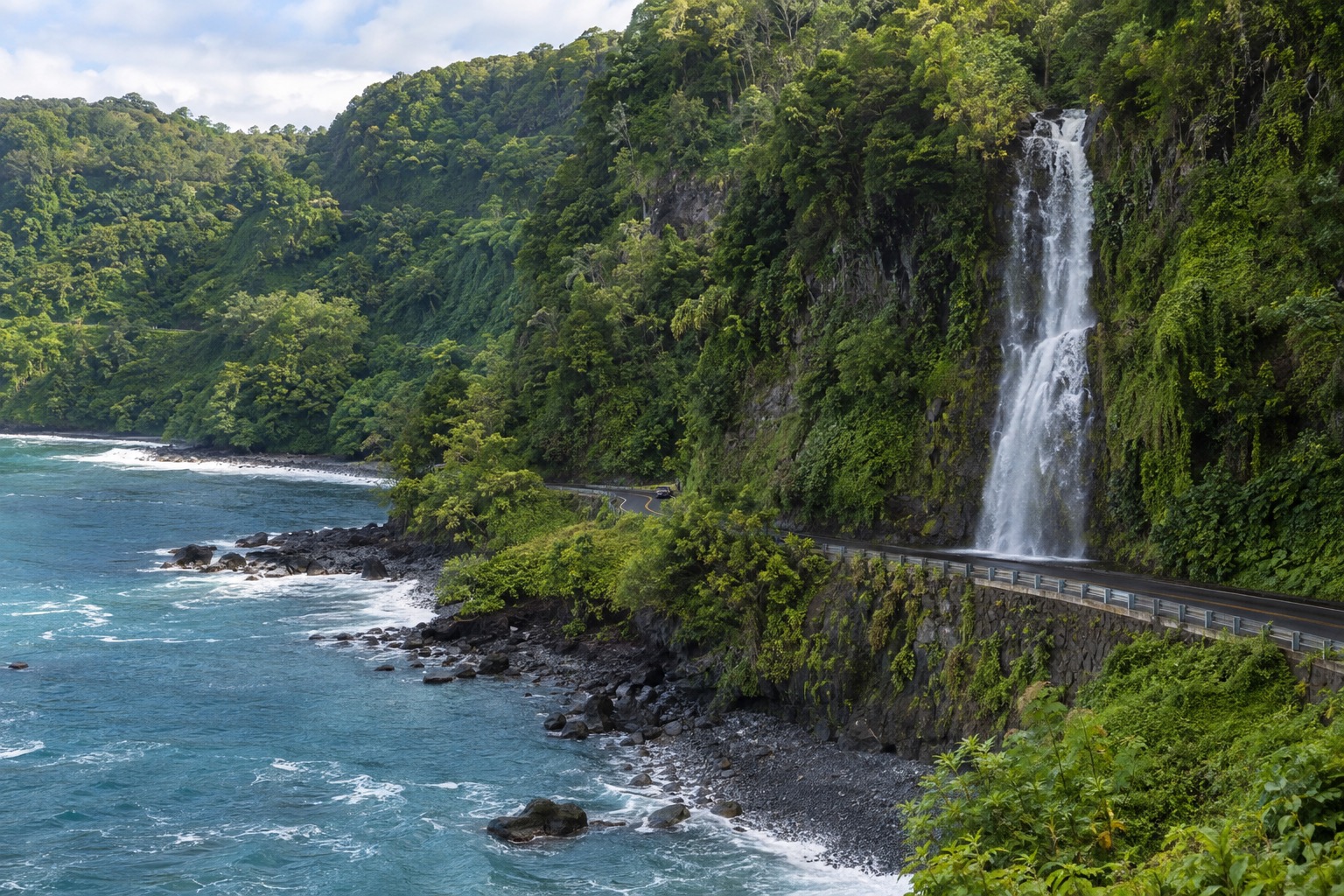
Hana is a place of wet green cliffs, roadside banana bread stands, and waterfalls that keep running even on the sunniest afternoon. The long, winding road in from Kahului sets the mood, and once you arrive the pace drops to a crawl. The year here comes in two moods, a warmer stretch from late spring into fall and a cooler, rain-fed winter, and each suits a different kind of trip to this far corner of Maui.
When is the best time to visit Hana?
The best time to visit Hana is from late spring through early fall, roughly May to September, for travelers who want warm days and the warmest ocean. Rain never really leaves this side of Maui, so the real choice is how much warmth and how much crowd you want.
For beaches and swimming, summer and early fall are the pick. The air is at its warmest, the sea is at its softest, and the north and east shores tend to be less rough than in winter. Hamoa Beach, south of town, and the black sand of Waianapanapa are the draws. If you plan to visit Waianapanapa State Park, keep in mind that every visitor needs a reservation booked in advance for a specific time slot. Big winter waves can turn these beaches rough, so before entering the water, check the posted warnings along with that day’s surf and currents, and swim where a lifeguard is on duty.
For sightseeing and the drive itself, the cooler months are pleasant, with waterfalls running full and the rainforest at its lushest. Showers come in and out all year, so a rain jacket belongs in the car in every season. If you would rather leave the curves to someone else, the state tourism authority suggests that visitors experience the road on a permitted tour led by professional guides, an option worth considering.
For budget and quiet, the shoulder stretches in late April and May, and again in September and October after the summer family rush, leave the road and the small town calmer. Families should know that spring break in March is loud across Maui, with the Hana Highway busier and rooms harder to find. Summer works well for kids who want to splash, but it is also when other families are on the road.
Hana weather by month
Temperatures barely move through the year, but the rain does not take a real break in any month.
| Month | Average high (°F) | Average low (°F) | Rain (in) | Rain days | Sea (°F) |
|---|---|---|---|---|---|
| January | 77.8 | 64.8 | 5.64 | 5.64 in of rain | 77.5 |
| February | 77.3 | 65.0 | 5.45 | 5.45 in of rain | 76.4 |
| March | 77.5 | 65.7 | 8.46 | 8.46 in of rain | 75.8 |
| April | 78.2 | 67.4 | 5.00 | 5.00 in of rain | 76.2 |
| May | 79.7 | 68.4 | 5.43 | 5.43 in of rain | 76.9 |
| June | 81.1 | 69.8 | 4.45 | 4.45 in of rain | 78.3 |
| July | 81.7 | 71.2 | 5.49 | 5.49 in of rain | 79.2 |
| August | 82.9 | 71.7 | 5.99 | 5.99 in of rain | 79.5 |
| September | 82.5 | 70.3 | 6.12 | 6.12 in of rain | 80.2 |
| October | 81.9 | 70.5 | 6.88 | 6.88 in of rain | 80.1 |
| November | 80.2 | 69.8 | 6.65 | 6.65 in of rain | 79.5 |
| December | 78.8 | 68.0 | 6.59 | 6.59 in of rain | 78.4 |
The year runs gently from mild winter days in the high 70s to summer afternoons in the low 80s, with nights that stay comfortable all year. Rain is present in every month, so no season here is truly dry.
Winter brings longer, steadier wet spells and the wettest month is March. Summer is a little drier, with June the lightest, and its showers tend to pass quickly. Fall turns wetter again, and October and November are among the rainier months.
When is Hana cheapest and least crowded?
Hana is quietest in the shoulder months, mainly late April through May and again from September to early November, outside the big holiday weeks. Crowds here are about the road, since the narrow highway and the small number of rooms mean a busy day feels busy fast.
The peak weeks are the winter holidays from Christmas to New Year, spring break in March, Easter week, the Presidents Day and Memorial Day weekends, and the long summer family stretch from late June through August. Rooms in and around town are few, so they go early at those times, and the parking areas at the beaches and waterfalls fill by midmorning.
In the quiet months the rhythm changes. You can often find a spot at Hamoa without much company, the stops along the highway feel unhurried, and the shops in town are easier to browse. Rooms are easier to find, and you have more freedom to linger.
Which months should you avoid in Hana?
No month is a real mistake, but the wettest stretch, roughly November through March, is the one to plan around if you hope for steady sun, and the hurricane season is the other thing to know.
The Central Pacific hurricane season runs from June 1 to November 30. Hawaii is rarely hit, but the season overlaps with the summer and fall peak, so keep an eye on forecasts before a trip. Outside those dates, from December to May, you are outside the official hurricane season.
Winter has its own character. Hana sits on the windward side, so it is far wetter than the sunny resort coasts, and winter wet spells can last several days. Big winter surf also makes north and east shores rough, and on those days the beach is for watching rather than swimming. The tradeoff is green hillsides and full waterfalls. Late summer is the hottest stretch, with the warmest afternoons of the year, but even then the trade winds and the shade of the rainforest keep it comfortable.
When can you swim in Hana?
You can get in the water in any month, since the ocean stays warm all year, but the nicest stretch is from June through November, when it is at its warmest.
Winter and early spring are the coolest, with the sea in the mid-70s, which still feels comfortable for most swimmers in the sunshine. By summer it warms into the upper 70s, and it peaks in early fall in the low 80s. That makes September and October lovely for long sessions in the water.
Temperature is only part of it. In winter, swells from the north and east can make the beaches rough, and in summer they are generally gentler, but conditions change by the day. Pailoa Beach at Waianapanapa is black sand and often has strong surf, so it is a place for looking and wading with care. If the sea is calm and the posted warnings, surf, and currents say it is safe, swim near a lifeguard where one is on duty.
In Kipahulu, safety concerns keep visitors out of the Pools of Oheo, so the way to see them is from the Kuloa Point Trail. If you use sunscreen, remember that Maui County allows only mineral sunscreens with zinc oxide or titanium dioxide to be sold or distributed without a prescription.
Festivals and events in Hana through the year
Winter on the windward coast: whales and holiday weeks
Winter is humpback whale season off Maui, and from the Hana coast you can sometimes spot spouts and breaches from the shoreline cliffs and roadside pullouts. The month-by-month window is something to confirm with local operators, but the winter months are the heart of it.
The Christmas and New Year weeks bring families and visitors to the road, and this is when the small town is at its busiest. It is a good time for slow breakfasts, banana bread from a roadside stand and a long drive between waterfalls under green hills.
Spring and summer: Lei Day and Kamehameha Day
May 1 is Lei Day across Hawaii, and in a small community like Hana it shows up in flower leis, school events and simple gatherings rather than big crowds. It is a good moment to see the local craft of lei making and to appreciate the flowers that grow all along the road.
Kamehameha Day on June 11 is a state holiday honoring the king who united the islands. Look for lei draping, parades and community celebrations around Maui, while Hana itself keeps things low-key. The holiday often brings a long weekend, so the road can be busier than usual.
Fall: quiet roads and the warmest sea
Fall has no single big festival in Hana, and that is part of its appeal. The summer rush has passed, the ocean is at its warmest, and the pace in town slows down. It is a good season for hikes to Waimoku Falls in Kipahulu and for long, unhurried afternoons at Hamoa.
Showers return in October and November, so plan mornings outdoors and keep afternoons flexible. The hurricane season runs until November 30, so keep an eye on the forecast if you are traveling in that window.
Sources
- NOAA NCEI, monthly normals 1991-2020, station USC00511125, checked September 8, 2026
- Open-Meteo Marine API, average 2015-2024, checked September 8, 2026
- sunrise-sunset.org, sunrise and sunset calculated for the 15th of the month, checked September 8, 2026
- Hawaii Tourism Authority, Go Hawaii, Hana (gohawaii.com/islands/maui/regions/east-maui/hana) ; HVCB, map Driving Times from Kahului Airport (2010), checked September 25, 2026
- Library of Congress, HAER HI-75 Hana Belt Road ; Hawaii DOT, Hana Belt Road Historic District (hidot.hawaii.gov, appendix E vol. 3), checked September 25, 2026
- Hawaii DLNR, Division of State Parks, Waianapanapa State Park (dlnr.hawaii.gov/dsp/parks/maui/waianapanapa-state-park), checked September 25, 2026
- NPS, Haleakala National Park, pages Kipahulu District and Fees & Passes, checked September 25, 2026
- NOAA NCEI, normals 1991-2020, stations USC00511125 (Hana AP) and USC00515842 (Makena), via PLAN-HAWAII.md §1
- County of Maui, Mineral Only Sunscreen, relayed by Maui Now, checked September 25, 2026
- NWS Honolulu / Central Pacific Hurricane Center, « 2026 Central Pacific Hurricane Season Outlook », weather.gov/hfo/hurricaneOutlook2026, checked September 24, 2026