
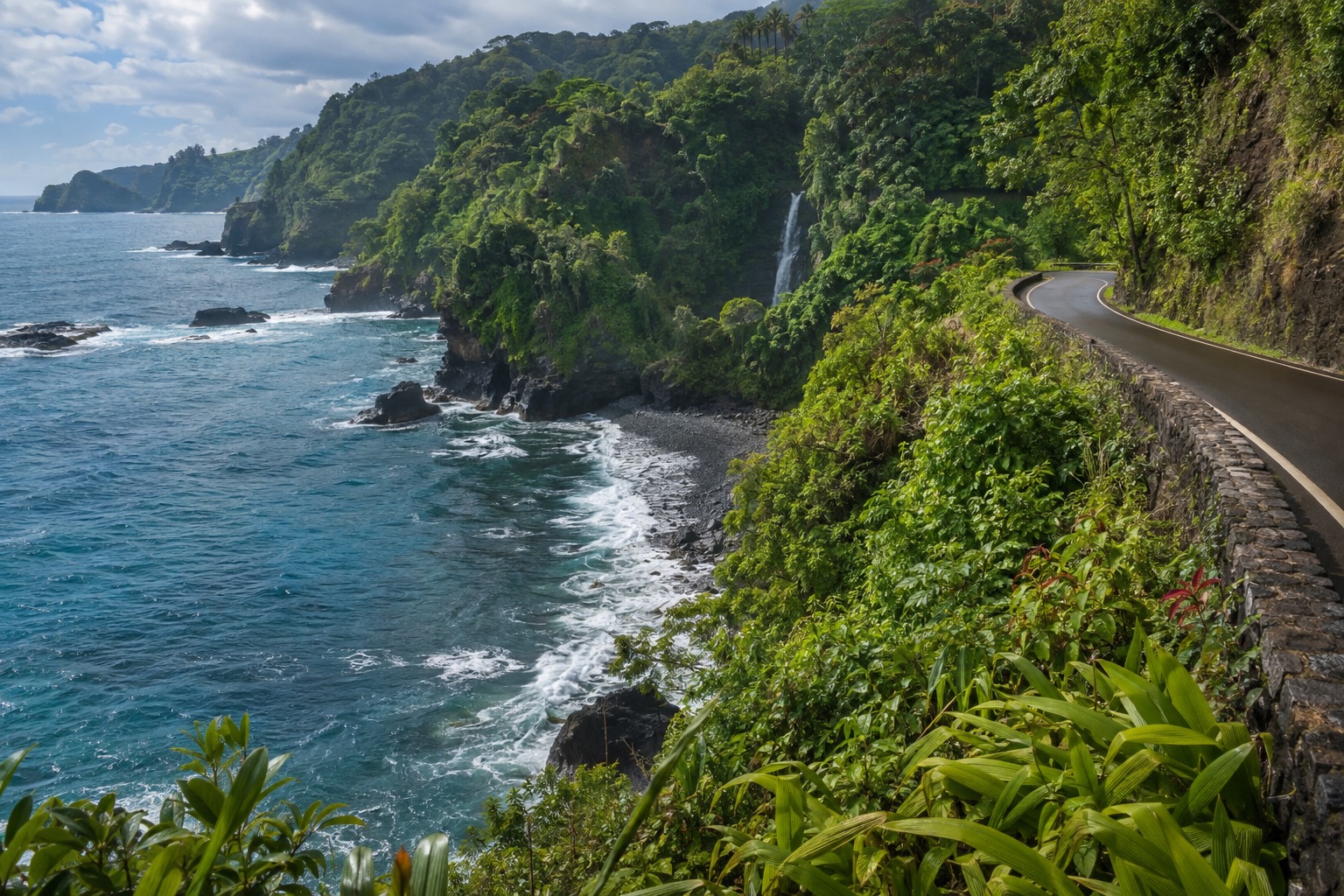
In November, the windward coast of East Maui smells of wet earth and ginger. Rain taps on the broad leaves along the highway, then moves on, and the light comes back gold over the pastures and the sea. Hana is a quiet village at the end of a long, winding road, and this month it offers green waterfalls, warm ocean water and a slow pace for travelers who come to wander rather than rush.
What is the weather like in Hana in November?
Warm, green and showery: November in Hana brings mild days in shirtsleeves, soft evenings and rain that comes and goes through the day.
| Month | Average high (°F) | Average low (°F) | Rain days | Sea (°F) |
|---|---|---|---|---|
| October | 81.9 | 70.5 | 6.88 in | 80.1 |
| November | 80.2 | 69.8 | 6.65 in | 79.5 |
| December | 78.8 | 68.0 | 6.59 in | 78.4 |
On Maui’s windward coast, Hana lies where moist air meets the slopes of Haleakala, driven there by the trade winds. That is why the village stays lush all year, and why the wetter half of the year, from November to April, feels distinctly damp compared with the dry resort beaches of Wailea on the leeward coast. Showers are often brief and heavy, followed by sun, and they can fall at any hour, though mornings tend to start clearer.
You can wear shorts and a T-shirt during the warm days, while the nights remain gentle, meaning a thin extra layer is all you need once it gets dark. The air is humid, which makes the heat feel soft rather than sharp. With about eleven hours of daylight in the middle of the month, the sun sets early enough that evenings on the lanai arrive sooner than in summer.
Bring a rain jacket you can wear while walking, and shoes that tolerate mud. Along the road and on the trails, rain makes stones and roots slick, and streams run fuller and browner after a downpour. The sea is warm and the light after a shower, with rainbows over the cliffs, is one of the pleasures of the month.
Can you swim in Hana in November?
You can indeed take a long, relaxing swim, because the water remains as warm as it does in early autumn.
Hana’s coast faces the open Pacific, and winter swells begin to build from the north around this time of year. Many beaches here are small coves with lava rock and strong shore break, so conditions change from day to day.
Hana Bay, tucked beside the village, is usually the gentlest place for a dip, and families often gather there on weekends. Red Sand Beach and the black sand at Waianapanapa are better for looking than for swimming when the surf is up.
Snorkelers may find clear patches on calm mornings, but runoff after heavy rain can cloud the water. Never assume a beach is calm or safe: read the signs, follow the flags where there are any, and listen to lifeguards when they are present.
Bring water shoes for rocky entries, a rash guard for the sun between showers, and a towel you do not mind getting sandy. Keep off the reef and give turtles and other wildlife their space.
What to do in Hana in November
November is a month for waterfalls, rainforest walks and slow afternoons. With rain feeding the streams, the falls along the road tend to run full, and the whole coast looks as green as it ever does. The big Hawaiian festivals are not centered on Hana this month, so the draw is the landscape itself and the unhurried rhythm of a small community.
Make the drive part of the day rather than a race to the end. Pull over at the roadside fruit stands for banana bread, fresh coconut or whatever is in season, and stop at the small bakeries and food trucks that keep the route fed. Locals drive the narrow road every day, so let them pass and take the one-lane bridges in turn.
Waianapanapa State Park
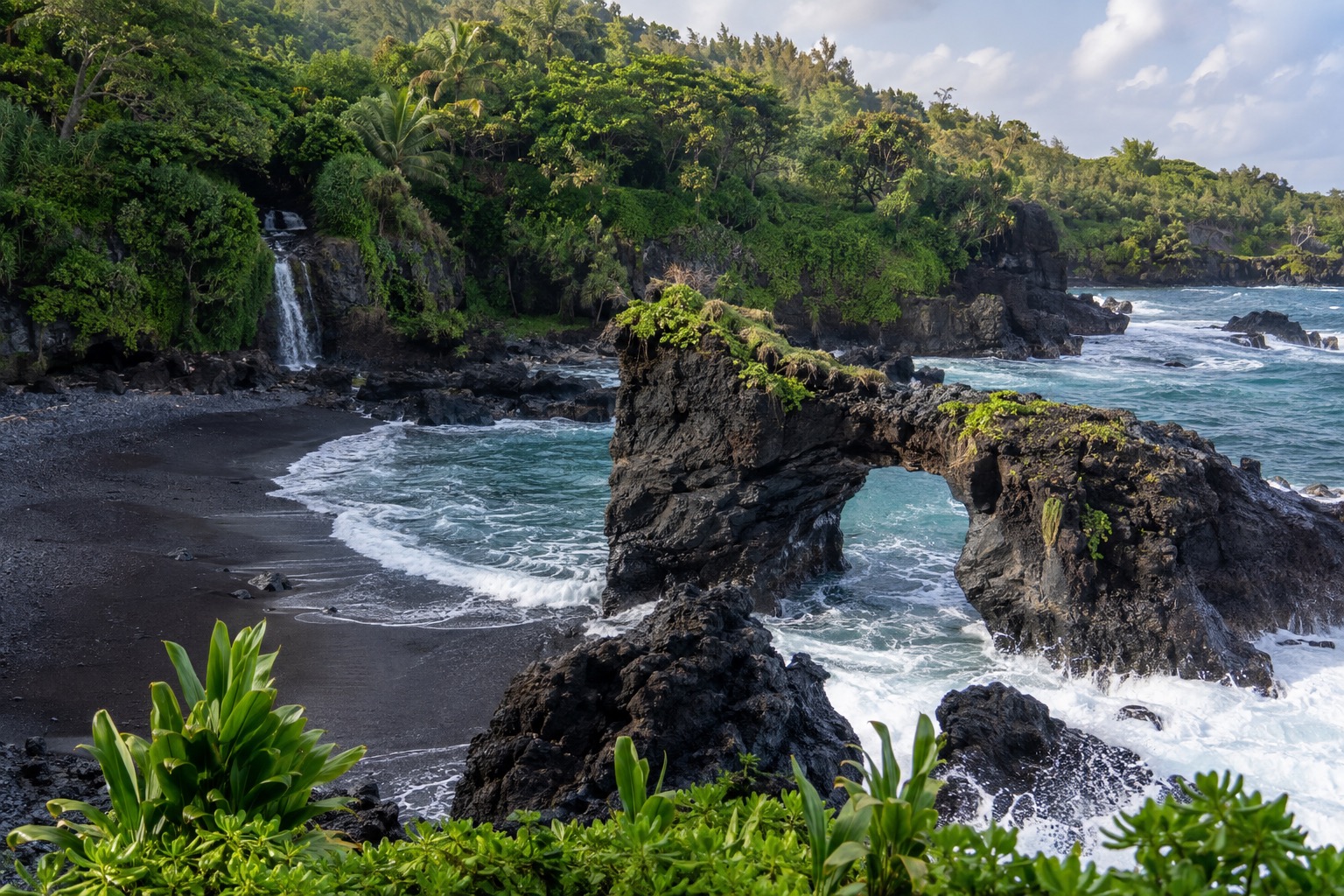
A short drive from the village, this park is known for its black sand beach, sea arches and lava tubes along a rugged shore. Waves crash hard against the rocks here, so it is a place for walking the coastal path and watching the sea rather than swimming. Waianapanapa requires a reservation for out-of-state visitors, so plan it before you arrive.
Morning light is kind to the dark sand and the bright green of the hala trees behind it. After rain the trail can be slippery, so wear shoes with grip. Keep a respectful distance from the cave pools and the stones, which hold meaning for Native Hawaiians.
Waterfalls and the Pipiwai Trail
If you have a full morning, spend it in the Kipahulu district of Haleakala National Park, south of Hana. A tall waterfall waits at the end of the Pipiwai Trail, which rises through a bamboo forest where wind makes the stalks tap gently. Along the way you pass banyan trees and smaller falls, and November rains tend to make the stream crossings lively.
Start early, before the tour vans arrive, and carry water and a rain layer. The lower coastal pools near the visitor area are a pleasant walk, but conditions change fast in this wet season, so heed the ranger signs. Afterward, a picnic on the grass above the sea makes an easy lunch.
The village and the quiet corners
Hana town is small: a general store, a few food stands, a historic church and a hillside cross that gives views over the bay. Hana Bay is a good place to watch local canoe paddlers and fishermen, and the pace slows around the old pier in late afternoon.
On a showery day, browse the local shops and the cultural center, talk with the people behind the counter and try a plate lunch. Hana rewards patience, and much of the charm lies in sitting still while the rain passes.
A two-day itinerary for Hana in November
Day 1 starts early on the road, ideally at first light so you reach the waterfalls before the traffic. Stop at a roadside stand for breakfast, then take your time through the rainforest and the short walks along the route. Arrive in Hana by lunch, with a plate lunch from a food truck or a simple café.
In the afternoon, head to Waianapanapa for the black sand and the coastal path while the light is still good. Sunset comes early in November, so plan to be settled by dusk, with dinner at a village restaurant or a simple meal at your lodging. If rain sets in, switch to the cultural center and the shops in town.
Day 2 belongs to Kipahulu. Reach the park in the morning for the Pipiwai Trail, walking up through the bamboo while the air is cool and the crowds are thin. Afterward, have a picnic by the sea and take a slow look at the coastline.
Spend the afternoon at Hana Bay, swimming only if the water looks gentle and the signs allow. Finish with a sunset on the shore and a quiet dinner. If the weather turns, a long lunch, a visit to a local gallery and a drive to a nearby lookout fill the hours until the clouds lift.
Is Hana busy in November?
Hana is moderately busy, with the road itself more crowded than the village, and the pace picks up toward the end of the month.
Day-trippers from the resort areas make up much of the traffic, arriving in the late morning and leaving by afternoon. Overnight guests experience a calmer Hana, especially in the early morning and evening. Rooms in the village are few, so they fill up ahead of holiday weeks, and Thanksgiving week draws more families from the mainland.
Book lodging and rental cars early if your dates touch Thanksgiving, and a little later for the quiet weeks at the start of the month. Restaurant tables are limited in a village this size, so expect early closing and plan meals around the day. Waianapanapa State Park requires a reservation for out-of-state visitors, so secure it as soon as your dates are set.
What to pack for Hana in November
Pack for warm, damp days and slippery trails, and keep a few things within reach in the car.
- A light rain jacket, for showers that arrive without warning
- Trail shoes with grip, for muddy paths and wet rock
- Water shoes, for rocky entries at the coves
- Quick-dry clothes, since humidity keeps cotton damp
- Mineral sunscreen and a hat, for the sun between clouds
- A small dry bag, to protect phones and cameras
Good to know before you go
November falls at the very end of the Central Pacific hurricane season, which runs from June 1 to November 30. The road is narrow and winding, with many one-lane bridges, so allow plenty of time and avoid driving it in the dark. Gas, groceries and food are limited in the village, so fill the tank and stock up before you head out.
Hana is an easy place to slow down, and the best plan is a flexible one. Let the weather set the order of the day, and keep a rain option in your pocket.
Hana in November vs October and December
Moving a month earlier gives you a slightly warmer sea and a touch more sun, with the winter swells still on their way. October is a good choice if you want to swim more confidently and avoid the holiday crowds.
A month later, December cools a little and the surf grows more serious on exposed shores. Holiday visitors fill the few rooms around Christmas, and the sense of a quiet village gives way to a livelier one. The rain is similar, but the days are shorter.
Choose October if the water matters most, and December if you want the festive season in a small community. November sits in between, with warm water, greener landscapes and room to breathe before the holiday rush.
Is November a good time to visit Hana?
Yes, for travelers who love lush scenery, waterfalls and a slow rhythm, and who do not mind a shower or two.
It suits hikers, photographers and anyone happy to plan around the weather. Those who want guaranteed beach days and calm water for every swim may prefer the dry resort coast, where rain is rarer and the surf is gentler in winter.
On arrival, first confirm your park reservation and fill the tank, then take the road at an easy pace. What makes November in Hana memorable is the green: streams running full, rainbows after a squall and a coast that looks its most alive.
Sources
- NOAA NCEI, monthly normals 1991-2020, station USC00511125, checked September 8, 2026
- Open-Meteo Marine API, average 2015-2024, checked September 8, 2026
- sunrise-sunset.org, sunrise and sunset calculated for the 15th of the month, checked September 8, 2026
- NOAA NCEI, normals 1991-2020, stations USC00511125 (Hana AP) and USC00515842 (Makena), via PLAN-HAWAII.md §1
- NWS Honolulu / Central Pacific Hurricane Center, « 2026 Central Pacific Hurricane Season Outlook », weather.gov/hfo/hurricaneOutlook2026, checked September 24, 2026