
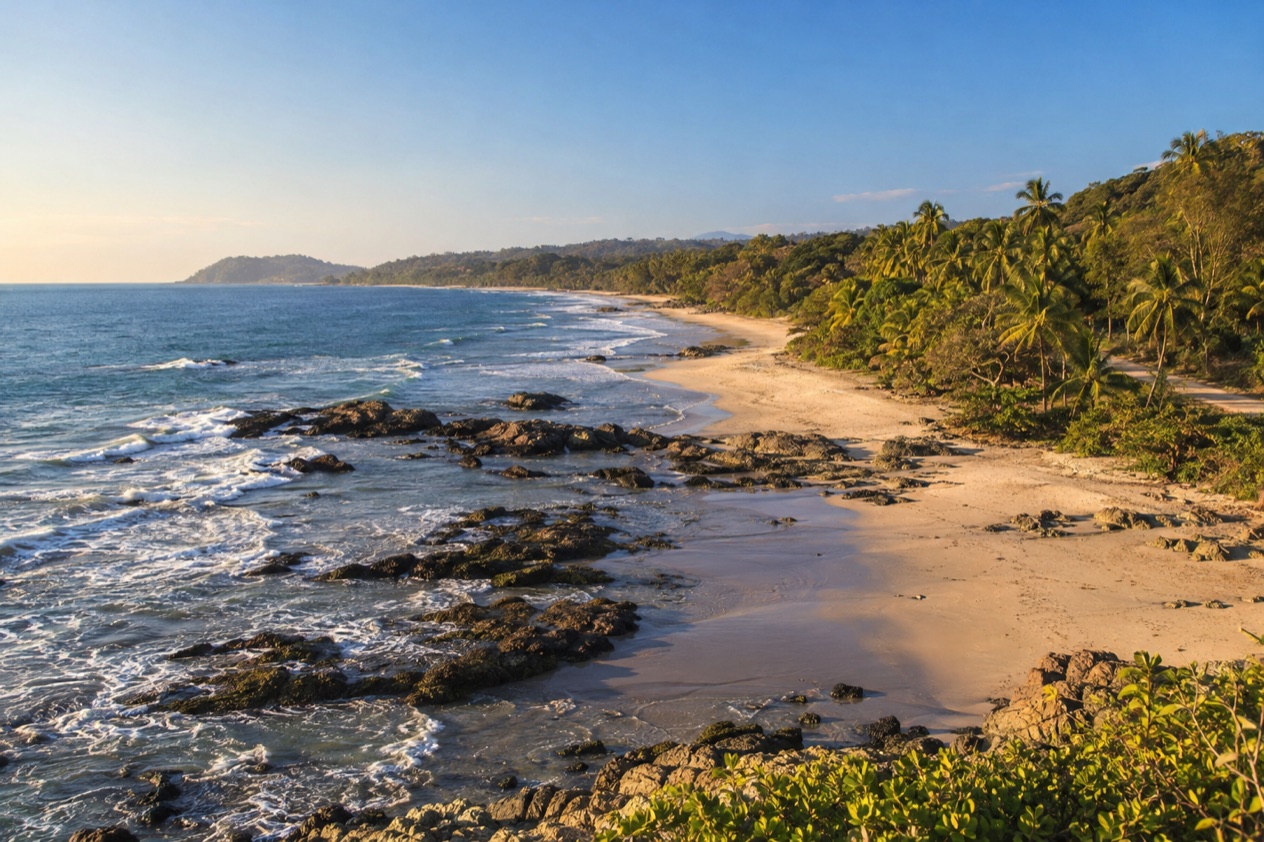
In February, Santa Teresa wakes to dust hanging gold over the dirt road, the thud of surfboards being loaded onto quads and scooters, and the smell of coffee and fresh bread drifting out of the small cafes. By afternoon the beach is wide and bright, the palms barely move, and the whole town seems to move at a barefoot pace. Perched at the tip of the Nicoya Peninsula, this is a town of surf and yoga in the heart of its dry season, and February fits anyone craving sun, swells and long evenings on the beach.
What is the weather like in Santa Teresa in February?
February is hot, sunny and almost completely dry in Santa Teresa, with a rain shower being the exception rather than the rule. The table puts the neighboring months side by side.
| Month | Average high (°F) | Average low (°F) | Rain days | Sea (°F) |
|---|---|---|---|---|
| January | 84.2 | 76.5 | 1.2 | 85.5 |
| February | 85.9 | 77.1 | 0.6 | 85.8 |
| March | 86.6 | 77.7 | 1.1 | 86.6 |
Mornings start warm and bright, and the best hours for walking the beach, surfing or doing yoga are the early ones, before the sun climbs. By midday the heat is strong enough that shade, a cold coconut or a smoothie and a long lunch become part of the plan. Afternoons stay hot until the light softens late in the day.
Rain is rare. Over the whole month you might see a brief shower or none at all, so a raincoat is not a priority, and the green of the rainy season has given way to drier, browner hillsides. The roads are dry, which means dust: a bandana or a sunglasses habit helps on the main dirt road.
Evenings stay warm enough for shorts and a light shirt, and you can eat outside well after dark. Days are close to twelve hours long, so the light fades in the early evening and sunsets over the Pacific become the daily gathering point on the sand.
Can you swim in Santa Teresa in February?
The sea stays warm, with temperatures in the mid-80s, but whether you can swim safely depends on the waves and currents. The warmth is the easy part. The waves and currents are what you need to read.
Santa Teresa is a surf beach first. The long stretch of sand faces open Pacific swell, and the water often has waves that suit surfers more than casual paddlers. Beginners usually take lessons, and the beach breaks in front of town are where many people learn.
In Costa Rica, rip currents pose a serious threat and lead to multiple drownings of American visitors annually, while lifeguards and alerts about hazardous conditions are absent at most beaches here. Watch how the water moves before going in, stay near other people, keep children within arm’s reach and never swim alone. Bring sunscreen, a rash guard and plenty of water, since the sun is strong all day.
What to do in Santa Teresa in February
February is the month to organize your days around the sea and the sun. The dry weather keeps the beach lively from first light to sunset, and the town runs on a rhythm of surf sessions, yoga classes, long breakfasts and sunset gatherings. Nothing is hurried, and that is much of the charm.
Late in the month, the Envision Festival, a music, art and yoga gathering, usually takes place at Uvita, on the southern Pacific coast, rather than in Santa Teresa. Dates change every year, so treat it as a possibility for a longer Costa Rica trip rather than something in Santa Teresa itself. In town, the month’s special events are more informal: beach bonfires, live music at open-air bars and yoga classes that fill up at sunrise.
Surfing and learning to surf
Most visitors come for the surfing, and the dry season in February delivers sunshine and dependable swell to the beach right in front of town. Ask local instructors when and where to paddle out, since conditions change along the beach. Surf schools and board rental shops line the main road, and instructors work with first-timers on the beach breaks.
Afternoons can bring stronger onshore breezes and more crowded lineups, so many surfers take a long lunch and return for the evening session, when the light turns golden. It suits beginners with a lesson and experienced surfers who know how to read currents. Follow the advice of local instructors on where to paddle out, since conditions change from one stretch of beach to the next.
Yoga, cafes and the beach routine
Santa Teresa is also a yoga town, and many studios and open-air shalas hold classes early in the morning and again at the end of the day. A common pattern is yoga at sunrise, a smoothie bowl or a plate of gallo pinto (rice and beans, usually with eggs) for breakfast, then time in the water or in a hammock. Cafes along the dirt road serve fresh juice, coffee, baked goods and a good deal of vegetarian and vegan food.
If you want a classic meal, head to a soda, the little neighborhood spot where a casado comes with rice, beans, salad, plantain, and your pick of chicken, fish, or beef. Fresh fish, ceviche and tacos are easy to find near the beach, and fruit stands sell pineapple, mango and watermelon.
Sunset on the sand
The evening ritual is the sunset. Down at the beach, folks arrive carrying a drink, a board or a camera, and while surfers remain out in the fading light, the Pacific sky shifts to orange and pink. February’s dry air often gives clear horizons, though clouds can come and go, so treat the show as a chance rather than a promise.
After dark the town stays relaxed. Restaurants set tables under strings of lights, some bars have live music, and the dirt road glows with headlights from quads and scooters. Bring a flashlight or use your phone light for the walk back, since many side paths are unlit.
A two-day itinerary for Santa Teresa in February
Day 1 begins early, because the cool hours are the best ones. Walk to the beach at first light for a surf lesson or a swim in the gentler water, then have breakfast at a cafe on the main road. By late morning the heat builds, so spend midday in the shade with a long lunch of ceviche or a casado, and then rest or read.
In the afternoon, when the sun softens, rent a bike or walk along the dirt road to browse the small shops and the beachfront stalls. Be on the sand well before sunset, then plan for dinner afterward at a restaurant with open-air tables.
Day 2 starts with a yoga class at sunrise, followed by a smoothie bowl or fresh fruit. Spend the morning exploring a different stretch of beach, looking for tide pools at low tide and watching the surfers. Midday is for shade, a cold drink and a lazy lunch at a soda or a seaside cafe.
In the late afternoon, return to the water for a final surf session or a walk along the shore. If a rare shower turns the weather, switch to a massage, a long coffee, or a book in a hammock. For the last evening, have dinner at a restaurant with live music, and end the night under the stars.
Is Santa Teresa busy in February?
Yes, February is a busy month in Santa Teresa, since it falls in the middle of the dry season when North American visitors escape the winter. The beach, the surf schools and the restaurants all stay lively, and the town’s small hotels fill up quickly.
Restaurants are easier, but popular ones fill at sunset, so arrive a little before the rush or reserve a table on a weekend evening. Surf lessons and yoga classes are easier to arrange once you arrive, though popular times, such as sunrise and late afternoon, fill first.
Even in a busy month, the town keeps its relaxed feel. The beach is long enough to find space, and mornings stay quieter than afternoons. If crowds bother you, plan your best activities for early hours and keep the evenings for the town’s livelier spots.
What to pack for Santa Teresa in February
Pack for heat, sun and a lot of time outdoors, with a few items that help on dusty roads and surf-beach days.
- Lightweight, breathable clothing, since days are hot and evenings stay warm.
- Sunscreen, a hat and sunglasses, because the sun is strong all day.
- A rash guard and swimwear, for surfing and long beach hours.
- A reusable water bottle, to stay hydrated in the heat.
- A bandana or light scarf, for dust on the dirt road.
- A small flashlight, for unlit paths at night.
Good to know before you go
The U.S. State Department rates Costa Rica Level 2, ‘Exercise increased caution,’ due to crime; it says petty crime is common throughout Costa Rica and that violent crime also affects tourists, including armed robbery, homicide and sexual assault.
February falls in the dry season, so the main planning questions are rooms, rentals and getting around rather than weather. The main road through town is dirt and dusty. Book your room first, then your rental vehicle, and leave surf lessons and yoga classes for when you arrive.
The sea can be strong even on sunny days. Rip currents are a real hazard here, and most beaches have no lifeguards, so watch the water before going in and ask local instructors about conditions.
Santa Teresa in February vs January and March
Moving the trip to January brings slightly cooler air and a little more chance of a passing shower, though the season is still dry and the sea is just as warm. The holiday crowds from the end of December often linger into the first part of the month, so rooms can be harder to find early on.
March is a touch hotter, and the sea warms a little more. The dry season is at its deepest, with hillsides browner and the dust thicker on the road. Visitors from spring break and Easter holiday periods can bring more people to the beach, especially later in the month.
Choose January if you prefer slightly cooler days and do not mind a small chance of rain. Choose March if you want the warmest water and the deepest dry-season feel. February sits in the middle, with reliably dry days, warm seas and a lively but relaxed town.
Is February a good time to visit Santa Teresa?
Yes, February is an excellent time to visit Santa Teresa for anyone who wants sun, surf and a beach routine with almost no rain. It suits surfers, yoga fans, couples and groups of friends who want long days outdoors and easy evenings.
It is a weaker fit for travelers who dislike heat or dust, or who want a quiet, empty town. If that is you, the greener months of the rainy season may feel more peaceful, though the weather is less predictable.
On arrival, settle in, walk the beach and watch the water before you swim, so you learn how the waves and currents behave. Then book a surf lesson or a yoga class for the next morning. Here, February brings dry air, a warm sea and golden evenings on the beach.
Sources
- Open-Meteo / ECMWF ERA5, normals 1991-2020 computed for the grid cell at 9.6458N 85.1698W, checked October 8, 2026
- Open-Meteo Marine API, average 2015-2024, checked October 8, 2026
- sunrise-sunset.org, sunrise and sunset calculated for the 15th of the month, checked October 8, 2026
- U.S. Department of State, Costa Rica Travel Information, Safety and security (https://travel.state.gov/content/travel/en/international-travel/International-Travel-Country-Information-Pages/CostaRica.html), checked October 8, 2026
- U.S. Department of State, Costa Rica Travel Advisory, issued April 1, 2026 (https://travel.state.gov/content/travel/en/traveladvisories/traveladvisories/costa-rica-travel-advisory.html), read via the State Department open data API on October 8, 2026
To plan your stay
- Things to Do in Santa Teresa: Surf, Yoga, Beaches and Day Trips
- Where to Stay in Santa Teresa: Beach Areas, Boutique Stays and How to Choose
- Best Time to Visit Santa Teresa: Dry Season, Green Season, Weather by Month and Festivals
- Santa Teresa in January: Dry-Season Weather, Surf, Beaches and What to Do