
At dawn in Santa Teresa the first surfers are already walking down the dirt road with boards under their arms, trailing dust and the smell of coffee from the cafes that open early. Howler monkeys growl somewhere in the trees behind the beach, and by mid-morning the yoga studios fill with people in loose cotton. Set on the southwestern tip of the Nicoya Peninsula, this barefoot town exists for surfing, stretching, eating well and little else, and it draws couples, friends and families who prefer a rough-edged beach town to a resort.
What are the best things to do in Santa Teresa?
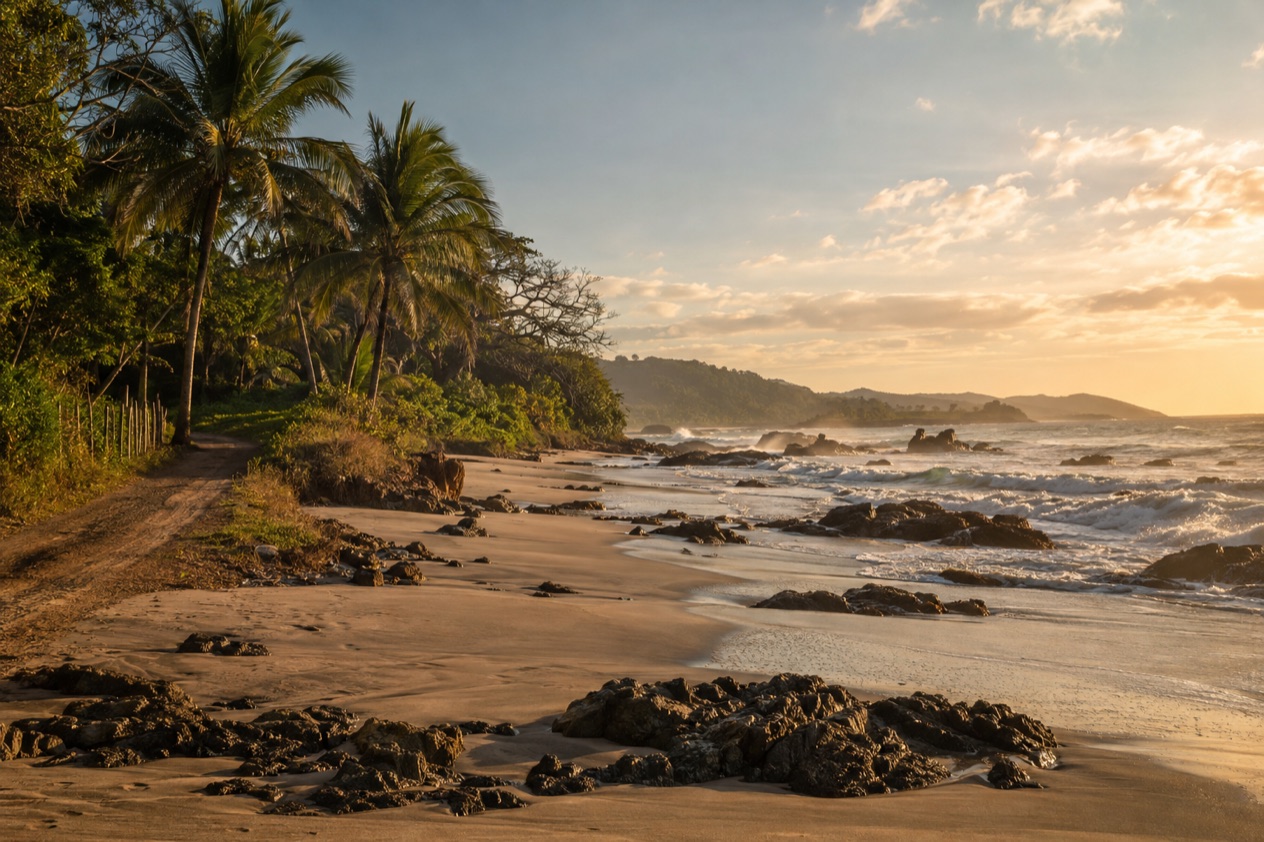
The best things to do here revolve around the water and the rhythm of the day: surf at sunrise, find shade and a smoothie at midday, and walk the beach as the light turns orange in the evening. Everything is strung along one long dirt road behind the sand, so you can get between places on foot, by bicycle or on an ATV, and the town never asks you to hurry.
Beyond the beach, the surrounding peninsula adds waterfalls, a historic nature reserve and boat days to an island.
- Take a surf lesson or rent a board: the beach breaks are the reason the town exists, and beginners and experts both find a wave somewhere along the coast.
- Roll out a mat in a yoga studio: classes in open-air shalas under the trees are as much a part of the morning as coffee.
- Watch the sunset from the sand: when the sky is clear, the whole town drifts to the beach as the sun drops into the Pacific.
- Explore the tide pools at low tide: the rock shelves at the edges of the beaches fill with small sea life and make a good short walk.
- Spend a day in Montezuma: a bohemian village with a string of waterfalls inland and a lively beach front.
- Hike in Cabo Blanco: the country’s first strictly protected reserve, with forest trails that lead down toward the sea.
- Eat fresh fish and a casado at a small open-air restaurant: simple Costa Rican plates and wellness-minded cafes sit side by side.
- Take a boat day to Isla Tortuga: a postcard island with snorkeling and a long white beach, reached from the Gulf of Nicoya side.
If you have only a short stay, the surf, the sunset and one day trip give you the full picture. A longer stay lets you settle into the habits of the place: early classes, a long lunch, an afternoon nap in a hammock and a slow walk to dinner.
Sights and landmarks in Santa Teresa
Santa Teresa has no cathedral, no museum row and no ruins. Its sights are a road, a coastline and a way of living, and the time you spend here goes to wandering between them. The landmarks are the places where the town gathers: a bakery corner, a yoga deck, a viewpoint on the rocks.
The dirt road and its cafes
The main road is the spine of Santa Teresa, and almost everything you want sits within sight of it. Small hotels hide behind tropical gardens, surf shops hang boards from their rafters, and cafes set out wooden tables where people linger over smoothie bowls and iced coffee. Quad bikes, scooters, bicycles and the occasional horse share the track, so the soundtrack is part engine, part birdsong.
The road is also the town’s weather report. It gets dusty in the dry season, when a pale haze hangs over the traffic and everyone wears a bandana, and it turns muddy in the green season, when puddles fill the ruts and the vegetation glows. Walk it early or late, when the light is soft and the dust is low, and keep to the edge when a vehicle approaches.
Yoga studios and the wellness scene
Yoga is practically a landmark here. Open-air studios built from wood and thatch sit among the trees, with mats facing the forest or a slice of ocean, and classes run morning and late afternoon so they fit around surf sessions. Styles range from gentle stretching to strong flowing practice, and drop-in visitors are as common as people who stay for weeks.
Around the studios you find massage huts, juice bars, breathwork and sound sessions, and shops selling handmade clothing and jewelry. Even if you have never unrolled a mat, one class is a good way to spend an early morning, stretching out the stiff shoulders that a surf lesson tends to leave behind. Bring a towel, because the air is warm and humid.
Sunset points and rocky headlands
Smaller landmarks are scattered along the coast. The rocky points at either end of the beach make good places to watch waves roll in and surfers paddle out, and a few cafes and bars perch above the sand with a view of the horizon. When the sky is clear, the sunset gathers a crowd of locals, travelers and dogs, and you may see the sun flatten and glow red as it meets the water.
Look, too, for the roadside murals, the open-air markets that pop up with handmade crafts and the small shops that sell tropical fruit and fresh bread. None of these is an attraction on its own, but together they give Santa Teresa its character. Keep your bag zipped and your valuables out of sight, since petty crime is common throughout Costa Rica.
Beaches and outdoor things to do in Santa Teresa
The beach is the main attraction, a long ribbon of sand backed by palms and forest that continues past one town name into the next. Waves are the rule rather than the exception, which is why this is a surfing destination first and a swimming destination second. Rip currents are very dangerous and cause several drownings of U.S. tourists each year.
Playa Santa Teresa
This is the town beach, wide and golden at low tide, with surf that pulls in everyone from first-timers to experienced riders. Surf schools set up along the sand with foam boards, and rental shops are a short walk from the access paths. Mornings tend to be the cleanest for surfing, with lighter wind and more orderly waves, and the beach is quiet enough for a long barefoot walk.
In the afternoon the waves can get choppier, and people turn to paddleboarding, sandcastles and shade under the trees. This beach suits active travelers and surf beginners more than anyone wanting a flat, easy swim.
Playa Carmen and Playa Hermosa
Playa Carmen sits at the southern end of the same stretch and is the quieter-feeling neighbor, with a relaxed crowd and a famous surf break that draws a steady flow of boards. Playa Hermosa lies to the north, a calmer-looking beach with a bit more room and a mix of residents and visitors.
Each has its own mood, and walking from one to the next is a pleasant way to spend a morning. The surf varies with swell and tide, so do not assume any stretch is gentle. Tide pools at the rocky ends become shallow, curious aquariums at low tide, and children and adults alike enjoy peering into them.
Surfing, paddleboarding and horseback rides
Surf lessons are the classic first activity. Instructors work with beginners in the shallows, then move to more demanding waves as skills improve, and equipment rental is everywhere. If surfing is not for you, stand-up paddleboarding in the early morning on flatter water, bodyboarding and long beach walks give you the sea without the board stress.
Horseback rides on the sand and through the nearby hills are another popular way to see the coast, especially around sunset. Ask your hotel about local outfits that are used to beginners, and wear closed shoes. Mountain biking and e-bike rentals open up the quieter tracks that wind inland, where monkeys and birds often announce themselves before you see them.
Day trips from Santa Teresa
The roads out of Santa Teresa are partly unpaved, so a day trip is always a slow-paced affair, and the most rewarding ones are the closest. A few places on the southern tip of the peninsula make an easy day and give you a break from the surf routine. Start early, bring water and a hat, and plan to be back by late afternoon.
Montezuma and its waterfalls
Montezuma is a small village on the coast to the southeast, known for its bohemian atmosphere, craft stalls, beachfront cafes and a lively mix of travelers. The river that runs behind the village drops through a series of waterfalls in a green, shaded valley, and the walk up is a favorite excursion. You reach it from Santa Teresa by road along the coast, and the journey takes longer than the map suggests because of the surface.
Go in the morning, when the trails are cooler and the stalls in town are setting up. After the falls, spend an hour in the village over a fruit plate or a plate of rice and beans, and browse the shops that sell handmade jewelry. The trail near the water can be slippery, so wear shoes with grip, and watch local signs and guides about conditions at the falls.
Cabo Blanco Absolute Nature Reserve
Cabo Blanco is Costa Rica’s first strictly protected reserve, a patch of forest at the tip of the peninsula. You walk under tall trees, listen for howler monkeys and look for birds, coatis and other wildlife, which are chances, not promises. Plenty of visitors come by road from Santa Teresa and the nearby villages.
The hike is humid and can be muddy, so go early and carry water. It suits people who enjoy walking in the forest and do not mind sweating for a quiet reward at the end. Rules, hours and access change, so check the park’s official page before you set out, and take a hat and insect repellent.
Isla Tortuga by boat
Isla Tortuga is a small island in the Gulf of Nicoya, famous for white sand, clear water and snorkeling around its rocky edges. Boat trips set out from the gulf side of the peninsula, and many include a beach lunch and a stop for snorkeling. The crossing and the island itself are a break from the surf scene and an easy day for those who like the sea calm.
Choose a morning departure for the best light and a quieter beach before the boats pile in. The trip suits couples, families with older children and anyone who wants a day on a beach with gentler water than Santa Teresa offers. Wear sunscreen, bring a hat and keep an eye on the weather, because rough water can change the schedule.
Smaller excursions nearby
The Curu wildlife refuge on the gulf side offers short forest walks and a chance of monkeys, birds and other animals. Malpais, just along the coast, has its own beaches, surf breaks and restaurants, and makes an easy afternoon outing by bike or ATV. Tambor and Paquera sit along the ferry route and serve as stops if you are coming or going by road.
What to eat in Santa Teresa
Eating in Santa Teresa is a pleasant mix of traditional Costa Rican food and the surf-and-yoga crowd’s taste for fresh, healthy plates. You find rice and beans, grilled fish and tropical fruit next to smoothie bowls, plant-based menus and wood-fired pizza. Most places are casual, open to the air, with a few tables on the sand or under a tin roof.
Costa Rican plates
A casado is the everyday lunch: a plate of rice, black beans, salad, fried plantain and a choice of fish, chicken or beef, all served together. Gallo pinto, the mix of rice and beans cooked with onion, pepper and cilantro, appears at breakfast with eggs, fried cheese and sour cream. These dishes are filling, cheap in spirit and the best way to taste the country in a single meal.
On the coast, fresh fish is the star. Ceviche, with raw fish cured in lime juice and mixed with onion, cilantro and sweet pepper, arrives cold and sharp, usually with crackers or plantain chips. Grilled catch of the day, served with rice and a squeeze of lime, is a simple pleasure after a morning in the surf. Ask what came off the boat that day.
Cafes, smoothies and healthy bowls
The cafes lean toward the health-minded. Smoothie bowls topped with granola, banana and coconut, avocado toast, fresh juices and cold-brew coffee are all easy to find. Costa Rican coffee is excellent, and a cup in the morning on a wooden deck is a small ritual worth building into your days.
Fresh coconut water, agua de pipa, is sold from stands and cafes, and tropical fruits such as pineapple, papaya, mango and guava turn up in juices and plates. Vegetarian and vegan options are widespread, so travelers with dietary preferences eat well here. Pair a light lunch with a long break in the shade, since the afternoon heat is strong.
Tacos, pizza and international kitchens
A cosmopolitan crowd of surfers and long-stay residents has brought tacos, sushi, wood-fired pizza, burgers and Mediterranean plates to the main road. Small kitchens run by travelers who stayed turn out hand-rolled pasta, fish tacos with fresh salsa and homemade bread. Some are tucked into gardens with string lights, and others are simple counters with a few stools.
Bakeries sell pastries, empanadas and bread in the morning, and are a good place to stock up before a day trip. Small grocery shops, called supermercados or pulperias, carry fruit, snacks and cold drinks, and a cold local beer such as Imperial is the classic way to end a day. Keep in mind that the dusty road, humidity and sun make water a priority.
Things to do in Santa Teresa at night
Evenings in Santa Teresa begin on the beach and end early or late depending on how you feel. There is no big nightclub district, just a scattering of bars, restaurants and open-air venues along the dirt road, and the pace is laid-back. Most people eat, have a drink, listen to a little music and go home to sleep before the next dawn surf.
Sunset and dinner on the sand
The evening starts with the sunset, when travelers and locals head to the beach with a drink, a board or a camera. As the sky changes color, surfers take their last waves and the silhouettes of palm trees sharpen against the horizon. Some restaurants and bars have tables right above the sand, and you can eat with your feet nearly in the surf.
After dark the air cools slightly and the smell of grilled fish and woodsmoke drifts along the road. Dinner tends to be unhurried, with long conversations and a second round of drinks. If you walk back along the beach, bring a flashlight or phone light, since stretches of the road and sand are dark.
Live music, bars and dancing
Live music turns up in bars and restaurants on certain nights, from acoustic guitar and reggae to DJ sets and surf-town cover bands. Some venues host fire dancers, open-mic evenings or dance parties in a garden setting. The scene changes with the season and the crowd, so ask your hotel or look at posters along the road to see what is on.
Bars are casual, with plastic chairs, hammocks and cocktails made with local fruit and rum. Dress is flip-flops and a light shirt, and the crowd mixes surfers, yoga teachers, digital nomads and visitors. Keep an eye on your belongings in busy places, since petty crime is common in Costa Rica.
Quiet evenings
If you would rather stay low-key, the town gives you plenty of calm choices. Evening yoga, a massage, a movie night at a guesthouse or a book in a hammock are all common ways to end the day. On clear nights the sky is dark and full of stars, away from city lights, and a walk to the beach is memorable.
Sleep comes early, because mornings start with the first light and the first surfers. Heed the road: it has few streetlights, and ATVs and scooters move fast in the dark, so walk on the side and use a light.
Things to do in Santa Teresa with kids
Children usually love Santa Teresa for its simple pleasures: sand, waves, animals and the freedom of a barefoot town. There are no theme parks or big attractions, and that suits families who like to spend days outdoors. The main things to keep in mind are the sun, the heat, the strength of the sea and the dusty road.
Beach days and tide pools
A morning at the beach is the heart of a family day. Kids build sandcastles, dig in the sand and run along the shoreline, while parents keep watch from the shade. At low tide, the tide pools at the rocky edges reveal small crabs, snails and fish, and exploring them is a favorite with curious children.
Rip currents are very dangerous, so keep children close. Beach flags and lifeguards are not guaranteed, so watch the water and ask locals about the safest spot. Hats, rash guards and plenty of sunscreen matter, especially around midday.
Surf lessons, horses and animals
Many surf schools teach children in the shallow, foamy waves close to shore, using soft boards and patient instructors. A first lesson can be a highlight of the trip, and even a few standing seconds bring big smiles. Younger kids may prefer bodyboarding or just splashing at the edge.
Animals add to the fun. Howler monkeys, iguanas, colorful birds and the occasional coati show up in the trees and along the road, and you may hear them before you see them. Gentle horseback rides on the beach, arranged through local outfits, are popular with older children, and a boat day to Isla Tortuga is a good excursion for families who like snorkeling.
What to keep in mind with children
The dusty road and the lack of sidewalks mean you should hold young children’s hands, especially when ATVs and scooters pass. The humidity and heat tire small travelers quickly, so plan activities for early morning and late afternoon, and leave midday for naps, shade and cool drinks. Drinking water, snacks and a hat go everywhere with you.
Distances matter too. Reaching Santa Teresa from San Jose eats up the better part of a day, since you take a ferry and then drive a long stretch on roads that are partly unpaved, and outings during the day move at a crawl. Choose one or two outings rather than packing in too much, and let the beach set the pace.
Good to know before you go
The U.S. State Department rates Costa Rica Level 2, ‘Exercise increased caution,’ due to crime; it says petty crime is common throughout Costa Rica and that violent crime also affects tourists, including armed robbery, homicide and sexual assault.
Reaching Santa Teresa from San Jose can consume most of a day, whether you drive and take the car ferry from Puntarenas to Paquera, then continue on a long stretch of partly unpaved roads, or hop a short flight to a nearby airstrip. The unpaved road through town gets dusty in the dry season and muddy in the green season.
Rip currents are very dangerous on this coast, so ask about conditions before you swim and keep children close. Pack sunscreen, a hat, insect repellent and shoes you do not mind getting dusty, and keep valuables out of sight, since petty crime is common throughout Costa Rica.
Sources
- Open-Meteo / ECMWF ERA5, normals 1991-2020 computed for the grid cell at 9.6458N 85.1698W, checked October 8, 2026
- U.S. Department of State, Costa Rica Travel Information, Safety and security (https://travel.state.gov/content/travel/en/international-travel/International-Travel-Country-Information-Pages/CostaRica.html), checked October 8, 2026
- U.S. Department of State, Costa Rica Travel Advisory, issued April 1, 2026 (https://travel.state.gov/content/travel/en/traveladvisories/traveladvisories/costa-rica-travel-advisory.html), read via the State Department open data API on October 8, 2026
To plan your stay
- Best Time to Visit Santa Teresa: Dry Season, Green Season, Weather by Month and Festivals
- Where to Stay in Santa Teresa: Beach Areas, Boutique Stays and How to Choose
- Santa Teresa in January: Dry-Season Weather, Surf, Beaches and What to Do
- Santa Teresa in February: Dry Weather, Surf, Envision Festival and Two Days on the Beach