
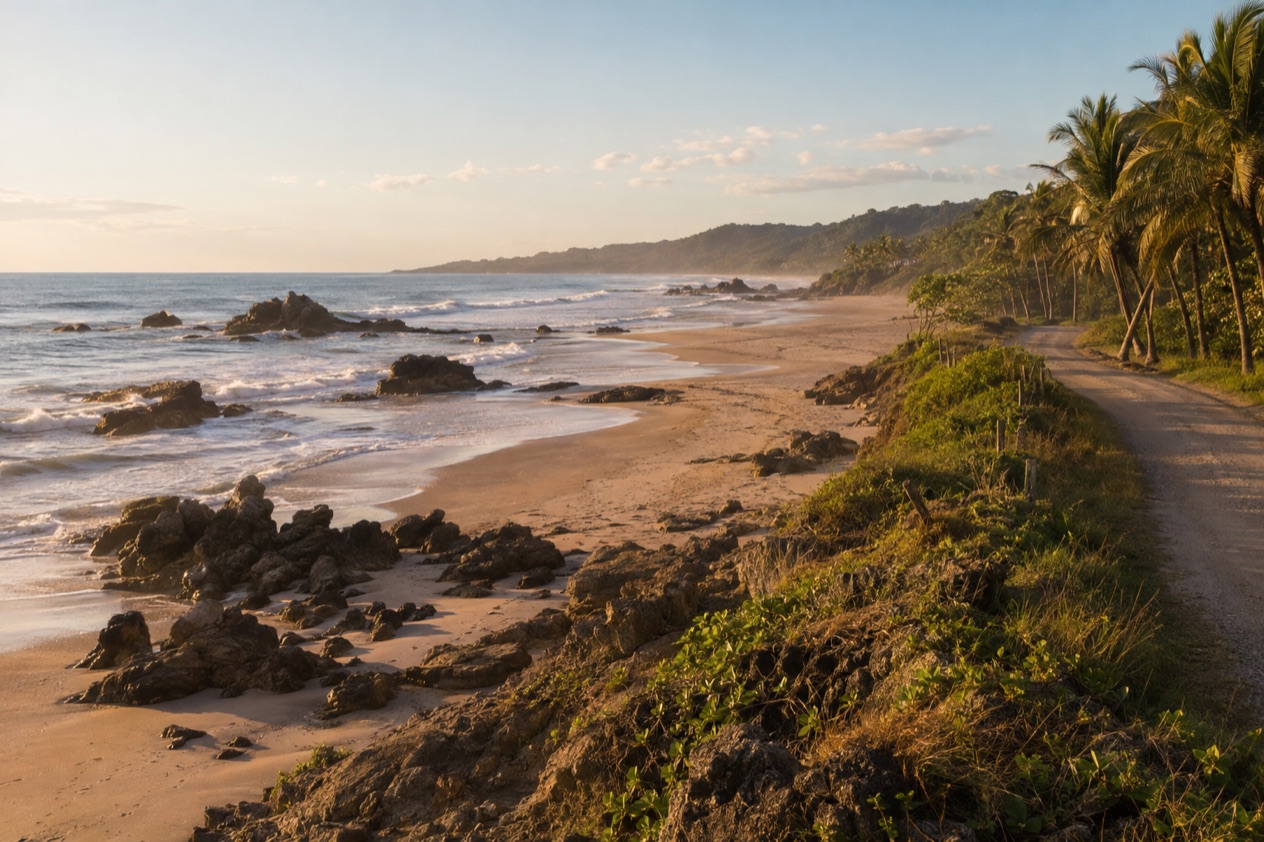
Early in the year, Santa Teresa wakes to dust hanging over the dirt road, surfers walking barefoot to the water at first light and hammocks swinging in the shade of almond trees. Later the rain arrives, the hills behind the beach turn a deep green, and afternoons are spent under tin roofs listening to the downpour. The town is strung along one long beach at the tip of the Nicoya Peninsula, and its mood changes completely between the bright, busy dry months and the quiet, drenched ones.
When is the best time to visit Santa Teresa?
The best time to visit Santa Teresa is the dry season, from about December to April, especially for beach days, yoga mornings and sunset watching. Skies are mostly clear, the sea is warm, and you can plan a day outdoors without watching the clouds. It is also the busiest stretch, so rooms fill early and the town hums.
For the beach and the sea, January through March is the sweet spot. Mornings are bright, afternoons are hot, and the swell keeps the surf schools and the more experienced riders happy. Swimmers still need to treat the ocean with care, since rip currents here pose a serious danger just as they do on plenty of Pacific beaches, and at most beaches there are no lifeguards or alerts about hazardous conditions. Watch how locals and instructors read the water before you go in.
For sightseeing, the dry months are easiest for visits to Montezuma Waterfalls or Cabo Blanco Absolute Nature Reserve, horseback rides and boat outings. In the green season the same road turns muddy, and outings take more planning. If you want greener scenery and fewer people, the shoulder weeks at the end of the dry season, around April, still give plenty of sun with a few early storms.
Budget travelers and anyone craving quiet should look at the green season, from about May to November. Many small hotels and cafes slow down, the beach is nearly empty at midday, and the rain usually arrives in the afternoon, which leaves mornings for surfing and walking.
Families do best outside the loudest weeks. Spring break in March fills the town with college groups and late nights, so parents of young children may prefer February or April.
Santa Teresa weather by month
Heat is constant in Santa Teresa, and what changes through the year is how often it rains.
| Month | Average high (°F) | Average low (°F) | Rain days | Sea (°F) |
|---|---|---|---|---|
| January | 84.2 | 76.5 | 1.2 | 85.5 |
| February | 85.9 | 77.1 | 0.6 | 85.8 |
| March | 86.6 | 77.7 | 1.1 | 86.6 |
| April | 85.4 | 77.8 | 6.9 | 86.9 |
| May | 83.1 | 76.9 | 21.8 | 87.6 |
| June | 82.3 | 76.4 | 24.4 | 86.0 |
| July | 82.1 | 76.2 | 22.9 | 85.6 |
| August | 81.9 | 76.1 | 25.1 | 85.7 |
| September | 81.5 | 75.7 | 26.5 | 86.0 |
| October | 80.9 | 75.4 | 25.6 | 85.5 |
| November | 81.3 | 75.6 | 16.5 | 83.5 |
| December | 82.5 | 76.0 | 4.9 | 84.7 |
The year splits in two. From December through March, rain is a rare event, a day or two at most, and the days are hot, sunny and dusty. April is the turning point, with a few afternoon storms announcing the green season.
From May through October it rains on most days, usually as heavy afternoon downpours that can last for hours, and September and October are the wettest stretch. November loosens up as the rain eases and the sky clears. Temperatures barely move, so nights stay warm all year and the choice is really between sun and dust or showers and green hills.
What is there to do in Santa Teresa in each season?
Surfing, yoga and beach time anchor the town in every season, but the way you spend a day changes with the weather. Most visitors build a rhythm around early mornings, a long lunch at a casual cafe and a sunset on the sand. The dry and green seasons simply move the pieces around.
The dry months, December to April
This is the season for everything that depends on sun. Spend mornings in the water or in a yoga class, then retreat to the shade through the hottest hours, with a fruit smoothie or a plate of casado, the Costa Rican lunch of rice, beans, a salad and a choice of meat or fish. Late afternoons are for the beach walk, when the light turns gold and tide pools appear at the edges of the bay.
Boat outings, horseback rides and coastal drives suit these months best, since the dirt road is hard and the sea is usually more manageable than in the wet season. Wildfires commonly occur between January and the end of May in Guanacaste and the northern region, so smoke or haze can show up on drives toward the north. Leave the muddy jungle hikes and waterfall hunts for the green season, when the streams actually run.
The green season, May to November
The rain turns the hills a startling green, and the forest behind the beach fills with birdsong and the roar of howler monkeys at dawn. Plan the day around the weather, with surfing and walks in the morning and cafes, books or a massage when the afternoon downpour starts. Waterfalls and streams are at their fullest, and the dirt road through town turns muddy, so shoes you do not mind getting dirty are the sensible choice.
Surf culture does not pause, and the Pacific often sends bigger swell in these months, which draws experienced riders and keeps the lineups lively. Beginners should stay with a school and pick their days carefully.
Turtles may come ashore on Pacific beaches in the wet months, and whales sometimes pass offshore, though both are chances, never promises. This is also the time to leave the busy beach photographs for another trip and enjoy empty sand and low prices.
Shoulder months and the winter holidays
November and April are the in-between months. In November the rain eases and the vegetation is at its lushest, with the sea slightly cooler than the rest of the year. In April a few storms start to build in the afternoon, yet mornings stay bright and the beach is calmer than in March.
December brings the first reliably dry weeks, along with visitors escaping winter at home. The town decorates with lights and palm-trimmed trees, restaurants fill at sunset, and the holiday atmosphere lasts into the new year. If you want that mood, book well ahead, and if you want empty beaches, aim for early or mid-November instead.
When is Santa Teresa cheapest and least crowded?
The quietest months are the heart of the green season, roughly from late May through October, and September and October are the emptiest of all. The beach is quieter, surf schools have more room, and beachfront tables are easier to find. Rooms are easier to find and often cost less than in the dry months, though it pays to confirm what stays open before a long journey.
The peak weeks are easy to name. Christmas and New Year fill every guest house, and Semana Santa, the Holy Week around Easter, brings Costa Rican families to the coast in large numbers. Spring break in March gives the town a loud, young energy, and North American summer school vacations bring another wave of families from about late June through July. These stretches mean peak-season rates, crowded sunset spots and full cafes.
Between those peaks, January and February feel busy but orderly, with good weather and a steady flow of surfers and yoga students. Early December and the weeks just after Easter are a pleasant compromise, with dry skies and a little more space. The trip in takes up most of a day if you go by road and ferry, or you can take a quick flight to a small airstrip nearby, so that long journey pays off for those who time their visit to avoid the crowds.
Which months should you avoid in Santa Teresa?
Avoid September and October if you want sunny beach days, because these are the wettest months and rain falls on nearly every day. Storms can be long and heavy, roads turn to mud, and some boat trips and hikes become impractical. If you come anyway, treat it as a quiet, green retreat and plan most of your outdoor time for the morning.
May and June are the first wet months, with frequent downpours and a steady rain pattern, though mornings often stay pleasant. The rest of the green season follows the same afternoon rhythm. You would not call any of these months unsafe, but outings can be canceled on short notice, and the drive from San Jose with the ferry crossing can feel long in poor weather.
The dry months have their own downsides. The heat peaks in March and April, the dirt road throws up dust, and wildfires commonly occur between January and the end of May in Guanacaste and the northern region.
Crowds and peak-season rates are the main drawback around Christmas, Easter and March. Nothing guarantees a given beach will be spared by any of these conditions, so keep dates flexible and look at the forecast before you travel.
When can you swim in Santa Teresa?
The Pacific stays bathwater-warm in every month, but powerful rip currents can make swimming unsafe at any time of year. The sea is a touch cooler in November and December, and warmest from April through June, yet the difference is slight and wetsuits are unnecessary for most people.
What changes is the surf and the weather. In the dry months the water is often clearer and the mornings are the best time to get in, while in the green season the swell can be bigger and rain makes the water murky near river mouths.
Several U.S. tourists drown every year because of powerful rip currents, and at most beaches there are no lifeguards and no warnings about hazardous conditions. Ask a local surf school or your hotel about the day’s conditions before entering the water.
After a big storm, the sea at the beach is usually rough and murky, and conditions change, so wait a day before swimming.
Festivals and events in Santa Teresa through the year
Winter holidays and Semana Santa
Christmas and New Year are the social peak. Hotels and restaurants fill with visitors from abroad and Costa Rican families, beach bonfires and music last late into the night, and the town has a festive, easygoing feel.
Semana Santa, the week before Easter, moves every year, usually in March or April. Many Costa Ricans head to the coast, the beach is crowded with families, and the days are quiet and devout in other parts of the country. Expect full guest houses and busy roads, and know that some businesses may close on the holiest days.
Green season fiestas
August 2 is the day of the Virgen de los Angeles, Costa Rica’s patron, and the country marks it with pilgrimages and church services, most famously in Cartago. In a surf town the day passes quietly, but you may see families gathering and small events.
September 15 is Independence Day in Costa Rica, celebrated with school parades, drumlines and children carrying handmade lanterns the evening before. If you happen to be in a village nearby you may catch a small parade, and the rain does not usually cancel it. Expect some businesses to be closed that day.
Nature seasons
Surf is the town’s real calendar. The Pacific swell often grows during the green season, and the dry months bring cleaner conditions, so beginners and experts arrive at different times. Ask a local school how the waves are before booking lessons.
Wildlife follows the rain. Howler monkeys and birds are active in the forest all year, and in the wet months turtles may nest on Pacific beaches while whales sometimes pass offshore. These are chances, not promises, and a guided walk or boat outing is the usual way to see them. Always keep a respectful distance and never use lights near nesting turtles.
Sources
- Open-Meteo / ECMWF ERA5, normals 1991-2020 computed for the grid cell at 9.6458N 85.1698W, checked October 8, 2026
- Open-Meteo Marine API, average 2015-2024, checked October 8, 2026
- sunrise-sunset.org, sunrise and sunset calculated for the 15th of the month, checked October 8, 2026
- U.S. Department of State, Costa Rica Travel Information, Safety and security (https://travel.state.gov/content/travel/en/international-travel/International-Travel-Country-Information-Pages/CostaRica.html), checked October 8, 2026
- U.S. Department of State, Costa Rica Travel Advisory, issued April 1, 2026 (https://travel.state.gov/content/travel/en/traveladvisories/traveladvisories/costa-rica-travel-advisory.html), read via the State Department open data API on October 8, 2026
To plan your stay
- Things to Do in Santa Teresa: Surf, Yoga, Beaches and Day Trips
- Where to Stay in Santa Teresa: Beach Areas, Boutique Stays and How to Choose
- Santa Teresa in January: Dry-Season Weather, Surf, Beaches and What to Do
- Santa Teresa in February: Dry Weather, Surf, Envision Festival and Two Days on the Beach