
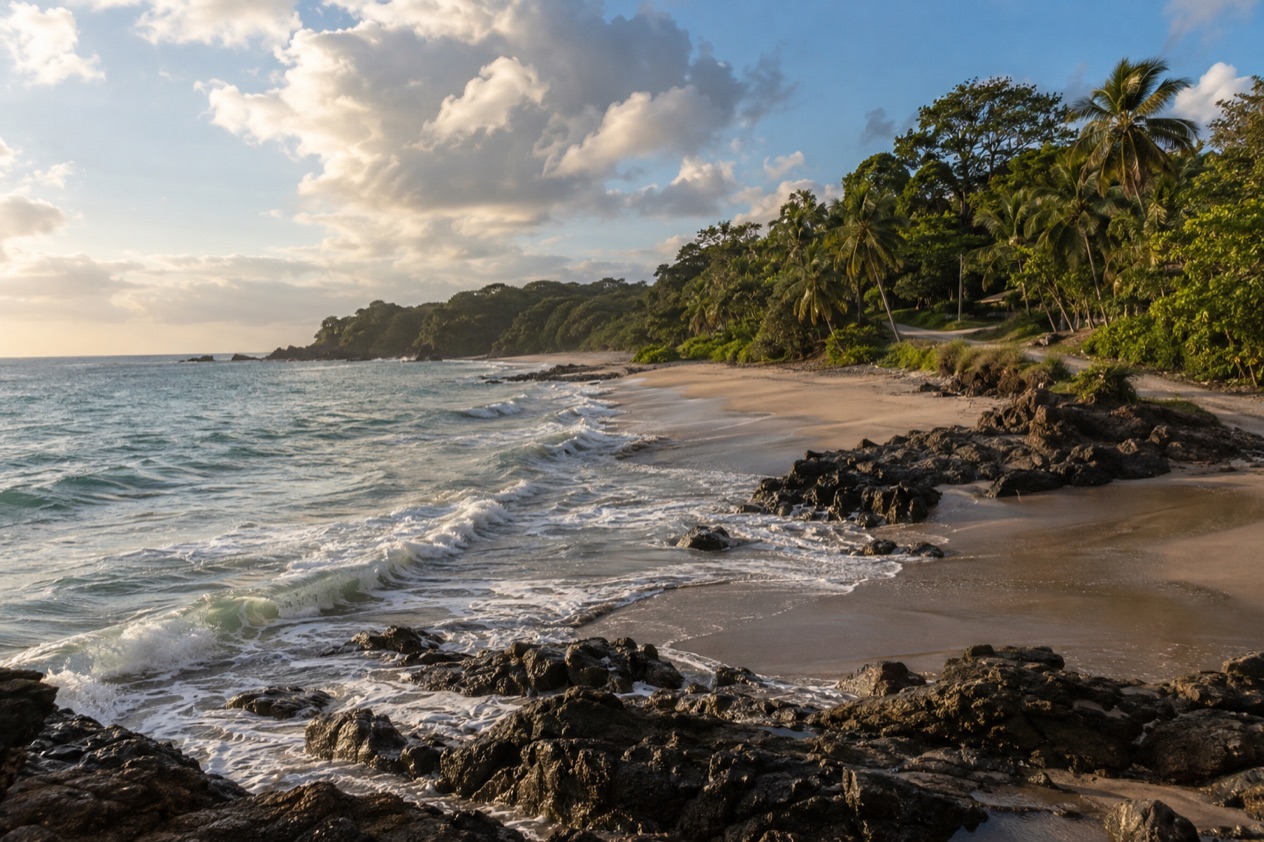
A late-afternoon downpour drums on the tin roofs along the dirt road, and half an hour later surfers are paddling out again beneath a washed pink sky while woodsmoke and wet earth drift out of the cafés. July is green season in Santa Teresa, with the jungle thick and loud behind the beach, the sand wide and quiet in the mornings, and the Pacific as warm as it gets. It suits travelers who want surf, yoga and slow days on the tip of the Nicoya Peninsula and who are happy to plan around a daily shower.
What is the weather like in Santa Teresa in July?
July in Santa Teresa is hot, humid and wet, with warm air from dawn to midnight and rain on most days, usually in bursts rather than from morning to night.
| Month | Average high (°F) | Average low (°F) | Rain days | Sea (°F) |
|---|---|---|---|---|
| June | 82.3 | 76.4 | 24.4 | 86.0 |
| July | 82.1 | 76.2 | 22.9 | 85.6 |
| August | 81.9 | 76.1 | 25.1 | 85.7 |
The day’s finest stretch comes early. The air is already warm when the light comes up over the hills, the beach is firm and almost empty, and the sun can be strong between clouds. Most travelers do their surfing, hiking and beach walking before lunch, because that is when the sky is most likely to stay open.
Rain tends to build through the afternoon. It can arrive as a short, heavy shower that turns the dirt road into a string of puddles, or as a gray, steady stretch that lasts into the evening. The days do not cool off much afterward, so the air stays sticky and clothes dry slowly. Daylight lasts a little over twelve hours, which gives you a full morning and a long, soft evening.
Nights stay warm enough for a T-shirt and sandals at an open-air restaurant. You will want a light rain jacket rather than a sweater, and clothes that dry fast. The forest is at its greenest, the waterfalls and creeks are running, and the sunsets, when the clouds break over the water, are often the richest of the year.
Can you swim in Santa Teresa in July?
You can take a long swim, since the ocean is warm enough, and the water feels good right away, so you will not need a wetsuit.
Warm does not mean gentle. A surf town through and through, Santa Teresa faces the open Pacific on a long beach where genuine swell arrives, which means waves are usual and the shoreline itself can shift with each new tide. The currents here pose a serious threat, and every year they lead to multiple deaths by drowning among American visitors nationwide. In Costa Rica, most beaches have no lifeguards or warnings about unsafe conditions, so check with your hotel or surf school about that day’s conditions before entering.
Even strong swimmers should check that day’s conditions with a hotel or surf school before entering. Children and nervous swimmers do better staying knee-deep, close to an adult, and the surf schools are a good way to learn how the waves behave. Bring a rash guard for sun and for the sandy scrapes of a wipeout, and check that day’s conditions with your hotel or surf school before swimming.
What to do in Santa Teresa in July
July here is built around early starts, long lunches and an easy rhythm set by the weather. The big date of the month is July 25, the Annexation of the Partido de Nicoya, a national holiday that marks Guanacaste joining Costa Rica.
It brings a long-weekend feel to the peninsula, with Costa Rican families on the road and a livelier mood on the beach. Schools also take a two-week mid-year break, so July has a family-vacation atmosphere that mixes with the surfers and yoga crowd.
The streets are a long, dusty or muddy strip of surf shops, juice bars, taquerías and small hotels hidden in the trees. Between showers, people drift from the beach to a café with a hammock, and nobody seems to hurry. Evenings smell of grilled fish and wood ovens, and the dirt road glows with the headlights of ATVs and the lanterns of open-air restaurants.
Surf, lessons and the long beach
Surfing draws the majority of travelers here, and the water shines in July. Swell often arrives steadily from the south in the green season, and the beach has several peaks spread along its length, so beginners and experienced surfers can find their own spot. Dawn sessions, before the afternoon clouds, are the favorite for the cleanest waves and the softest light.
If you have never stood on a board, a lesson on the inside waves is the way to start, and the schools along the road rent boards by the hour or the day. If you would rather watch, the sand is wide enough for a long walk, and the line of surfers against the sunrise makes a good morning show with a coffee in hand. Wear a rash guard, put on sunscreen even when it is cloudy, and follow the instructors’ advice about where to paddle.
Cabo Blanco and the green jungle
The Cabo Blanco nature reserve, at the southern end of the peninsula, is the best way to see the forest that wraps around the town. The trail through the trees is shady, humid and loud with birds and insects, and July’s rains turn the understory into a deep green tunnel. Howler monkeys and coatis are often heard or seen, though wildlife is never a promise, and a guide helps a lot in spotting what moves in the leaves.
Go in the morning, when the forest is cooler and the trail is less muddy, and wear closed shoes with good grip because the path can be slick after rain. Rules and access change, so check the reserve’s official page before you set out. Pack water, repellent and a light rain layer, and plan to finish the walk before the afternoon showers arrive.
Yoga, sunsets and slow evenings
Yoga studios and open-air shalas are part of Santa Teresa’s daily rhythm, with classes in the early morning and again near sundown. In July the sound of rain on a roof makes a class feel even more peaceful, and many studios have covered platforms for exactly that. Drop-in sessions suit visitors who only have a day or two.
Come evening, the ritual is sunset, and once the clouds part along the horizon, people collect on the sand or at a bar by the beach. Local menus lean on the sea and the market, with fresh fish, ceviche, coconut water drunk from the shell, and the Costa Rican staples of casado (a plate of rice, beans, salad and a main) and gallo pinto (rice and beans fried together for breakfast). Small family restaurants called sodas serve the best of them at the plainest tables.
On rainy afternoons, cafés, bakeries and chocolate and smoothie bars become the gathering places. A fruit smoothie with a book under a tin roof is part of the July experience here.
A two-day itinerary for Santa Teresa in July
Day 1 begins at dawn on the beach, when the sky is clear and the water is at its calmest.
Spend the afternoon on the covered side of town, with a yoga class, a massage or a stroll through the craft and surf shops while the showers pass. If the sky clears, return to the beach for the last light of day, and finish with dinner at an open-air restaurant where the menu is mostly seafood. If you arrive today, treat this as a travel day, since the journey takes most of a day, and keep the evening for a short sunset walk.
Day 2 is for the forest, so start early on the trails of Cabo Blanco while the air is cool and the birds are loudest. Walk to the end, rest in the shade, and return to town before the afternoon clouds darken the sky. Lunch can be a plate of ceviche at one of the small restaurants near the trailhead.
After lunch, return to Santa Teresa for a slower afternoon in its cafés and craft and surf shops. If it rains, stay indoors with a coffee and a pastry, or spend an hour in a gallery or bookshop. Come back for a late dinner at a wood-oven pizzeria or a grill, and end the day with a last drink on the sand.
Is Santa Teresa busy in July?
Moderately, with quiet stretches and a few busy weeks when the school break and the national holiday bring Costa Rican families to the coast.
The two-week mid-year school break keeps families traveling, and the holiday on July 25 adds to the festive mood. During those days the beach, the main road and the popular restaurants fill with local visitors, and rooms in the best-located small hotels go first. Outside those weeks, July is a green-season month with fewer international visitors, and you can often walk into a restaurant without a reservation.
If your dates fall during the school break or around the holiday, compare rooms, rental cars and flights when you choose your dates. For the quieter weeks, booking a few weeks ahead is a reasonable habit, and you will often find more choice of rooms. You can often line up surf lessons and yoga classes at the last minute, though on holiday weekends the sought-after instructors reach capacity.
The mornings are always the calmest part of the day, even in the busy weeks. Beaches and trails are quieter at sunrise, and the crowd tends to gather around sunset.
What to pack for Santa Teresa in July
Pack for heat and wet, with light layers that dry fast and a few things that protect you from sun, rain and mud.
- A light rain jacket, because showers arrive suddenly and the air stays warm.
- Because wet clothing dries slowly in the humid air, pack shirts and shorts that dry quickly.
- Sandals plus closed shoes with grip for muddy trails and the dirt road.
- Sunscreen and a rash guard, for the strong sun between clouds and for surf lessons.
- Insect repellent, for the jungle trails and the evenings.
- A dry bag or waterproof pouch for your phone and documents on rainy days.
Good to know before you go
The U.S. State Department rates Costa Rica Level 2, ‘Exercise increased caution,’ due to crime; it says petty crime is common throughout Costa Rica and that violent crime also affects tourists, including armed robbery, homicide and sexual assault.
The journey is the main thing to plan. Traveling between San Jose and Santa Teresa may consume the better part of a day, whether you board a car ferry at Puntarenas for the trip to Paquera and then tackle long stretches of partly unpaved road, or you take a brief flight to a small nearby airstrip.
In July the rain can make the last stretch slower and muddier, so treat the arrival as its own day and leave generous time. Book rooms and any flight seats first, and keep the busy school-break weeks in mind when you choose your dates.
Santa Teresa in July vs June and August
Moving four weeks earlier to June gives you nearly the same weather, with the sea a touch warmer and the green season in full swing. It is a little quieter before the school break begins, and you miss the holiday on July 25, so the mood on the beach is calmer and the choice of rooms is wider. For travelers who want the same surf and jungle with fewer families around, June is a very good alternative.
August is the wettest of the three months, with rain falling on even more days and the afternoon showers lasting longer. The sea stays warm, and the forest is at its lushest, but the beach days are shorter and the mud is deeper. The family crowds thin out after the July break, so the town feels quieter and the pace slower, which suits surfers and yoga students who care little about the weather.
Families and anyone who wants a festive local mood should stay with July, especially around the holiday. Travelers who want the calmest beach and the easiest room choices should shift to June or August, and those who dislike rain should weigh that choice carefully, since all three months are wet.
Is July a good time to visit Santa Teresa?
Yes, for travelers who love warm water, surf and green forest and who can live with an afternoon shower, July is a rewarding month in Santa Teresa.
Surfers, yoga students, families and hikers will find plenty to do, with early mornings that reward the early riser and evenings that stay warm and sociable. Anyone who needs sunny days without passing short showers for photographs, or who dislikes humidity and mud, should choose another season. Beach lovers who want to lie out all day will find the weather less cooperative than in the dry months.
Once you get there, give your first morning to the beach, stroll from one end of the sand to the other, and before swimming, check with a neighborhood surf school or your hotel about where the current runs calmest. Then settle into the rhythm of the place, with early starts, a slow lunch and a pause for the rain. July in Santa Teresa belongs to the jungle at its greenest, an exceptionally warm sea, and a national holiday that brings Costa Rican families to the coast.
Sources
- Open-Meteo / ECMWF ERA5, normals 1991-2020 computed for the grid cell at 9.6458N 85.1698W, checked October 8, 2026
- Open-Meteo Marine API, average 2015-2024, checked October 8, 2026
- sunrise-sunset.org, sunrise and sunset calculated for the 15th of the month, checked October 8, 2026
- U.S. Department of State, Costa Rica Travel Information, Safety and security (https://travel.state.gov/content/travel/en/international-travel/International-Travel-Country-Information-Pages/CostaRica.html), checked October 8, 2026
- U.S. Department of State, Costa Rica Travel Advisory, issued April 1, 2026 (https://travel.state.gov/content/travel/en/traveladvisories/traveladvisories/costa-rica-travel-advisory.html), read via the State Department open data API on October 8, 2026