
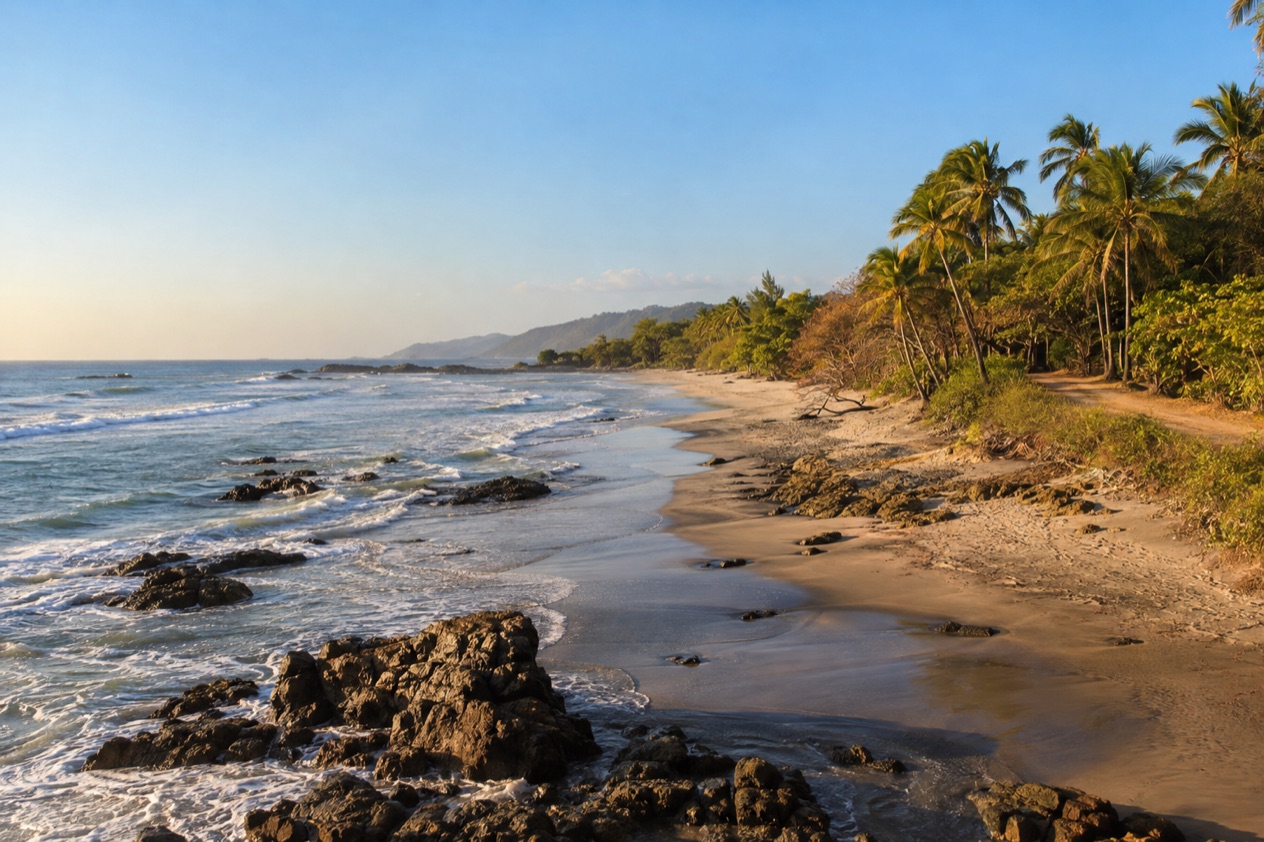
By six a.m. the dirt road running through Santa Teresa is already coming to life: with boards tucked under their arms, surfers head for the beach, the first ATV kicks up a trail of dust, and coffee aroma floats from the little cafes. When evening comes, the whole town heads again to the beach to see the sun sink into the Pacific. On the southern tip of the Nicoya Peninsula, March sits at the peak of the dry season, a month made for waves, yoga mats, fresh fish and long golden afternoons.
What is the weather like in Santa Teresa in March?
Expect a hot, sunny March that stays almost completely dry, the sort of warmth that drives you into the water by noon and toward the shade not long afterward.
| Month | Average high (°F) | Average low (°F) | Rain days | Sea (°F) |
|---|---|---|---|---|
| February | 85.9 | 77.1 | 0.6 | 85.8 |
| March | 86.6 | 77.7 | 1.1 | 86.6 |
| April | 85.4 | 77.8 | 6.9 | 86.9 |
The day begins sunny and warm right away, and the early hours, before the sun rises higher, are the finest time to walk the beach, surf or hike. Midday is strong. A good number of folks head for a porch, a hammock or a smoothie bar, then return once the late afternoon light turns soft.
Rain is rare this month. If rain does fall, it tends to be short, and weeks can go by with no rain at all. The trade-off is dust: the road through town turns powdery, so a motorbike or an ATV leaves a haze behind it, and a light scarf over the nose helps on busy stretches.
You can eat dinner outdoors in a T-shirt because the evenings remain warm, so a jacket is not necessary. The sun sets over open water, and the light turns orange and pink for a long stretch before dark. About twelve hours of daylight make the days easy to plan around dawn and sunset.
Can you swim in Santa Teresa in March?
The water is warm, but open-Pacific waves and dangerous rip currents demand caution.
The beaches here face the open Pacific, so waves are the main character. Surf often runs well on the long beach in front of town and on its neighbors, and the water can be lively even on a sunny day. If you are new to the water, check with the hotel or a surf school on how the day looks and obey any flags that are posted, while the stronger swimmers and surfers go past where the waves break. Between sets, the water can be pleasantly clear for a swim.
Rip currents kill U.S. tourists every year, with several drowning deaths, but most beaches have neither lifeguards nor any warning about hazardous conditions.
A surf school or a local instructor can show you where the channels pull. Bring sunscreen, a hat and a refillable bottle, since the shade is thin on the sand.
What to do in Santa Teresa in March
March here is about the rhythm of the dry season: surf in the morning, a long lunch, a slow afternoon and a sunset walk. The town is strung along one dirt road, and almost everything happens within reach of it, from yoga studios and open-air cafes to little shops selling handmade jewelry and swimwear.
Food leans toward whatever came out of the sea that morning. Look for ceviche, grilled fish with rice and salad, and the casado, a plate of rice, beans, plantain, salad and a protein that is the everyday lunch of Costa Rica.
Breakfast often means gallo pinto, the rice and black beans eaten with eggs, and fruit smoothies and coconut water are everywhere. In the dry season mangoes and other tropical fruit often turn up on the table.
The big national festival of the month happens far away. The Dia del Boyero, a parade of painted oxcarts in Escazu near San Jose, is held on the second Sunday of March and honors the oxcart drivers who once carried coffee to the coast. It is not a Santa Teresa event, so treat it as a cultural touchstone rather than a plan, although you may see oxcart motifs on souvenirs and murals around the country.
Surf and the beaches along the dirt road
Palms line a long strip of sand at the main beach, which shifts in feel from one end to the other. In the north, near Playa Hermosa, the beach is wide and the surf schools gather. Farther south toward Playa Carmen and Mal Pais, the coastline folds into rocks and tide pools, and the waves are often a better fit for people who already surf.
Go early, when the wind is usually light and the surface smoother, and come back near sunset when the crowd gathers on the sand. Rental boards and lessons are easy to find along the road, and a first lesson is a good way to learn how the currents move.
Not a surfer? Walk the beach, read a book under a palm or watch the lines of waves roll in. Keep an eye on the flags and on your belongings, because the water can surprise you.
Cabo Blanco and the southern tip
Cabo Blanco, the reserve at the very end of the peninsula, is a good outing for a hot dry-season morning because the trail runs through shaded forest. The path leads down toward a quiet beach, and along the way you may spot monkeys, birds and other wildlife, chances rather than promises. Its sleepy gateway village, Cabuya, has a few small restaurants and a calm shore.
Cabo Blanco lies south of town, and its forest trail leads toward the coast. Wear closed shoes, carry plenty of water and start early, because the forest heat builds by late morning. Because the reserve’s entry rules and access can shift, look at the park’s official page before you head out.
Montezuma and its waterfall trail
On the other side of the point, Montezuma is a small, bohemian beach town with a lively waterfront, craft stalls and cafes tucked among the trees. Many visitors pair Montezuma with the walk to the waterfalls just outside town, where the trail climbs through green forest and over rocks. The trail can be slippery and steep in places, so wear shoes with grip.
Dry-season water levels are lower than in the green season, so expect a gentler flow. Enjoy the views from the trail and the cool air under the trees, and keep to the rules posted on site about getting into the water. Afterward, lunch near the beach in Montezuma is a pleasant way to cool off before the drive back.
A two-day itinerary for Santa Teresa in March
Day 1 belongs to the beach and the town. Be on the sand at first light for a walk or a surf session, when the air is warm but not yet heavy, then have a big breakfast of gallo pinto, eggs and fruit at a cafe along the dirt road. Spend the late morning in the water or on a lesson.
Midday is the time to slow down: a fish lunch in the shade, a siesta or a yoga class in one of the open-air studios. In the afternoon wander the shops and juice bars, then walk to the water for sunset, when the whole beach turns toward the horizon. With only about twelve hours of daylight, dinner comes early, so a seafood plate at a small place in town fits well.
Day 2 heads south. Choose the forest trail at Cabo Blanco or the waterfall walk in Montezuma, then stop for a late lunch by the water.
Return in the late afternoon for a last swim near Playa Carmen and a drink at a beach bar. If the weather turns, which is unlikely this month, spend the day in a yoga class, a cooking workshop or a long lunch at a covered cafe.
Is Santa Teresa busy in March?
Yes, March is a lively month, because the dry season and its steady waves draw surfers, yoga students and winter-weary travelers from the north.
The town fills most in the weeks when schools and offices in North America take their spring breaks, and rooms near the beach go first. Restaurants are busiest at sunset and on weekends, and the best tables fill early. In quieter weeks you can still find a seat without much planning, though the most popular dinner spots do better with a reservation.
As a habit, book rooms and rental vehicles early for the holiday weeks and a bit later for ordinary ones. Surf lessons, yoga classes and day trips are available in town. The dirt road gets crowded with ATVs and motorbikes in the afternoon, so walking or leaving early makes getting around easier.
Trails and reserves tend to be calm in the early morning, with fewer people than on the beach. Before you head out, look at the park’s official page, because the rules for access do change.
What to pack for Santa Teresa in March
Pack light, breathable clothes and think about sun, sand and dust.
- Pack sunscreen, a hat, and sunglasses since the sun gets intense starting mid-morning.
- Swimsuits and a rash guard, since you will spend hours in the water.
- A scarf or buff, to keep the dust of the dirt road out of your nose and mouth.
- Sandals and closed shoes with grip, for the beach and for the forest trails.
- A refillable water bottle, for hot hikes and long days outside.
- A light layer for breezy evenings on the sand.
Good to know before you go
The U.S. State Department rates Costa Rica Level 2, ‘Exercise increased caution,’ due to crime; it says petty crime is common throughout Costa Rica and that violent crime also affects tourists, including armed robbery, homicide and sexual assault.
March falls within the dry season, so it is a fine month to visit the peninsula, yet it is also a period when wildfires often break out from January through the end of May, with Guanacaste and the northern region among those affected. The dirt road is dusty, so allow extra time for getting around and expect a bumpy ride. Travelers need a passport and proof of onward travel, and should verify their permitted stay before departure.
Santa Teresa in March vs February and April
Moving the trip a month earlier brings very similar weather: dry, sunny and warm, with the sea only a shade cooler. February is also a busy month for the surf crowd, so the mood and the crowds are much the same, with the beach and the cafes humming from morning to night.
A month later, April brings a visible change. Showers return more often, usually as afternoon storms, and the landscape begins to green. The warm sea is a touch warmer still, and the crowds start to thin once the spring-break weeks have passed, which makes rooms and restaurant tables a little easier to find.
Choose March if you want reliably dry days for beach time, surf and trails. Shift to February if your dates are flexible and you want the same dry-season rhythm, or to April if you would rather trade a few showers for fewer people and a greener view.
Is March a good time to visit Santa Teresa?
March is a wonderful month to come for those seeking sunshine, balmy seas and a relaxed beach town when it is most full of life.
Surfers, yoga students, couples and friends who care about sunsets will love it, and so will travelers who like to plan days around the beach rather than the weather. Anyone who dislikes dust, heat or a busier road may prefer a greener, quieter month. On arrival, settle into your room, walk to the beach for a first look at the surf and sign up for a lesson or a class while the early slots are still open.
What sets March apart here is the light: long, dry afternoons that end with the whole town on the sand, watching the sun slide into the Pacific.
Sources
- Open-Meteo / ECMWF ERA5, normals 1991-2020 computed for the grid cell at 9.6458N 85.1698W, checked October 8, 2026
- Open-Meteo Marine API, average 2015-2024, checked October 8, 2026
- sunrise-sunset.org, sunrise and sunset calculated for the 15th of the month, checked October 8, 2026
- U.S. Department of State, Costa Rica Travel Information, Safety and security (https://travel.state.gov/content/travel/en/international-travel/International-Travel-Country-Information-Pages/CostaRica.html), checked October 8, 2026
- U.S. Department of State, Costa Rica Travel Advisory, issued April 1, 2026 (https://travel.state.gov/content/travel/en/traveladvisories/traveladvisories/costa-rica-travel-advisory.html), read via the State Department open data API on October 8, 2026
To plan your stay
- Things to Do in Santa Teresa: Surf, Yoga, Beaches and Day Trips
- Where to Stay in Santa Teresa: Beach Areas, Boutique Stays and How to Choose
- Best Time to Visit Santa Teresa: Dry Season, Green Season, Weather by Month and Festivals
- Santa Teresa in February: Dry Weather, Surf, Envision Festival and Two Days on the Beach