
GUADALAJARA · THE CITY GUIDE · JALISCO
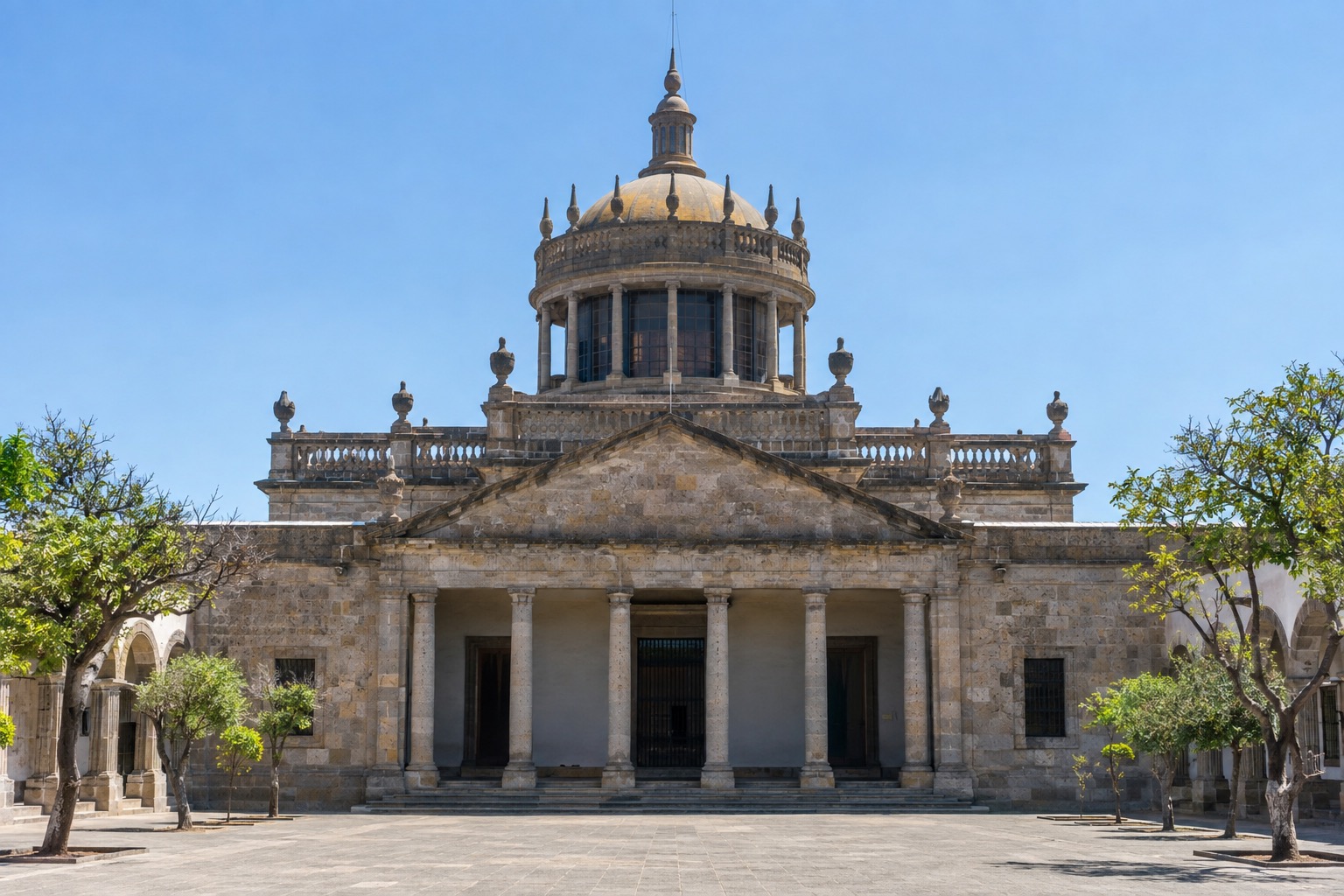
Inside the chapel of the Hospicio Cabanas, Jose Clemente Orozco painted murals in the late 1930s, and the building around them has held a UNESCO World Heritage listing since 1997. A string of plazas links it to the cathedral, so the historic center can be walked in a single line.
Along that line you pass the cathedral’s twin yellow-tiled spires and the Teatro Degollado opera house. The Mercado San Juan de Dios fills several floors with food, leather and crafts. South of the center, Tlaquepaque and Tonala carry the pottery and blown glass. Out west in the agave fields, the town of Tequila distills the spirit that took its name.
THE CITY AT A GLANCE · GUADALAJARA
Build the visit around the Hospicio Cabanas and its Orozco murals, string the cathedral and plaza walk onto it, add Tlaquepaque, Tonala and Tequila as day trips, and read the Level 3 advisory for Jalisco before you book.
UNESCO SINCE 1997 · JALISCO ADVISORY LEVEL 3 · TONALA MARKET THURSDAYS AND SUNDAYS
Go for: Orozco’s chapel murals, a cathedral-to-Hospicio plaza walk, pottery and blown glass in Tlaquepaque and Tonala, and a distillery tour in Tequila.
Think twice before: booking without reading the State Department’s Level 3 advisory for Jalisco, issued May 29, 2026.
Advisory: US Department of State · Heritage: UNESCO · Museum: INAH · full sources below
On this page
- Is Guadalajara safe to visit right now?The Jalisco Level 3 advisory, issued May 29, 2026
- Things to do in Guadalajara’s historic centerCathedral, Teatro Degollado, Plaza Tapatia, Hospicio Cabanas and the market
- Day trips from GuadalajaraTlaquepaque crafts, Tonala’s Thursday and Sunday market, Tequila distilleries
- Hospicio Cabanas ticket priceWhat we could confirm, and the Museo Regional at 210 pesos
- Best time to visit GuadalajaraWeekly timing: Museo Regional Tuesday to Sunday, Tonala Thursday and Sunday
Manuel Tolsa designed the Hospicio Cabanas in the Neoclassical style. UNESCO’s 1997 inscription covers 2.34 hectares. Today the building houses the Instituto Cultural Cabanas, and the Orozco murals are in its chapel.
Is Guadalajara safe to visit?
The U.S. State Department’s Mexico travel advisory, issued May 29, 2026, rates the state of Jalisco at Level 3, Reconsider Travel. Guadalajara, Tlaquepaque, Tonala and Tequila all sit in that state. The full text is on travel.state.gov. Read it before you book and again the week you fly, because advisories get reissued.
What is there to do in Guadalajara?
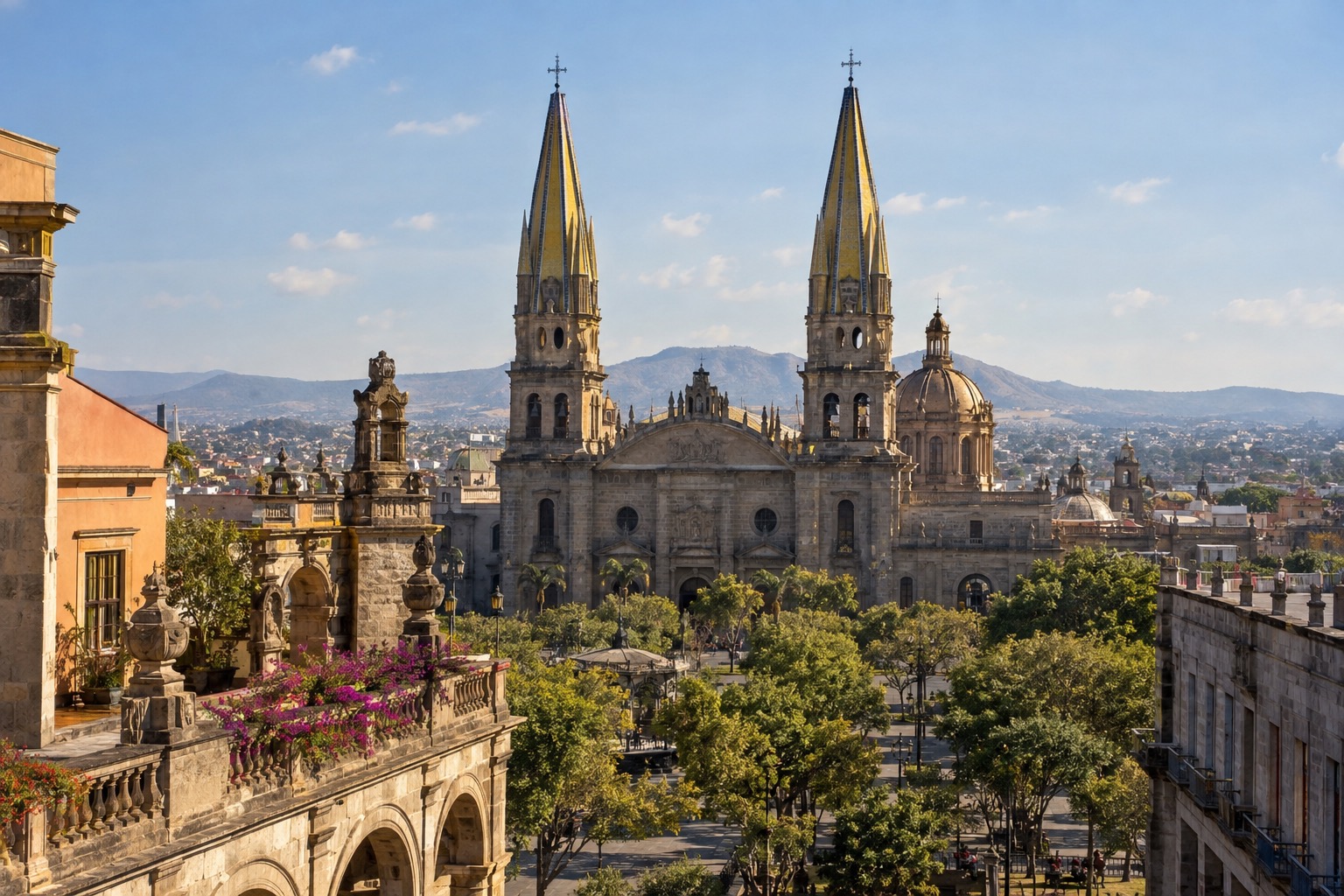
Start at the cathedral, which anchors the Plaza de Armas at the heart of the historic center. The Teatro Degollado, Guadalajara’s historic opera house, faces it. From there the Plaza Tapatia links the cathedral area to the Hospicio Cabanas, past the Rotonda de los Jaliscienses Ilustres.
The Museo Regional de Guadalajara also sits in the historic center. For a different pace, the Mercado San Juan de Dios (locals also call it Mercado Libertad) spreads food, leather and crafts stalls over several floors.
Tlaquepaque, Tonala and Tequila from Guadalajara
Tlaquepaque lies just south of central Guadalajara. It is a crafts town of pottery, blown glass and mariachi plazas, so leave room in the bag for something breakable.
Tonala sits next to Tlaquepaque and holds a large pottery and crafts market on Thursdays and Sundays. The two towns fit into one outing when you aim for one of those days.
Tequila is the third trip, out in the agave fields west of Guadalajara. The region’s namesake spirit is distilled there, and several distilleries offer tours. Each sets its own tour times and prices, and we have not checked them.
How much does the Hospicio Cabanas cost?
No Hospicio Cabanas ticket price or opening hours came through in a source we could read, so no figure appears here. The Instituto Cabanas, housed in the building, is the body to ask through its official channels.
The Museo Regional de Guadalajara, in the historic center, charges 210 pesos general admission. Mexican nationals and foreign residents in Mexico pay 105 pesos. It opens Tuesday to Sunday, 9 a.m. to 4 p.m. Convert at the day’s exchange rate.
A 4 p.m. close is early. Put the museum in the morning and keep the afternoon for the plaza walk between the cathedral and the Hospicio.
Food, leather and crafts at the Mercado San Juan de Dios carry stall prices we cannot quote, and the same goes for Tonala’s Thursday and Sunday market. Decide a shopping limit before you walk in.
When is the best time to visit Guadalajara?
Sources & data for this guide
- Jalisco Level 3 advisory, issued May 29, 2026 · US Department of State, Mexico Travel Advisory (travel.state.gov) · checked Sep 29, 2026
- Hospicio Cabanas: UNESCO inscription in 1997, 2.34 hectares, Tolsa design, Orozco chapel murals · UNESCO World Heritage Centre · checked Sep 29, 2026
- Museo Regional de Guadalajara admission and hours · INAH (inah.gob.mx) · checked Sep 29, 2026
- Descriptions of the cathedral, Teatro Degollado, Plaza Tapatia, the market, Tlaquepaque, Tonala and Tequila, and the Tonala market days, are editorial.
- We hold no checked Hospicio Cabanas admission, no Hospicio hours and no Guadalajara climate series yet. We left them out rather than guess.
We hold no checked month-by-month climate series for Guadalajara, so no month gets a temperature or a rain figure here. For a full calendar of Mexico’s Caribbean coast, see our Cancun best-time guide.
The Museo Regional opens Tuesday to Sunday, so Monday belongs to the outdoor parts of the center: the cathedral square, the front of the Teatro Degollado and the Plaza Tapatia walk. We have not checked Monday hours at the Hospicio or the market.
Thursday and Sunday are the days for Tonala’s market. Tlaquepaque sits next to Tonala, so a single outing covers both.
The Jalisco advisory was issued May 29, 2026, and we read it on Sep 29, 2026. Check the current version when you pick dates. If Guadalajara is one stop in a longer Mexico plan, the other places are on our destinations index.
A first day can run in one line. Begin at the cathedral on the Plaza de Armas, pass the Teatro Degollado facing it, and follow the Plaza Tapatia past the Rotonda de los Jaliscienses Ilustres to the Hospicio Cabanas. End in the chapel among Orozco’s murals from the late 1930s.