
THE DOURO VALLEY · THINGS TO DO · QUINTAS · RAIL · RIVER
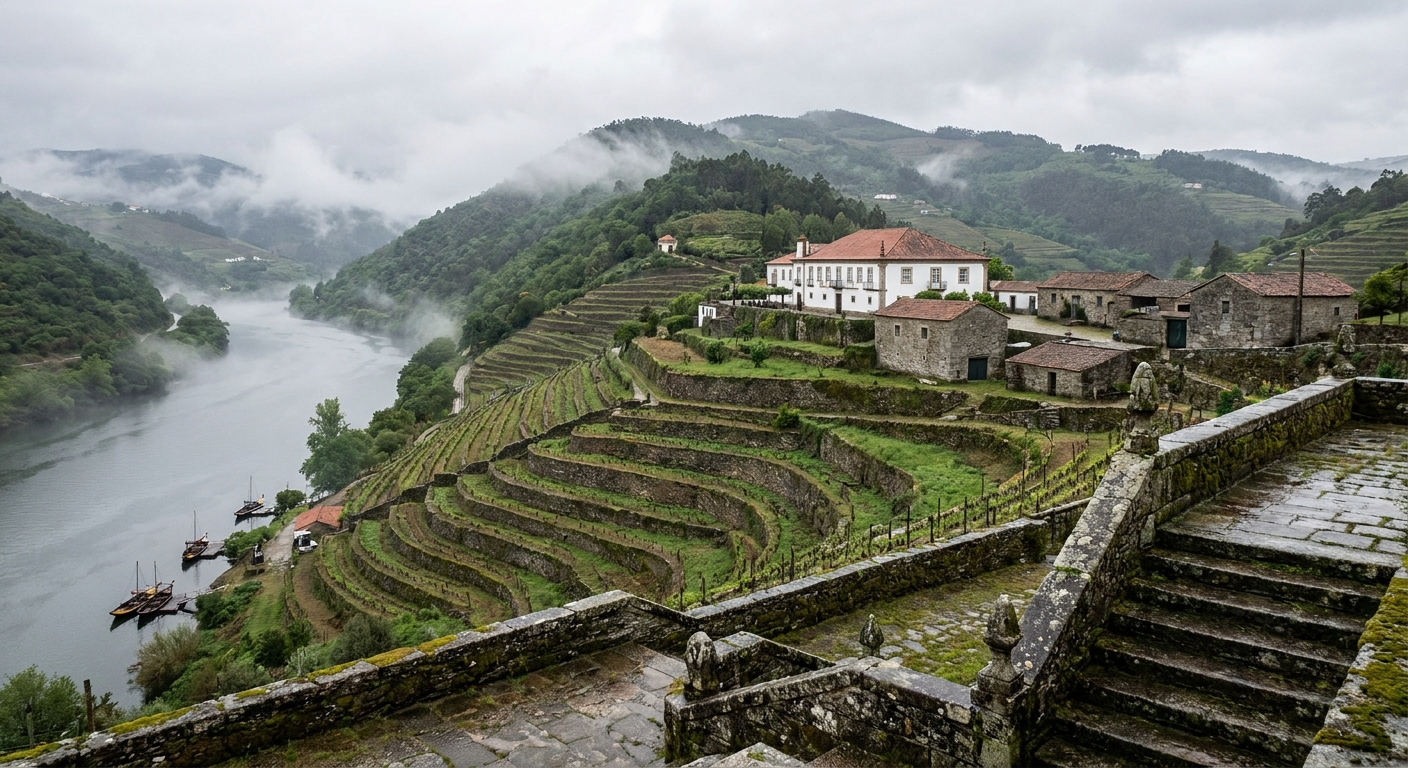
Almost everything the Douro offers happens on a slope. The quintas stand above the terraces with their names painted on the roof tiles, the railway runs at water level underneath all of it, the boats work the bends between dams, and the viewpoints are reached by roads that climb off the N222 in switchbacks. Choosing between those four is mostly a question of who is driving afterwards.
Season changes what an activity even is. In February the terraces are bare and the cellars are quiet. In spring the river runs full and the walls flower. In early autumn the estate you would have toured in an hour becomes a working floor with crates coming in, and our vindima guide covers those weeks in full. Temperatures, rain days and the crowd curve are kept on the month-by-month page.
THE DOURO BY ACTIVITY · NORTHERN PORTUGAL
Two of the valley’s best days run on rails and water, so a car-free Douro is realistic; the rest of the list asks who is staying sober on the climbs.
QUINTA TASTINGS · LINHA DO DOURO · RIVER BOATS · MIRADOUROS · CÔA ROCK ART
Go for: a morning cellar visit at Pinhão, the river stretch of the Linha do Douro with the window open, and a viewpoint terrace in the last hour of light.
Think twice before: planning three estates in one day with your own car. Port is fortified, the climbs are single-lane, and the spit bucket solves only part of it.
IVDP · CP (Comboios de Portugal) · Fundação Côa Parque · ANSR · dated list at the end
On this page
- Things to do in the Douro without a carStation pickups, walkable quintas, hired drivers
- The Linha do Douro train from PortoRégua, Pinhão, Tua, Pocinho
- Boat trips from Régua and PinhãoRabelo cruises and the dam locks
- Free things to do in the Douro ValleyMiradouros, Pinhão station tiles, Lamego’s stairway
- The Douro Valley in summer heatCool cellars, early boats, an afternoon pool
- Harvest and foot treading in the DouroOur Douro harvest guide
- One list to plan Douro days fromActivity, base, time and what limits it
Where the Douro’s activities concentrate: Peso da Régua, Pinhão and the Douro Superior
Peso da Régua is where the practical version of a Douro day begins. The quays take the cruise boats, the station is the junction for buses up to Lamego, and the Museu do Douro explains how the wine trade was organised long before anyone came here for a view. Régua also keeps restaurants open in the evening. That matters when an estate pours its last glass and sends you back down the hill with nowhere to eat.
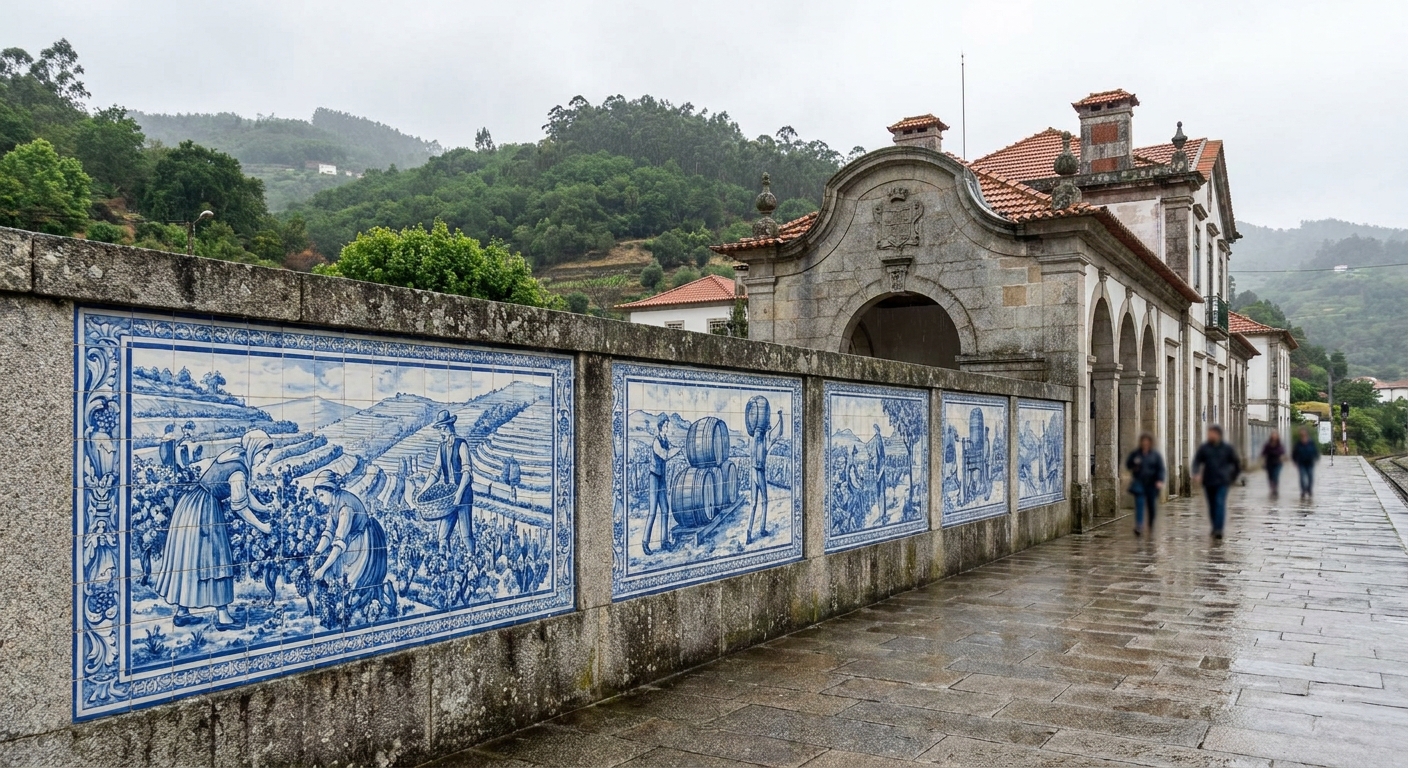
Pinhão is the tasting village. Its station is lined with azulejo panels showing the harvest as it looked a century ago, and the port houses keep visitable properties on both banks: Quinta do Bomfim on the edge of the village, Quinta do Seixo across the water at Valença do Douro. Boats leave from a quay a few steps from the platform. The place is small, and after dinner it goes very quiet.
The Douro Superior, east of the Tua confluence, is a driving day rather than an outing. The gorge widens, the villages thin, and the Paleolithic engravings at Vila Nova de Foz Côa are seen with a guide in the park’s own vehicles. Vultures ride the cliffs along the Spanish border in the Douro Internacional park. Our region page describes that far eastern stretch and where you would sleep out in it.
Things to do in the Douro Valley: quinta tastings, the Linha do Douro, a rabelo cruise, the miradouros and Foz Côa
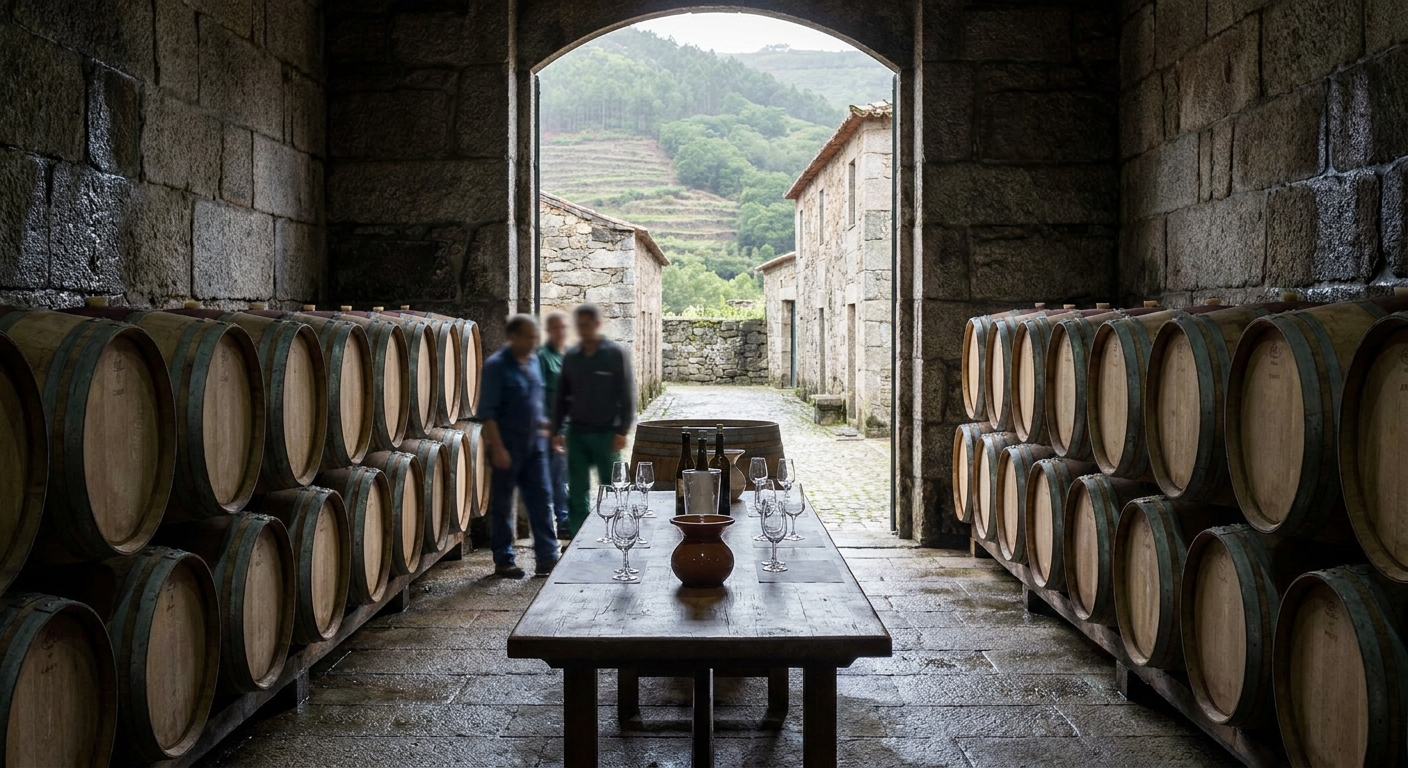
1. A quinta visit and tasting. The usual shape is a walk through the cellar and the lagar room, then a flight poured on a terrace above the vines: a white or a rosé to open, then tawny and vintage. Some estates add a walk out into the terraces, and several serve lunch. Booking is normal now and walk-ins are less so. Who drives afterwards shapes the whole day, and the tasting and driving question gets its own section below.
2. The Linha do Douro by train. Services leave Porto’s Campanhã station, swing inland, then drop to the water and follow it east through Régua, Pinhão and Tua to the end of the line at Pocinho. On the last stretch the track runs close enough to the river that passengers cross the aisle for the view. A historic steam service works the Régua to Tua section on published dates in the warm months. Timetables are thin, so check CP before building a return around one.
3. The boat. Cruise boats shaped like the old rabelos run short trips from the quays at Régua and Pinhão, and longer day boats come up from Porto with a train or coach return. The dam locks are half the entertainment: the hull rises slowly inside wet concrete at Carrapatelo and again at Bagaúste, with the valley waiting above the wall. Ask which direction your ticket runs before you pay. Upriver and downriver are different afternoons.
4. Harvest and foot treading. In early autumn the terraces fill with pickers and the crates come down to the lagares, the granite tanks where grapes are still trodden by foot at some estates. Whether guests get in, whether it happens after dinner, and which properties take bookings for it form a subject of their own. The vindima guide works through all three. Rooms in the valley are scarcest during those weeks.
5. The miradouros and the balcony roads. São Leonardo de Galafura looks across the Baixo Corgo from a rock terrace above Régua, Casal de Loivos hangs directly over the Pinhão bend, and São Salvador do Mundo stands high above the water near São João da Pesqueira. The N222 between Régua and Pinhão is the drive people come for. The lanes climbing off it are narrower still, single-lane in places, blind on the bends.
6. The Côa Valley rock art. Engravings of horses, aurochs and fish were cut into open schist along the Côa in the Paleolithic, and they are still outdoors where they were made. Visits run from the museum at Vila Nova de Foz Côa in guided vehicles, on a booking, and the schedule moves with the light and with summer heat. From Pinhão this fills a day. It does not compress into an afternoon detour.
Quinta tastings and the driving question on the N222
A port tasting is not a supermarket pour. The wine is fortified, the flight climbs from white and rosé through tawny to vintage, and the glasses keep arriving while somebody explains the difference between them. Estates put a spit bucket on the table for a reason. In our experience two visits in a day is comfortable and the third is where people start doing arithmetic in the car park.
Portuguese law sets a blood-alcohol limit for drivers and roadside checks happen. No figure is quoted here because it can change, and our car rental guide carries the current rulebook. The roads make the rest of the argument. Quinta driveways are steep gravel, the climbs to the viewpoints run single-lane with a stone wall on one side and air on the other, and in autumn you meet tractors and grape trucks on those corners.
The workable arrangements are dull and effective. Name a driver who tastes nothing and uses the bucket all afternoon. Hire a driver instead, since estates and valley hotels arrange that on request when you book. Or join one of the small-group days that leave from Régua and Pinhão and let somebody else take the bends after the vintage glass.
The car-free version works better here than in most wine regions. Trains stop in both tasting towns, several quintas collect guests from the platform if you ask when you reserve, and Quinta do Bomfim stands at the edge of Pinhão within walking distance of the station. Taxis exist at Régua and Pinhão but there are few of them. Arrange the ride back before the first glass, not after the last one.
Fees and what they include vary from estate to estate and from one season to the next. Ask what the flight covers, whether lunch is served, and whether the cellar is open at all in winter, when several properties cut their hours. Relative tiers for rooms, tastings and meals are set out in what a Portugal trip costs, and a stay where dinner and the cellar visit arrive on one bill is argued in the honeymoon guide.
Free things to do in the Douro: miradouros, the Pinhão station tiles, the Régua quays
The viewpoints cost nothing and hold up against anything ticketed in the valley. São Leonardo de Galafura has a rock terrace, a small chapel and no ticket office. Casal de Loivos gives you the Pinhão bend from directly overhead. Down at water level, the azulejo panels at Pinhão station are on the public platform, and the Régua quays make a flat walk with the boats coming and going in front of you.
Villages are the other free hour. Provesende keeps a granite manor square and a bakery. Favaios sits up on the plateau where the moscatel is made. Above Lamego, the baroque stairway to Nossa Senhora dos Remédios zigzags past tiled landings, free to walk and steep enough to count as the day’s exercise. In late winter, almond blossom on the slopes above the river turns an ordinary drive into an outing.
The Douro Valley in high summer: what to do in the heat
The valley is a trench and behaves like one from July into September. Terraces bake by late morning and the schist gives the heat back at dusk. What still works is anything cool: cellars keep their temperature behind thick walls, the Museu do Douro at Régua is indoors, and a boat at least has moving air over the water. The actual temperatures are on July and August.
So the summer day inverts. Tastings and any walking go early, the middle hours belong to a pool or a shaded terrace, and dinner runs late. Rivers signposted as praia fluvial give you somewhere to swim in between. Heat and inland fire season are covered on our Portugal safety page. Winter has the reverse problem: fog sits on the water here long after the coast has cleared, and a nine o’clock viewpoint shows you nothing at all.
Things to do in the Douro Valley by nearest base
| What you want | Where it happens | Nearest base | Time it takes (est.) | What limits it |
|---|---|---|---|---|
| Cellar visit and tasting | Quintas around Pinhão and Valença do Douro | Pinhão | A morning | Booked ahead, and somebody has to drive |
| The scenic rail ride | Linha do Douro, Régua to Pocinho | Porto or Régua | Most of a day out and back | Thin timetable, check CP |
| River cruise | Quays at Régua and Pinhão, or up from Porto | Régua or Pinhão | An afternoon | Direction of travel, ask before booking |
| Foot treading at harvest | Working quintas, early autumn | A quinta, booked | An evening at the lagar | Season only, rooms sell out |
| Miradouro circuit | Galafura, Casal de Loivos, São Salvador do Mundo | Régua or Pinhão | A late afternoon | Single-lane climbs, no bus service |
| Prehistoric rock art | Vila Nova de Foz Côa, Douro Superior | Foz Côa or Pocinho | A full day from Pinhão | Guided vehicles only, booked in advance |
| Swimming and shade | Quinta pools, river beaches | Anywhere in the valley | An afternoon | Heat in the gorge, see the month pages |
| Wine trade history | Museu do Douro, Peso da Régua | Régua | A rainy morning | Closing day set by the museum, verify |
Only Foz Côa fills a whole day, so two nights in the valley hold three or four of these rows without hurrying anyone. Which base carries those nights is argued on our Douro guide, and the seven-day route shows how the wine country slots into a northern week with Porto.
The Douro with kids: the boat, the train and the parts that are a wine tour
Douro days that work with children have an engine in them. The train is the obvious one, especially the river stretch east of Régua where the water runs right under the window. A short cruise from Pinhão with a lock passage keeps most ages watching, since a hull rising inside a concrete chamber is a machine doing something visible. A quinta with a pool buys back the entire afternoon.
A tasting circuit does not work. Cellars are cold and slow, terrace edges drop away with loose schist underfoot, and the Côa engravings mean a long transfer and a walk in the open with no shade. Advice by age group and the family version of a Portuguese week are in Portugal with kids.
Which Douro activities need a car, and which run on rails and water
| Activity | Car? | Without one | Our verdict |
|---|---|---|---|
| Tastings near Pinhão | Optional | Station taxis, quinta pickups, one estate on foot | Book the pickup when you book the visit |
| Two or more estates in a day | Helpful | Small-group days from Régua or Pinhão | Pay for the driver rather than the car |
| The Linha do Douro ride | No | The train is the activity | Leave the car at the hotel |
| River cruises | No | Quays at Régua and Pinhão | Confirm which way the boat runs |
| Miradouros above the river | Yes | Occasional local buses | Single-lane roads, blind bends, slow |
| Côa Valley rock art | Yes | Train to Pocinho, then a transfer | Park vehicles cover the last stretch |
| Harvest visits | Depends | Estates arrange transport in the picking weeks | Ask at the moment you book |
Portuguese motorways run boothless electronic tolls, and the A4 east out of Porto is one of them. Automatic transmissions have to be reserved as automatics rather than hoped for at the desk. Renting a car in Portugal deals with both, along with the alcohol rules that weigh more here than anywhere else in the country.
If you would rather not drive at all, the rail and coach network and its gaps are mapped in getting around. To see how a valley week compares with the rest of the country by activity, open Porto and the North, the Alentejo or the Algarve. The national shortlist is in things to do in Portugal.
What to skip in the Douro
Skip the third tasting. Skip the day out of Porto that promises two estates, a cruise and a train ride between breakfast and dinner, because the road time swallows the difference. Skip the viewpoint lanes after dark in harvest season, when tractors are using them too. And if you are the driver, skip the flight and take the cellar tour anyway. The wine is sold at the door and travels home better than a roadside fine on the N222 does.
The last word
Ask whether the lagar room is open even when nothing is happening in it. Out of season the granite tanks stand empty and cold, a drain in one corner, a hose coiled against the wall, the whole floor smelling faintly of the last vintage. Stepping down into one explains how port is made faster than any flight poured upstairs. Our harvest guide has the version with grapes and a band in it.
Then keep the late afternoon free. From the terrace at Casal de Loivos the river turns the colour of the schist it cuts through, the day boats have already gone back down toward Régua, and the loudest thing left is a tractor working a terrace somewhere below you. Nothing in a tasting room competes with that, and nobody charges for it.
Sources & data for this guide
- UNESCO World Heritage · Alto Douro Wine Region · the inscribed property is a delimited core of the cultivated valley · checked Sep 6, 2026
- Port styles, appellation and estate visits · IVDP, Instituto dos Vinhos do Douro e do Porto · checked Sep 6, 2026
- Linha do Douro stations and services, Porto Campanhã to Pocinho, plus the seasonal historic steam service between Régua and Tua · CP, Comboios de Portugal · dates published season by season · checked Sep 6, 2026
- Guided visits to the open-air engravings and the museum at Vila Nova de Foz Côa · Fundação Côa Parque · vehicles depart from the museum, booking required · checked Sep 6, 2026
- Blood-alcohol limit for drivers and roadside enforcement · ANSR, Autoridade Nacional de Segurança Rodoviária · the current figure is deliberately not reproduced here, confirm before a tasting day · checked Sep 6, 2026
- Region and wine tourism listings, including quinta visits and river cruises · visitportugal.com (Turismo de Portugal) · checked Sep 6, 2026
- Editorial note: no temperatures, tasting fees, ticket prices or journey times appear on this page. Estate hours change year to year, the month pages carry the climate figures, and the car guide carries the driving rules.