
PORTUGAL · IS IT SAFE? · THE STRAIGHT ANSWER
Short version: Portugal is one of the safest countries an American can visit, and it isn’t close. The US State Department files it at Level 1, its lowest tier (“exercise normal precautions”), violent crime against tourists is genuinely rare, and the sum of most visitors’ security experience is an eleven-second tussle with a tram-riding pickpocket that a zipped bag would have prevented. This page exists to say that with sources, and to cover the short list of things actually worth knowing.
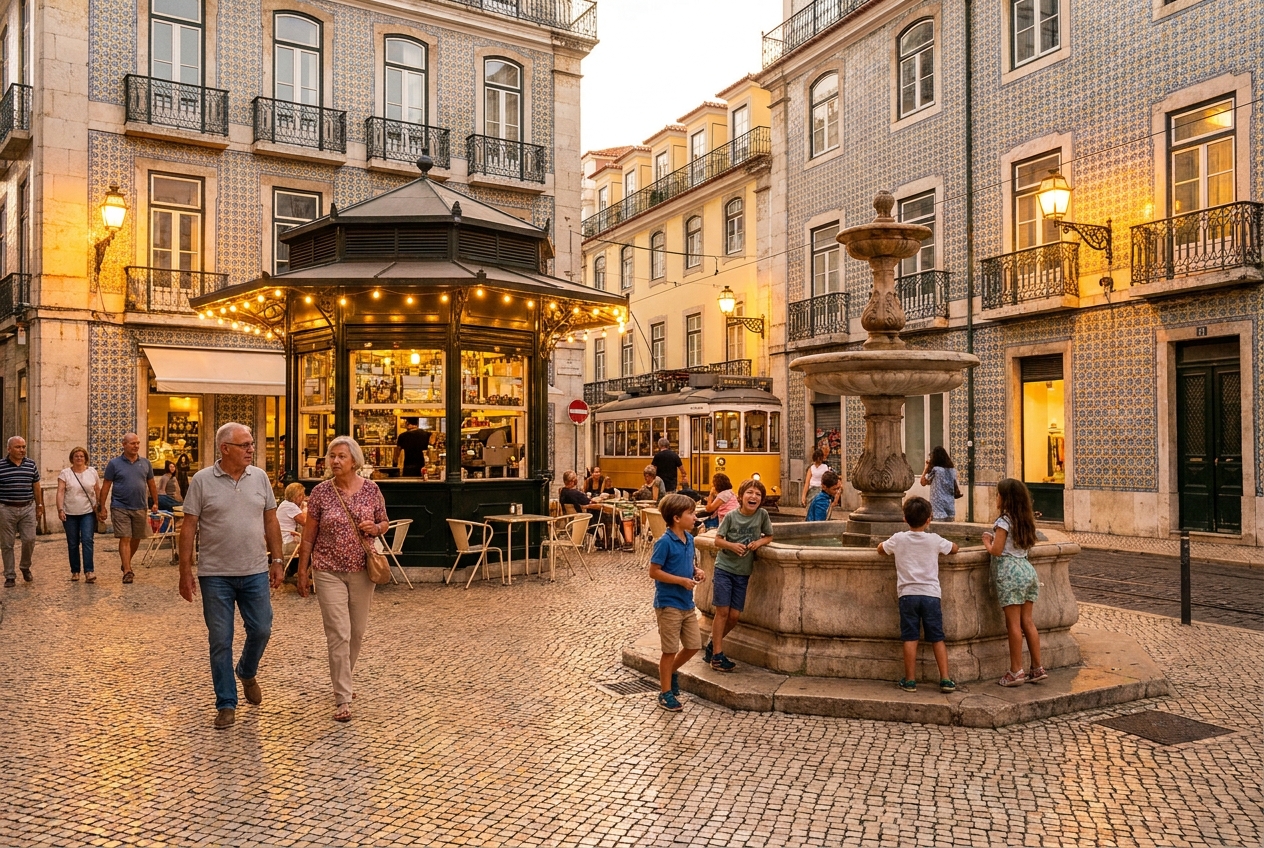
SAFETY AT A GLANCE · PORTUGAL
Treat Portugal like a city-smart evening anywhere: zip the bag on tram 28, drink the tap water, walk home after dinner, and save the vigilance for the ocean, which is the one thing here that genuinely doesn’t care about you.
US ADVISORY: LEVEL 1 (LOWEST) · REAL RISK: PICKPOCKETS · REAL DANGER: THE ATLANTIC
Perspective: the statistically riskiest parts of a Portugal vacation are the rental-car hours and the surf, not any street you’ll walk.
Think twice before: swimming at unguarded Atlantic beaches or turning your back on the ocean on rocks and cliff edges. The sea here is cold, strong and unsentimental about photographs.
Advisory: US State Department · full sources at the end of this guide
On this page
- Give me the official pictureWhat the advisories say
- The one real nuisancePickpockets, and the 3 habits that end them
- The one real dangerThe Atlantic, respected
- Health, scams, driving, soloEverything else, briefly
How safe is Portugal? What the official sources say
The State Department’s Portugal advisory sits at Level 1, “Exercise Normal Precautions”, the same tier as Japan or Iceland and the lowest that exists. Its one standing caveat is petty theft in tourist crowds. Global peace indices routinely place Portugal among the handful of most peaceful countries on earth.
None of this means nothing ever happens (Lisbon is a real city with real nightlife districts at 3am), but it does mean the baseline question (“is it safe to go?”) has a one-word answer, and the useful questions are the specific ones below.
Pickpockets in Lisbon and Porto: how to avoid them
The entire tourist-crime economy of Portugal concentrates where you’d guess: tram 28 at rush, packed miradouros at sunset, Metro escalators, café chair-backs. The response is three habits, not a mindset: a bag that zips, worn in front in crowds. The phone in a front pocket or the zipped bag, never on the café table’s edge. And nothing of value in the daypack’s outer pouch. That’s the whole discipline.
Two supporting notes: violent mugging of tourists is rare enough to make national news, and the “found wallet” and “friendship bracelet” performers around Rossio deserve the same amused walk-past they get in every European capital.
If something does vanish, 112 reaches police with English-speaking operators, tourist police desks in Lisbon and Porto handle reports briskly, and your travel insurance wants that report’s number.
Ocean safety in Portugal: Atlantic surf and rip currents
Now the section that earns its keep. Portugal’s serious visitor incidents involve water, not crime: an ocean that runs cold and muscular even in August, rip currents on the west-coast beaches, rogue waves on rocks and fishing platforms, and cliff edges (Algarve included) that erode from beneath and are marked accordingly.
The rules locals live by: swim at lifeguarded beaches in season and obey the flags (green swim, yellow feet-wet, red stay out; a checkered flag means the beach itself is unsupervised), assume any beach with surfers and no families is telling you something, never turn your back to the ocean on rocks or promontories, and treat cliff-top barriers as load-bearing information rather than suggestions.
Surf schools at Guincho, Peniche or Sagres are the safe door into the big water. Freelancing into it is how embassies meet their citizens.
Health, scams, driving and solo travel in Portugal
Health: tap water is excellent everywhere, food safety is European-boring, no vaccines beyond routine ones, pharmacies (the green crosses) are ubiquitous and their pharmacists competently handle small miseries. EU-standard healthcare is real, and travel insurance still earns its keep because US plans rarely follow you.
Scams: beyond the pickpocket ecosystem, the repertoire is thin — inflated tuk-tuk quotes (agree the price first), the occasional restaurant that treats the unrequested bread couvert as mandatory (it isn’t — ask it removed), and ATM screens offering “conversion to dollars” (always decline and let your bank convert).
Driving: statistically your riskiest activity here. Portuguese highway speeds run enthusiastic, and the car guide covers the tolls and habits. Solo and women travelers report Portugal among Europe’s most comfortable countries: street harassment is notably rare, and the usual city-smart night rules (licensed taxis or apps late, watch your drink in Bairro Alto) are sufficient, not special.
LGBTQ+ travelers: Portugal ranks among Europe’s most legally protective and socially relaxed destinations, and Lisbon and Porto both have visible, integrated scenes.
Earthquakes: the 1755 one shaped Lisbon’s architecture and the risk exists on paper. On a vacation timescale it belongs in the same drawer as asteroid strikes.
The last word
Portugal’s safety profile is the rare one where the honest guide has to work to fill a page: zip the bag, respect the flags, agree the tuk-tuk price, and the country’s actual risks are sunburn and buying too much cork. Save your alertness budget for the ocean viewpoints, and spend everything else on the trip. That’s not promotion. That’s what Level 1 means.
Sort the paperwork in five minutes with the entry guide, pack the zipped bag via the packing list, and get back to the good decisions: when and where.
Sources & data for this guide
- Level 1 advisory, petty-theft caveat · US State Department Portugal Travel Advisory · checked Sep 1, 2026
- Beach flag system · Portuguese national lifeguarding standard (ISN) · checked Sep 1, 2026
- Emergency 112, pharmacy system, healthcare standard · official EU/Portugal public information
- Peace-index standing · Global Peace Index rankings, recent editions
- Scam repertoire, harassment observations and neighborhood notes are editorial judgment from ground experience
- Re-checked each season alongside the advisory.