
PORTO AND THE NORTH · THINGS TO DO · CELLARS · STAIRWAYS · SURF · SERRA
The north keeps its attractions in a tight radius. Port cellars stand on the far bank of the river from Porto. A baroque stairway climbs a wooded hill above Braga, with a funicular beside it worked by water. Guimarães holds a medieval core under arcades, the Atlantic runs cold and straight up the coast toward the Spanish border, and behind all of it the granite of Peneda-Gerês goes up fast, with ponies grazing on top of it.
Most of that can be done from a Porto bed. Two of them go better with a night in the country. Street-level Porto, its Ribeira, its tram and its tiled station, we keep in things to do in Porto, and the national shortlist that places this region beside Lisbon and the south is things to do in Portugal.
THE NORTHERN SHORTLIST · PORTO AND THE NORTH
Most of the region’s list works from a Porto bed, while Peneda-Gerês and the rural Minho want a car and a day of their own.
GAIA CELLARS · BOM JESUS · GUIMARÃES · COLD-WATER SURF · VINHO VERDE · PENEDA-GERÊS
Go for: a cellar flight in Gaia, the water funicular at Bom Jesus, the espigueiros at Soajo, and grilled fish on the pavement at Matosinhos.
Think twice before: promising anyone warm-water swimming. The northern Atlantic asks for neoprene in every month, and a swimming holiday belongs down south: the Algarve list.
Hours, fares and weather figures stay on the guides that own them · dates at the end
On this page
- Port tasting a bridge from the cityThe Gaia lodges, and how the afternoon runs
- The Bom Jesus stairway and its funicularBraga’s hillside sanctuary
- Guimarães on footCastle ridge, arcades, Paço dos Duques
- Beaches and surf north of PortoMatosinhos, Esposende, Cabedelo
- Free things to do in the northBarcelos market, the Geira milestones
- What to do in the north when it rainsCellars and arcades, and what drowns
- One list to plan the week fromActivity, base, time, what can stop it
How the north’s activities divide: the Gaia riverbank, the Minho towns, the Atlantic coast and the Gerês
The riverbank pair, Porto and Vila Nova de Gaia. The port houses age their wine on the Gaia side, facing the city across the water, so the tasting happens a bridge away from where you sleep. Two lodges in one afternoon is a comfortable ceiling. Walkers use the upper deck of the Dom Luís I bridge, and the Teleférico de Gaia drops from the bridge head down to the quay. Which lodge suits which drinker, we argue out in things to do in Porto.
The Minho towns, inland and on the train map. Braga and Guimarães both run on rails out of Porto, and each becomes a walking town the moment you step off. Braga brings a cathedral, granite squares and the Bom Jesus hill above its roofs. Guimarães brings arcades, a castle ridge and the Paço dos Duques de Bragança. Deeper into the country, Ponte de Lima and Barcelos want a car or a patient bus timetable.
The coast and the mountains, at opposite extremes. North of the river mouth the Atlantic runs open, cold and windy past a string of working beach towns. Inland and east of Braga, the park country climbs into granite, oak wood and reservoir, with semi-wild ponies on the tops and Roman milestones still standing by an old road. Sea level to serra is not far in miles. It is a whole day in practice, and the region portrait for both is Porto and the North.
Northern Portugal’s biggest days out: Gaia’s cellars, Bom Jesus, Guimarães, the surf coast and Peneda-Gerês
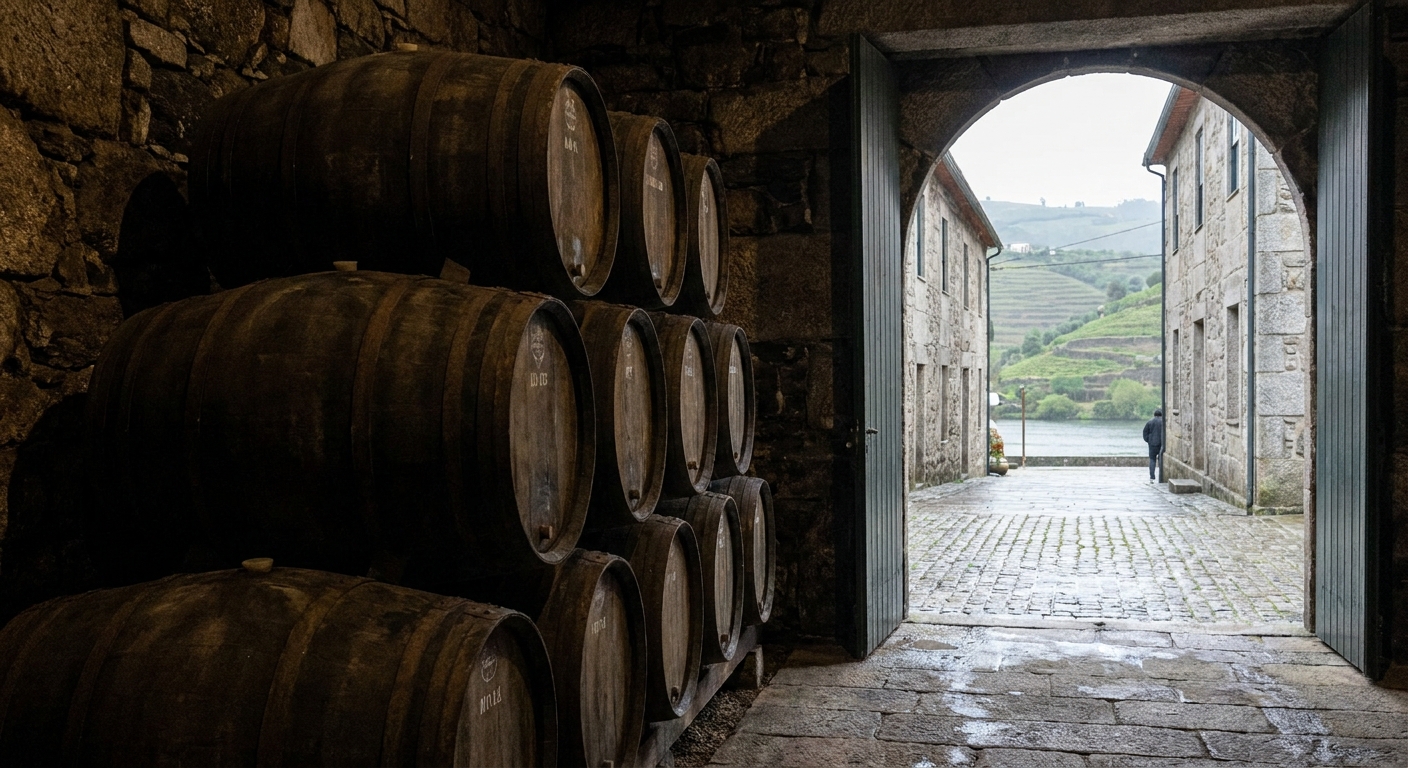
A cellar afternoon in Vila Nova de Gaia. The grapes come off the Douro terraces upstream, the barrels rest on the cool south bank, and the flight in front of you usually runs ruby, tawny and vintage in that order. The lodges cluster within a few streets of each other on the slope above the quay, painted gables facing the city. Some take walk-ins. Several sell guided tours by reservation only, so settle that before you cross the bridge rather than at the door.
The Bom Jesus stairway and its water funicular, above Braga. The baroque staircase climbs a wooded hill in zigzag flights, every landing themed, a fountain running on nearly all of them. Beside it the funicular works on water ballast: the upper car fills its tank until it outweighs the lower one, and gravity handles the rest. Riding up and walking down is the usual compromise. For the town below, its cathedral and its Holy Week processions, read our Braga guide.
Guimarães, on foot, before the coaches. The UNESCO-listed core runs on arcades, wooden balconies and small squares, with Largo da Oliveira taking the evening. Up on the ridge, the castle keep is traditionally held to be the birthplace of Portugal’s first king, and the Paço dos Duques de Bragança stands on the slope between town and walls. A cable car lifts to the Penha hill for the view back over the Minho. Timing and the day-trip crush: our Guimarães guide.
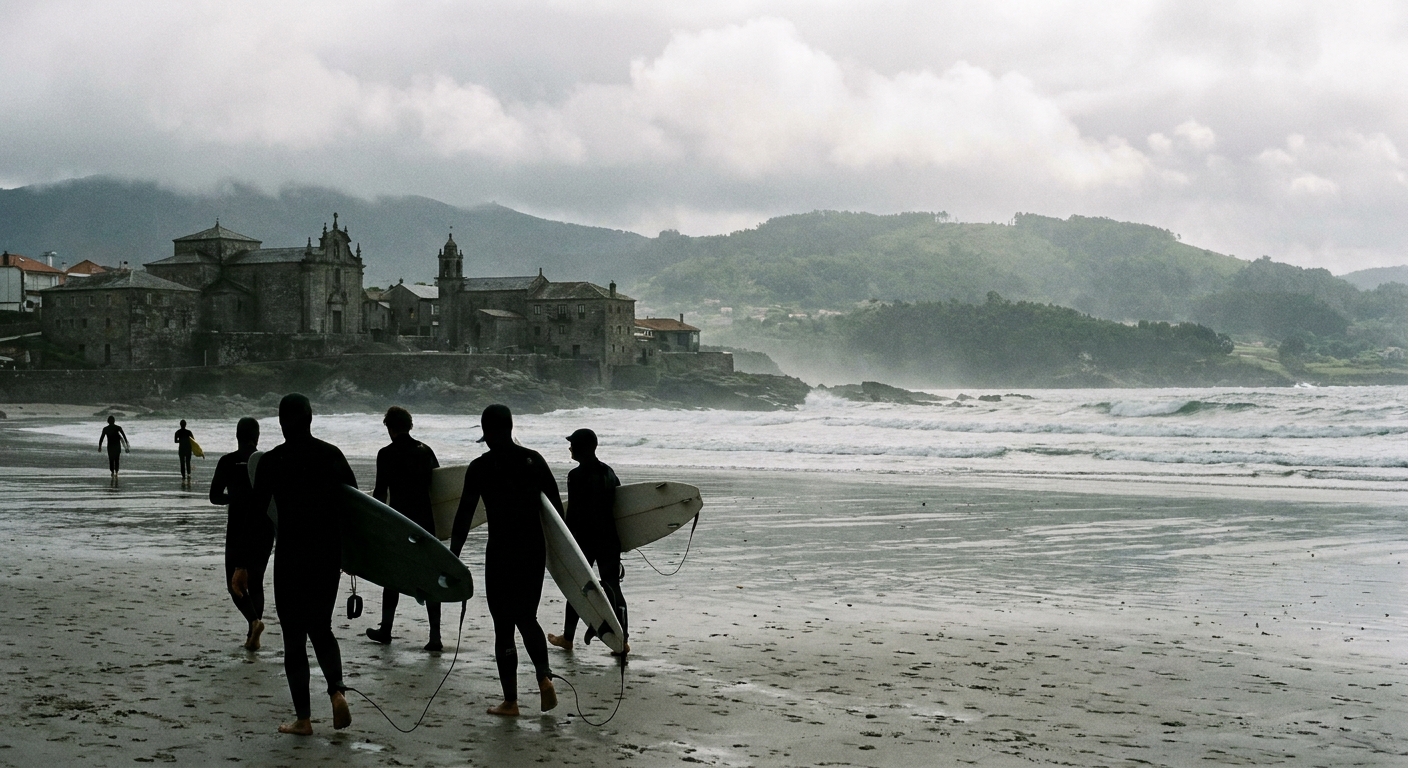
A surf lesson in cold water, north of Porto. Schools work Matosinhos at the end of the metro line, the sand at Esposende by the Cávado mouth, and Cabedelo across the Lima from Viana do Castelo. Neoprene is standard kit here in every month of the year, and board, suit and instructor normally come as one package. Afternoon wind is a fixture of the northern summer, so most lessons run in the morning and the kitesurfers take the rest.
Vinho verde where the vines actually grow. The Minho trains its vines high on wires and granite posts to keep fruit clear of the damp, and the young white that comes out is faintly spritzy, served cold, often poured by the jug in a village tasca. Estates around Ponte de Lima and the Lima valley receive visitors, mostly by arrangement. One valley east the terraces change character entirely: that is the Douro, with its own list in things to do in the Douro Valley and a working harvest in the vindima guide.
Peneda-Gerês, a full day and a car. The park stacks granite summits, oak wood and reservoirs behind Braga. Garranos, the semi-wild ponies of the northwest, graze the high ground and cross the road when they feel like it. At Soajo and Lindoso, espigueiros stand in rows on stone legs above the threshing floors, granaries built to keep maize dry in a wet country. Along the Homem valley, milestones of the Geira, the Roman road from Braga to Astorga, still stand beside the track. ICNF publishes the marked trails.
Beaches and surf north of Porto: Matosinhos, Vila do Conde, Esposende and Cabedelo
Water temperature decides more here than the forecast does. Upwelling keeps hauling deep water to the surface along this coast, so the Atlantic stays cold straight through the summer and swimming happens in short bursts between towel breaks. Wetsuits on the sand in August are normal rather than eccentric. Our month-by-month guide carries the sea and air figures, each one sourced and dated.
That same cold water is why the coast is good. Beach breaks run the whole line from Matosinhos up past Vila do Conde, Póvoa de Varzim and Esposende, schools operate from spring into fall, and the exposure that ruins a lazy float delivers waves and empty sand instead. Wind builds most afternoons, and the flatter, greyer mornings are usually the ones the instructors prefer.
Matosinhos is a fish lunch as much as a beach. The charcoal grills work the pavement outside the restaurants behind the harbour, and the smoke reaches the corner before any menu does. On the roundabout at the beach edge stands She Changes, Janet Echelman’s red net sculpture, known locally as the Anémona, moving whenever the wind does. The metro drops you a few blocks from both.
Further up, the beach towns each keep a different past. Vila do Conde has the Santa Clara aqueduct marching in from the hills behind its shipyard. Póvoa de Varzim still runs a fishing fleet under its promenade. Esposende faces the pine and dune of Ofir across the Cávado, and Viana do Castelo sits at the Lima mouth under the Santa Luzia basilica, with a funicular up to it and Cabedelo’s sand on the far bank.
River-mouth sand is the calmer option for small children, and the open beaches are the ones with the pull. Rip currents are a real hazard along this whole coast, beaches are flagged and staffed in season, and a red flag here is enforcement rather than a suggestion. Read the safety page before the first swim. Anyone who came to Portugal for warm water should be looking at the Algarve instead.
Free things to do in the north: the Bom Jesus climb, Barcelos market, the Geira milestones
Climbing the Bom Jesus stairway costs nothing, and the fountains run whether you paid for the funicular or not. Braga’s churches open their doors free, with a treasury or a tower asking a small fee in places. Guimarães hands you its arcades, Largo da Oliveira and the walk up to the castle walls without a ticket, and the old streets empty out beautifully once the afternoon coaches leave.
Barcelos fills its great square, the Campo da República, with a market of pottery, produce and painted roosters, and you can leave having bought a single peach. In Peneda-Gerês the Geira milestones stand unfenced beside the old road, close enough to put a hand on. Beaches here are public and free to reach, the coastal boardwalks north of Porto run for miles, and standing on the terrace below Santa Luzia while the Lima runs out to sea asks nothing of your wallet.
What to do in Porto and the North when it rains, and what the rain cancels
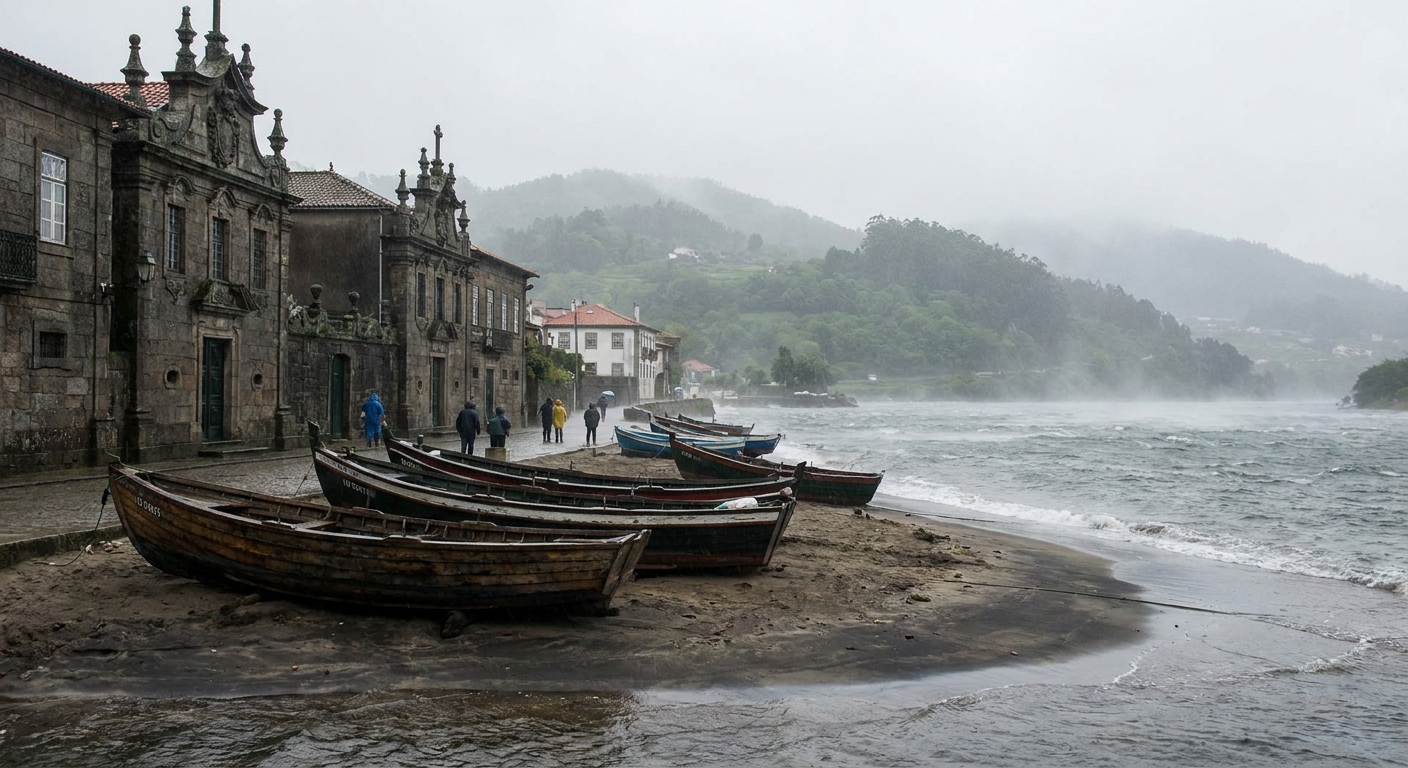
Rain built this landscape, and several of the best days here ignore it. The Gaia cellars are an indoor afternoon by design, cool and dark in any weather. Guimarães put arcades over its sidewalks for exactly this reason. Braga’s church interiors, the covered markets, a long lunch of caldo verde and a tasting room at a Minho estate all hold up under a front, and the surfers are wet already.
What genuinely drowns is anything bought for the view. Low cloud erases the Gerês tops, slicks the granite and turns the walking tracks into watercourses, and the same cloud hides the Minho from the Penha cable car and the Douro from a boat deck. Save those for the clear morning and spend the wet one indoors. Which months take the heaviest weather is set out, with sources, in the calendar.
Things to do in northern Portugal by nearest base and time needed
| What you want | Where it happens | Nearest base | Time it takes | What can stop it |
|---|---|---|---|---|
| Port tasting and a cellar tour | Vila Nova de Gaia, opposite Porto | Porto or Gaia | An afternoon | Several lodges are reservation-only |
| Baroque stairway and water funicular | Bom Jesus do Monte, above Braga | Braga | A morning | Fog hides the view, not the climb |
| Medieval core, castle, ducal palace | Guimarães | Guimarães or Porto | A slow half-day on foot | Midday coach crowds in the old town |
| Cold-water surf lesson | Matosinhos, Esposende, Cabedelo | Porto or Viana do Castelo | A morning session | Afternoon wind, and neoprene year round |
| Vinho verde at the source | Lima valley, around Ponte de Lima | Ponte de Lima, Braga or Viana | A long afternoon with a driver | Most estates want a call ahead |
| Terraced vineyards upriver | The Douro | Porto, or a quinta in the valley | A full day, better as an overnight | Harvest weeks fill the rooms |
| Ponies, espigueiros, Roman milestones | Peneda-Gerês | Braga, Gerês village or Arcos de Valdevez | A full day | Car essential, slow mountain roads |
| Fish grilled on the pavement | Matosinhos | Porto | A long lunch | Many kitchens keep a weekly closing day |
Every row is a day, or most of one, and that is why a northern week ends up as two bases instead of four. Where to stay in Porto settles the city half, day trips from Porto handles what returns by dinner, and the full sequence waits in seven days or ten.
Porto and the North with kids: the cable cars, the river sand, and the days that are stairs
The days that land with children have a ride or a boat in them. The Teleférico de Gaia crosses above the lodge roofs, the Bom Jesus funicular fills and empties its tanks in full view, the Penha cable car at Guimarães climbs into pine wood, and the funicular at Viana do Castelo ends on a terrace above the river mouth. Sheltered sand inside the Lima and Cávado mouths beats the open beach for anyone small.
The friction is gradient and cold water. Bom Jesus is a long flight of stone steps if nobody rides, the castle at Guimarães is steps and open walls, and Gerês trails are loose rock rather than gravel paths. Swimming happens in short bursts up here whatever the air is doing. Ages, stroller verdicts and the week that survives contact with a toddler are worked through in Portugal with kids.
Which northern days need a rental car, and which run on trains
| Where | Car? | Without one | Our verdict |
|---|---|---|---|
| Porto and Vila Nova de Gaia | No | Metro from the airport, both bridge decks on foot | Collect the keys on the morning you leave town |
| Braga | No | Trains from Porto, city bus up to Bom Jesus | Rails cover it comfortably |
| Guimarães | No | Trains from Porto, then a short walk into the core | Driving into the old town is a punishment |
| Coast to Póvoa de Varzim | No | Metro up the coast, regional trains beyond | Beach parking is the worst part of driving it |
| Rural Minho, Ponte de Lima, Barcelos | Yes | Slow buses between the market towns | Rent for two days, not for the week |
| Peneda-Gerês | Essential | A bus as far as Gerês village, then very little | Plan short days on mountain roads |
| Douro Valley upstream | Optional | Riverside train, cruise boats, quinta pickups | Train in, car only for several estates |
Two mechanical questions arrive before the scenery does: boothless electronic tolls on the motorways, and automatic gearboxes, reserved rather than hoped for. Renting a car in Portugal covers both. If you would rather stay on rails the whole way, getting around maps the network and its gaps.
What the week costs is a separate conversation, priced three ways in the cost guide. Pack for wet granite rather than for a beach holiday: the list takes one screen. And the table manners that catch Americans at a northern table, starting with the couvert nobody ordered, are in know before you go.
What to skip in Porto and the North
Skip any plan that puts Guimarães and Peneda-Gerês in the same day. One is arcades and coffee, the other is mountain road, and squeezing them together costs you both. Skip the drive south to the Algarve and back inside a northern week, since the sun down there deserves its own base. Skip a cellar tour you did not book and then wait around for, when a second lodge two streets away has a table. Leave one afternoon with nothing in it for a Minho market.
The last word
Run the north in this order and it holds: a cellar afternoon in Gaia the day you land, Braga and Guimarães by train while your legs are fresh, and the Gerês saved for the morning the cloud finally lifts. Rain cancels less of this region than people expect. It changes what the granite looks like, and the builders of the Guimarães arcades knew that when they roofed the sidewalks. If the week has room for exactly one drive, spend it inland from Braga.
Then take one thing home from Soajo. The espigueiros stand in a row on their stone legs above the old threshing floor, crosses on the roof ridges, a few of them still holding maize, a garrano grazing where the track leaves the village. Nobody built them to be photographed. That is roughly the bargain this corner of Portugal offers: a working countryside that never rearranged itself for visitors, and lets you walk through anyway.
Sources & data for this guide
- Region character, towns, sanctuaries and park information · visitportugal.com (Turismo de Portugal) · checked Sep 6, 2026
- Historic centre of Guimarães and the historic centre of Porto, World Heritage listings · UNESCO World Heritage List · checked Sep 6, 2026
- Peneda-Gerês trails, the Geira Roman road markers and the espigueiros at Soajo and Lindoso · ICNF · checked Sep 6, 2026
- Rail service to Braga, Guimarães and Viana do Castelo, plus the metro line up the coast to Póvoa de Varzim · CP Comboios de Portugal and Metro do Porto · checked Sep 6, 2026
- Cellar tours, funicular and cable car fares and opening days change by season and by operator, so we point at the operator rather than printing them here · confirm at booking
- Editorial note: no temperature, rainfall or price figures appear on this page. The month-by-month guide and the trip cost page hold them with sources and dates. Durations here are our own editorial calls from time on the ground.