
DOURO VALLEY · JANUARY · NORMALS 1991-2020
The Douro in January shows you its bones. The vines are cut back to stumps and wire, the schist walls that hold them stripe every slope, and two thousand years of terrace building stands there with no canopy over it. Vila Real, the weather station that watches this country from 561.5 meters, averages a high of 49.8°F (9.9°C) for the month. Down along the water, groves of orange trees keep their fruit while everything above them is stone and bare wood.
What January takes is light and dry ground. The 15th carries 9 hours 34 minutes of daylight, sunrise at 7:52 am and sunset at 5:27 pm, and the month collects 5.09 inches of rain across 11.4 days that record at least 0.04 inch. Nights average 37.0°F (2.8°C). This is a genuine winter in a river gorge. Waterproof shoes with grip do more for you here than a heavy coat.
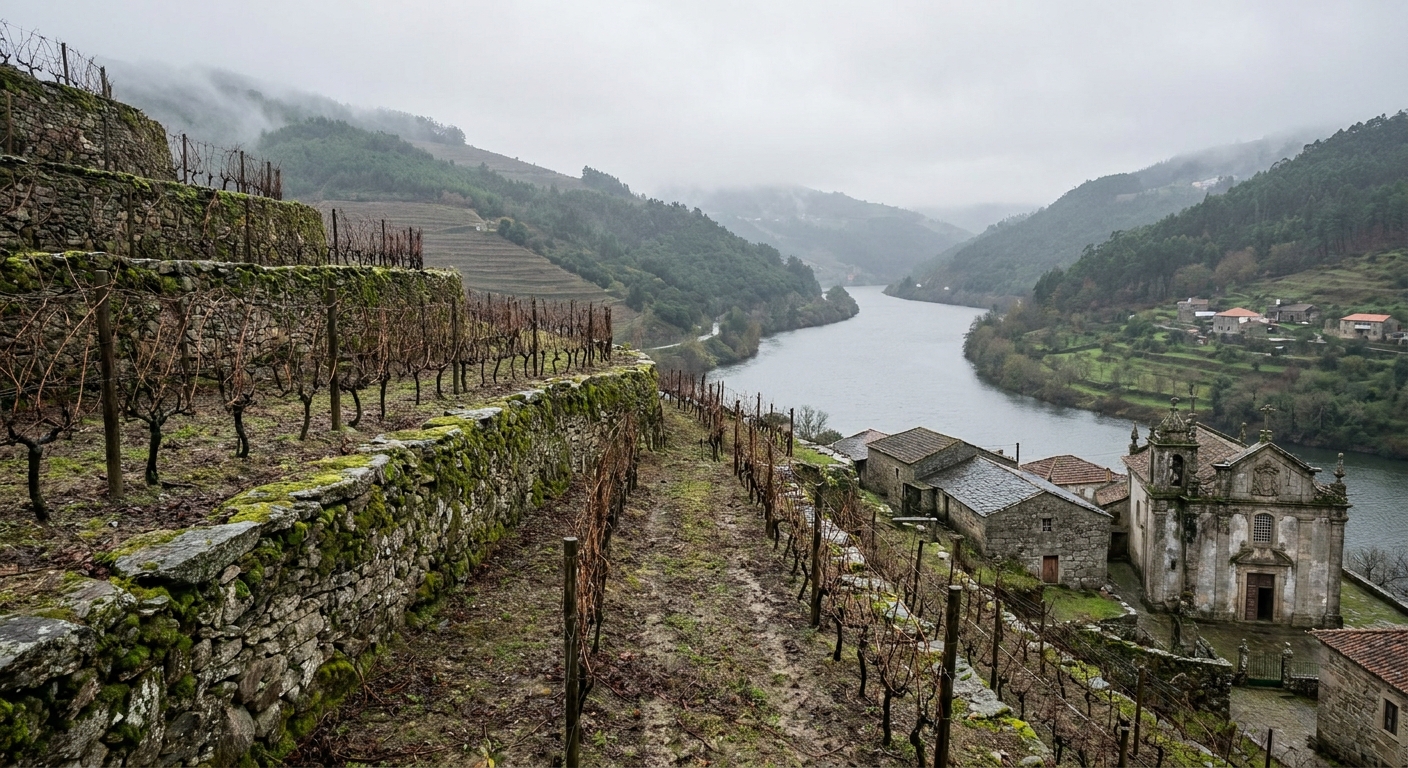
THE MONTH AT A GLANCE · DOURO VALLEY · JANUARY
January gives you the Douro stripped to its stonework at 49.8°F, and charges you 11.4 wet days and a 5:27 pm sunset for it.
IPMA 1991-2020 · STATION 567 VILA REAL AT 561.5 M · 9 H 34 MIN OF DAYLIGHT
Go for: terraces you can read wall by wall, two building eras bare on the same slope, orange groves on the lower banks, and 49.8°F afternoons for walking.
Think twice before: building the trip on tastings, evenings outdoors or long steep hikes: 11.4 days catch rain, 4.6 of them hard, and the light is gone by 5:27 pm.
Normals: IPMA station 567, Vila Real · Landscape: UNESCO file 1046 · full sources at the end
On this page
- Douro Valley weather in JanuaryHighs of 49.8°F and 11.4 rain days
- How cold the nights getAn average low of 37.0°F
- Crowds and prices in JanuaryWhat we verified, and what we did not
- Things to do in JanuaryBare terraces, quintas, orange groves
- A two-day Douro itineraryBuilt around 9 h 34 min of light
- January vs December and FebruaryHow the three months compare
- Is January a good time to visit?Yes for the stone, no for tastings
The twelve-month picture lives in our best time to visit Portugal guide, the harvest has a page of its own, and Porto answers the where-to-base question. One practical note before anything else: we could not verify a single winter fare or timetable for a Douro boat or train, so plan on a car, and our rental guide covers insurance and the tolls.
Douro Valley weather in January: average highs, lows and rain days
| Measure | January at Vila Real |
|---|---|
| Average high | 49.8°F (9.9°C) |
| Average low | 37.0°F (2.8°C) |
| Precipitation | 5.09 in |
| Days with 0.04 in or more | 11.4 |
| Days with 0.39 in or more | 4.6 |
| Daylight, January 15 | 9 h 34 min · 7:52 am to 5:27 pm |
Every figure here comes from one thermometer: IPMA’s station 567 at Vila Real, 561.5 meters up, reading the 1991 to 2020 normals. That matters twice. It is a measured station rather than a model grid cell, so these are numbers an instrument recorded. And it stands inside Douro country rather than on the coast, at altitude: the valley floor is far hotter than Porto, and the high ground anywhere in the region is colder and a great deal wetter than this reading.
Rain reaches the ground on roughly three January days in eight, 11.4 of them catching at least 0.04 inch. A proper soaking of 0.39 inch or more arrives 4.6 times, call it one day in seven, when the terraces run water and the driving becomes the day’s activity. One caution before you compare tables: those are IPMA’s own thresholds, not the 0.10-inch cutoff American climate tables use, and the two counts are not interchangeable.
Between the average low and the average high sits 12.8°F, which is a modest spread on paper and a real one when you are standing on a north-facing terrace at nine in the morning. Pack layers you can shed by noon and a shell you trust for a full hour of rain. Footwear matters most of all, because schist paths and cobbled village lanes turn slick, and our packing guide handles the rest of the bag.
On January 15 the sun clears the horizon at 7:52 am and drops at 5:27 pm for 9 hours 34 minutes of daylight, and in a gorge the usable share is shorter still, since the ridges take the light early. Put the driving in the middle of it. Photographers get a long, low hour on the terraces instead of vertical summer glare, and anyone who wants the river seen from a height should be up there by three.
How cold is the Douro Valley in January? Day highs, night lows and frost
Vila Real runs 49.8°F (9.9°C) by day against 37.0°F (2.8°C) by night, a gap of 12.8 degrees. Both are month-long means, so a settled spell of high pressure beats them and a week of Atlantic rain does not come close. The Marão and Montemuro ranges shelter the valley from the harshest Atlantic wind. That shelter is part of why wine works here at all, and it does nothing about cold air pooling in the bottom of a gorge overnight.
Dress for two days inside one. A fleece under a windproof layer handles a 37-degree start on a terrace walk, and by two in the afternoon, with sun on a south-facing slope, most people are carrying the fleece. Cellars run cold whatever the sky is doing, so keep something warm to put back on when you step out of the light and into stone. A thin pair of gloves is worth the pocket it takes in the first hour.
We could not verify a frost-night count for Vila Real or anywhere else in the valley, so we give no number of freezing nights. What the normals do say is that the average low sits five degrees above freezing at 561.5 meters, which puts individual clear, still nights at or below 32°F well within range. On water, nothing at all: we found no river or reservoir temperature series for the Douro, so no swimming figure comes from us.
How busy is the Douro Valley in January? Crowds, booking and prices
January is a winter month in a region whose visiting year is built around the vine, and that is as far as our data lets us take it. We found no occupancy series and no monthly room-rate figures for the Douro municipalities, so we crown no month cheapest and none busiest. The structural part is certain enough. Days are short, the terraces are dormant, and the traffic a working harvest generates belongs to another season.
Booking works backward from a gap in what we know. We could not verify a single quinta’s winter opening hour or tasting price, and estates in a region this seasonal do not all keep the same January calendar. Write or call before you set out, and fix the visits before the room rather than after: a valley address with nothing open within twenty minutes makes for a very long evening. We cannot give you a lead time in weeks, because no availability data was readable.
On the tourist tax, we have nothing to offer. We could not verify a lodging-tax rate for any Douro municipality, so no percentage appears from us. Ask what it adds when you book, check the line on your confirmation, and treat any figure you read elsewhere as unverified until it shows up on your own bill.
If one line on the budget changes January, it is the car. Nine and a half hours of daylight and 11.4 wet days make all the difference between a vehicle waiting outside the door and transport you have to arrange each morning. We verified no boat or train fare on the river, so we will not pretend to compare the costs. Getting around Portugal covers the national picture, including the drive up from Porto.
Things to do in the Douro Valley in January
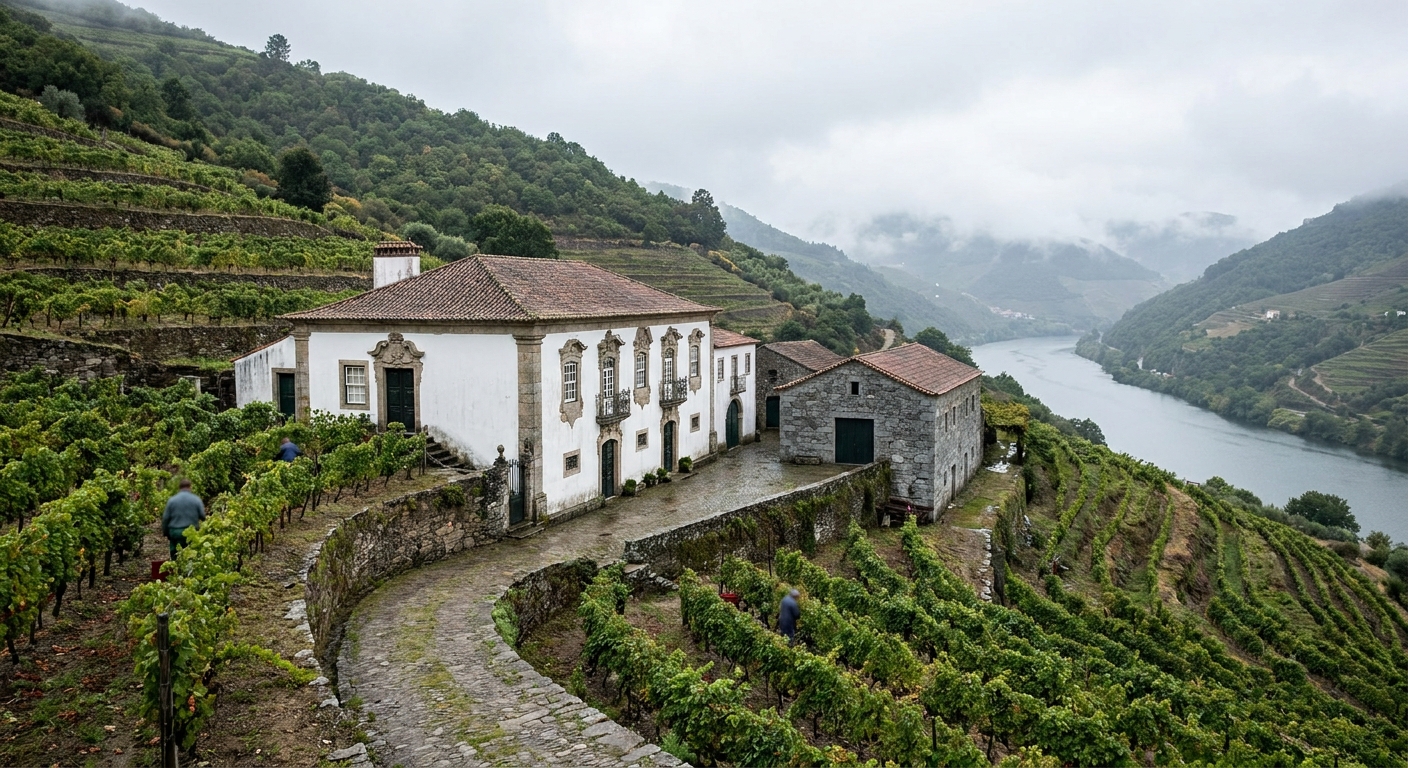
Winter hands you one thing no other season does: you can read the terraces. With the vines cut back, two generations of wall separate from a hundred yards off. The socalcos came first, from before the phylloxera of 1860, narrow and irregular, buttressed with dry schist and carrying only one or two rows of vines apiece. The long, regular, slightly sloping terraces came after, at the end of the 19th century and the start of the 20th, wider, tilted so the vines catch more sun, monumental enough to have changed the look of the whole valley.
The scale sits in the UNESCO file: 24,600 hectares of terraced vineyard inscribed in 2001 under criteria three, four and five, with a buffer zone of 225,400 hectares around it, nine times the property, a ratio UNESCO itself calls difficult to manage. On the ground it sorts into named valleys, the Varosa, the Corgo, the Távora, the Torto and the Pinhão. Quintas, each a main house with its winery and farm buildings, stand thickest in the Upper Corgo and the Upper Douro, and white villages sit midway up the slopes around an 18th-century parish church.
Stone does not move with the season and the air does, and the gap between them is the whole argument for coming now. Walls that read as texture in July read as architecture in January. Stone channels that once fed hillside catchments show where summer scrub buries them. Orange groves along the lower banks, some of them walled, hold their color through the month. The walls need constant maintenance to stand at all, and with no leaf cover you can see plainly which stretches have had it and which are bulging.
On free things, our sources are thin rather than reassuring. We could not verify a January admission scheme, a museum price or a tasting fee anywhere in the region, so we promise nothing on that front. What plainly costs nothing is the looking: the river road, the high ground above the villages, the parish churches from the outside, and an afternoon spent working out which terrace on a given slope was built before 1860.
The Douro Valley in January: a two-day itinerary
Day one runs on the light. Breakfast at eight while it is still dim, on the road by half past, first hour spent low along the water where the orange groves are and the ridges still hold the sun off. Climb mid-morning, because the terrace views want the sun above the gorge walls and that runs from about eleven to two. Take lunch indoors at the warmest point of the day, near 49.8°F, then give the last light to one long stretch of river road, parked and out of the car by 4:30 pm.
Day two belongs to a single tributary rather than the whole river. The Pinhão and the Torto both cut back into the hills, the road climbs, and terraces stack on both sides. If the weather turns, and 4.6 January days bring 0.39 inch or more, invert the day: drive through the rain, walk in the breaks, and save the schist paths for the afternoon once they have had hours to drain. Wet stone stays slick long after the sky clears, so leave steep walking for a dry morning.
The Douro Valley in January vs December and February
| Measure | December | January | February |
|---|---|---|---|
| Average high | 50.7°F (10.4°C) | 49.8°F (9.9°C) | 54.0°F (12.2°C) |
| Average low | 38.5°F | 37.0°F | 38.3°F |
| Precipitation | 5.62 in | 5.09 in | 3.29 in |
| Days with 0.04 in or more | 10.5 | 11.4 | 8.5 |
Set the three side by side and January comes out the coldest and the most frequently wet. Its nights average 37.0°F against 38.5°F in December and 38.3°F in February. Its days at 49.8°F fall just under December’s 50.7°F and well under February’s 54.0°F. Rain is the surprise: December drops more total water, 5.62 inches against 5.09, while January spreads a smaller total over more days, 11.4 against 10.5. No water-temperature series exists for any of the three that we could find.
Move four weeks forward and February pays you 4.2°F on the daytime high, 1.80 inches less rain and 2.9 fewer wet days, for nights barely different at 1.3°F warmer. Move four weeks back and December offers 0.9°F more by day and half an inch more rain, 5.62 inches over 10.5 days. What shifting costs you is bare ground: the further you travel from midwinter, the less of the stonework stays uncovered.
Is January a good time to visit the Douro Valley?
Yes, if you came for the landscape and the stone. Photographers, walkers who do not mind a shell, and anyone who wants the terraces without foliage get a month built for them, at 49.8°F in the afternoon. No, if the trip hangs on tastings you have not confirmed, long evenings outside, or any kind of swimming. Families with young children will find 9 hours 34 minutes of light and 11.4 wet days a tight frame for a valley whose pleasures are mostly outdoors.
When the answer is no, take February. The same valley gives 54.0°F days, 3.29 inches of rain across 8.5 days, and nights within a degree and a half of January’s. That is the cleanest four-week upgrade the calendar offers here, and early in the month you keep most of the bare-slope view that brought you.
What no other month gives is the full reading of the valley: socalcos and post-phylloxera terraces standing bare on one slope, with some 2,000 years of winemaking and a Port trade regulated since 1756 written into the walls.
The last word
Book the room for its view and the car for the daylight, then let the sky decide the order of your days. One fact worth carrying up the valley: in late January 2001, torrential rain damaged terraces badly enough that UNESCO recorded a special effort would be needed to bring parts of the vineyards back into working order. The same file notes a Douro Mission, created in 2006 to safeguard the landscape. Those walls are maintained, not permanent. Watch the forecast, and give a heavy-rain day to the road instead of the slope.
Sources & data for this guide
- January normals, rain days and the 0.04 in / 0.39 in thresholds · IPMA, normais climatológicas 1991-2020, station 567 Vila Real (561.5 m) · checked Sep 23, 2026
- December and February normals, same station and same period · IPMA 1991-2020 · checked Sep 23, 2026
- Daylight, sunrise 7:52 and sunset 17:27 on January 15, converted to local time · sunrise-sunset.org · checked Sep 23, 2026
- Property and buffer areas, 2001 inscription, terrace history, quintas, tributaries, the late-January 2001 storm damage and the Douro Mission · UNESCO World Heritage Centre, file 1046, Alto Douro Wine Region · checked Sep 23, 2026
- We could not verify any quinta opening hour, tasting price, museum fee, boat or train fare, lodging-tax rate, occupancy series or room-rate series for the valley · no such figure is given above · noted Sep 23, 2026
To plan your stay
- Things to Do in the Douro Valley: Quinta Tastings, the River Train, Boats and Miradouros
- Douro Valley vs Alentejo: Monthly Temperatures, Rain Days and Daylight
- Best Time to Visit the Douro Valley: Month-by-Month Weather, Harvest Season and the Quiet Months
- The Douro Valley in February: Weather, Rain Days and How March Compares