
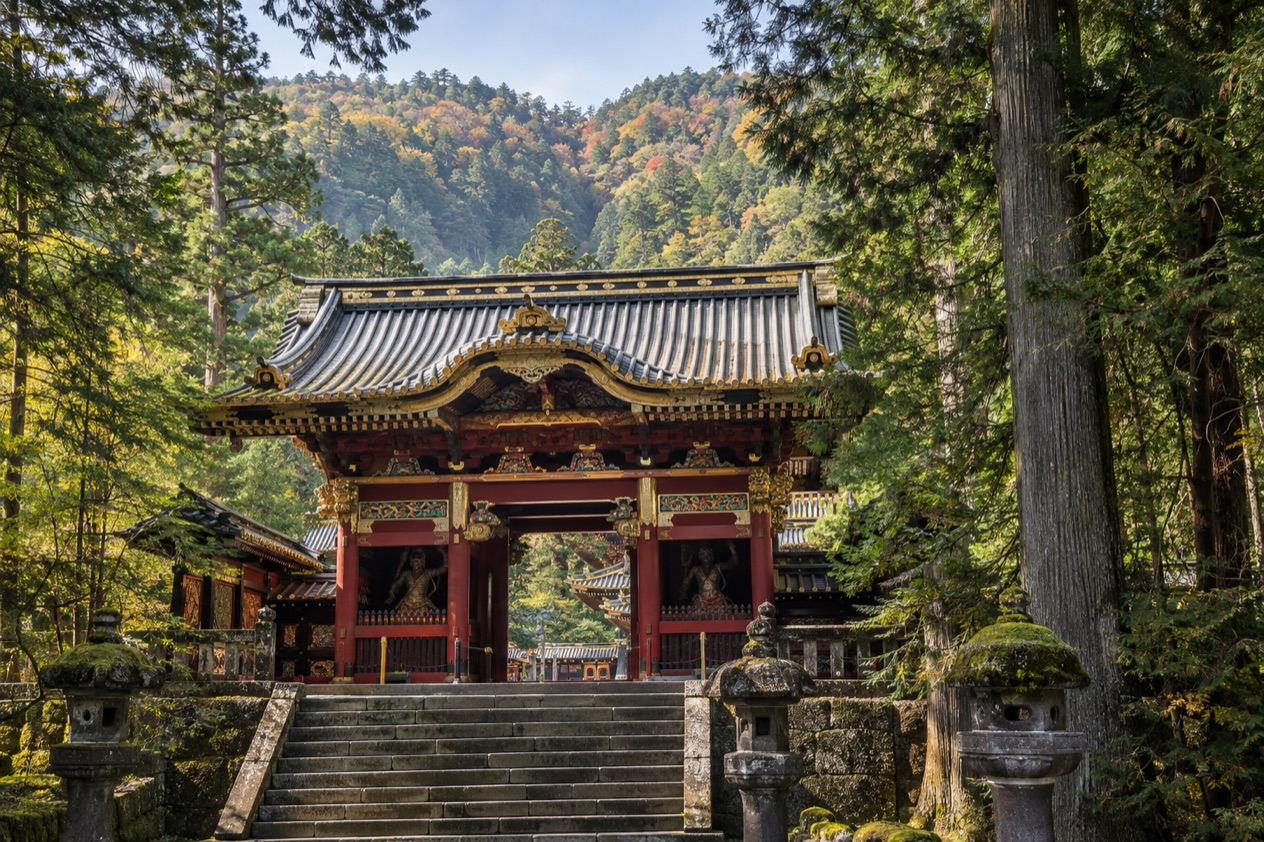
In October the cedar avenues of Nikko turn damp and dark, and the first reds and golds start to show against the lacquered gates of the shrines. Up at Lake Chuzenji the maples change first, and the air smells of wet bark and woodsmoke. This is Nikko in its autumn dress, a month for temple courtyards, waterfalls, bowls of soba and long soaks in hot springs, written for anyone planning a fall trip into the mountains of Tochigi.
What is the weather like in Nikko in October?
October in the Nikko mountains is crisp, damp and changeable, with cool afternoons and cold nights, and noticeably drier than September.
| Month | Average high (°F) | Average low (°F) | Precipitation (in) | Days with 1 mm or more of precipitation | Hours of sunshine | Daylight on the 15th |
|---|---|---|---|---|---|---|
| September | 66.0 | 53.4 | 16.10 | 14.4 | 105 | 12 h 28 min |
| October | 56.7 | 42.3 | 9.48 | 11.1 | 123 | 11 h 19 min |
| November | 47.5 | 32.4 | 3.84 | 6.7 | 152 | 10 h 15 min |
Afternoons by the lake feel like a cool autumn day back home, comfortable for walking in a sweater and a light jacket. Mornings and evenings bite. Once the sun drops behind the ridges, the cold comes down quickly, and a warm layer you did not need at lunch becomes the most useful thing in your bag. Humidity stays high, so the cold feels damp rather than dry.
Rain still falls on about a third of the days, usually as gray, drizzly spells that hang in the cedars and turn the stone steps and moss slick and shiny. The mountains make their own weather, so a clear morning can cloud over.
A rain jacket and shoes with grip matter more than an umbrella on the forest paths. Snow or sleet is a rare visitor at the lake in October, but a flake is not out of the question on the coldest mornings.
The days are noticeably shorter than in early fall, and the light turns low and golden earlier. That is flattering for red leaves and wet lacquer, but it also means sightseeing plans have to fit into a tighter window, especially since the shrine gates close in the late afternoon.
What to do in Nikko in October
October in Nikko is about autumn color, and the month shapes everything else you do. The leaves turn first in the high ground around Lake Chuzenji and the waterfalls, then the color works its way down toward the town and the shrine precincts. From one fall to the next the timing shifts, so treat the color as a season you arrive in the middle of, not a date on the calendar.
Toshogu also holds an autumn grand festival, often in the middle of the month, with a procession in warrior costume that echoes its larger spring counterpart. Matsuri (traditional festivals with music and dance) are part of the rhythm of Japanese towns, and a Nikko matsuri in the cedar-lined precinct is a different thing from the same event in a city street. Dates move with local arrangements, so ask where you are staying whether the procession falls inside your visit.
| Site | Open |
|---|---|
| Toshogu Shrine | 08:00-16:30 (April to October) |
| Taiyuin | 08:00-16:30 (April to October) |
Toshogu and the shrine precinct
Toshogu is the showpiece of Nikko, a shrine of carved, painted and gilded gateways and halls set among enormous cedars. In October the dark trunks make the red lacquer and gold leaf look even brighter, and a wet day only deepens the colors. The buildings are packed with carvings of animals, flowers and mythical beasts, so it rewards slow looking rather than a quick pass.
Beside it sit Taiyuin, a mausoleum with its own gates and halls, and the Futarasan Shrine, with its quieter forest grounds. Rinno-ji, the Buddhist temple of the area, adds a third tradition to the same hillside, and walking between all of them shows how Shinto and Buddhism have shared this ground.
Stone paths between the sites can be slick after rain, so shoes with grip help. Because the gates close in the late afternoon, these are the stops to put first in the day.
Lake Chuzenji and Kegon Falls
The high country is where October earns its reputation. Lake Chuzenji sits in a mountain bowl whose slopes turn to red, orange and yellow, and the lakeshore is a place to wander, sit with a hot drink and watch mist drift over the water.
Kegon Falls drops from the edge of the lake basin into a gorge, and the surrounding trees frame it in color through the month. The road that climbs up from town is a ribbon of hairpin bends, and it carries much of the autumn traffic.
Weather up here changes quickly. Even on a bright day the shade is cold, and cloud can swallow the falls and the far shore without warning. If the mist comes down, the lakeside cafés and souvenir shops become the place to wait it out, and a clearing often rewards patience. This is also the part of Nikko where the cold is real, so dress for the lake, not for the town.
Senjogahara, Ryuzu Falls and the hot springs
Beyond the lake lie the open marshland of Senjogahara and the cascading Ryuzu Falls, with trails through grasses that turn gold and trees that blaze at the edges. Boardwalks and paths here are the kind of outing a calm, dry day suits, though you should treat them as walks in a wet mountain environment, with changeable cloud and cold in the shade.
After a day outdoors, an onsen (a hot spring bath) is the natural reward in the cool evenings. The mountains around Nikko have springs in the lake area and beyond, and a soak after a damp, chilly afternoon is one of the best things about an autumn visit. Ryokan (traditional inns) often serve dinner in the room and lay out futons on tatami floors, which suits the early darkness.
Nikko cooking leans on the mountains. Yuba, the delicate skin lifted from heated soy milk, appears as a creamy topping, rolled in simmered dishes or at a set lunch with soba. Buckwheat noodles taste right in cool weather, served hot in broth or cold with dipping sauce. Autumn menus also tend to bring mushrooms, chestnuts and persimmons, and grilled freshwater fish suits the lake and river country.
The mood in the streets is unhurried. Visitors drift between the precinct, the cafés and the shops selling local sweets, and the cold sends everyone toward steaming bowls and tea. Many travelers also come out from Tokyo for the day, and Tobu-Nikko Station is about 2 hours from Asakusa and Shinjuku, but an overnight lets you see the precinct and the lake at either end of the day.
A two-day itinerary for Nikko in October
Day 1 belongs to the shrine precinct, because the gates of Toshogu and Taiyuin close in the late afternoon and the days are getting shorter. Start with the approach from the Shinkyo Bridge, then spend the morning under the cedars at Toshogu, with its carved gateways and gilded halls. Taiyuin follows, then the Futarasan Shrine and the halls of Rinno-ji, in an order that keeps the climbing and the stairs together.
Midday is for yuba. A set lunch in a small restaurant near the precinct, with soba and a simmered dish, warms you up before the afternoon. After lunch, wander the lanes toward the river gorge and the shops with local sweets, and stop for tea when the damp gets into your sleeves.
Evenings are cold, so dinner at an izakaya (a casual pub-style restaurant) or at your ryokan suits the day. If rain sets in, Rinno-ji’s halls, the covered corridors and the cafés give you plenty of shelter.
Day 2 goes up to the high country and the lake, where the leaves turn first. Take the winding road to Lake Chuzenji and see Kegon Falls from the viewing platforms, then walk along the lakeshore. Pack your warmest layer, because the shade up here is properly cold. After a lakeside lunch, Ryuzu Falls and the marshland of Senjogahara fill the afternoon, with paths through golden grass.
The evening goes to an onsen near the lake, with dinner afterward in a ryokan or a mountain restaurant. If the weather turns, the day shifts indoors: lakeside cafés, a long soak and a slow lunch make a good wet-weather plan. Since the daylight is only a little over eleven hours long, plan to be heading downhill before dusk.
Is Nikko busy in October?
October is leaf season in the mountains around Nikko, and that season sets the pace of the month. Color draws people to the lake, the falls and the shrine grounds, so the places that look best are also the places where you will meet other visitors, especially around the bright spots of the high country.
What you will notice most is the rhythm. The days are shortening, the gates at Toshogu and Taiyuin close in the late afternoon, and the cold arrives with the dusk. Life settles into an early pattern, with sightseeing during daylight and the evenings given over to dinner and hot water. Leaving the precinct for the lakeside and the marshland spreads you across more of the area.
Tables and rooms follow the same logic as any place in leaf season, but nothing in our information on Nikko gives numbers for either. What the calendar does show is that October falls in the middle of the autumn color, between the damp of September and the colder days of November, so it is a month when people choose Nikko for its scenery.
What to pack for Nikko in October
The mountain air is cool by day and cold by night, and rain comes on about every third day, so pack for layers and for wet paths.
- A warm fleece or sweater, for lakeside evenings and cold mornings in the high country.
- A waterproof jacket, because gray, drizzly spells hang in the mountains.
- Shoes with good grip, for wet stone steps at the shrines and damp trails.
- A hat and light gloves, for the cold at the lake once the sun is down.
- Slip-on socks or a spare pair, since shoes come off at the entrance of many temple halls and ryokan.
- A small daypack, for the layers you take off and put on as you climb.
Good to know before you go
Opening hours are the thing to plan around this month. Toshogu and Taiyuin keep their longer hours from April through October, then close an hour earlier from November, so October is the last month on the longer schedule.
If you are coming from the Gunma side, buses run from Oze to Nikko between mid-spring and mid-autumn, which puts October inside that season. Nikko sits in Tochigi Prefecture, in the Kanto region, and rain here can arrive for days at a stretch in the mountains, so leave some slack in the plan.
Nikko in October vs September and November
Moving the trip four weeks earlier brings September, which is warmer but much wetter, with more days of rain and a longer day. The leaves have not yet turned, so you trade the color for milder temperatures and a lake that feels less cold. It suits travelers who care more about hiking in comfortable weather than about autumn scenery, and who can accept more gray days.
Four weeks later, November is colder, much drier and sunnier, with the shortest days of the three months. Snow or sleet becomes a regular visitor at the lake rather than a rarity, and the shrine gates close an hour earlier. The leaves are on their way down in the high country, so you catch the end of the color rather than the heart of it.
October sits in between. It is the month to choose for fall color together with workable daylight and a dryer outlook than September, with a cold edge that a good jacket handles. Travelers who dislike the cold or want the longest sightseeing days should lean toward September. Those who prefer clear, crisp weather and do not mind the cold, or who want to see the last leaves, can shift toward November.
Is October a good time to visit Nikko?
Yes, October is a good time for travelers who want autumn color, cool hiking weather and hot springs, and who are happy to pack for rain and cold. It suits people who love forests, waterfalls and shrines, and who like the idea of ending each day in an onsen or a warm restaurant.
It is a weaker fit for anyone who wants warm weather or long evenings out. The mornings and nights are cold, rain comes often enough to need a plan, and the day ends early. If you hate layering or wet shoes, another month will serve you better.
On arrival, start with the shrine precinct while the gates are open, then turn to the lake and the falls once you have a feel for the weather. Leave the high country for the day when the cloud lifts, and keep the onsen for the cold end of the day.
What makes October in Nikko special is the meeting of two kinds of color: the red lacquer and gold leaf of the shrines, and the maples of the mountains that begin to match them. Nowhere else does the carved precinct and the autumn forest feel so much like one picture.
Sources
- Japan Meteorological Agency (JMA), Normal values 1991-2020, monthly (https://www.data.jma.go.jp/stats/etrn/view/nml_sfc_ym.php?prec_no=41&block_no=47690), station Okunikko, elevation 1292 m, checked October 11, 2026
- Computed from the date and the latitude of the place (sunrise equation, solar elevation -0.833 degrees), October 11, 2026
- Japan Meteorological Agency, Emergency Warnings (https://www.jma.go.jp/jma/en/Emergency_Warning/ew_index.html), checked October 11, 2026
- Japan National Tourism Organization, safety information (https://www.japan.travel/en/japan-safe-travel-information/), checked October 11, 2026
- Japan National Tourism Organization, weather and seasons in Japan (https://www.japan.travel/en/plan/weather/), checked October 11, 2026
- Japan Meteorological Agency, maple color-change dates 2025-2026 with difference from the 1991-2020 normal (https://www.data.jma.go.jp/sakura/data/phn_014.html), checked October 11, 2026
- Japan Meteorological Agency, kaede2020.pdf (https://www.data.jma.go.jp/sakura/data/kaede2020.pdf), checked October 11, 2026
- Japan National Tourism Organization, festivals and events (https://www.japan.travel/en/see-and-do/festivals-and-events/), checked October 11, 2026
- Wikipedia, Matsuri (https://en.wikipedia.org/wiki/Matsuri), checked October 11, 2026
- Wikipedia, Takayama Festival (https://en.wikipedia.org/wiki/Takayama_Festival), checked October 11, 2026
- Japan Meteorological Agency, biological season observations (https://www.data.jma.go.jp/sakura/data/index.html)
- Japan National Tourism Organization, Nikko (https://www.japan.travel/en/destinations/kanto/tochigi/nikko-area/), checked October 11, 2026
- Wikipedia, Nikkō, Tochigi (https://en.wikipedia.org/wiki/Nikk%C5%8D,_Tochigi), checked October 11, 2026
- Wikivoyage, Nikko (https://en.wikivoyage.org/wiki/Nikko), checked October 11, 2026
To plan your stay
- Things to Do in Nikko: Toshogu Shrine, Lake Chuzenji, Kegon Falls and Kinugawa Onsen
- Where to Stay in Nikko: Station Side, Shrine Precinct, Ryokan Stays and Heritage Stays
- Nikko from Tokyo: Tobu Railway Trains, Limited Express Names and a Day in Nikko
- Know Before You Go to Nikko: Entry, Getting There, Weather and Etiquette