
In June, Kobe’s umbrellas come out and the harbor lights blur softly in the damp air. Hydrangeas show up in garden corners and on sloping side streets, and kitchens turn out hot plates of beef and bowls of noodles. This is Kobe as a wet-season city: a port across the bay from Osaka that rewards travelers who plan around the rain with indoor stops, long meals and slow evenings.
What is the weather like in Kobe in June?
June in Kobe is warm, damp and noticeably grayer than May, with highs in the low 80s and a good number of days that bring rain.
| Month | Average high (°F) | Average low (°F) | Precipitation (in) | Days with 1 mm or more of precipitation | Hours of sunshine | Daylight on the 15th |
|---|---|---|---|---|---|---|
| May | 74.5 | 61.7 | 5.30 | 9.1 | 203 | 13 h 57 min |
| June | 80.1 | 69.1 | 6.96 | 10.7 | 164 | 14 h 28 min |
| July | 86.7 | 76.5 | 7.40 | 10.0 | 189 | 14 h 17 min |
What the table means on the street is mostly humidity. It averages about 72 percent in June, which makes the air feel heavier than the thermometer suggests. Honshu summers are described as hot and sultry, and June is where that begins. Sunshine drops well below May’s level, so gray skies are normal and a clear, bright day feels like a bonus.
Rain falls on roughly one day in three. Plan on a folding umbrella or light rain jacket in the bag every day, and keep a dry stop in mind for each outing. The nights stay mild, with lows near 70, so you will not need a coat after dinner. A thin layer is enough for air-conditioned trains, department stores and museums, which can feel cool after the muggy street.
Daylight stretches long this month, which gives you room for a late dinner and an evening stroll along the waterfront. Shoes that tolerate puddles and dry quickly will serve you better than anything delicate.
What to do in Kobe in June
June in Kobe suits the traveler who likes a mix of gardens, covered arcades, galleries and good food. It is a month for moving between pleasures, with a roof never far away. The city sits on a bay and is the capital of Hyogo Prefecture, and it has long been a port city, which shows in its mix of architecture, its bakeries and its Chinatown.
Hydrangeas are the flower people associate with this wet stretch of the calendar. They are native to Japan, and the leaves of one species, Hydrangea serrata, are made into ama-cha, a sweet herbal tea. Look for the flowers in temple grounds, gardens and along quiet residential lanes, where rain tends to make the colors look deeper.
Kitano and Nankinmachi
Kitano is the old district of foreign residences, where Western-style houses from Kobe’s port era now serve as small museums, cafés and shops. Moving from house to house gives you a series of covered stops, which is useful when showers come and go. The streets are lined with stone walls and the occasional bakery, and the mix of European and Japanese details is what makes the neighborhood distinctive.
Nankinmachi, Kobe’s Chinatown, is the place to eat on foot. Stalls sell steamed buns, dumplings and skewers, and you can eat under awnings between sips of tea. It pairs well with Kitano as a single day of wandering, with the houses before lunch and the stalls after.
The waterfront and the harbor
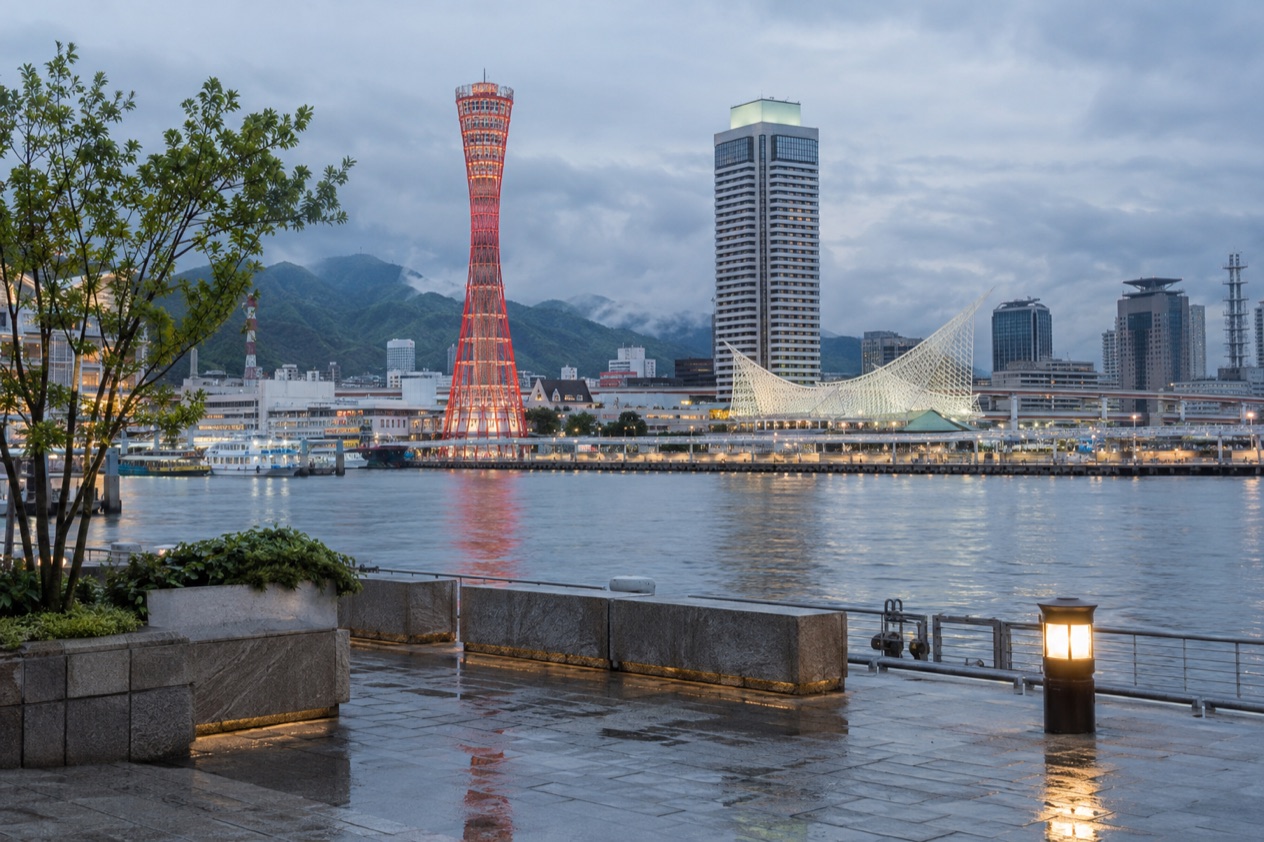
Kobe’s identity is tied to its harbor, and the waterfront rewards a slow loop. Meriken Park, with its Port Tower, and the shopping and dining complexes of Harborland give you open sky between showers and covered arcades when the rain returns. At night the harbor lights reflect on wet pavement, which is a pleasant way to end a gray day.
A cruise-style walk along the water, a coffee in a harborside café and a browse through shops makes an afternoon. If the rain sets in, the malls and indoor galleries nearby keep the plan intact.
A view from Kobe City Hall
The observation deck on the 24th floor of Kobe City Hall lets you look over the city and the bay from above. It is a useful choice for a day when you want a view without a trek, and the weather decides how far you can see.
| Site | Open |
|---|---|
| Kobe City Hall observation deck (24th floor) | Monday to Friday 08:15-22:00. Saturdays, Sundays and holidays 10:00-22:00 |
Kobe beef, bread and sake
Food is a reason to plan the whole trip around Kobe. Kobe beef, served as steak on a teppanyaki grill or in thin slices for shabu-shabu and sukiyaki, is the dish the city is known for. The grill-side format suits a damp evening, with the heat of the iron plate and the sizzle of the cooking in front of you.
Beyond beef, Kobe has a long tradition of bakeries and sweet shops, a legacy of its port history, and its cafés turn out pastries that pair well with a rainy afternoon. Sake from the region’s breweries is another option for the evening. Noodles in a hot broth, whether ramen or something from a Chinatown kitchen, suit the humid weather better than you might expect.
Shin-Kobe, the bullet train station, connects the city with the wider rail network. Many travelers pair Kobe with Osaka, which is across the bay, and both are easy to combine in a single trip.
A two-day itinerary for Kobe in June
Day 1 starts in Kitano, with the old foreign houses taking up the morning. Visit two or three, stopping in a café between them. Midday belongs to Nankinmachi, where you can graze on dumplings and buns, then move on to the covered shopping streets in the center for the early afternoon, which keeps you dry if rain arrives.
Spend the late afternoon at the harbor, around Meriken Park and the Port Tower, and wander Harborland as the light fades. The days are long this month, so there is time to linger. For dinner, book a teppanyaki seat and order Kobe beef, which makes a fitting centerpiece to the first day.
Day 2 begins with the observation deck at Kobe City Hall, which opens at 08:15 on weekdays and 10:00 on weekends and holidays. From there you see how the city sits between its bay and its hills, and you can decide where the weather will let you go next. A hydrangea hunt in a garden or temple follows, since the flower belongs to the season.
Lunch is a bowl of noodles or a bakery stop, and the afternoon is for a museum or a sake tasting, both of which work as the rain card for the day. If the weather clears, add a second harbor walk. Finish with an izakaya dinner, a casual pub meal of small plates and drinks, in the evening.
Is Kobe busy in June?
June has no cherry blossoms or autumn maples to draw crowds to Kobe, so the month is shaped more by the weather than by a rush of visitors.
What you will notice is the pace of a working port city going about its business. Office workers cross the arcades with umbrellas, cafés fill with people waiting out showers, and the harbor feels like a place for locals as well as travelers. Without a seasonal festival pulling people in, you set your own rhythm, and you can follow the weather rather than a crowd.
The things that do draw people are the usual ones: Kitano, Chinatown and the harbor, along with the dining. These places are part of Kobe in every month, and in June they are best approached with flexibility, moving indoors when it rains and outdoors when it clears. The city also works as a base for Osaka, which is across the bay, so many travelers split their days between the two.
What to pack for Kobe in June
Pack for warm, humid days and the possibility of rain at any hour. Light clothing and a way to stay dry matter most.
- A compact umbrella or light rain jacket, since rain falls on many days.
- Breathable cotton or quick-dry shirts, because the humidity makes heavy fabric uncomfortable.
- Shoes that handle wet pavement and dry quickly, for the walks between Kitano, Chinatown and the harbor.
- A thin layer for air-conditioned trains, malls and museums.
- A small towel or handkerchief for the muggy air.
- A plastic bag or dry pouch to protect your phone and map in a shower.
Good to know before you go
June in Kobe is humid and wet, and the plan works best when it has indoor options built in. Kobe is directly connected to Tokyo by the JR Tokaido/Sanyo Shinkansen, arriving at Shin-Kobe Station, with a journey time of between 2 hours 40 minutes and 3 hours 15 minutes.
That makes it workable as a stop on a longer trip. The City Hall deck is useful on a day of passing showers, and the open hours differ between weekdays and weekends, so match your visit to the day.
Kobe in June vs May and July
Moving the trip to May brings more sun and drier air. Mornings and evenings are cooler, and long walks between Kitano, Chinatown and the harbor feel more comfortable. The rain is lighter, and you can plan more outdoors, though the hydrangea season has not yet arrived in full.
July is hotter and stickier, with highs in the upper 80s and nights that stay warm. Rain remains part of the picture, and the sultry feel of a Honshu summer settles in for good. Outdoor walking is more tiring, so the plan leans toward air-conditioned stops and evening strolls.
Travelers who want long outdoor days should lean toward May. Those who enjoy a moody, damp atmosphere, hydrangeas and cozy meals will find June a good fit. July suits people who handle heat well and want the longest stretch of summer before the busiest part of the season.
Is June a good time to visit Kobe?
Yes, June is a good time for travelers who enjoy food, cafés, museums and a damp, atmospheric city, and who do not mind carrying an umbrella.
It is less suited to anyone counting on bright skies and long outdoor days, or who dislikes humidity. If that is you, May is the kinder choice. For everyone else, the rain is part of the experience, and Kobe’s covered arcades, Chinatown stalls and teppanyaki counters make it easy to enjoy.
On arrival, start with the old houses of Kitano and a first meal in Nankinmachi, then let the weather guide the next move. What stays with you from June in Kobe is the sight of the harbor lights on wet pavement, a plate of Kobe beef on the grill and a hydrangea beaded with rain.
Sources
- Japan Meteorological Agency (JMA), Normal values 1991-2020, monthly (https://www.data.jma.go.jp/stats/etrn/view/nml_sfc_ym.php?prec_no=63&block_no=47770), station Kobe, elevation 5 m, checked October 11, 2026
- Computed from the date and the latitude of the place (sunrise equation, solar elevation -0.833 degrees), October 11, 2026
- Japan National Tourism Organization, weather and seasons in Japan (https://www.japan.travel/en/plan/weather/), checked October 11, 2026
- Wikipedia, Climate of Japan (https://en.wikipedia.org/wiki/Climate_of_Japan), checked October 11, 2026
- Japan National Tourism Organization, flowers by season: cherry blossom, plum, wisteria, hydrangea, where and when (https://www.japan.travel/en/see-and-do/flowers/), checked October 11, 2026
- Wikipedia, Hydrangea (https://en.wikipedia.org/wiki/Hydrangea), checked October 11, 2026
- Japan National Tourism Organization, summer in Japan (https://www.japan.travel/en/guide/summer-guide/), checked October 11, 2026
- Visit Kobe, the official travel guide (https://www.feel-kobe.jp/en/), checked October 11, 2026
- Wikipedia, Kobe (https://en.wikipedia.org/wiki/Kobe), checked October 11, 2026
- Wikivoyage, Kobe (https://en.wikivoyage.org/wiki/Kobe), checked October 11, 2026
- Japan National Tourism Organization, Kobe (https://www.japan.travel/en/destinations/kansai/hyogo/kobe-and-around/), checked October 11, 2026
To plan your stay
- Things to Do in Kobe: Kobe Beef, Kitano's Foreign Houses, Arima Onsen and Harbor Night Views
- Where to Stay in Kobe: Shin-Kobe, the City Center, Harborland and Arima Onsen
- Kobe from Osaka: Trains, Two Stations, the Bus and a Day at the Harbor
- Kobe vs Osaka: Beef, Dotonbori Nights, Getting Around and Weather