
A slab of beef the color of pale marble meets a hot iron plate, and the fat begins to melt almost at once, filling the room with a sweet, rich smell. That is the first thing you notice at a Kobe beef table, before a single bite. This is a page about eating the real thing in the city that gave it its name: what the label means, how the meat is cooked and when Kobe is pleasant to visit.
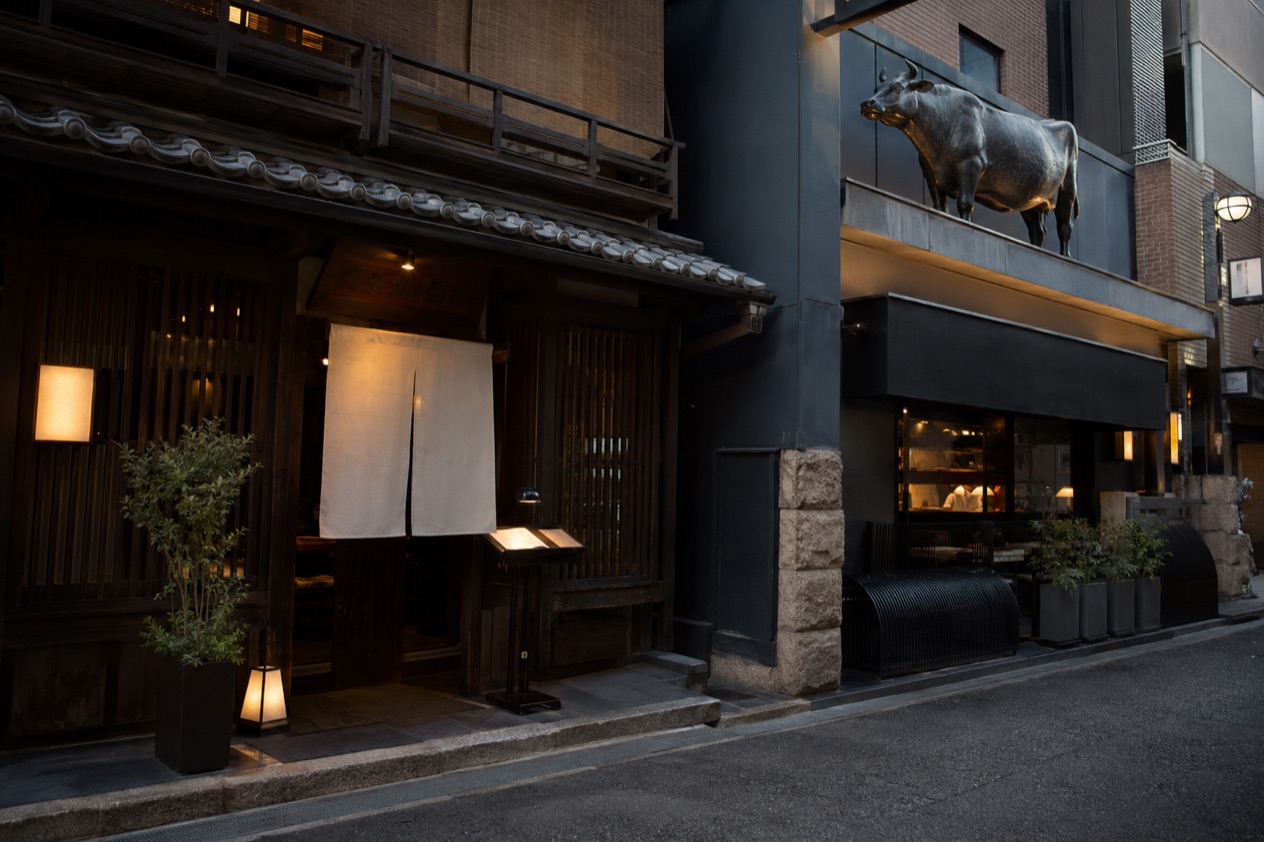
Is visiting Kobe beef worth it?
Yes, if you like to eat with curiosity and want to taste a regional brand at its source rather than a copy of it. Kobe beef is not a sightseeing stop with gates and halls. It is a meal, and the pleasure lies in understanding what is on the plate: a specific cattle, raised in a specific prefecture, graded against strict standards, and served in the port city whose name it carries.
What sets it apart from other Wagyu you might eat nearby is the label itself. Kobe beef is a regional brand defined by geographical origin and production standards, not a separate breed. Japan counts more than 320 Wagyu brands, one for each region, and Kobe is only one of them.
Its reputation goes back to the 1860s, when foreign residents of Kobe carried word of it abroad. For an American traveler, there is an extra reason to go: in the United States the Kobe trademark lacks legal recognition, so meat sold as Kobe there may not meet the certification requirements of the Japanese product.
The taste is the other reason. American Kobe-style beef tends to be darker and stronger-tasting, while the authentic product is mild and very fatty.
Some diners find a small portion is plenty, and that is part of the experience: you savor a few slices rather than finishing a large steak. Kobe sits across the bay from Osaka and is the capital of Hyogo Prefecture, so the meal fits easily into a trip through the Kansai region.
What to see at Kobe beef
The cattle behind the brand
Everything begins with Tajima cattle, a strain of the Japanese Black breed. Japanese Black accounts for more than 90% of the Wagyu raised in Japan and is the main source of highly marbled beef. For beef to carry the Kobe name, the animals must be born and fed in Hyogo Prefecture, and they must be a heifer or a bullock.
Production is small. Only about 3,000 head of cattle may qualify as Kobe per year, which explains the price you see on menus. When a restaurant displays a certificate or a numbered note about the animal, it is worth reading: in Japan every cow carries a ten-digit identification number that follows it through its whole life.
Marbling and grading on the plate
The first thing you see in a raw cut is the marbling, the fine web of white fat running through red meat. Kobe beef must reach a marbling level (BMS) of 6 or above and a meat quality score of 4 or 5. The carcass weight must be 499.9 kg or less, and processing takes place only at slaughterhouses in Kobe, Nishinomiya, Sanda, Kakogawa or Himeji.
On the plate, this means slices that look almost pink and white, and a texture that softens as soon as it warms. Look at how thinly the meat is cut and how small the portion is. The fat is the point, and it tastes mild rather than heavy when the cut is right.
The ways it is cooked
Kobe beef is prepared as steak, sukiyaki, shabu-shabu, sashimi and teppanyaki. Teppanyaki is the version many visitors picture: a chef grills the meat on a flat iron griddle in front of you, cutting it into bite-sized pieces with quick, practiced strokes. You watch the fat render and the surface brown before the first piece reaches your plate.
Sukiyaki and shabu-shabu are hot-pot styles. In sukiyaki the beef simmers in a sweet-savory broth of soy and sugar, often dipped in raw egg, while shabu-shabu has you swish thin slices through hot broth yourself. Sashimi serves the beef raw and thinly sliced. Each method shows a different side of the same meat, from smoky and seared to delicate and light.
Kobe itself, the setting for the meal
Kobe is a port city, the third-largest in Japan after Tokyo and Yokohama, with around 1.5 million people. That harbor history is why foreign residents first tasted the beef here and spread its name. A meal in Kobe puts the brand back in its own context: a city that has long looked outward over the water.
Shin-Kobe is the bullet train station, and the city is directly connected to Tokyo by the JR Tokaido/Sanyo Shinkansen. After lunch or dinner, the harbor area is a natural place to walk off the richness of the meal.
When to visit Kobe beef
Kobe beef is served all through the year, so the question is really when the city is most pleasant for a long, rich meal. October is a good candidate. Highs average in the low 70s, nights are cool, and rain falls on fewer than eight days, so you can walk between the station, the harbor and your table without much trouble. The sunshine is still generous, and the humidity is moderate.
Spring is the other comfortable stretch. From March to May the average temperature in Kobe ranges from 10°C to 20°C, which suits an unhurried day of walking followed by dinner. April brings highs in the mid-60s and a few more showery days, so a light layer and an umbrella fit well.
Winter has its own appeal for the hot-pot styles. January highs stay in the upper 40s and nights drop into the high 30s, which is exactly the weather for sukiyaki or shabu-shabu.
Snow or sleet shows up on some days that month, though precipitation is light overall. Summer is the heavy season: July highs reach the upper 80s with humidity around three-quarters and wetter days, so a cool dining room becomes part of the pleasure.
| Month | Average high (°F) | Average low (°F) | Precipitation (in) | Days with rain |
|---|---|---|---|---|
| January | 48.9 | 37.6 | 1.51 | 4.7 |
| April | 66.0 | 52.5 | 3.96 | 9.0 |
| July | 86.7 | 76.5 | 7.40 | 10.0 |
| October | 73.8 | 62.1 | 4.65 | 7.8 |
One date is worth knowing if you love the subject. National Wagyu Day, also called World Wagyu Day, falls on June 21 and was adopted by the World Wagyu Council to promote Wagyu. It is a good excuse to plan a meal around, though the beef itself is on the menu every other day too.
Tips for your visit
Go with the right expectations about the label. Look for the words Kobe beef together with the restaurant’s explanation of where the meat comes from, and remember that the broader word Wagyu is narrower than the Japanese category of domestic beef, which includes dairy breeds such as Holstein and Jersey.
Since 2007, Japan’s labeling guidelines recommend that Wagyu be used only for beef from the four breeds or specified crosses born and raised in Japan. A menu that names its cattle and its prefecture is telling you something useful.
Plan the meal around the style you want. Teppanyaki gives you the show, sukiyaki and shabu-shabu give you a leisurely, communal table, and sashimi is for those who like the beef raw and delicate. If you are unsure, a tasting of two preparations lets you compare the way heat changes the same cut. Eat slowly, since the richness builds, and pair it with rice, pickles and a vegetable side to keep the palate balanced.
Combine the meal with the rest of Kansai. Kobe lies across the bay from Osaka, so the two cities can share a trip, and the Shinkansen links Kobe with Tokyo, with the journey to Shin-Kobe Station taking between 2 hours 40 minutes and 3 hours 15 minutes. Families will find that the rich, mild beef works well in small portions, and a meal here sits comfortably next to a stroll by the harbor.
If you want to compare, you can try Wagyu from other prefectures on the same trip. Wagyu is raised in places such as Miyazaki, Hokkaido, Kagoshima, Shiga, Kumamoto and Tottori, each with its own brand. Tasting a regional cut elsewhere and then a Kobe one makes the differences in marbling and flavor easier to notice.
Good to know before you go
Kobe beef is a premium product, produced in small numbers, so expect to pay for it and to eat a modest portion. Back home, remember that Kobe on an American menu may not be the certified Japanese product: the USDA lifted its ban on Japanese beef imports in August 2012, and authentic Kobe beef has been imported since, but the name alone guarantees nothing.
In Kobe, a restaurant that explains the origin of its meat is the one to choose. Autumn and spring bring comfortable weather, while the rainy and humid months of summer call for an umbrella between meals.
Sources
- Wikipedia, Kobe beef (https://en.wikipedia.org/wiki/Kobe_beef), checked October 11, 2026
- Wikipedia, Wagyu (https://en.wikipedia.org/wiki/Wagyu), checked October 11, 2026
- Japan National Tourism Organization, Kobe (https://www.japan.travel/en/destinations/kansai/hyogo/kobe-and-around/), checked October 11, 2026
- Visit Kobe, the official travel guide (https://www.feel-kobe.jp/en/), checked October 11, 2026
- Japan Meteorological Agency (JMA), Normal values 1991-2020, monthly (https://www.data.jma.go.jp/stats/etrn/view/nml_sfc_ym.php?prec_no=63&block_no=47770), station Kobe, elevation 5 m, checked October 11, 2026