
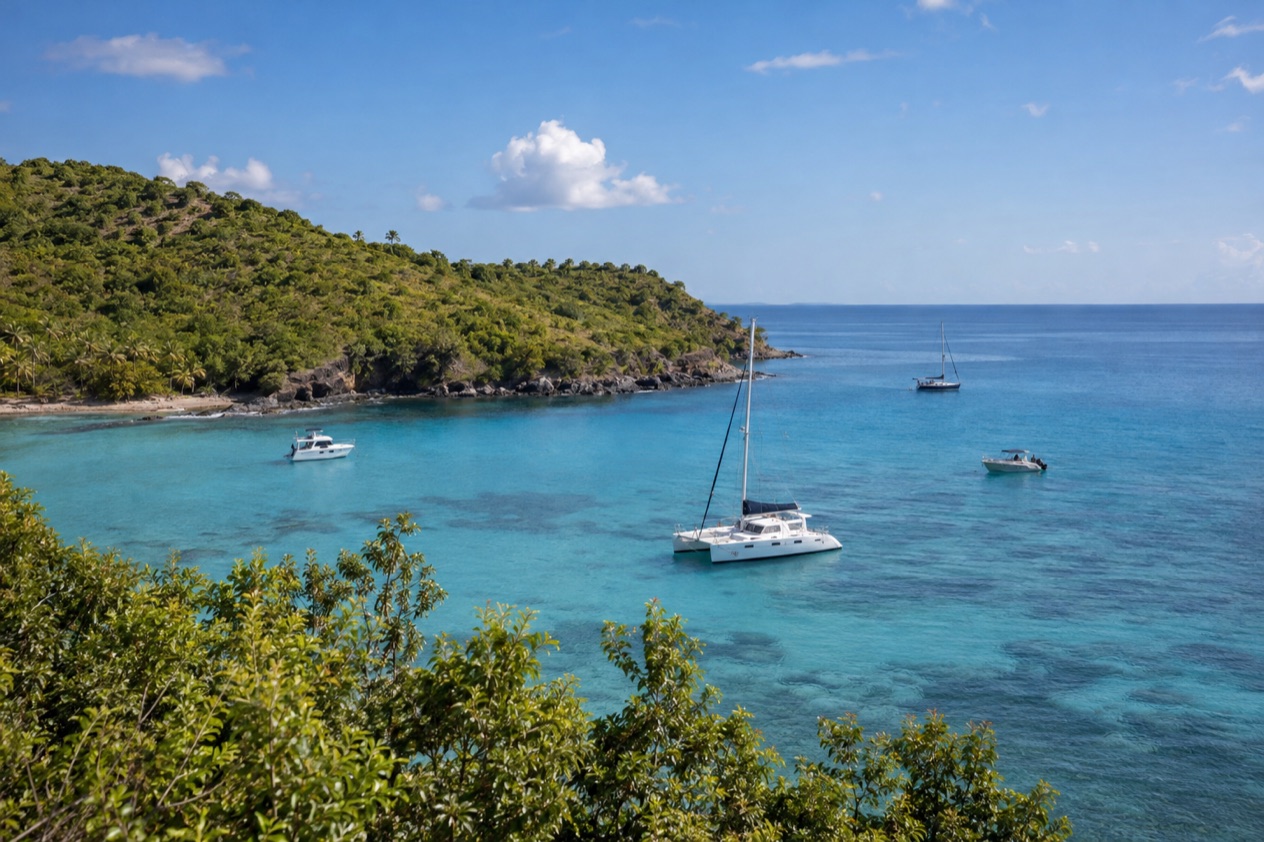
At first light in February, Fajardo’s marinas come alive with halyards clinking and the scent of coffee and diesel while catamaran crews wash off their decks. Trade winds keep the air soft, the light is clear, and the hills behind town are still green from the winter showers. It is a month for getting out on the water, for kayaking a glowing bay after dark and for long lunches at open-air kiosks along the northeast coast.
What is the weather like in Fajardo in February?
February is warm, breezy and mostly dry, with short passing showers rather than long rainy days. For a traveler, the feel of February can differ a little right at the marinas a few miles south of Fajardo.
| Month | Average high (°F) | Average low (°F) | Rain days | Sea (°F) |
|---|---|---|---|---|
| January | 82.9 | 71.4 | 6.5 | 80.4 |
| February | 83.5 | 71.4 | 4.4 | 79.8 |
| March | 84.2 | 71.9 | 5.5 | 80.8 |
Mornings start soft and pleasant, and by midday the sun is strong enough that a hat and a shady table at lunch feel like good ideas. The trade winds take the edge off the afternoons, which is why this is such a good month for sitting on a boat deck. Evenings stay warm enough for dinner outside in a T-shirt, perhaps with a light layer once the breeze picks up by the water.
Rain usually comes as a quick shower that blows through and leaves the sky bright again, and a downpour that lasts the whole day is unusual. The hills toward El Yunque catch more cloud than the marinas, so a gray morning inland does not mean the same at the coast. The days are a little over eleven hours long, with clear light that is good for photographs of the cays and the lighthouse coast.
The sea, at about 80°F, is comfortable for snorkeling and for time in the water, a reading taken from marine data for recent years. Pack for sun first and showers second.
Can you swim in Fajardo in February?
Sure, you can take a long swim and snorkel for hours in that warm sea, even if the first plunge feels cooler than it does in late summer. The waters around Fajardo face the Atlantic on the north and east, so swell and wind can vary a lot from one day to the next, and one beach can be gentle while another is choppy.
The cays offshore, Icacos above all, are the classic place for a white-sand beach and snorkeling, and boats take swimmers there from the marinas. Reef-protected spots tend to be the easiest for children and nervous swimmers, but conditions change daily, so ask the crew how the water looks that morning. On the mainland side, Luquillo beach along the coast road is a popular family stop with food kiosks right behind the sand.
If you see a flag, a sign, or a lifeguard, do what it says, and when the waves are up, be careful at open-water beaches that face the swell. Pack a rash guard or light shirt for sun protection, plus sunscreen, and your own mask if you have one.
What to do in Fajardo in February
February in Fajardo is about the water and the coast. The weather is at its steadiest of the year for boat days, the nights are dark enough in the right weeks for the bay to glow, and the roads between San Juan and the east are lined with kiosks serving fried snacks and cold coconut water. Carnaval season in the island’s towns, including the big celebration in Ponce, often runs in the weeks before Lent, and it is a reason to extend a trip if the dates line up.
Laguna Grande by kayak at night
Inside the Las Cabezas de San Juan Nature Reserve sits Laguna Grande, one of three bioluminescent bays in Puerto Rico. With a guide, you head out after dark in a kayak, traveling through channels lined with mangroves on the way to the open lagoon, where every paddle stroke may wake a blue-green light in the water.
Check the moon calendar before you pick your night, since the glow shows up best when the sky is dark and there is no moon. You may see a bright show or a faint one, and that depends on the moon, clouds and the night itself. The paddle suits most people who are comfortable in a kayak, and it is best to bring a change of dry clothes for afterward.
Icacos and the cays by boat
A day on the water is the signature Fajardo outing. Catamarans and sailboats leave the marinas in the morning for Icacos, a small uninhabited cay with white sand, and for reefs nearby where snorkelers often see colorful fish. Many trips pack in a swim stop, snorkeling, lunch and music on deck, and the trade winds keep the sail lively.
February’s steady weather makes it a good month for this, though wind and swell still change from day to day. Go in the morning when the light is clearest, put on sunscreen before boarding, and keep a dry layer in your bag for the ride back.
Luquillo kiosks and the road to El Yunque
On the coastal drive between San Juan and Fajardo, close to where the road branches for El Yunque, Luquillo beach appears with its row of food stalls. The kiosks turn out alcapurrias (meat-stuffed fritters of green banana and taro), pinchos (skewers from the grill), empanadillas and just-caught seafood, so a meal here slides in easily ahead of or following the beach.
If you are heading up to the rainforest, go early, because the mountains collect cloud as the day goes on. Rain there is more likely than on the coast, so bring a light rain jacket and shoes that can get wet.
Fajardo is also the base for the islands of Culebra and Vieques, but the public ferries to both leave from the nearby port of Ceiba, a short drive south, so plan your morning around that drive rather than the Fajardo marinas. In town, the waterfront has seafood restaurants where you can eat grilled fish, tostones and rice with pigeon peas while watching boats come in. Many are casual, with open sides that suit the climate. Order a piragua, shaved ice with fruit syrup, from a street cart on a hot afternoon.
A two-day itinerary for Fajardo in February
Day 1 belongs to the sea. Be at the marina early, when the light is soft and the water is calm in the harbor, and board a catamaran or sailboat for the cays.
Spend the morning swimming and snorkeling at Icacos and the reefs nearby, have lunch on deck or on the sand, and return to the marina in the late afternoon. Sunset comes a little before six, so a drink by the water works nicely before dinner.
Dinner can be at a waterfront seafood place in town, where fresh fish and mofongo (mashed fried plantain, often with garlic and pork or shrimp) are the usual orders. If the sky is clear and the moon is thin or absent, take an evening paddle at Laguna Grande instead, and eat after. If rain moves in, a long lunch and a slow afternoon at a marina restaurant is a good plan B.
Day 2 is for the coast road. Start with a slow breakfast, then drive toward Luquillo for a morning on the beach, since the sun is strong by midday and shade becomes valuable. Have lunch at the kiosks, with fritters and something cold to drink, then continue to the rainforest turnoff at El Yunque if you want greenery and waterfalls in the cooler part of the afternoon.
If showers settle in over the mountains, stay on the coast and browse the shops and cafes along the waterfront, or take a long, quiet seafood lunch and wait for the clouds to move. Finish the day back in Fajardo with an early dinner, so you are rested for any morning ferry or flight.
Is Fajardo busy in February?
February is a busy month on the northeast coast because it sits in the drier season, when mainland visitors escape the cold and boat operators fill their calendars. Weekends are especially lively, with San Juan families heading east for the beach and the marinas buzzing with day-trippers.
Catamaran trips, kayak tours of the bay and rental cars tend to go first, and the best departure times disappear earliest. Book boats and the night paddle as soon as your dates are firm, especially for weekends and for the holiday weekend around Presidents Day. Rooms and restaurant tables are easier on weekdays, when the marinas are quieter and the kiosks along the coast have shorter lines.
The kiosks of Luquillo are busiest on weekend afternoons, so go early or on a weekday if you want a calmer meal. In the rainforest, reservations and fees apply in some places, so confirm the current rules before you drive up.
A rental car makes the east coast easier, since the ferry port, the beaches and the rainforest are all on the road system. Reserve it early, particularly if you are arriving on a weekend.
What to pack for Fajardo in February
Think sun, salt water and the occasional shower, with one light layer for breezy evenings on the boat or the waterfront.
- Swimsuit and a quick-dry shirt, for the cays and the beach.
- Sunscreen and a hat, because the midday sun is strong even with the breeze.
- Water shoes, for rocky entries and wet boat decks.
- A light rain jacket, for passing showers and the El Yunque side.
- A dry bag or waterproof pouch, to protect your phone on the boat and the kayak.
- A change of clothes for after the night paddle, since you will be damp.
Good to know before you go
February is outside the official hurricane season, which runs from June 1 to November 30 in the Atlantic and the Caribbean. Having your own vehicle makes it easier to explore the east coast, and because the public ferries to Culebra and Vieques leave from Ceiba instead of Fajardo, plan that trip for a day when you want to visit one of those two islands. Book boats and the night kayak first, then fit the rest around them.
Fajardo in February vs January and March
Moving the trip to January gives you a slightly wetter month with more rain days, and the sea is about as warm. Three Kings Day lands on January 6 near the beginning of the month, and the octavitas that follow keep the party going strong. When your travels carry you from the eastern shore to the western capital, mark the Calle San Sebastian Street Festival in Old San Juan on your calendar, taking place from mid to late January. Humpback whales are in the waters off the west coast around then, but that is on the other side of the island.
March is a touch warmer and the sea a little warmer too, and the spring break crowds begin to arrive at the beaches and on the boats. Rain days rise a bit compared with February, though showers remain short. Sargassum seaweed can reach east coast beaches in some springs, so the water may look different at the shore, a chance rather than a certainty.
Choose February for the steadiest boat weather and the quieter stretch between the holiday rush and spring break. If big street festivals are what you want to pair with the trip, make it January, and if the warmest water appeals to you and crowds are no problem, make it March.
Is February a good time to visit Fajardo?
Yes, especially for anyone who wants to spend most of the day on or near the water. The weather is warm without being oppressive, showers are brief, and the sea is comfortable for swimming and snorkeling.
It suits couples, families with older children, sailors, snorkelers and kayakers, and anyone who likes eating well at open-air kiosks. Travelers who want big surf should look to the north and west coasts, and those who dislike busy weekends may prefer to visit midweek.
On arrival, book the boat day and the night paddle first, then pick the nights around the dark of the moon. After that, the days can be loose, with a swim, a plate of alcapurrias and a slow drive along the coast. What stays in memory is the contrast: a bright day among the cays under the trade winds, then a black lagoon where every paddle stroke lights up blue.
Sources
- NOAA NCEI, monthly normals 1991-2020, station RQW00011630 (Roosevelt Roads (Ceiba)), checked October 8, 2026
- Open-Meteo Marine API, average 2015-2024, checked October 8, 2026
- sunrise-sunset.org, sunrise and sunset calculated for the 15th of the month, checked October 8, 2026
- NOAA National Hurricane Center, Climatology (https://www.nhc.noaa.gov/climo/), checked October 8, 2026
To plan your stay
- Things to Do in Fajardo: Bioluminescent Bay, Icacos Cay, Beaches and Day Trips to Culebra
- Where to Stay in Fajardo: Marina Town, Reserve Villages, Luquillo and Ceiba
- Day Trips from Fajardo: Icacos Cay, Culebra, the Bioluminescent Bay and Luquillo
- Best Time to Visit Fajardo: Weather by Month, Beaches, Crowds and Festivals