
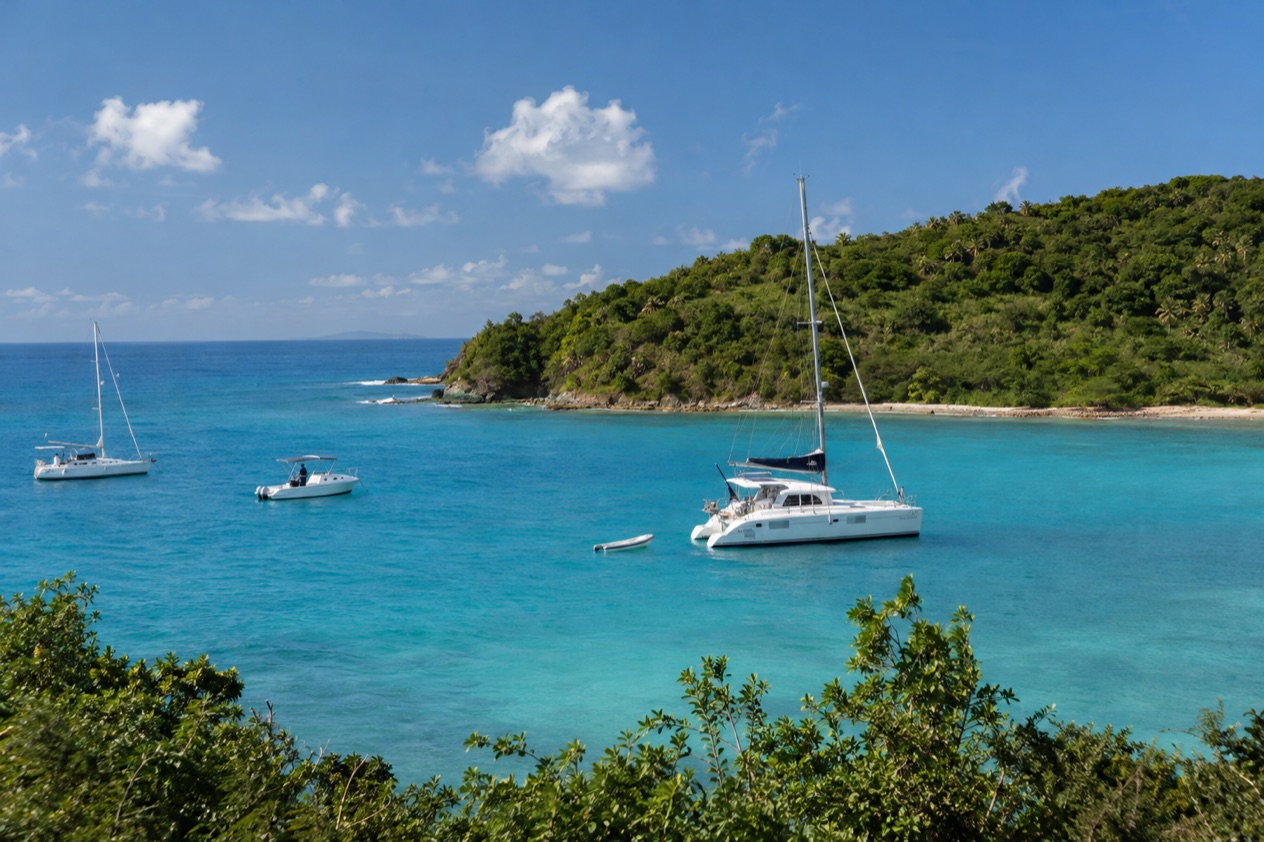
On a January morning the sailboats in Fajardo’s marinas creak gently at their moorings while pelicans work the water beside the docks. The air is soft, the trade wind keeps things comfortable, and the smell of coffee drifts out of the bakeries on the waterfront. This is the dry season on Puerto Rico’s northeast corner, a good month for catamaran days to the offshore cays, for kayaking into a bioluminescent bay after dark and for long lunches by the sea.
What is the weather like in Fajardo in January?
January in Fajardo is warm, breezy and mostly sunny, with short passing showers rather than long gray spells.
| Month | Average high (°F) | Average low (°F) | Rain days | Sea (°F) |
|---|---|---|---|---|
| December | 84.1 | 72.8 | 8.3 | 81.5 |
| January | 82.9 | 71.4 | 6.5 | 80.4 |
| February | 83.5 | 71.4 | 4.4 | 79.8 |
Mornings start soft and slightly cool by Caribbean standards, which makes them the best hours for a walk along the shore or a coastal trail. By midafternoon the sun is strong, but the trade wind takes the edge off, and shorts and a light shirt are all most people need. Evenings are pleasant enough to eat outside, and a thin layer is only useful on a boat or after a shower when the wind picks up.
Rain tends to arrive as quick squalls that blow in off the Atlantic, soak the street for a few minutes and move on, leaving the light clear and washed. Over the month it adds up to modest totals, and only on rare days does it settle in for hours. Days run a little over eleven hours of daylight, so sunset comes in the early evening and dinner plans are easy to build around it.
Can you swim in Fajardo in January?
Yes, the sea is warm enough for a comfortable, unhurried swim, with water temperatures around 80°F according to marine records for recent years. You feel it as refreshing at first and then simply pleasant, and snorkeling does not require a wetsuit for most people.
The best swimming is usually on the sheltered side of the cays, and Icacos, a small uninhabited island reached by boat, is the classic choice for white sand and snorkeling. On the mainland, the northeast coast faces the Atlantic, so winter swells can make some beaches choppier than others. Since the ocean shifts daily and differs by shoreline, check the water prior to entering, and obey any flag, sign or lifeguard you see.
Families with small children and nervous swimmers usually do better in calm, shallow spots than on open beaches. Bring a mask and snorkel, a rash guard or a light shirt for the sun, and plenty of sunscreen, since the January sun is stronger than it feels with the breeze on your skin.
What to do in Fajardo in January
January is the heart of Puerto Rico’s long Christmas season, which stretches from late November into mid-January. Three Kings Day, known as Dia de Reyes, falls on January 6 and stands as the centerpiece, when kids set out hay or grass for the camels of the kings and relatives come together over rice, pigeon peas and roast pork. The weeks afterward bring the octavitas, a second round of small celebrations, and in Old San Juan the Calle San Sebastian Street Festival usually fills the streets with music in mid to late January.
In Fajardo itself the month is about the water. Mornings are for boats, afternoons for the beach or a long seafood lunch, and nights for the glowing bay. The dry season also makes it a good time to take a drive along the coast road with stops for fried snacks.
A boat day to Icacos and the cays
Fajardo is the marina town for catamaran and sailing day trips to the cays offshore, and Icacos is the best-known stop. Icacos draws visitors with pale sand, clear water and snorkeling.
January suits this outing because the sun is steady and the sea is warm without the summer heat. It works for couples, groups and families with older children, though the wind can make the crossing lively on days with a northern swell. Wear your swimsuit under your clothes and keep a dry bag for phones and cameras.
Laguna Grande after dark
Inside the Las Cabezas de San Juan Nature Reserve sits Laguna Grande, one of the three bioluminescent bays found in Puerto Rico. Most people come here after dark, joining a guide in a kayak and gliding down a mangrove channel until the lagoon reveals itself. Dark, moonless nights bring out the brightest glow, which means the moon’s phase counts for more than the month does.
You may see the water light up in blue-green trails around the paddle, and it is a memorable experience for those who go on a dark night. It is not guaranteed, since the glow varies, and a bright moon softens it. Kids who are comfortable in a kayak often love it, and the guide explains the mangroves and the tiny organisms behind the light.
Luquillo kiosks and the road west
If you take the coast road from San Juan toward Fajardo, you will find Luquillo beach, where a long line of food kiosks sits near the turnoff for El Yunque. At this spot, alcapurrias (green banana and taro fritters filled with meat), bacalaitos (crisp salt cod fritters), and grilled seafood paired with a cold coconut drink are yours to sample.
It is a relaxed stop for lunch after a morning on the road, and the beach itself has a gentle curve that locals use for weekend gatherings. In January the season brings pasteles and roast pork to many menus, so ask what is being served for the holidays. Pair it with a walk under the palms before you continue east.
If you want a cooler break from the coast, the rainforest of El Yunque sits just inland from this stretch and makes a natural pairing with a Luquillo lunch. Showers are likelier in the mountains, so a light rain jacket is useful.
A two-day itinerary for Fajardo in January
Day 1 starts early at the marina, when the light is soft and the boats are heading out. Board a catamaran or sailing trip to Icacos and the nearby cays, and spend the late morning swimming and snorkeling, with a lunch served on board or on the sand. Return by midafternoon, rinse off and rest through the hottest hours.
As the sun drops, which in January happens in the early evening, walk the waterfront and choose a seafood restaurant near the marinas for dinner. If the rain comes, spend the afternoon in a café or at a covered waterfront restaurant and shift the boat trip to the next clear morning.
Day 2 begins with a drive along the coast toward Luquillo, stopping for a beach walk and a kiosk lunch of fritters and grilled fish. Add a short detour toward El Yunque if the sky is clear, and bring a rain jacket for the forest.
In the late afternoon, return to Fajardo and make your way to the Las Cabezas de San Juan reserve for a kayak trip on Laguna Grande that evening. Choose a night close to the new moon if you can, since the glow is strongest then. If the weather turns, keep the day to the kiosks, a long lunch and a slow drive, and leave the bay for another night.
Is Fajardo busy in January?
It is moderately busy, with the liveliest stretch in the first days of the month, when the Christmas season is still running. Families on holiday travel and visitors from the mainland escaping winter fill boats, beaches and restaurants, especially on weekends.
After Three Kings Day and the octavitas, things quiet down, and the second half of the month is generally easier for tables and boat spots.
Reserve those before you settle other plans, and keep the rest of the days flexible so you can shift around a rainy morning.
What to pack for Fajardo in January
Pack for warm days, a steady breeze and quick showers, with a little extra for the water.
- Swimsuits and a quick-dry towel, for boat days and beach stops
- Sunscreen and a hat, since the sun is strong even with the breeze
- A mask and snorkel, for the cays
- A light rain jacket, for passing squalls and El Yunque
- Water shoes, for rocky entries and kayak launches
- Insect repellent, for mangrove paddles at dusk
- A thin layer, for the wind on the boat
Good to know before you go
January is outside the official hurricane season, which runs from June 1 to November 30, so the main planning questions are about crowds and bookings. If you want to reach Culebra or Vieques by public ferry, you will board in Ceiba, a quick trip by car south of Fajardo, rather than in Fajardo.
A rental car makes the coast road, Luquillo and the reserve far easier to combine. Americans traveling here do not require a passport or visa, and everything is priced in U.S. dollars.
Fajardo in January vs December and February
Moving the trip to December gives you a slightly warmer sea and more rain, with showers more frequent through the month. It is also the heart of the Christmas season, with parrandas (neighborhood caroling groups) and a festive mood, but it brings holiday crowds and fuller boats, especially in the last week.
February is drier and a touch cooler in the water, with fewer showers and a bit more stability for boat days. The festive season has ended, and the town settles into a calmer rhythm, which suits travelers who want easy bookings.
Choose December if you want the lights, the music and the traditions, and January if you want a bit of both with the crowds easing later in the month. Choose February for the steadiest weather and the quietest weeks.
Is January a good time to visit Fajardo?
Yes, especially for travelers who want warm water, boat days and a holiday mood that fades gently into the calmer dry season. It suits couples, families with older children, snorkelers and anyone who likes to pair a beach day with a night paddle.
It is less ideal for those who want a totally empty coastline in the first days of the month, or who dislike a brisk breeze on the water. Surfers who want big winter swells will look to the west coast instead.
Check the moon when choosing the best night for the bay kayak. What makes January special here is the mix of a lingering Christmas spirit, a sea still warm from the year’s end and a glowing bay waiting after dark.
Sources
- NOAA NCEI, monthly normals 1991-2020, station RQW00011630 (Roosevelt Roads (Ceiba)), checked October 8, 2026
- Open-Meteo Marine API, average 2015-2024, checked October 8, 2026
- sunrise-sunset.org, sunrise and sunset calculated for the 15th of the month, checked October 8, 2026
- NOAA National Hurricane Center, Climatology (https://www.nhc.noaa.gov/climo/), checked October 8, 2026
To plan your stay
- Things to Do in Fajardo: Bioluminescent Bay, Icacos Cay, Beaches and Day Trips to Culebra
- Where to Stay in Fajardo: Marina Town, Reserve Villages, Luquillo and Ceiba
- Day Trips from Fajardo: Icacos Cay, Culebra, the Bioluminescent Bay and Luquillo
- Best Time to Visit Fajardo: Weather by Month, Beaches, Crowds and Festivals