
On a December morning in Fajardo, the marina fills with the clink of halyards and the smell of coffee from the dockside cafés, while catamarans line up to head out to the cays. Parrandas sing through the Christmas weeks, the trade winds keep the afternoons bearable, and the sea is still warm enough for a long swim. The year here runs from a breezy, drier winter and spring to a hot, showery late summer and fall, and each stretch gives the northeast corner of Puerto Rico a different mood.
When is the best time to visit Fajardo?
The best time to visit Fajardo is from about December to April, when the weather is a little cooler and drier, and the sea is calm enough more often for boat days to the cays; May and early June are a good second choice. The climate table reflects observations from Ceiba, about seven miles south of Fajardo.
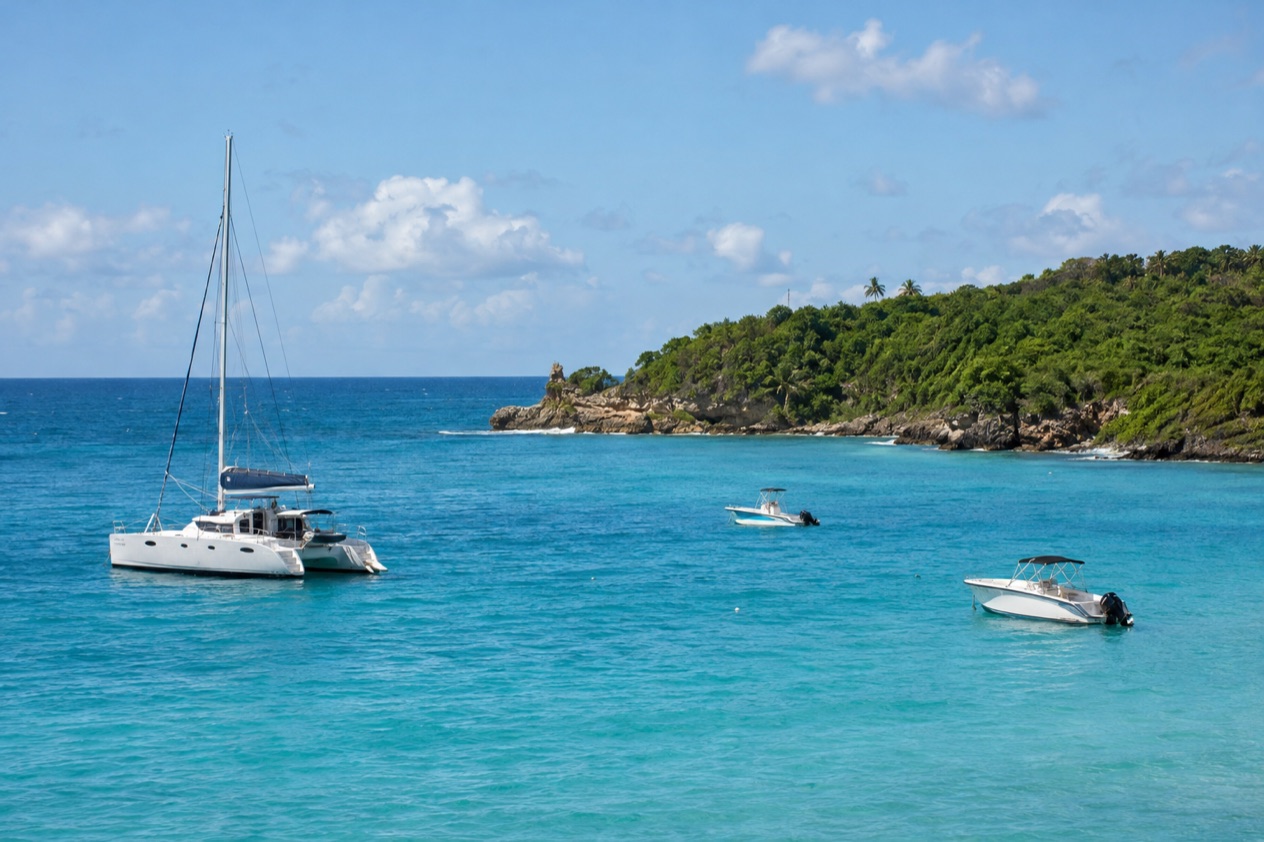
For beach and sea days, winter and spring are the sweet spot for Seven Seas Beach and boat trips to the cays. Mornings on the water to Icacos or the other cays are bright and breezy, snorkeling visibility is usually good, and the sea stays warm all year.
Swells from the Atlantic can make some days rougher in winter, so the boat captains decide each morning where to go. If you want the warmest water and do not mind the heat, late summer and early fall bring the highest sea temperatures of the year.
Those same dry months for sightseeing also suit Las Cabezas de San Juan Nature Reserve, the Luquillo food kiosks, and a day in the nearby El Yunque rainforest, which is wet all year long. Walking in the middle of a summer day is draining, so plan outdoor visits for early morning. A night paddle in the bioluminescent Laguna Grande can happen in any month, and it is at its brightest on dark, moonless nights.
For a quieter, easier trip, May, June and the weeks after school starts in the fall leave the marina and the beaches less busy, with the trade-off of more showers and, in fall, the heart of hurricane season. Families should know that March is spring break season, and the public beaches and boat docks can get loud and crowded on weekends. Summer works well for families who plan around school vacations, early starts and the afternoon heat.
Fajardo weather by month
Fajardo is hot all year, and the real difference between months is how much rain falls and how warm the nights feel.
| Month | Average high (°F) | Average low (°F) | Rain days | Sea (°F) |
|---|---|---|---|---|
| January | 82.9 | 71.4 | 6.5 | 80.4 |
| February | 83.5 | 71.4 | 4.4 | 79.8 |
| March | 84.2 | 71.9 | 5.5 | 80.8 |
| April | 85.9 | 73.3 | 6.3 | 82.2 |
| May | 86.7 | 75.4 | 8.4 | 84.6 |
| June | 88.1 | 77.3 | 7.4 | 85.8 |
| July | 88.8 | 77.3 | 10.2 | 85.7 |
| August | 89.1 | 77.6 | 8.9 | 86.2 |
| September | 88.8 | 76.4 | 10.9 | 87.3 |
| October | 88.3 | 75.7 | 10.1 | 87.3 |
| November | 86.2 | 74.5 | 10.9 | 84.1 |
| December | 84.1 | 72.8 | 8.3 | 81.5 |
February is the driest month in the table, with the fewest rainy days, and the stretch from January to April stays fairly light on rain, with short passing showers. May brings a clear step up in rain, and from July through November roughly a third of the days or more bring some rain, often in heavy afternoon downpours or in longer wet spells when a tropical system passes.
November is a surprise to many visitors: it is still among the wettest months even though the summer heat has eased. The warmest weather comes from June through October, when afternoons are sticky and nights stay in the mid-70s. Winter nights are noticeably more comfortable, though never cold.
What is there to do in Fajardo in each season?
Winter and spring: the boat season
From December through April, Fajardo is at its busiest on the water. Catamaran and sailing day trips leave Fajardo for Icacos and the other offshore cays, while public ferries to Culebra and Vieques leave from nearby Ceiba, not Fajardo. The breeze keeps the sun manageable, and the lighter rain means fewer canceled plans.
On land, this is the right time to walk the trails and the old lighthouse at Las Cabezas de San Juan, and to make the drive west along the coast to Luquillo for fried snacks from the kiosks and a swim at the beach. Humpback whales pass off the west coast of the island in winter, which is a reason to plan a separate trip there rather than expect them from Fajardo.
Summer and early fall: heat, warm water and showers
From June to October the sea is at its warmest and the days are long. Boat trips still run when the weather allows, and mornings are the best time for the water, before the clouds build and the afternoon showers arrive. Plan a siesta, a long lunch or a museum stop for the hottest hours.
This is also the season to look for sea turtles nesting on Puerto Rico beaches, which is a chance rather than a promise. Sargassum seaweed can reach east coast shores in some springs and summers, so a beach day may look different from the photos. The bioluminescent bay glows all year, and a night with no moon and no rain is worth keeping free.
The holiday season
Late November through mid-January is the island’s long Christmas season, with parrandas (groups of friends who show up at a door with guitars, cuatros and maracas), pasteles and lechon asado on the table, and festive lights around town. January 6, Three Kings Day, and the octavitas that follow keep the celebration going. Weather turns pleasant, though November is still wet, so pack a light rain jacket.
When is Fajardo cheapest and least crowded?
Fajardo is least crowded in May and June, then again from late August through early November, once summer vacations are over and school is back in session. Rooms are easier to find, the marina is calmer, and the beach has more room to spread out.
The busiest weeks come with the U.S. holidays. Christmas and New Year fill the rentals and the boat trips, and Presidents Day weekend and the March spring break weeks bring crowds and noise to the public beaches. Holy Week, which falls in March or April depending on the year, is a big family vacation week across the island, and the Fourth of July and the summer weekends are busy with local families heading out on boats and to the cays.
Weekends are busy all year because many San Juan residents come to the east coast, so weekdays are calmer on the water and at Luquillo.
Which months should you avoid in Fajardo?
Avoid August through October if you want to be safe from storm disruption, and November if you want the driest, sunniest days, though none of these months is a bad time for every kind of trip.
The Atlantic hurricane season runs from June 1 to November 30, with the peak in mid-September and most activity between mid-August and mid-October. Traveling during that stretch calls for monitoring weather reports, heeding the National Hurricane Center along with local authorities, and staying ready to adjust your schedule. Even without a named storm, a tropical wave can bring days of heavy rain, which cancels boat trips and the night kayak.
The heat is the other factor. From July through September, afternoons are muggy and the sun is strong, so water, shade and early starts matter more than in winter. Sargassum is usually worst from spring into summer, and some beach days on the east and south coasts may show seaweed along the shore. No beach is guaranteed to be spared, so keep a backup plan.
Winter cold fronts are mild in Puerto Rico, but they can bring a few gray, breezy days and bigger swells on the Atlantic side, which sometimes shorten or reroute boat trips. They matter less than the storms of late summer.
When can you swim in Fajardo?
You can swim in Fajardo in every month, because the sea stays warm all year, from the low 80s in winter to the upper 80s in early fall.
Winter water feels refreshing rather than cold, and is perfectly comfortable for snorkeling in a light rash guard. From May the sea turns bath-warm, and in September and October it is at its warmest, so it can feel less refreshing on a hot day. Conditions change from day to day and from beach to beach, so ask the boat crew or look for flags, signs or lifeguards where they are present, and follow them.
Winter swells can make open beaches along the Atlantic coast rougher, while the sheltered spots around the cays are often easier in the morning. Rain and runoff can cloud the water for a day or two after a storm, and sargassum can gather on some shores in spring and summer.
Festivals and events in Fajardo through the year
Christmas season, Three Kings and Carnival
The Christmas season starts in late November and runs into mid-January, longer than on the mainland. Expect parrandas, also called asaltos, where neighbors arrive after dark to sing and are fed in return, plus pasteles, rice with pigeon peas and tembleque, a coconut pudding. On January 6, Three Kings Day, children leave grass or hay for the Kings’ camels, and the days that follow, the octavitas, keep the music going.
In the weeks before Lent, towns across the island hold Carnival, best known in Ponce, with parades, costumes and vejigante masks. Holy Week moves every year, and brings processions, family beach days and a pause in many businesses at the end of the week. In mid to late January, the Calle San Sebastian Street Festival in Old San Juan is an easy day trip from Fajardo for those who like crowds and music.
Summer fiestas
On the night of June 23, the Noche de San Juan Bautista, Puerto Ricans walk backward into the sea at midnight for luck, and the beaches around Fajardo fill with families and friends. It is a lively, friendly night rather than a show, so bring a towel and expect company.
In late July, Fajardo’s own Fiestas Patronales de Santiago Apostol bring music and community celebrations, while Loiza’s festival is known for bomba and its coconut and vejigante masks. It is one of the island’s best-known cultural celebrations, and it makes a good day out from Fajardo for those who want to see more than the beaches.
Nature seasons: turtles and glowing water
Sea turtles nest on Puerto Rico beaches in spring and summer, and some east coast shores see leatherbacks and hawksbills.
The glow of Laguna Grande, in the Las Cabezas de San Juan reserve, is a year-round chance. Guided night kayak trips are the usual way to see it, and the light is strongest on dark, moonless nights, so check the moon phase when you pick your date. Clouds and rain can dim the evening, and the glow is never guaranteed.
Sources
- NOAA NCEI, monthly normals 1991-2020, station RQW00011630 (Roosevelt Roads (Ceiba)), checked October 8, 2026
- Open-Meteo Marine API, average 2015-2024, checked October 8, 2026
- sunrise-sunset.org, sunrise and sunset calculated for the 15th of the month, checked October 8, 2026
- NOAA National Hurricane Center, Climatology (https://www.nhc.noaa.gov/climo/), checked October 8, 2026