
PORTUGAL · WHAT TO PACK · THE SHORT LIST THAT WORKS
Portugal is an easy country to pack for and a very easy one to pack wrong for. The mistakes are always the same three: shoes that can’t handle a million polished cobbles, a suitcase that believed the word “summer” applied after sunset, and a bag with no room for the Atlantic’s opinions. Fix those and everything else is detail.
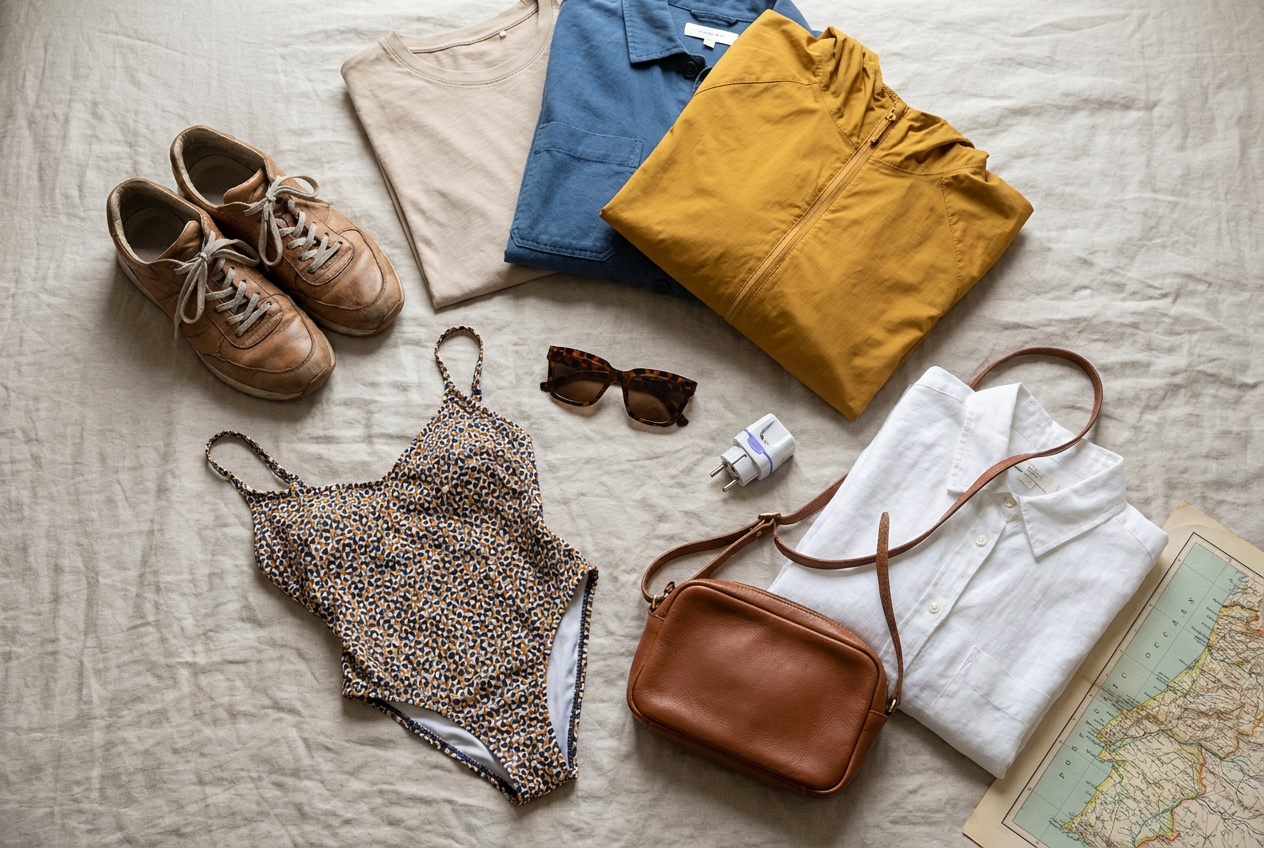
THE BAG AT A GLANCE · PORTUGAL
Pack for walking and for layers: grippy broken-in shoes, a warm top for every evening of the year, a rain shell from October to April, and a swimsuit in every season you’d dare.
THE HOLY TRINITY: SHOES · LAYERS · RAIN SHELL (IN SEASON)
Pack light: laundromats and hotel services are cheap and common, and every trip in this country involves carrying your bag up at least one hill it didn’t warn you about.
Leave at home: heels and slick-soled dress shoes (the calçada is glass when damp), the hair dryer (hotels have them, voltage disagrees with yours), and anything that only matches one outfit.
Climate basis: our 1991–2020 normals per city · full sources at the end of this guide
On this page
- The core kit, any seasonThe eight non-negotiables
- Coming in summerJune to September changes
- Coming in the cooler monthsOctober to May changes
- One screen, checkableThe full list, in a table
What to pack for Portugal: the essentials
1. Broken-in walking shoes with real grip. The single most consequential object in your bag. Portuguese sidewalks are calçada: small polished limestone cubes, beautiful, uneven, and frankly slippery when damp. Lisbon and Porto add gradients to the equation. Sneakers you already trust beat anything bought last week. The habits that go with those shoes, from the couvert to the hour dinner starts, are in Things to Know Before Going to Portugal.
2. A warm layer for every single evening. The Atlantic runs the thermostat, and it drops the temperature 10 to 15 degrees when the sun goes: an August dinner on a miradouro wants a sweater, and locals can spot the shivering tourist at a hundred meters. One fleece or overshirt, worn or carried daily.
3. A packable rain shell (October through April, and always in the north). Portugal’s rain arrives in soft pulses rather than all-day sieges, which is exactly what a stuffable shell was invented for. Umbrellas fight the Atlantic wind and lose.
4. A swimsuit, further into the year than you’d think. The Algarve’s sea peaks in early October and hotel pools stretch the season further. It weighs nothing. Pack it from May through October at minimum.
5. A crossbody bag that zips. Portugal is a Level 1 country where the one real nuisance is pickpocketing on tourist trams and viewpoints, and a zipped bag worn in front ends the conversation (the full safety picture is reassuringly short).
6. Type C/F plug adapters, plural. Portugal runs 230V on the standard European two-round-pin socket. Your phone and laptop chargers handle the voltage natively. Bring two adapters, because one lives forever behind the nightstand of a hotel you’ve left.
7. Sun kit in all seasons. The famous light is real: sunglasses and SPF year-round, a proper hat May through September, and remember the sun works fine at 60°F in March.
8. A shoulder-covering option for churches and monasteries: a light scarf or shirt does it. Nobody is strict about it in tourist churches, but the working ones appreciate the gesture.
Packing for summer in Portugal (June – September)
Think dry heat with a sea breeze, not tropics: linen and cotton over technical fabrics, shorts that can also enter a nice restaurant (Portuguese casual runs a notch neater than American vacation-wear), and the evening layer promoted from item to law.
Add reef-safe sunscreen for the Algarve, water shoes if the cove beaches are your plan (pebbles and rock shelves lurk), and skip the rain shell south of Lisbon. The odds are with you. The interior (the Alentejo, the Douro in August) is genuinely hot: a real hat stops being optional there.
Packing for fall, winter and spring (October – May)
The layering months. Days can serve 65°F sunshine and a squall in the same afternoon, so the winning outfit is a tee, an overshirt and the shell, adjusted hourly.
Add a compact umbrella for city use if you must, a warmer sweater for December–February evenings (indoor heating is politely minimal in older buildings, so a sleeping layer is not a strange idea), and waterproof-ish shoes if you’ll walk the north.
What you can leave home: the parka. Lisbon’s coldest month averages days of 57°F, and you will see locals in scarves and tourists in t-shirts, both slightly wrong.
The Portugal packing list, on one screen
| Item | Season | Why it earns the space |
|---|---|---|
| Grippy broken-in shoes | Always | Polished calçada + hills. The trip lives or dies here |
| Evening layer | Always | The Atlantic drops nights 10–15°F, even in August |
| Packable rain shell | Oct – Apr · north | Rain comes in pulses. Umbrellas lose to the wind |
| Swimsuit | May – Oct | The sea peaks in October; pools stretch further |
| Zipped crossbody bag | Always | Ends the pickpocket question before it starts |
| 2× Type C/F adapters | Always | 230V, two round pins; one adapter always defects |
| Sunglasses + SPF | Always | The light is the country’s whole brand |
| Hat | May – Sep | Non-negotiable inland (Alentejo, Douro) |
| Scarf / cover layer | Always | Churches, sudden shade, bus air-conditioning |
| Water shoes | Beach trips | Cove beaches hide rock shelves under the postcard |
| Compact umbrella | Nov – Mar cities | For the drizzle days the shell finds tedious |
| Warmer sweater | Dec – Feb | Old buildings heat politely, not thoroughly |
What not to bring to Portugal
Heels and leather-soled dress shoes: the calçada wins, always, and no restaurant in the country requires them. A hair dryer or US-voltage gadgets with motors: hotels provide dryers, and 230V eats single-voltage appliances for breakfast (chargers are fine).
The just-in-case formal outfit: even the tasting-menu rooms run smart-casual. A big suitcase for a multi-stop trip: between cobbles, train racks and one guaranteed staircase, the 10-day route is a carry-on argument. Heavy repellent arsenals: mosquitoes exist on warm evenings but rate a travel-size bottle, not a strategy.
The last word
The perfect Portugal bag is small, walks well and layers fast. Everything you forget short of the passport can be bought in an hour in any town with a pharmacy and a Chinese bazaar, which is every town. Spend your packing energy on the shoes, and spend the saved luggage space on the return leg: cork, tinned fish and wine have a way of asking for it.
Check the season first with the 12-month verdict, see what the bag will be doing in the north-to-south route, and settle the paperwork in five minutes with the entry requirements guide.
Sources & data for this guide
- Temperatures and rain seasonality · our 1991–2020 climate normals per city (ERA5), detailed in the 12-month guide · checked Sep 1, 2026
- Electrical: 230V, Type C/F sockets · IEC world plugs reference · checked Sep 1, 2026
- Safety context (Level 1, petty-theft caveat) · US State Department Portugal advisory, detailed in the safety guide
- Fabric, dress-code and store-availability notes are editorial judgment from ground experience