
The question of which one to take comes up within minutes of arriving. Kyoto answers it with two things working side by side: a municipal subway with two lines, and a city bus network that includes routes made for sightseeing.
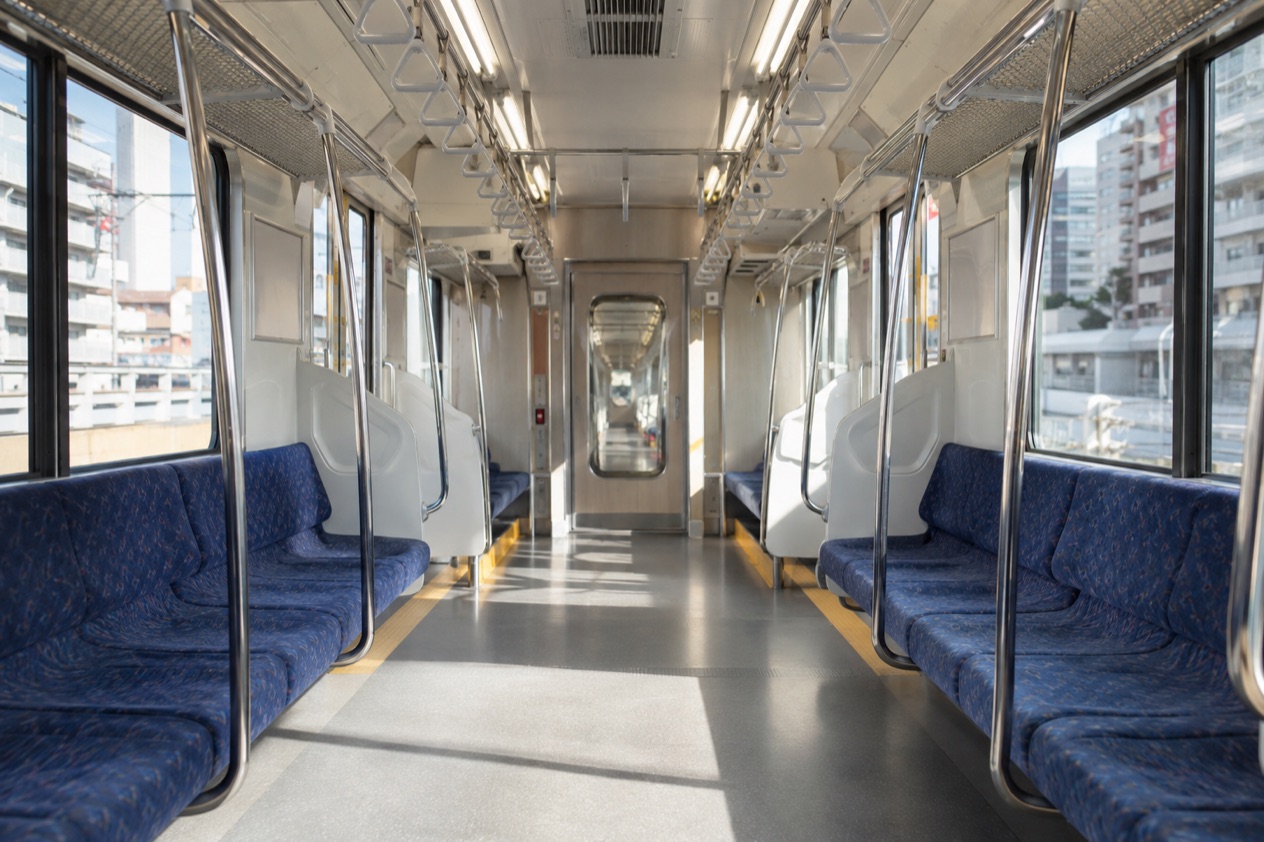
How do you get around Kyoto?
You get around Kyoto by combining the Kyoto Municipal Subway with Kyoto City Bus, and the two are meant to be read together. The subway is a short spine of two lines run by the Kyoto Municipal Transportation Bureau. The buses fill in the rest, carrying you to the places a pair of subway lines cannot reach on their own. Most days in the city end up using both.
A good way to think about it is by purpose. The subway suits moments when you want to cross the center of the city in a straight line and know exactly where you will surface.
The bus suits moments when the destination is a temple gate, a hillside shrine or a garden whose name appears on the front of the vehicle. Neither asks you to choose for the whole trip. You can ride one in the morning and the other after lunch.
The subway in a few lines
The Kyoto Municipal Subway began operating on 29 May 1981, which makes it a modest system by the standards of Tokyo or Osaka. Its top speed is 47 miles/h (47 mph), and the whole network adds up to about nineteen miles of track. That is small enough to hold in your head: two lines, one place where they cross, and stations named after the streets and districts above them.
Even so, the system carries a great people. Daily ridership reached 397,000 in 2018, a reminder that the subway is not just for visitors. Commuters, students and shoppers share the cars with travelers carrying day packs and maps, so the platforms have the ordinary rhythm of a working city rather than a tourist attraction.
City buses, and the ones built for sightseeing
Kyoto City Bus operates a sightseeing route called Raku Bus, and the city also has a service called the Kyoto Okazaki Loop Bus. Both exist because a visit to Kyoto is rarely a matter of one landmark. They give visitors lines named for what they are for, rather than a number you have to decode.
The name Okazaki Loop points to the Okazaki district, a part of Kyoto associated with museums, a large shrine and a canal lined with trees. A loop route is a pattern you can picture: a bus that circles rather than runs out and back. The Raku Bus, with its own name, is the sort of line you look for on a sign at the stop before you look at the numbered routes.
Planning each ride with the city’s route tool
Kyoto provides a route planner called Arukumachi KYOTO Bus and Train Veteran. It handles route search, timetables and bus location information, so you can enter where you are and where you want to go and see the buses and trains that connect them, along with where a bus is at that moment.
A tool like this changes the way a day in Kyoto feels. Instead of standing at a stop wondering, you can see the line you want, read its timetable and watch the bus come closer. It is a natural companion for the afternoons when you want to add one more temple to the plan.
Which buses and subway lines matter?
The two subway lines, the Karasuma Line and the Tozai Line, matter most on the rails, and Raku Bus and the Okazaki Loop Bus are the named routes worth knowing among the buses. Together they form a short list, and a short list is a gift in a city with so many places to go.
| Subway line | Length | Stations |
|---|---|---|
| Karasuma Line | 13.7 km (8.5 mi) | 15 |
| Tozai Line | 17.5 km (10.9 mi) | 17 |
Karasuma Line and Tozai Line
The Karasuma Line is the shorter of the two, with fifteen stations, and the Tozai Line has seventeen. The names are part of Kyoto’s street culture. Karasuma and Oike are streets in the central grid, and the grid is a big part of why this city is so readable once you see it.
The two lines share one interchange station, Karasuma Oike Station. That single crossing is the key to the whole system. If you are changing from one line to the other, you do it there, and nowhere else. It makes planning simple: any trip that needs both lines runs through one named station, so you only have to keep that one name in mind.
The subway belongs to the Kyoto Municipal Transportation Bureau, the same city body behind Kyoto City Bus. That shared parentage is why the city can offer passes and sightseeing services that treat the bus and the subway as one network.
Raku Bus
Raku Bus is a sightseeing route operated by Kyoto City Bus. The word raku in Japanese suggests comfort or ease, and the name sets the line apart from the plain numbered services. When you scan the signs at a stop, this is the one to look for if your day is about seeing places rather than commuting.
The practical advice here comes from the route planner. Because Kyoto offers timetables and live bus location through Arukumachi KYOTO, you can look up the sightseeing line on your phone and follow the bus as it approaches, rather than guessing from the stop alone.
Kyoto Okazaki Loop Bus
The Kyoto Okazaki Loop Bus is a named service of its own, and its name tells you where its attention lies. Okazaki is a district of broad avenues, gallery buildings, a canal and a vermilion shrine gate, an area where a day can be spent moving from one cultural stop to the next.
A loop bus fits that kind of day, because the point is to hop between neighboring places and return to where you started. Look for it by name at the stop, and use the route planner to read the timetable before you commit to a plan around it.
How do you pay?
Paying on Kyoto’s buses and subway comes down to a few arrangements the city spells out: a one-day pass for holders of the JR-West Rail Pass, and free summer rides for young children on the city buses. Beyond those two, the page has no further fares to quote.
The Kyoto Subway and Bus 1-Day Pass
The Kyoto Subway & Bus 1-Day Pass is available only for JR-West Rail Pass holders. That is the entire condition: if you hold that rail pass, this one-day pass is open to you, and if you do not, it is not. The pass is built around the city’s two kinds of public transport, the subway and the bus, so a single pass speaks to both halves of the system.
What that means for planning is straightforward. A traveler who already arrives with a JR-West Rail Pass has an extra option for moving around the city itself. A traveler without one simply approaches each ride on its own terms. Either way, it helps to know the condition before you stand at a ticket machine.
Eco-Summer and children on the buses
During Kyoto City Bus Eco-Summer, up to two elementary school students can ride for free. The offer belongs to the summer program, and it applies to elementary school students, with a limit of two. For a family traveling in Kyoto in the warm months, it is a detail worth recognizing when the program runs.
The wording matters: the free rides are tied to Eco-Summer on Kyoto City Bus, not to the subway and not to every season. Treat it as a feature of that program and nothing broader, and look for the program’s name when you plan a summer visit.
Reading timetables before you ride
Whatever you pay, the route planner is where the rides come together. The Arukumachi KYOTO Bus and Train Veteran planner lets you search routes, read timetables and see bus location information, so the choice between a bus and a subway line is made with the schedule in front of you.
Think of it as the companion to the passes. The pass tells you who can use a one-day ticket, the Eco-Summer program tells you when children ride free, and the planner tells you which vehicle to board. Together they cover the question of how a day in Kyoto moves along.
Good to know before you go
Kyoto’s transport is easiest to hold in mind as a short list: two subway lines meeting at Karasuma Oike, named bus routes such as Raku Bus and the Okazaki Loop Bus, and a route planner for the rest. Summer visitors with young children should look for Eco-Summer on the city buses, and anyone with a JR-West Rail Pass should remember the one-day pass reserved for them. Everything else is a matter of picking the next stop on your list and letting the planner point to the vehicle.
Sources
- Kyoto City Transportation Bureau, bus and subway guide (https://www2.city.kyoto.lg.jp/kotsu/webguide/en/), checked October 11, 2026
- Wikipedia, Kyoto Municipal Subway (https://en.wikipedia.org/wiki/Kyoto_Municipal_Subway), checked October 11, 2026
To plan your stay
- Best Time to Visit Kyoto: Cherry Blossoms, Autumn Leaves, Weather by Month and Festivals
- Things to Do in Kyoto: Temples, Gardens, Food and Day Trips
- Where to Stay in Kyoto: Kyoto Station, Central and Eastern Districts, and Ryokan Stays
- Know Before You Go to Kyoto: Entry, Money, Getting Around and Local Etiquette