
You step off the Shinkansen into Kyoto Station, a huge glass-and-steel hall where a full floor of ramen restaurants steams above the concourse and Kyoto Tower rises just outside the main entrance. Beyond the station, the city opens into a grid of streets, wooden townhouses and temple gates. A few things are worth knowing before you arrive: how the city is laid out, how entry works, how people pay and move around, and the small habits that make a visit run smoothly.
What should you know before visiting Kyoto?
Four things matter most in Kyoto: the city is split into five main areas, the temples and shrines reward visits at the edges of the day, the seasons change the feel of the place completely, and a handful of everyday habits, from removing shoes to carrying your passport, are part of ordinary life here. Get these straight and the rest falls into place.
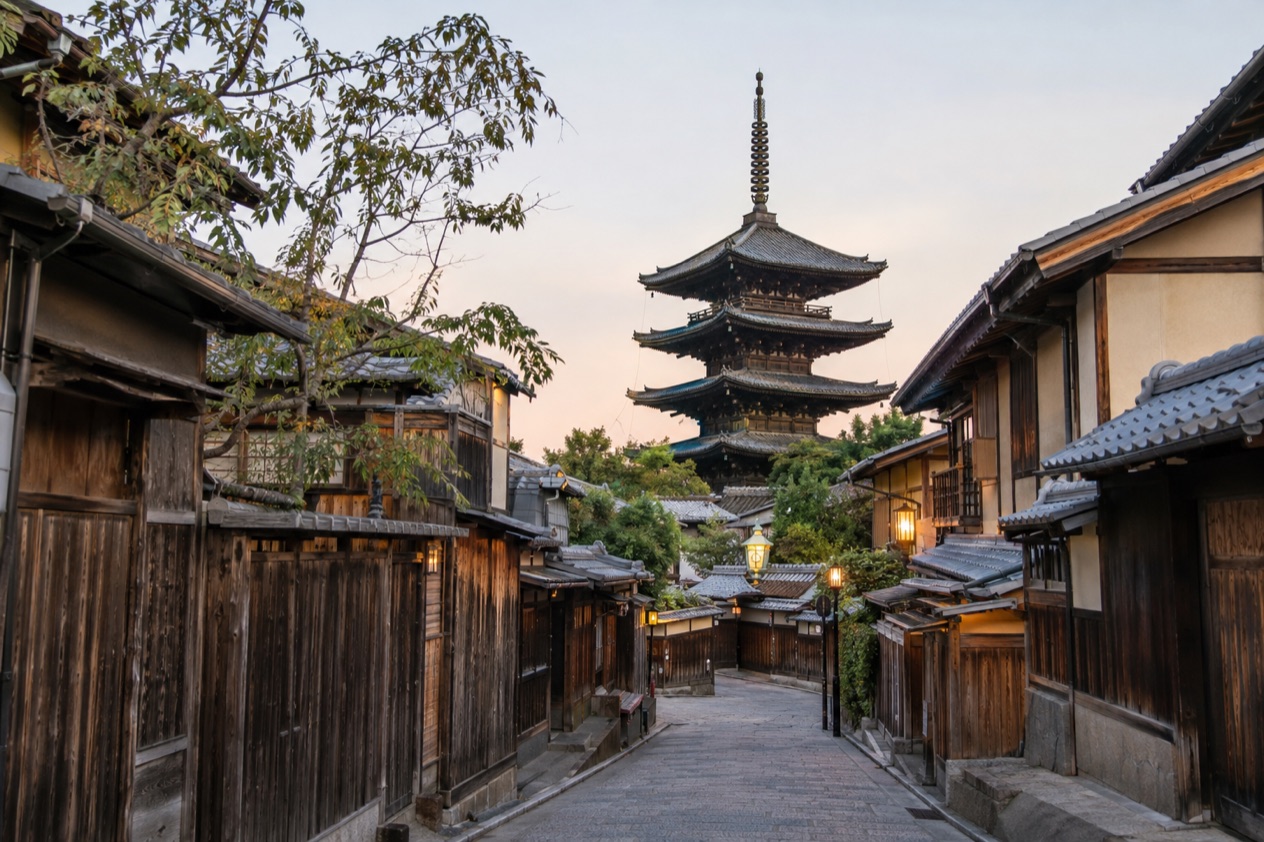
Kyoto is organized into Central, Eastern, Northern, Southern and Western areas, and thinking in those terms helps when you plan a day. The center follows a grid pattern modeled on Chang’an, the capital of China’s Tang dynasty, which is why so many streets cross at right angles. The city served as Japan’s capital and the emperor’s residence for over 1000 years, and that long history shows up everywhere, from machiya townhouses to the hanamachi districts where geishas live and work.
Farm stays in the Keihoku area put you in touch with agriculture, the Takao area has three mountains known as the Sanbi, with their temples and lush greenery, and farther north the sandbar of Amanohashidate and the boat houses of Ine fishing village face the Sea of Japan.
Hands-on activities are part of the picture too: you can try a sword-fighting lesson taught by a professional actor at Myokakuji Temple, turn your name into kanji and carve a stamp, or spend a day in a kimono. Japan’s tourism board suggests visiting shrines early in the morning or late in the evening, when some are illuminated.
Entry, customs and paperwork
According to the U.S. State Department, U.S. citizens can enter Japan for tourist or business stays of up to 90 days without a visa. You need a valid passport, and the passport must remain valid for the entire time you are staying. The Department also says you should have proof of a return or onward ticket.
A visa-free stay does not allow you to work on the local economy. Once you are in the country, the State Department notes that you must always carry your U.S. passport (or a Japanese Residence Card if you live there), because you may be questioned or detained if you cannot show proof of identity and status.
One more point about what comes in your luggage: CBD products may be illegal in Japan depending on the amount of THC they contain, so they are better left at home. Treat any product that contains cannabis-derived ingredients with that in mind before you pack.
Money, cards and tipping
International credit, debit and prepaid cards are generally accepted throughout Japan, according to the Japan National Tourism Organization. That covers a lot of everyday spending, from hotels to department stores such as the Isetan inside Kyoto Station.
Some shops do not display the symbols of the cards they take, so it is a habit worth adopting to simply ask the seller whether your card can be used. A quick question at the register saves any awkwardness later, especially in small, family-run places tucked into the side streets.
Tipping is not part of the dining or service culture in Japan, and staff are not expecting it. Good service is simply the baseline, and a warm thank-you, said with a small nod, is the usual way to show appreciation.
Getting around and staying connected
Kyoto Station is served by the Tokaido Shinkansen line, which connects the city to major cities across Japan. Traveling from Tokyo Station to Kyoto by the most direct Shinkansen line takes about 2 hours and 20 minutes. The station building is a destination in itself, with a full floor of ramen restaurants, an Isetan department store, a theater and a Granvia hotel.
Kyoto Tower stands a few steps from the main entrance of the station and is over 130 meters tall, visible across the entire city. It makes a handy landmark when you come out of the station and want to get your bearings before heading to Central, Eastern or any of the other areas.
Guided options also exist for getting to the main sights, such as the Fushimi Inari Taisha Shrine guided tour offered by DMO Kyoto. Farther afield, from the farm stays of Keihoku to the fishing village of Ine, the northern parts of the region are a different kind of trip from the city itself.
Health, water and the weather
Kyoto’s seasons are distinct, and each one asks for something different in your suitcase. January is cold, with an average high near 48°F and a low near 35°F, and snow or sleet falls on many days, though the total stays modest. Skies are brighter than you might expect, and the air is moderately humid.
April is mild and pleasant, with highs in the upper 60s and lows near 49°F, and rain falls on a good number of days, often in showers rather than all-day downpours. October is similar in feel, with highs in the mid-70s and cool evenings that suit long walks between temples. In both months a light layer is enough for most of the day.
July is the hot, humid month. Highs average near 90°F and lows stay in the mid-70s, with rain on more than eleven days and the heaviest monthly rainfall of the four. Plan indoor breaks, and expect the air to feel sticky even when the sun is hidden.
| Month | Average high (°F) | Average low (°F) | Precipitation (inches) | Days with rain or more |
|---|---|---|---|---|
| January | 48.4 | 34.7 | 2.10 | 6.4 |
| April | 68.2 | 48.6 | 4.61 | 9.4 |
| July | 89.6 | 74.5 | 8.80 | 11.6 |
| October | 74.1 | 57.9 | 5.64 | 8.2 |
Local customs and etiquette
Shoes come off at the entrance of a building, and slippers are put on inside. Shoes are placed in a shoe box or neatly to the side. It is a habit you will meet in ryokan, some restaurants, and many temples, and it is easy to follow once you notice that everyone else is doing it.
Inside a Japanese home or ryokan, the slippers come off again on tatami mats, since the woven floor is meant to be walked on in socks or bare feet. Visitors will also find a separate pair of slippers waiting for the bathroom, and the habit is to swap into them and back out again. It is a small ritual, but it tells you a lot about how much care goes into keeping a space clean.
Beyond shoes, everyday manners in Kyoto lean toward quiet and consideration. Voices tend to stay low on trains, people line up in an orderly way at stops and platforms, and a slight bow with a thank-you goes a long way.
Trash bins are not always on every corner, so it is common to carry your wrapper with you until you find one. In the districts where geishas live and work, visitors are best served by treating the streets as the neighborhoods they are, with courtesy and a little space.
Good to know before you go
The U.S. State Department rates Japan Level 1: Exercise Normal Precautions.
Kyoto is a city for all four seasons: autumn brings exceptional colors to the maples and the ornamental plum orchard around Nijo Castle, where the nightingale floors chirp underfoot, while July is the wettest and stickiest month of those described here. Keep your passport on you, carry a card and some cash, and take your shoes off without being asked.
Sources
- Japan National Tourism Organization, Kyoto (https://www.japan.travel/en/destinations/kansai/kyoto/), checked October 11, 2026
- Kyoto City Official Travel Guide, activities (https://kyoto.travel/en/activities), checked October 11, 2026
- Kyoto City Official Travel Guide, areas (https://kyoto.travel/en/areas), checked October 11, 2026
- U.S. Department of State, Japan travel information, local laws and special circumstances (https://travel.state.gov/content/travel/en/international-travel/International-Travel-Country-Information-Pages/Japan.html), checked October 11, 2026
- Japan National Tourism Organization, manners, etiquette, shoes, bowing, chopsticks, public behavior (https://www.japan.travel/en/guide/understanding-and-mastering-japanese-manners-and-etiquette/), checked October 11, 2026
- Japan National Tourism Organization, credit cards and cash, where cards are accepted (https://www.japan.travel/en/plan/credit-cards/), checked October 11, 2026
- U.S. Department of State, Japan travel advisory (https://travel.state.gov/content/travel/en/international-travel/International-Travel-Country-Information-Pages/Japan.html), checked October 11, 2026
- U.S. Department of State, Japan travel information, entry and exit requirements (https://travel.state.gov/content/travel/en/international-travel/International-Travel-Country-Information-Pages/Japan.html), checked October 11, 2026
- Japan Meteorological Agency (JMA), Normal values 1991-2020, monthly (https://www.data.jma.go.jp/stats/etrn/view/nml_sfc_ym.php?prec_no=61&block_no=47759), station Kyoto, elevation 41 m, checked October 11, 2026
To plan your stay
- Best Time to Visit Kyoto: Cherry Blossoms, Autumn Leaves, Weather by Month and Festivals
- Things to Do in Kyoto: Temples, Gardens, Food and Day Trips
- Where to Stay in Kyoto: Kyoto Station, Central and Eastern Districts, and Ryokan Stays
- Kyoto from Tokyo: Shinkansen Trains, Nozomi vs. Hikari and Kodama, and a First Day in Kyoto