
Before the first buses pull out of Kanazawa, the city is still quiet, the canals of the old districts are dark, and the plan for the day is a destination with steep thatched roofs or wooden merchant streets. Kanazawa sits between the Sea of Japan and the mountains, which puts farm villages, a Japanese Alps town and a port city within reach of a single day. These are the outings that pair well with a base here, and who each one suits.
What are the best day trips from Kanazawa?
The best day trips from Kanazawa head into the mountains and along the coast: the thatched farmhouses of Shirakawa-go, the old streets of Takayama and the sea-and-mountain city of Toyama. Each gives a different picture of the region, and each pulls you out of a city known for gardens, crafts and samurai-era lanes.
- Shirakawa-go, for the gassho farmhouses with roofs built to shed heavy snow, reached by highway bus from Kanazawa.
- Gokayama, the quieter companion of Shirakawa-go in Toyama Prefecture, which shares its World Heritage listing.
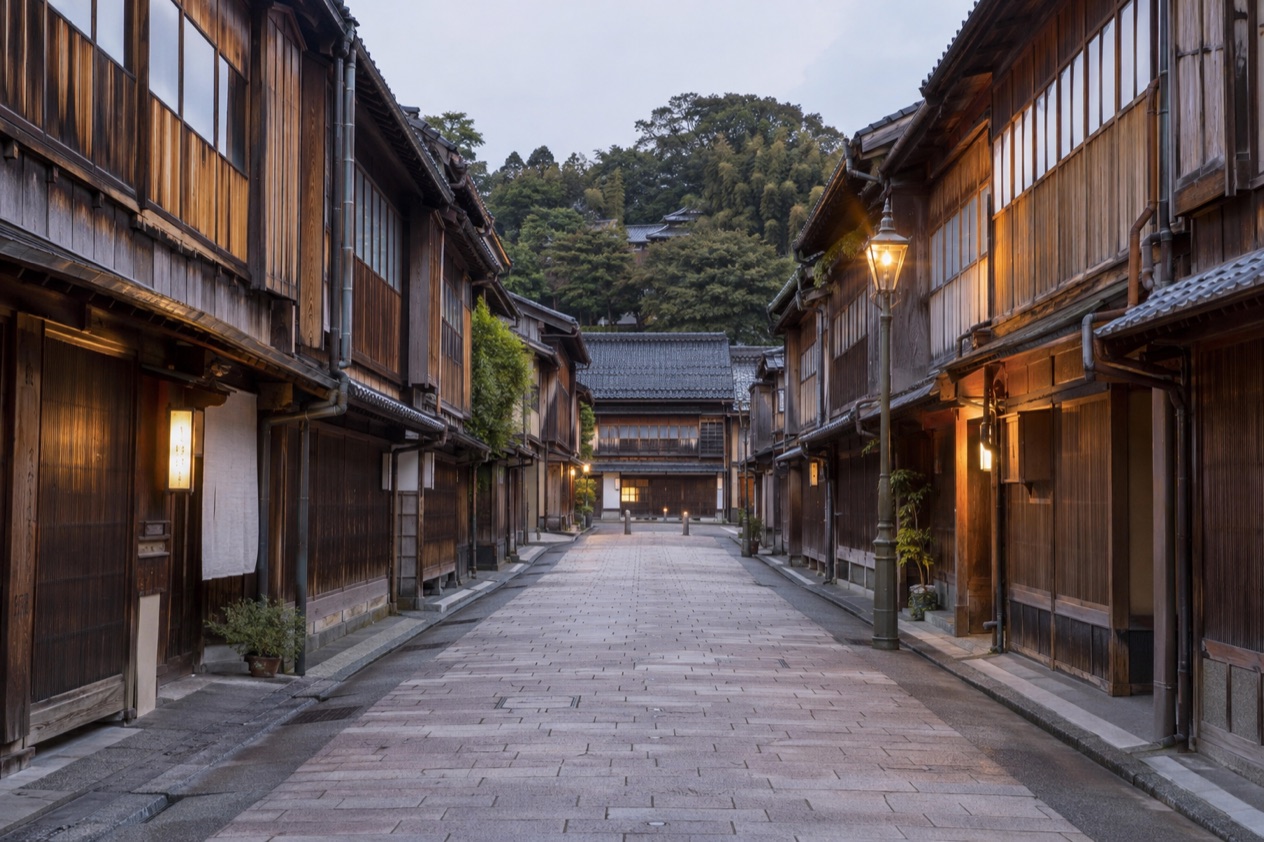
- Takayama, for a well-kept quarter of Edo-style streets in the Japanese Alps that earned it the nickname Little Kyoto of Hida.
- Toyama, for a city set between the sea and the mountains, on the same Hokuriku Shinkansen line that serves Kanazawa.
- Kenrokuen and Kanazawa Castle Park after dark, for a slower evening if you spend the day nearby and come home to the illuminations.
Not every outing has to cover distance. A day that leaves the city and returns for the evening light in the garden often feels the fullest, and the sections below help you choose between them.
The best day trips from Kanazawa
Shirakawa-go and Gokayama
Shirakawa-go can be reached by highway bus from Kanazawa, as it can from Takayama, Toyama and Nagoya. The village and its neighbor Gokayama, over the line in Toyama Prefecture, were registered together as a UNESCO World Heritage Site on December 9, 1995.
What you come for is the farmhouses, built in the gassho style, a name that means hands together, as in prayer. The steep thatched roofs recall palms pressed together, and their pitch exists to throw off the snow.
Shirakawa is one of the snowiest places in Japan, and that explains everything about the village. Walk between the houses and the rice fields, look at the deep eaves and the wooden frames, and notice how the whole settlement is arranged around the winter.
In summer the paddies are green and the roofs look like pictures from a calendar. In winter the same houses sit under a heavy white blanket, which is the scene most people have in mind when they book the trip.
Gokayama is the place to add if you want less of a crowd of cameras and more of the feel of a farm hamlet. It suits travelers who like architecture, rural landscapes and slow walking. Bring warm layers in the cold months, since this is snow country, and plan the return bus rather than leaving it to chance.
Takayama
Takayama sits in the heart of the Japanese Alps in Gifu Prefecture, and it has long been called Little Kyoto of Hida because its quarter of Edo-style streets has been so carefully preserved. The lanes are lined with dark wooden merchant houses, latticed fronts and eaves, and the old town reads as a place to wander rather than a list of sights. Shirakawa lies within 50 minutes of Takayama now that the Hida Tunnel is open, so the two are sometimes linked in a longer outing.
Takayama Station on the JR Takayama Line does not accept IC cards, so tickets for the local line must be bought in cash. Carry some yen before you set out. In April the cherry blossoms appear here from the middle to the end of the month, about three weeks after Nagoya, which gives the town a spring of its own.
This trip suits travelers who enjoy browsing small shops, looking at old townhouses and eating regional food without hurrying. Because it is a trip into the mountains, it fits best when you have a full day to give it rather than a stolen afternoon.
Toyama
Toyama is the capital of Toyama Prefecture, on the coast of the Sea of Japan, and it lies between the sea and the mountains. The Hokuriku Shinkansen serves it, and the line is covered by the Japan Rail Pass on the stretch from Tokyo. That makes Toyama a natural counterpart to Kanazawa, a city of the same coast and the same line, with a different mood.
Think of Toyama as a city day rather than a monument day. You come for the combination of harbor air and the backdrop of the mountains, the local seafood that belongs to a Sea of Japan port, and a break from the heritage lanes of Kanazawa. Snow falls on average through the winter here, almost all of it from December through March, so a winter trip needs coats and sturdy shoes.
It suits travelers who have already seen Kanazawa’s gardens and crafts and want a calmer, less itinerary-driven day. It also pairs with Gokayama in the same prefecture for anyone who prefers to stay on one side of the line.
Day trips from Kanazawa compared
| Trip | Best for | How to go |
|---|---|---|
| Shirakawa-go | Gassho farmhouses and snow-country scenery | Highway bus from Kanazawa |
| Gokayama | Farm hamlets in Toyama Prefecture, shared World Heritage listing with Shirakawa-go | Part of the same area as Shirakawa-go |
| Takayama | Edo-style streets in the Japanese Alps | JR Takayama Line station, cash tickets for local line |
| Toyama | A coastal city between sea and mountains | Hokuriku Shinkansen |
To choose, start with what you want to see. If the picture in your head is a thatched roof under snow, go to Shirakawa-go and consider adding Gokayama. If you would rather spend the day on old streets, shops and regional food, choose Takayama.
If you prefer a city by the water with mountains behind it, take the Shinkansen line to Toyama. In the cold months, remember that Shirakawa and Toyama both see heavy snow, which changes the clothes you pack and the mood of the day.
A last way to decide is to look at the evening. Kanazawa Castle Park and Kenrokuen Garden are illuminated at night, and Kenrokuen has free admission, so a day trip that returns to Kanazawa leaves room for a stroll through the lit garden before bed.
Tour or on your own?
A tour makes sense when the day hangs on a long road, a village with a lot to explain, or a program of several stops. Shirakawa-go is the clearest case, because its history and the logic of its roofs are what make it interesting, and a guide can put that into words. A tour also takes the timing off your hands when the route involves a mountain road or a connection between buses.
Going on your own gives you the freedom to linger. Shirakawa-go can be reached by highway bus from Kanazawa, so you can set your own pace in the village once you arrive. Toyama is a city served by the Hokuriku Shinkansen, so it needs little more than your own curiosity. Takayama rewards a day of unscheduled wandering, which a fixed program can cut short.
Before you commit to either, check a few things. Ask what a tour actually includes, which stops it makes and how long it leaves you in each place. For Takayama, carry cash for local line tickets, since the station does not accept IC cards.
For any mountain destination in winter, ask how snow affects the route and what time the last return leaves. Compare the options against the kind of day you want, quiet and self-directed or organized and explained, and pick the one that matches.
It also helps to think about who is traveling. A group with mixed interests may prefer the structure of a tour, while a pair who like to stop at every shop will be happier with a bus ticket and a free afternoon. Neither choice is wrong. They simply produce different days from the same starting point in Kanazawa.
Good to know before you go
Carry some yen in cash for small purchases and for local rail tickets, which in Takayama cannot be paid with an IC card. Pack for the weather of the mountains rather than the coast, especially in winter when Shirakawa and Toyama see deep snow.
Comfortable shoes help on village paths and old streets, and a flexible plan helps more than a tight one, since a delayed bus or a snowy road can rearrange a day. Return to Kanazawa with enough time to enjoy the lit paths of Kenrokuen.
Sources
- Japan National Tourism Organization, Kanazawa (https://www.japan.travel/en/destinations/hokuriku-shinetsu/ishikawa/kanazawa-and-around/), checked October 11, 2026
- Kanazawa Tourist Information Guide (https://www.kanazawa-tourism.com/), checked October 11, 2026
- Wikipedia, Kanazawa, Ishikawa (https://en.wikipedia.org/wiki/Kanazawa,_Ishikawa), checked October 11, 2026
- Wikivoyage, Kanazawa (https://en.wikivoyage.org/wiki/Kanazawa), checked October 11, 2026
- Wikipedia, Shirakawa-gō (https://en.wikipedia.org/wiki/Shirakawa-g%C5%8D), checked October 11, 2026
- Wikivoyage, Shirakawa-go (https://en.wikivoyage.org/wiki/Shirakawa-go), checked October 11, 2026
- Japan National Tourism Organization, Toyama (https://www.japan.travel/en/destinations/hokuriku-shinetsu/toyama/toyama-and-around/), checked October 11, 2026
- Wikipedia, Toyama (city) (https://en.wikipedia.org/wiki/Toyama_(city)), checked October 11, 2026
- Wikivoyage, Toyama (https://en.wikivoyage.org/wiki/Toyama), checked October 11, 2026
- Wikipedia, Takayama, Gifu (https://en.wikipedia.org/wiki/Takayama,_Gifu), checked October 11, 2026
- Wikivoyage, Takayama (https://en.wikivoyage.org/wiki/Takayama), checked October 11, 2026
To plan your stay
- Best Time to Visit Kanazawa: Cherry Blossoms, Autumn Color, Winter Snow and Festivals
- Where to Stay in Kanazawa: Station Area, Tea House Streets, Downtown and Ryokan Choices
- Kanazawa from Tokyo: Hokuriku Shinkansen, Komatsu Airport and a Day in the Gardens
- Know Before You Go to Kanazawa: Entry, Money, Getting Around and Local Etiquette