
Somewhere between the first brochure and the final booking, people planning a Japan cruise hit the same wall: spring blossoms or autumn maples, northern summer or a quiet winter harbor? The honest answer depends on what you want to see from the rail, and the calendar shapes the whole voyage, from the food at each port to the weather on deck. Think of the choice as picking a season for the country you want to watch slide past, with typhoon season as the one question to weigh alongside it.
When is the best time for a Japan cruise?
Spring is for people who want to watch cherry blossoms along the harbors, autumn is for maple leaves on the hills behind the ports, and summer and winter suit travelers drawn to festivals, seafood and a different mood in each city.
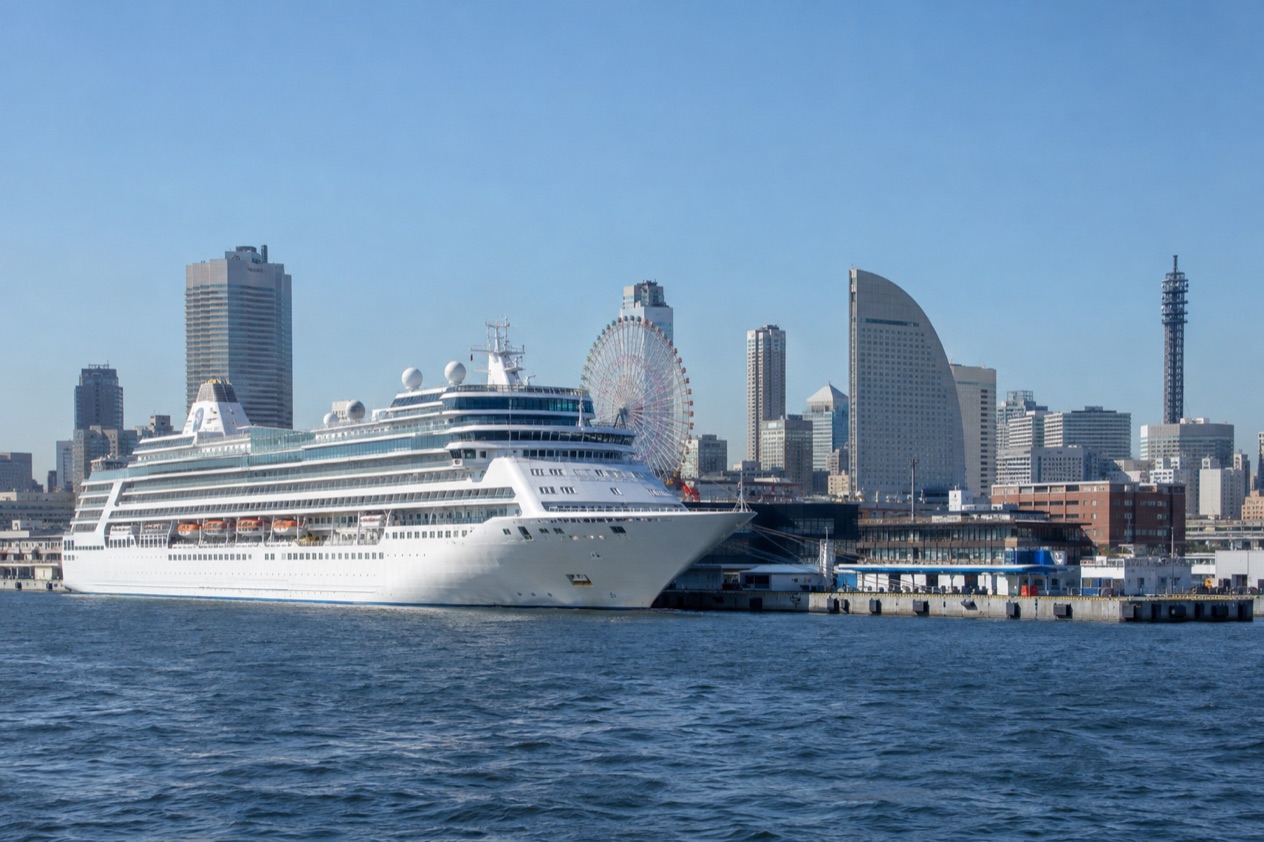
No single month wins for everyone. The cruise itself is the constant: a large passenger ship used mainly for vacationing, with dining included in the fare on almost all of them. What changes is the backdrop, so start from the scene you picture rather than from a date on a calendar.
Spring: blossoms and a lighter wardrobe
Spring in Japan is built around hanami, the habit of gathering under flowering cherry trees to eat, drink tea and simply look up. From a ship you meet it in pieces: pink along a castle moat in one port, along a river path in the next, on a hillside above a harbor after that. The blossoms move through the country over several weeks, so the timing of your sailing decides which cities you catch in flower.
This is the season for travelers who care about gardens, picnic boxes of bento and the soft light that comes with the flowers. Pair it with spring dishes such as bamboo shoots and sweets wrapped in cherry leaves, which turn up in shops and restaurants near every dock.
Autumn: maple color and harvest food
Autumn is the other season that Japan has made into a ritual. Maples turn red and orange around temples, shrine steps and mountain gardens, and the habit of going out to see them is as old as hanami. On a cruise, the ports become jumping-off points for those temple grounds, with the color arriving earlier in cooler places and later in warmer ones.
The table turns toward chestnuts, persimmons, mushrooms, new rice and grilled fish. It suits travelers who like to eat their way through a country and who prefer a day of walking among leaves to a day of beach time. Autumn also overlaps with the stormier part of the year in parts of Japan, which is why the typhoon question below matters for this season in particular.
Summer and winter: festivals and a different Japan
Summer is the season of matsuri, the neighborhood festivals with portable shrines, drums, paper lanterns and food stalls selling grilled skewers, shaved ice and chilled noodles. It is hot and humid in much of the country, and the northern island of Hokkaido is where travelers head for a cooler change of scene. A cruise lets you sample several festival towns without repacking.
Winter has its own pull: steaming bowls of ramen and hot pot, hot springs in the evening, and snow festivals in the north. Fewer travelers picture Japan in winter, and that is part of the appeal for those who like their sightseeing with a bit of cold air and a warm meal at the end of it.
Repositioning cruises and the shape of the season
A cruise ship moving from one region to another will commonly operate a repositioning cruise while doing so. That matters for Japan because the ships you see in Japanese waters may be passing through on a longer journey, and their routes can look different from a fixed round trip out of a single port. If a repositioning voyage appeals, it is worth comparing it with a standard itinerary on what each one actually visits.
Cruise lines also differ in character. Star Clippers sails only tall ships, Regent Seven Seas runs medium-sized vessels designed so that virtually all suites have balconies, and Saga Cruises allows only passengers over 50. Choosing the line is as much a part of timing as choosing the month, because the ship decides how you spend the hours between ports.
What changes from month to month?
What changes most from month to month is the scenery you step into at each port, along with the food, the festivals and the weather that goes with them. The ship stays the same, and the meals aboard stay the same, but the country outside the window keeps turning over through the year.
Food at the port changes with the season
A good reason to care about the month is the market. Seafood, fruit and vegetables arrive in a rhythm that Japanese cooks follow closely, and the same city can taste quite different in spring and in autumn. Port cities are well placed for this, since fish markets and seafood counters sit close to the water.
Kobe is the obvious example on the cruise map, and its name is tied in travelers’ minds to Kobe beef, along with bakeries and sweets with a long port-city history. Dining on almost all cruise ships is included in the cruise price, so a day ashore is the chance to eat something the ship does not serve.
Kobe, a port built on artificial islands
The Port of Kobe is a Japanese maritime port in Kobe, in Hyogo, within the Keihanshin area and backed by the Hanshin Industrial Region. Flat land there is limited, so artificial islands have been built to make room: Port Island, Rokko Island and the island of Kobe Airport. When your ship arrives, you are arriving at a place that has literally been made larger by hand.
The season you pick changes how you spend the day from this port, whether that means looking for blossoms, color in the hills or a harbor stroll in cold air followed by a hot meal. Kobe is a name worth looking for on an itinerary, but the days ashore are what make a cruise memorable, not the dock itself.
What your fare covers as the months change
One thing stays steady all year: all cruise packages include accommodation, meals and entertainment, though extra fees may be charged for alcohol, fine dining, spa treatments and shore excursions. That is useful when you compare months, because the extras you add ashore are where a spring blossom trip and a winter hot spring trip may feel different.
So think about which extras fit your season. A day of organized sightseeing among autumn leaves, a spa treatment after a cold day in the north, a special dinner after a festival: each is a choice you make on top of the base fare, and you can decide which ones suit the month you chose.
What about typhoon season?
Typhoon season is a real part of the question and deserves a place in your planning, even though no month is a guarantee either way. Like any sea voyage, a cruise lives with the weather, and storms are one of the reasons a season is worth thinking about before you commit to a date.
The practical point is to treat the timing as one factor among several rather than as the only one. You are balancing what you want to see against the chance that the weather has other ideas, and an itinerary that suits you in good conditions still needs to suit you when plans shift a little.
Weighing storms against the scenery you want
If autumn color is your goal, you are choosing a season that overlaps with part of the stormier time of year in some places, so it helps to be at ease with a flexible day. If you are drawn to spring blossoms or to winter, you are choosing different conditions and different trade-offs, with their own rain, wind and cold to plan around.
None of this is a reason to stay home. It is a reason to look closely at the itinerary, to see how many ports it includes and how it could adjust if one day goes differently. Cruises with a long list of calls leave more room for the unexpected than a single anchor point does.
Choosing a ship and a route with the weather in mind
The ship you pick shapes how a rough patch feels. A large cruise ship is used mainly for vacationing and is built around its onboard life, with dining included and entertainment on offer, so a day at sea can still be a pleasant one. A tall ship from Star Clippers gives a very different experience, closer to the water and the wind, which suits sailing enthusiasts more than anyone chasing a quiet deck chair.
Regent Seven Seas offers medium-sized vessels with balcony suites, which means that if the weather keeps you in, your own balcony is part of the view. Whichever line you choose, remember that excursions are extras, so on a day when plans change, you can decide what to add or skip.
Good to know before you go
Money matters on a cruise mostly in the extras: alcohol, fine dining, spa treatments and shore excursions are charged on top of a package that already covers your cabin, meals and entertainment. Keep the typhoon season in mind when you choose your dates, and let the scenery you want guide the rest. A Japan cruise rewards a traveler who picks a season on purpose, then spends the days ashore on a market, a garden or a bowl of something hot.
Sources
- Wikipedia, Cruise line (https://en.wikipedia.org/wiki/Cruise_line), checked October 11, 2026
- Wikipedia, Cruise ship (https://en.wikipedia.org/wiki/Cruise_ship), checked October 11, 2026
- Wikipedia, Port of Kobe (https://en.wikipedia.org/wiki/Port_of_Kobe), checked October 11, 2026
To plan your stay
- Celebrity Japan Cruises: Asia Voyages, Hiroshima and Tokyo Sights, and the Port of Kobe
- Cruises from Los Angeles to Japan: Departure Port, Yokohama Arrival and Crossing Length
- How Much Does a Japan Cruise Cost?: What the Fare Covers, Drinks and Shore Excursions
- Holland America Japan Cruises: Asia Sailings, Ports and Ships