
On a September evening in Osaka Bay, the air is still thick and warm, and the lights of the port reflect on water that has held the day’s heat. Cruising Japan in this month means sailing between a humid, sultry south and a Hokkaido that is already turning cooler. It suits travelers who like to change climates from one port to the next and see the country from the water.
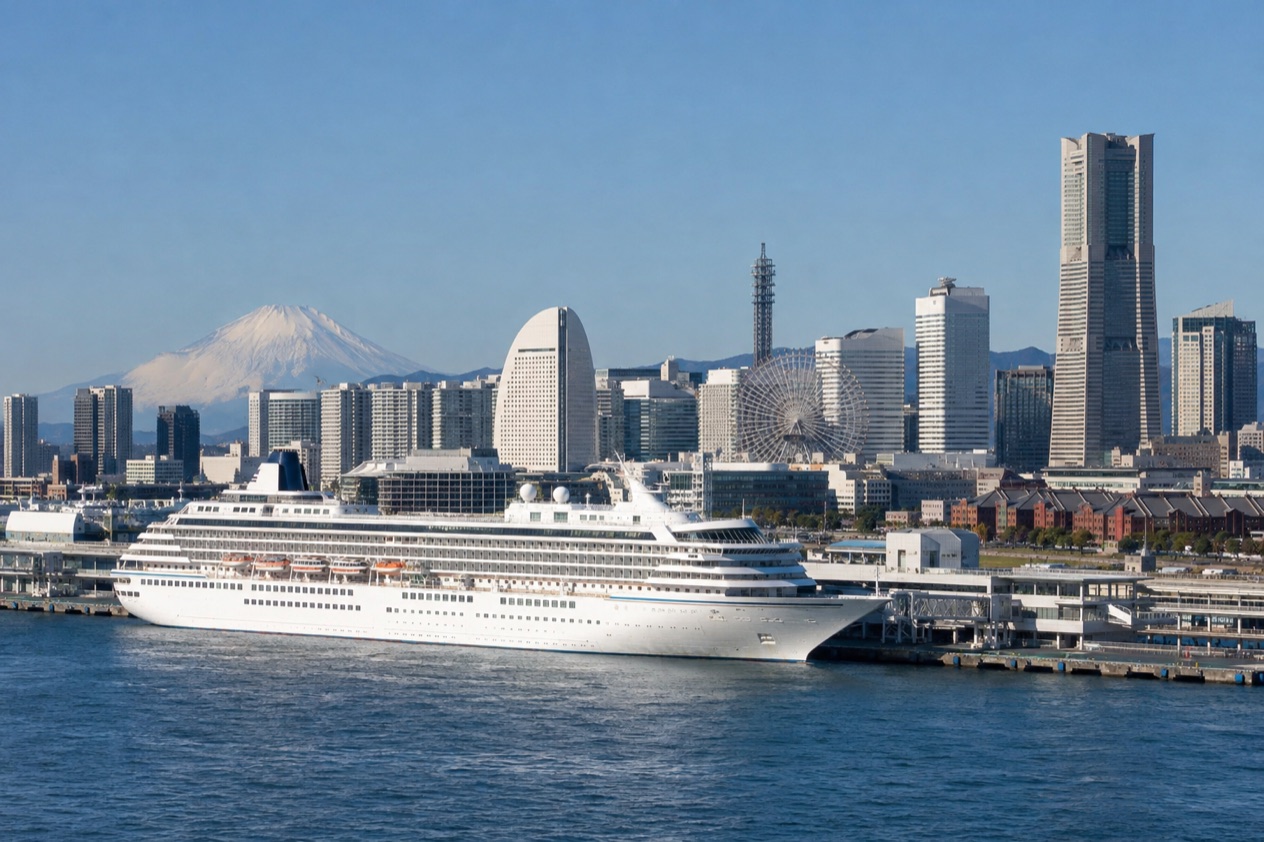
What is a Japan cruise like in September?
A Japan cruise in September is a floating hotel that links very different climates, with long, hot, humid days in the south and a noticeably cooler air in Hokkaido. Cruise ships are large passenger ships used mainly for vacationing, and that shapes the rhythm of the trip: you unpack once, wake up in a different harbor, and spend your days ashore or at sea as you please.
Japan stretches from Hokkaido in the north to the subtropical islands of Okinawa, so a single sailing can feel like crossing several seasons. The Pacific side, Osaka Bay and the southern islands share the heavy air of late summer. Farther north, the evenings ask for a layer, and the idea of a light sweater starts to make sense.
Life on board
Dining on almost all cruise ships is included in the cruise price, so meals in the main restaurants and buffets are part of the fare. Most cruise lines do not include alcoholic beverages in their fares, and passengers are expected to pay for drinks as they consume them. That shapes how a day on board works: breakfast before the gangway, a lunch ashore or on the ship, and a sunset drink on deck as the coast slides past.
Ashore, the pleasure of a Japan port call is eating local. A bowl of ramen near the harbor, a skewer of grilled chicken, takoyaki (battered octopus balls) in Osaka or a seafood rice bowl in Hokkaido can fill the hours before you walk back up the gangway.
Ports in the Osaka and Kobe area
The Port of Osaka is the main port in Japan, located in Osaka within Osaka Bay, and it has a sister port relationship with the Port of Busan. The Port of Kobe sits in Kobe, Hyogo, in the Keihanshin area, backgrounded by the Hanshin Industrial Region. Flat land is limited there, so artificial islands were built, including Port Island, Rokko Island and the island of Kobe Airport.
Kobe was the world’s busiest container port from 1973 to 1978, a reminder that these harbors are working waterfronts as much as arrival points. From a ship, you see cranes, bridges and the new islands rising from the bay before the city itself comes into view.
What is the weather in September?
September weather depends on the port: hot and sticky in Osaka and Tokyo, hotter still in Okinawa, and clearly cooler in Sapporo. The mainland islands of Honshu and Kyushu are known for very humid, hot and sultry summers, and early September still feels like summer there.
| Port | Avg high (°F) | Avg low (°F) | Precipitation (in) | Days with rain (1 mm+) | Sunshine (hours) | Humidity (%) | Daylight Sept. 15 |
|---|---|---|---|---|---|---|---|
| Tokyo | 81.5 | 68.5 | 8.85 | 11.0 | 127 | 75 | 12 h 27 min |
| Osaka | 85.1 | 71.4 | 6.02 | 9.5 | 162 | 67 | 12 h 27 min |
| Naha, Okinawa | 87.1 | 78.4 | 10.83 | 11.8 | 181 | 75 | 12 h 21 min |
| Sapporo | 73.0 | 58.6 | 5.60 | 10.2 | 159 | 71 | 12 h 34 min |
Tokyo and Osaka: warm nights, sticky air
In Tokyo, afternoons are warm and evenings barely cool off, so the air stays heavy after dark. Rain shows up on about a third of the days, and September is a wet month there, with gray, drizzly spells alongside brighter ones. Short sleeves and an umbrella fit the month.
Osaka runs hotter in the afternoon and a little drier than Tokyo, with more sunshine and less humid air. It still feels like midsummer on a sunny day, and a port visit is best planned around shade, air-conditioned museums and long lunches.
Okinawa: the warmest stop
Naha is the warmest place on the list, with nights that hardly cool at all and plenty of sun between rainy spells. The sea near Naha averages in the mid-80s, which feels like bathwater compared with most coasts. The rain here is the heaviest of the four ports, and it comes in showers and wetter stretches.
Sapporo: the first hint of autumn
Sapporo has the mildest afternoons and the coolest evenings of the four. Days are comfortable for walking, and a light layer is useful after dark. It is the one place on this list where September can feel like the start of autumn rather than the end of summer.
What do you see in September?
In September you see ports at the tail end of summer, with the first signs of autumn arriving from the north, and a coastline that is still green.
Harbors and skylines from the deck
Arrivals are the best show. Sailing into Osaka Bay, you pass container terminals, long bridges and the artificial islands that Kobe built where flat land ran out. Days are a little longer than twelve hours, so there is time for both a morning arrival and an evening departure with the lights coming on.
Ashore, you can wander the cities at your own pace. Osaka offers its food streets and canal-side neighborhoods, Kobe has its waterfront and Port Island, and Tokyo has districts for every mood. The heat and humidity push most days toward a slow rhythm, with indoor stops in the middle.
Mountains and the end of climbing season
Mount Fuji’s climbing season typically runs from the beginning of July to about the first week of September. If your sailing falls early in the month, the season is just closing, and later in September you will see the mountain from a distance rather than from its trail.
Leaves are still to come
Autumn in Japan gradually becomes milder after summer, with moderate temperatures ideal for walking, but the colors come later. Brilliant reds, yellows and oranges appear from mid-November to early December. In Aomori the maple color change usually arrives around November 13, and in Fukuoka around December 1. September is the wait before all that, so plan for green landscapes and summer light.
Is September a good month for a Japan cruise?
September is a good month for travelers who enjoy warm weather and want to see several climates in one trip, and a less good one for anyone who dislikes humid heat. The south and the main cities are still hot and sultry, while Hokkaido is the relief on the itinerary.
Who it suits
It suits travelers who like heat, sea air and long days on deck, and who do not mind a shower now and then. Okinawa’s warm sea and Osaka’s sunny afternoons reward them, and a sailing that reaches Sapporo gives a cooler end to the trip.
It suits less well anyone hoping for crisp autumn air and fall color. Tokyo’s wetter, stickier days can feel heavy, and a rainy spell can turn a port day into a museum day. Plan indoor options for each stop.
Weather and storms at sea
The Japan Meteorological Agency issues Emergency Warnings to alert people to the significant likelihood of catastrophes in association with natural phenomena of extraordinary magnitude, a system it launched on 30 August 2013. On a cruise, itineraries can change with the weather, and the Japan National Tourism Organization offers a Japan Safe Travel Information page with safety tips and government information for travelers. The sensible approach is to pack for heat and rain together: light clothes, a compact umbrella, comfortable shoes and a thin layer for the evenings, especially if Hokkaido is on the route.
Good to know before you go
Meals are generally part of the cruise fare, while drinks are usually paid for as you go, so budget for them on board. September is a wet month in several ports, with rain on roughly a third of the days in Tokyo and Naha, so a light rain jacket earns its place in the suitcase.
For travelers with children, the Japan National Tourism Organization’s Paris office offers brochures on family travel in Japan and on nature and adventure. Keep the Japan Safe Travel Information page in mind for official guidance while you are moving between ports.
Sources
- Japan Meteorological Agency (JMA), Normal values 1991-2020, monthly (https://www.data.jma.go.jp/stats/etrn/view/nml_sfc_ym.php?prec_no=44&block_no=47662), station Tokyo, elevation 25 m, checked October 11, 2026
- Computed from the date and the latitude of the place (sunrise equation, solar elevation -0.833 degrees), October 11, 2026
- Japan Meteorological Agency (JMA), Normal values 1991-2020, monthly (https://www.data.jma.go.jp/stats/etrn/view/nml_sfc_ym.php?prec_no=62&block_no=47772), station Osaka, elevation 23 m, checked October 11, 2026
- Japan Meteorological Agency (JMA), Normal values 1991-2020, monthly (https://www.data.jma.go.jp/stats/etrn/view/nml_sfc_ym.php?prec_no=91&block_no=47936), station Naha, elevation 28 m, checked October 11, 2026
- Open-Meteo Marine API, average 2015-2024, checked October 11, 2026
- Japan Meteorological Agency (JMA), Normal values 1991-2020, monthly (https://www.data.jma.go.jp/stats/etrn/view/nml_sfc_ym.php?prec_no=14&block_no=47412), station Sapporo, elevation 17 m, checked October 11, 2026
- Japan Meteorological Agency, Emergency Warnings (https://www.jma.go.jp/jma/en/Emergency_Warning/ew_index.html), checked October 11, 2026
- Japan National Tourism Organization, safety information (https://www.japan.travel/en/japan-safe-travel-information/), checked October 11, 2026
- Japan National Tourism Organization, weather and seasons in Japan (https://www.japan.travel/en/plan/weather/), checked October 11, 2026
- Japan National Tourism Organization, summer in Japan (https://www.japan.travel/en/guide/summer-guide/), checked October 11, 2026
- Wikipedia, Climate of Japan (https://en.wikipedia.org/wiki/Climate_of_Japan), checked October 11, 2026
- Japan Meteorological Agency, maple color-change dates 2025-2026 with difference from the 1991-2020 normal (https://www.data.jma.go.jp/sakura/data/phn_014.html), checked October 11, 2026
- Japan Meteorological Agency, kaede2020.pdf (https://www.data.jma.go.jp/sakura/data/kaede2020.pdf), checked October 11, 2026
- Japan National Tourism Organization, autumn in Japan (https://www.japan.travel/en/guide/autumn-guide/), checked October 11, 2026
- Japan National Tourism Organization, spring in Japan (https://www.japan.travel/en/guide/spring-guide/), checked October 11, 2026
- Wikipedia, Cruise ship (https://en.wikipedia.org/wiki/Cruise_ship), checked October 11, 2026
- Wikipedia, Port of Kobe (https://en.wikipedia.org/wiki/Port_of_Kobe), checked October 11, 2026
- Wikipedia, Port of Osaka (https://en.wikipedia.org/wiki/Port_of_Osaka), checked October 11, 2026
To plan your stay
- Celebrity Japan Cruises: Asia Voyages, Hiroshima and Tokyo Sights, and the Port of Kobe
- Cruises from Los Angeles to Japan: Departure Port, Yokohama Arrival and Crossing Length
- How Much Does a Japan Cruise Cost?: What the Fare Covers, Drinks and Shore Excursions
- Holland America Japan Cruises: Asia Sailings, Ports and Ships