
The Dodecanese sit in the far southeast corner of the Aegean, between the Greek mainland and the Turkish coast. Each main island has its own mood: knights and medieval walls on Rhodes, sponge divers and mansions on Kalymnos, a cave with dwarf elephant finds on Tilos. Pick two or three, plan around the ferries, and aim for May, June, September or October.
What are the Dodecanese islands, and what do they share?
The name comes from the Greek for twelve islands, but the group holds more than 160 islands and islets. The name means Twelve Islands, but the group actually includes 14 larger islands plus over 40 smaller islets and rocks, so counts you come across may differ. The main ones are Rhodes, Kos, Karpathos, Kalymnos, Leros, Patmos, Symi, Astypalea, Nisyros, Tilos, Chalki and Kasos. Lipsi, Arki and Agathonisi fill out the map.
Knights, Ottomans and Italians all left their mark. The islands were under Italian rule until 1947, and that period still shows in the architecture and town planning. The food is Greek with Turkish, Italian and Middle Eastern echoes: pitaroudia (chickpea fritters) on Symi, lakani (slow-cooked lamb) on Rhodes, and makarounes (handmade pasta with caramelized onions) on Karpathos.
Rhodes aside, most of the islands are dry and fairly bare, until a port or a valley suddenly turns green. Islanders live from farming, sponge fishing and, more and more, visitors.
Which Dodecanese island is right for me?
The big islands absorb crowds easily, while the small ones repay the extra ferry time with quiet.
Rhodes
Rhodes has a cosmopolitan feel, with a well-developed tourist scene and a long history that sits comfortably beside modern comforts. Its medieval Old Town is a UNESCO site, a walled city with the Street of the Knights and the Palace of the Grand Master. Beyond town lie Ancient Kamiros, the acropolis of Lindos high above the sea, and the Valley of the Butterflies, where thousands of butterflies gather in the summer months. Lindos gets crowded during the season, so arriving early or late in the day lets you wander among the locals. The rest of the island mixes resorts, villages, mountains and beaches, and the summer here runs longer than on any other Greek island. You'll need a car for the quieter corners. Rhodes suits families, history fans and beach lovers.
Kos
The birthplace of Hippocrates is largely flat, and its network of cycle paths makes it a natural bike island. See the Asklepieion, where Hippocrates taught, the Roman Casa Romana with its mosaics, and Antimachia Castle, then stop in the mountain village of Zia for the views. At Therma Beach, hot springs run into the sea. Kos is good for couples, cyclists and beach lovers.
Patmos
St. John is said to have written the Book of Revelation here. Above the port of Skala you will find the Monastery of Saint John the Theologian, and the Monastery of the Apocalypse marks the cave of his vision of the end of the world. Cruise ships make Patmos busy by day, but it turns quiet at night. Chora counts among the most beautiful villages in Greece. Patmos suits spiritual travelers and anyone seeking calm.
Karpathos
Windy, mountainous and deeply traditional, Karpathos is a favorite with windsurfers and hikers. The mountain village of Olympos was isolated for centuries, still keeps medieval customs and crafts, and has a lively ethnographic museum. Pigadia, the capital, has hotels and restaurants along an active waterfront. Some beaches, like Achata, are usually reached by boat or a challenging hike. It rewards travelers who come to watch, listen and learn; party seekers will be disappointed.
Symi
Arriving by ferry is the show: neoclassical mansions in ochre, terracotta and gold rise around Gialos harbor. Walk the 500 steps of Kali Strata up to the upper town, then take one of the small boats from Gialos to a bay for a swim. Many people visit on a day trip from Rhodes, though Symi works well as a base too. Make time for Panormitis Monastery.
Kalymnos
Once known mainly for its sponge divers, Kalymnos now draws climbers to more than 3,000 routes on its limestone cliffs, and hosts a well-known climbing festival. Pothia is a working harbor town with a sponge museum and old mansions. Try the thyme honey. Nearby Telendos and Pserimos are known for their tranquility, and their local festivals serve revithada, a chickpea stew. Kalymnos suits active travelers and anyone curious about a working island.
Astypalea
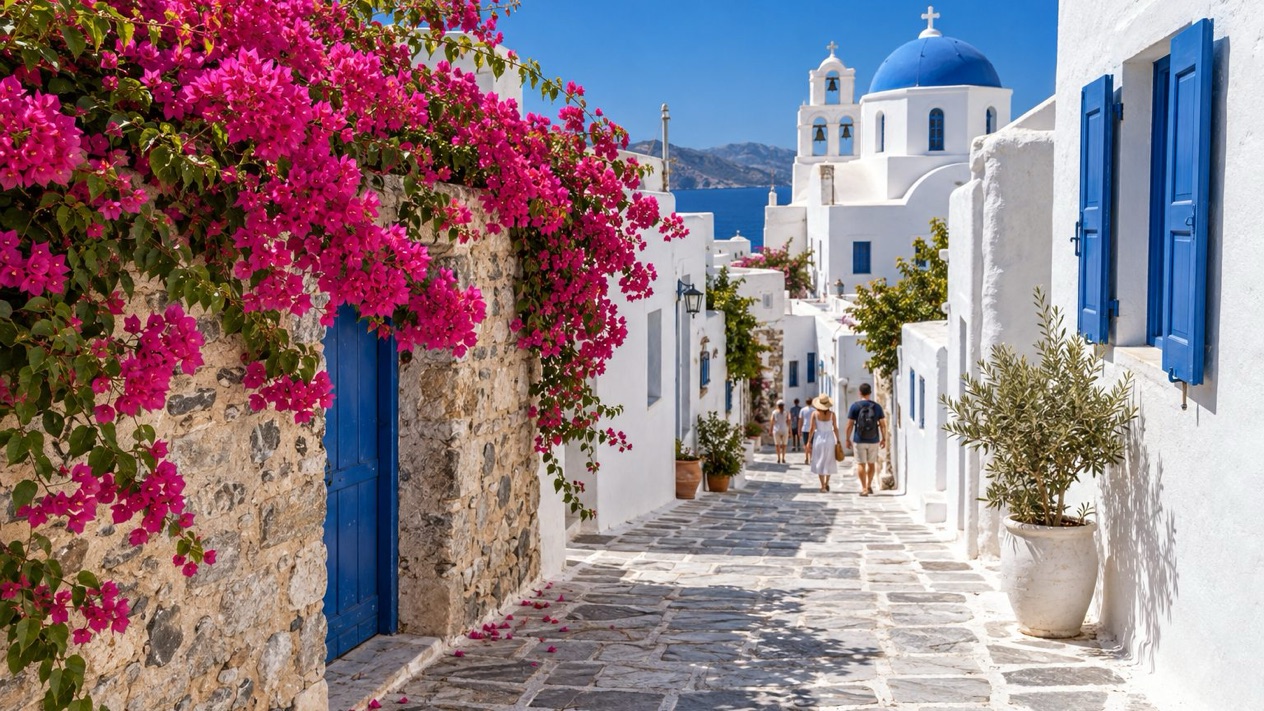
Shaped like a butterfly, Astypalea has a dazzling white Hora crowned by a Venetian castle. With its geometric white houses and maze of lanes, it feels more Cycladic than Dodecanese. Astypalea has an airport, with flights from Athens. It suits couples and photographers.
Nisyros
This is a volcano you can walk into. Mandraki, the main town, has a relaxed nightspot or two. Nisyros is good for hikers and the curious.
Tilos
Quiet and eco-minded, Tilos is known for walking, deserted villages, uncrowded beaches and birdlife. Harkadio Cave yielded dwarf elephant bones, and some are displayed in the town hall. Livadia has plenty of places to stay. It suits hikers, bird-watchers and nature lovers.
Chalki, Kasos and Kastellorizo
Chalki is tiny and elegant, with mansion houses, a single settlement, Nimporio, and almost no cars. Kasos is the southernmost of the group, a traditional place where feast days bring lyres and lutes to life, and boat trips head out to the golden beaches of the little islet of Armathia. Kastellorizo lies far out on its own, about half a mile from the Turkish coast. Two-story houses in bright colors line its little harbor, and its coastline of rocky coves, with no sandy beaches, makes for some of the best snorkeling in Greece. All three suit travelers who want to feel far away.
Lipsi, Leros and the small ones
Lipsi is gentle and walkable, with a dozen beaches within reach of the port. Leros has Italian architecture, sheltered bays for swimming and a rich underwater world for divers. On Arki and Agathonisi you can watch rare birds and admire traditional houses built around inner courtyards.
How do you get to the Dodecanese?
Rhodes and Kos have international airports, with seasonal direct flights from European cities. Daily flights from Athens and Thessaloniki also serve Rhodes, Kos and Astypalea.
By sea, ferries leave Piraeus in the late afternoon and reach Rhodes about fifteen hours later, stopping at Patmos, Kalymnos, Leros and Kos on the way. A cabin makes the overnight run far more comfortable. Boats also sail from Kavala and from other Aegean islands.
How do you get around between islands?
Regular ferries link the main islands, high-speed catamarans cut travel times, and car ferries suit longer stays. Rhodes is the hub, with daily boats to Symi. Chalki has its own passenger ferry, with frequent daily sailings from Kamiros Skala on the west coast of Rhodes, while ferries from Rhodes Town call there about twice a week. Tilos gets several ferries a week.
The remote islands take more planning. Kasos sees about two boats a week from Piraeus, and Karpathos a couple, though Kasos also has flights to Athens, Karpathos and Rhodes. Kastellorizo has daily summer flights from Rhodes and ferries twice a week.
Small excursion boats make day trips from many ports. For sailors, the main charter bases are on Rhodes and especially Kos. Greece charges a fee on leisure vessels over seven meters long in its waters, so ask your charter company how it's handled.
On land, Rhodes and Kos reward a rental car, and Kos's cycle paths make a bike a fine alternative. Symi and Chalki are easy on foot.
When is the best time to visit the Dodecanese?
May, June, September and October are the sweet spot: warm, sunny and less crowded, with ferry schedules at their most reliable. The islands average more than 300 days of sunshine a year, and spring and fall are best for hiking. Swimming is best from late May to late September.
July and August bring the warmest weather, 82 to 90°F (28 to 32°C), the most frequent ferry connections and the liveliest festivals and events. Beaches and sights are packed, Rhodes and Kos most of all, while the smaller islands stay pleasant even then.
What should Americans know before going?
U.S. citizens can visit Greece without a visa for up to 90 days of tourism. Your passport should have at least three months of validity beyond your planned departure date, and a passport you've reported lost or stolen won't get you in. Be ready to show proof of sufficient funds and a return or onward ticket if asked. Once there, carry your passport or a photo ID at all times.
Greece is generally safe, but petty crime is common at popular tourist spots, and thieves break into rental cars to steal passports, valuables and luggage, so take your belongings with you when you park. Strikes and demonstrations can halt ferries, seaports and airports with little notice, so leave slack in an island-hopping plan. Forest fires are common in the dry summer and occasionally close roads.
If you drive, Greek law requires you to carry a valid U.S. license, and insurance companies may require an international driver’s permit. Greece has one of the highest traffic fatality rates in the EU, and motorcyclists must wear a helmet.
Sources
- Visit Greece (GNTO) (https://www.visitgreece.gr/en/islands/dodecanese), checked October 18, 2026
- thethinkingtraveller.com (https://www.thethinkingtraveller.com/blog/the-12-islands-in-greece-discover-the-dodecanese), checked October 18, 2026
- sailingissues.com (https://sailingissues.com/greekislands/dodecanese.html), checked October 18, 2026
- discovergreece.com (https://www.discovergreece.com/travel-ideas/best-of/8-hidden-gems-dodecanese-islands), checked October 18, 2026
- greektravel.com (https://www.greektravel.com/greekislands/dodecanese.htm), checked October 18, 2026
- U.S. Department of State (https://travel.state.gov/content/travel/en/international-travel/International-Travel-Country-Information-Pages/Greece.html), checked October 15, 2026
- U.S. Department of State (https://travel.state.gov/content/tsg_aem/us/en/home/international-travel/travel-advisories/destination.grc.html), checked October 15, 2026