
GULF ISLANDS NATIONAL SEASHORE · SEPTEMBER · FLORIDA · MISSISSIPPI
Most American school years are back in session by September, yet the Gulf off Gulf Islands National Seashore stays close to its summer warmth. The sea surface averages 85.9°F this month, against 87.8°F in August, while the average afternoon high eases to 88.5°F. For travelers free after Labor Day, that pairing means long swims off Santa Rosa Island, Perdido Key or the Mississippi islands without the full weight of August heat.
September also sits at the heart of the Atlantic hurricane season, which NOAA dates from June 1 to November 30 with a statistical peak around September 10 (our Florida orientation has the details). Rain falls on 5.3 days in an average September at the station behind our normals, down from 8.1 in August. The choice comes down to warmer water now or drier, cooler days in October, and the figures below let you weigh both.
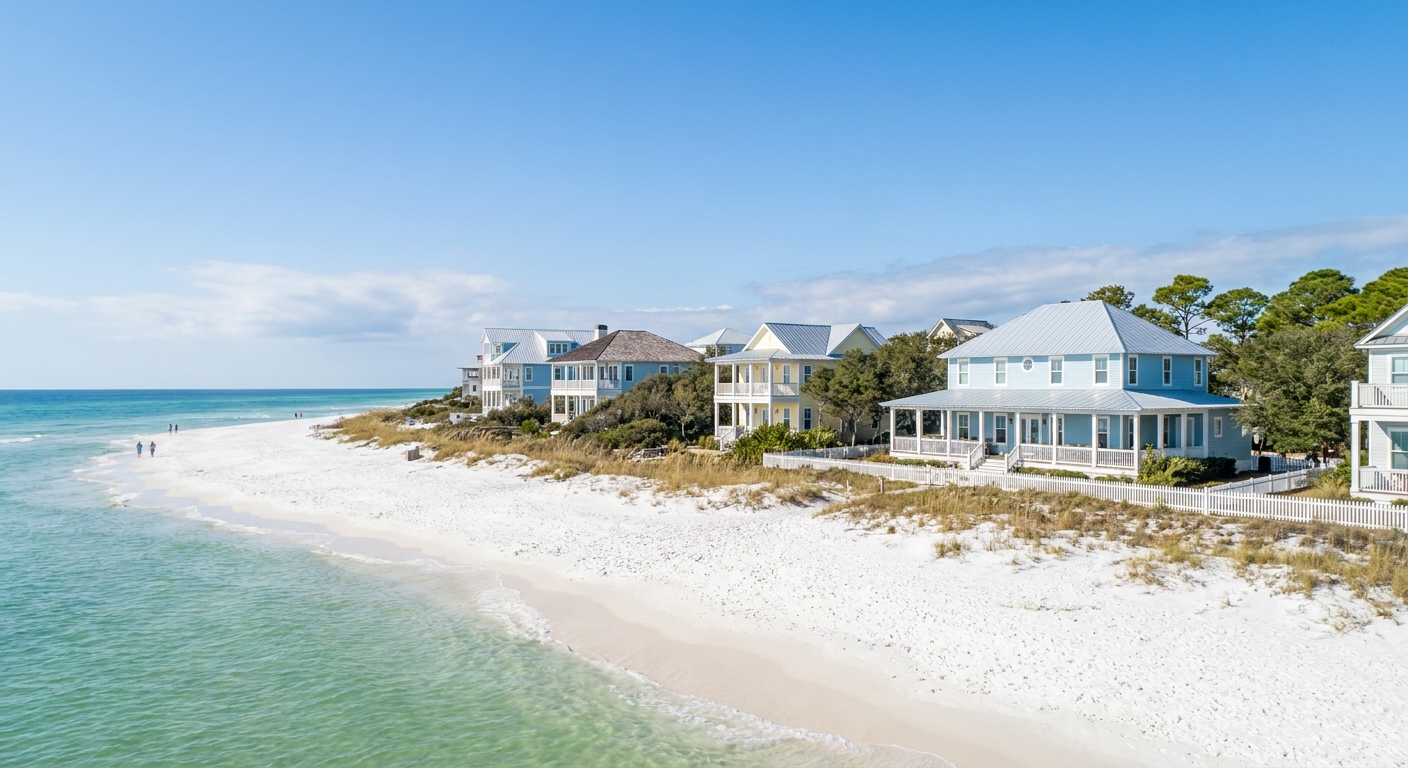
SEPTEMBER AT A GLANCE · GULF ISLANDS NATIONAL SEASHORE
Go in September for an 85.9°F Gulf and 88.5°F afternoons, and book every room and car refundable, because the month sits at the peak of hurricane season.
HIGH 88.5°F · SEA 85.9°F · 5.3 WET DAYS · STORM-SEASON PEAK
Go for: long swims in warm Gulf water, early visits to Fort Pickens and a sunset close to 6:50 p.m. Central time.
Think twice before: locking in nonrefundable dates around September 10, or planning long trail days in 88.5°F afternoons.
Climate: NOAA NCEI station USW00053853 · Sea: Open-Meteo Marine API · Light: sunrise-sunset.org · full sources at the end
On this page
- September highs, lows and rain88.5°F afternoons and 5.3 wet days
- Swimming in SeptemberA sea surface near 85.9°F
- Crowds and prices in SeptemberRefundable booking and the storm peak
- Things to do in SeptemberForts, beaches and trails by time of day
- A two-day September itineraryTwo days from a 6:28 a.m. sunrise to a 6:50 p.m. sunset
- September vs August and OctoberHighs of 90.6°F, 88.5°F and 80.9°F side by side
- Is September a good time to visit?Yes for swimmers who book refundable
Getting here and sleeping near the sand belong to our statewide guides. Flights into Florida helps you pick an airport, and Pensacola is the natural arrival point for the Florida units of the seashore. Where to stay in Florida covers lodging, and getting around explains car rental, the default for a park spread across two states. For a September weekend, two nights fit the itinerary below. Four nights let a stormy day slide without costing the trip.
Gulf Islands National Seashore weather in September: average highs, lows and rain days
| September normal | Value |
|---|---|
| Average high | 88.5°F |
| Average low | 72.4°F |
| Precipitation | 5.18 in |
| Days with 0.10 in or more | 5.3 |
| Days with 1 in or more | 1.5 |
| Daylight on Sep 15 | 12 h 23 min |
| Sea surface (mean of daily maxima, 2015-2024) | 85.9°F |
The normals below are official NOAA NCEI figures for 1991-2020, read from a real thermometer at station USW00053853 in South Walton, not from a reanalysis grid cell. They give September an average high of 88.5°F, an average low of 72.4°F and 5.18 inches of rain. The station sits east of the seashore. The park runs 160 miles west from there into Mississippi, so read every figure here as a picture of its eastern end. Davis Bayou and Ship Island, at the Mississippi end, can differ.
Measurable rain, at least 0.10 inch, falls on 5.3 days in an average September, or roughly one day in six. A real soaking of an inch or more comes on 1.5 days, about one day in twenty. The Florida wet season, with its afternoon thunderstorms, runs May through October (our best-time guide covers the pattern statewide). Put beach hours in the morning and keep the afternoon flexible.
Nights run 16.1°F cooler than afternoons, from the 88.5°F average high to a 72.4°F low. That low is still shorts-and-T-shirt weather, so the jacket stays home. Pack for sun and sudden rain instead: a wide-brimmed hat, sunscreen, a refillable bottle, sandals that can get wet and a light rain shell for the days that bring an inch or more.
On September 15 the seashore gets about 12 hours 23 minutes of daylight. The sun rises at 6:28 a.m. and sets at 6:50 p.m. Central Daylight Time, the zone used across the park’s Florida and Mississippi units. The softest light on the dunes comes in the half hour before sunset, so be on the sand by 6:15 p.m.
Can you swim in Gulf Islands National Seashore in September? Sea temperature and what it feels like
Open-Meteo’s Marine API puts the September sea surface off the seashore at 85.9°F, averaged over 2015 to 2024. That figure is a mean of daily maxima, the warmest reading of each day, so it runs a shade warmer than a 24-hour average and may sit above tables built that way. It also comes from a different source and period than the NOAA air normals, and we keep the two apart.
For anyone wading in, 85.9°F water sits just 2.6°F under the 88.5°F average high, close enough that a swim refreshes without any shock of cold. Children can stay in for long stretches, and snorkelers on the calmer sound side will not need a wetsuit for warmth. Take shade and water breaks on the sand anyway, since the heat on an open beach builds toward midday.
We could not read wind or swell data for September, so we give no wave heights. Check the National Weather Service surf forecast and any beach warning flags each morning, and follow the tropics through the National Hurricane Center in the days before you drive out. Our Florida safety guide covers rip currents and water safety.
How busy is Gulf Islands National Seashore in September? Crowds and prices
September starts on the far side of the summer school holidays, with Labor Day weekend on its first Monday. We found no occupancy series and no monthly hotel-rate data, so we crown no month the cheapest and quote no discount. By the school calendar, the family summer season along this coast ends with that holiday Monday.
We could not verify typical booking lead times for September, so we give no count of weeks. The storm calendar sets the rule instead: with the hurricane peak around September 10, choose refundable rooms and a cancellable rental car, and keep them cancellable until the week you travel. If Labor Day weekend is the plan, book as soon as your dates are fixed, since it is a summer holiday weekend.
We could not verify the lodging-tax rates charged by the counties along the seashore, so we give no percentage. Ask for the all-in nightly total, taxes and any resort fee included, before you commit, and build the rest of the budget with our Florida trip-cost guide.
Flexibility is the one line where spending more changes September. A refundable room rate, or travel insurance that covers named storms, costs more up front and lets you move the trip if a system heads for the Gulf during the peak weeks. Read the policy’s hurricane clause before you buy, because cover for a storm usually has to be in place before it is named.
Things to do in Gulf Islands National Seashore in September
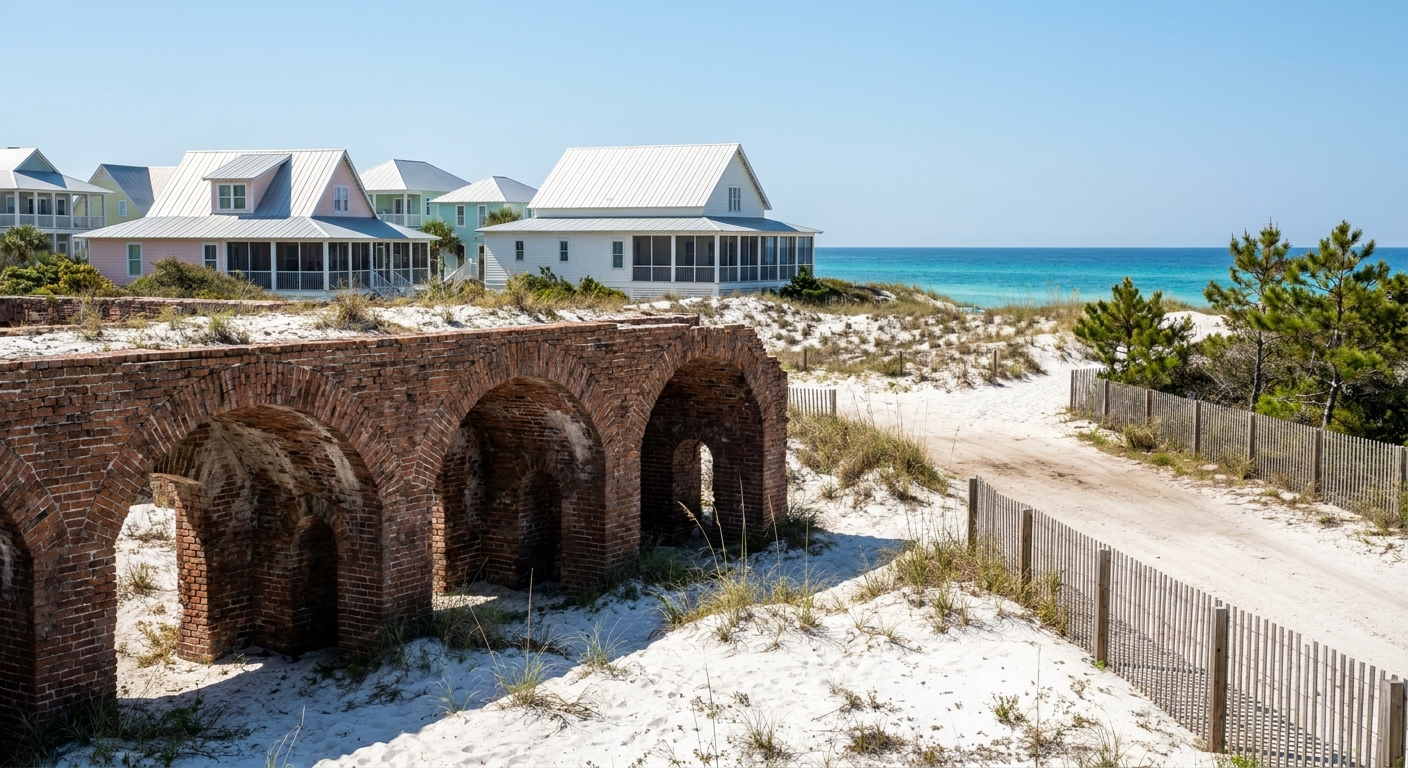
September keeps swimming at the center of a seashore trip, with the sea surface averaging 85.9°F against 78.9°F in October, a 7.0°F fall in four weeks. It also trims the heat from August’s 90.6°F average high, so a morning inside a brick fort is easier than a month earlier. Long evening swims before the 6:50 p.m. sunset on the 15th are the September activity. October’s cooler water shortens them.
On Santa Rosa Island, Fort Pickens sits at the western tip with its brick casemates and beaches on both the Gulf and the sound, and Opal Beach lies farther east toward Navarre. On the mainland, Fort Barrancas stands in Pensacola and the Naval Live Oaks trails run through Gulf Breeze, while Johnson Beach is the seashore’s stretch of Perdido Key. In Mississippi, Davis Bayou in Ocean Springs is reachable by car and Ship Island by boat from Gulfport. Check nps.gov/guis before each day for September fees, hours, parking and the ferry schedule.
At these sites September moves the air far more than the sand. Fort interiors keep you out of the sun while the open ramparts take the full 88.5°F afternoon, and the trails at Naval Live Oaks offer little relief once the day heats up. Walk the forts and the trails before 11 a.m., then give the hottest hours to the water.
We could not verify whether a fee-free day falls in September 2026, and we could not read the current entrance fees, so we name neither. Confirm fees on the park’s official site before you drive to a gate, and keep our Florida national parks guide handy for the other federal sites in the state.
Gulf Islands National Seashore in September: a two-day itinerary
Start day one on the Santa Rosa Island sand for the 6:28 a.m. sunrise. At 8 a.m., head to Fort Pickens and walk the casemates while the morning is still cool. By noon, break for lunch and shade in Pensacola Beach. From about 3 p.m., swim on the Gulf side in water near 85.9°F, then stay on the beach for the 6:50 p.m. sunset before dinner.
Day two crosses to the mainland: the Naval Live Oaks trails in Gulf Breeze at 7 a.m., then Johnson Beach on Perdido Key for a late-morning swim. If an afternoon storm rolls in, move the swim to the next dry window and wait it out under the brick arches of Fort Barrancas. If the National Hurricane Center shows a storm heading for the northern Gulf, follow local officials and leave the barrier islands early.
Gulf Islands National Seashore in September vs August and October
| Normal | August | September | October |
|---|---|---|---|
| Average high | 90.6°F | 88.5°F | 80.9°F |
| Average low | 75.8°F | 72.4°F | 63.2°F |
| Precipitation | 6.08 in | 5.18 in | 2.82 in |
| Days with 0.10 in or more | 8.1 | 5.3 | 3.5 |
| Sea surface (daily maxima, 2015-2024) | 87.8°F | 85.9°F | 78.9°F |
August runs 90.6°F by day and 75.8°F by night, September 88.5°F and 72.4°F, October 80.9°F and 63.2°F. The step into September is small, 2.1°F on the high and 3.4°F on the low. The drop into October is steep: 7.6°F on the high and 9.2°F on the low. Rain follows the same curve, from 6.08 inches on 8.1 wet days in August to 5.18 inches on 5.3 days in September and 2.82 inches on 3.5 days in October. The sea, from Open-Meteo’s marine data, goes 87.8°F, 85.9°F, then 78.9°F.
Moving four weeks earlier buys 1.9°F of extra sea warmth and costs 2.8 more wet days plus the full 90.6°F afternoons. Moving four weeks later cuts the rain to just over half of September’s total and brings 80.9°F highs for comfortable fort walks, with a sea 7.0°F cooler. Both neighbors sit inside the hurricane season, which runs to November 30, so the refundable-booking rule holds in either direction. Our August guide covers the earlier side.
Is September a good time to visit Gulf Islands National Seashore?
Yes, for swimmers, families with children not yet in school and anyone who wants warm water and can book refundable: an 85.9°F sea and 5.3 wet days make a strong case. No, for travelers locked into nonrefundable dates during the peak weeks of storm season, and for hikers who find 88.5°F afternoons too hot for trail miles.
If the answer is no, choose October. Its 80.9°F highs and 63.2°F lows suit fort walks and trail days, and its 2.82 inches of rain is the lightest total of the three months. Swimmers will meet a 78.9°F sea, so pack a thin wetsuit top for long sessions.
Of the three months, only September pairs a sea above 85°F with fewer than six wet days.
The last word
Settle the booking terms first: a refundable room turns the storm peak around September 10 into a date you can move. Then plan around one more figure from the NOAA station: 5.18 inches over 5.3 wet days works out to nearly an inch per wet day, so a September shower arrives in earnest. Pack a dry bag for the phone and car keys, swim in the 85.9°F Gulf while the sky holds, and walk Fort Pickens early.
Sources & data for this guide
- September air normals (88.5°F high, 72.4°F low, 5.18 in) and rain days (5.3 at 0.10 in, 1.5 at 1 in) · NOAA NCEI monthly normals 1991-2020, station USW00053853 in South Walton, east of the seashore · checked Sep 24, 2026
- August and October air normals and rain days · same NOAA NCEI station and period · checked Sep 24, 2026
- Sea surface 85.9°F (August 87.8°F, October 78.9°F), mean of daily maxima 2015-2024 · Open-Meteo Marine API · checked Sep 24, 2026
- Daylight and sunrise/sunset on Sep 15 (11:28 and 23:50 UTC, shown here in CDT) · sunrise-sunset.org · checked Sep 24, 2026
- Hurricane season dates and Sept 10 peak · NOAA National Hurricane Center, via our Florida orientation · checked Sep 24, 2026
- Our admission: we could not read wind, swell, lodging-tax, entrance-fee, opening-hour or ferry data for September. Our air normals describe the eastern end of a 160-mile park, and the Mississippi units may run differently · check nps.gov/guis when you book.
To plan your stay
- Best Time to Visit Gulf Islands National Seashore: Weather, Sea Temperature and the Quiet Months
- Gulf Islands National Seashore in August: Weather, Sea Temperature, Crowds and a Two-Day Plan
- Gulf Islands National Seashore in October: Weather, Sea Temperature and Crowds
- Gulf Islands National Seashore in July: Weather, Sea Temperature, Rain and Crowds