
FLORIDA · MADISON BLUE SPRING · CAVE DIVING
Water leaves the ground at Madison Blue Spring at 73.2 °F (22.9 °C). That is what the USGS gauge read on 11 September 2026, and it reads close to that every day of the year, because a spring holds the temperature of the ground it comes through and only the air above it moves with the calendar. Cool enough to catch your breath in August, never cold enough to keep you out.
The same gauge measured 72 cubic feet per second leaving the vent. That volume is why you can pick out a fish on the bottom: the water is replaced faster than it can cloud. Clarity of that order is what draws cave divers to this corner of Madison County, who come for the opening in the limestone rather than for the bank above it. The state’s own facility count, meanwhile, records no designated swimming area here.
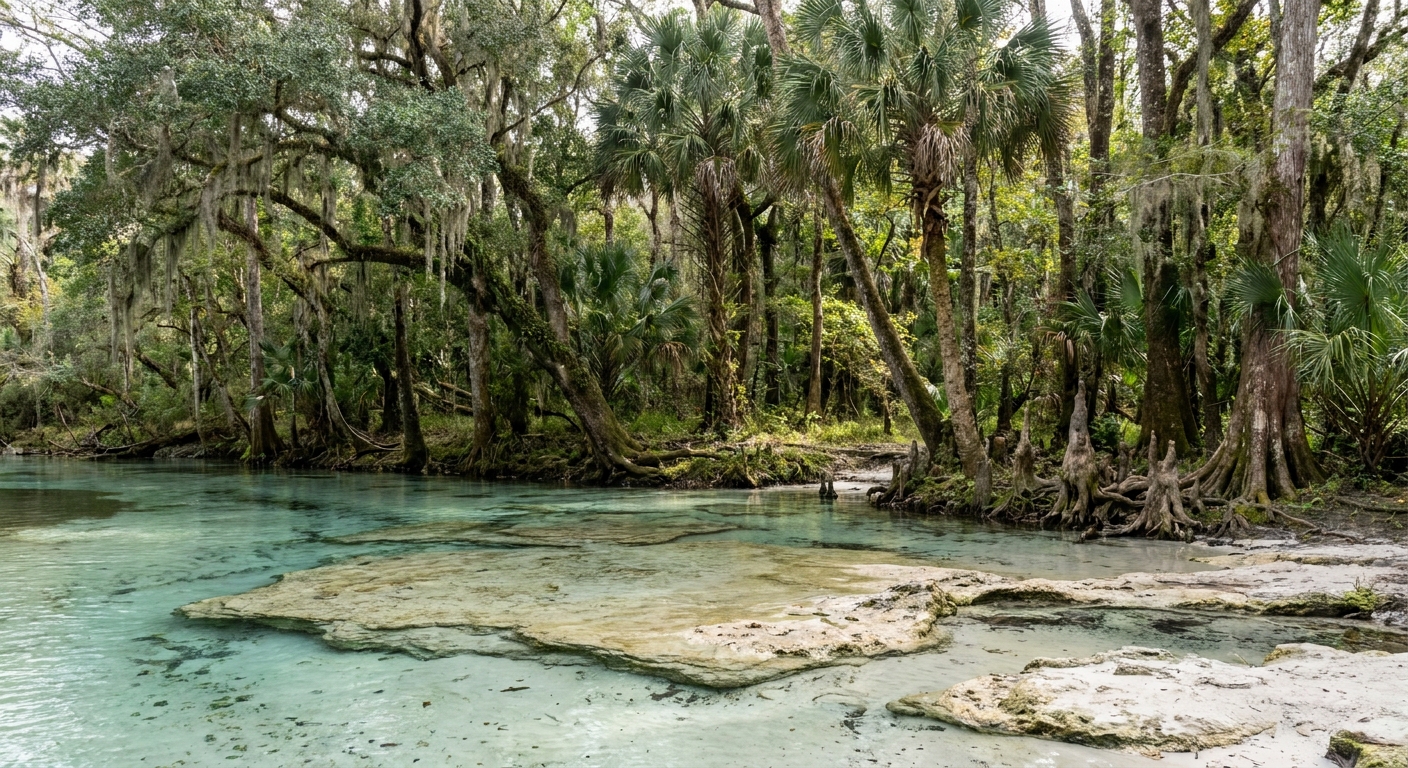
THE SPRING AT A GLANCE · MADISON BLUE SPRING
Come for water clear enough to read the bottom through and steady at 73.2 °F, but come knowing the state’s 2024 facility inventory records no designated swimming area and no launch here, and that the fee and the closing hour have to come from the park itself.
73.2 °F YEAR-ROUND · 72 CU FT/SEC AT THE VENT · NO LISTED SWIM AREA · A DIVERS’ SPRING
Go for: cave diving at a vent that gives 73.2 °F in August and in January alike, and for the visibility that 72 cubic feet per second of replacement buys.
Think twice before: loading tubes and a kayak for a family afternoon here, since the 2024 state inventory records neither a launch nor a designated swim area.
Water: USGS station 02319302 · Facilities: Florida DEP 2024 inventory · Law: FS 373.802(5) · full sources at the end
On this page
- How cold the water is in January73.2 °F, and what to wear in it
- Is swimming allowed here?What the 2024 state inventory records
- Cave diving and what else fills a stopThe vent, the flow and the legal class
- Weekend crowds and parkingWhat we could and could not read
- Is the drive worth it?Who this spring rewards
- Other springs in FloridaThe Florida springs roundup
- Where to see manatees in a springThe manatee guide
Two numbers here come from one instrument on one morning: USGS station 02319302, read on 11 September 2026. Spring water holds steady, so those readings travel well, and the gauge publishes fresh figures before you leave the house. Everything we could not read is flagged as such below, the entrance fee and the opening window included.
How cold is Madison Blue Spring?
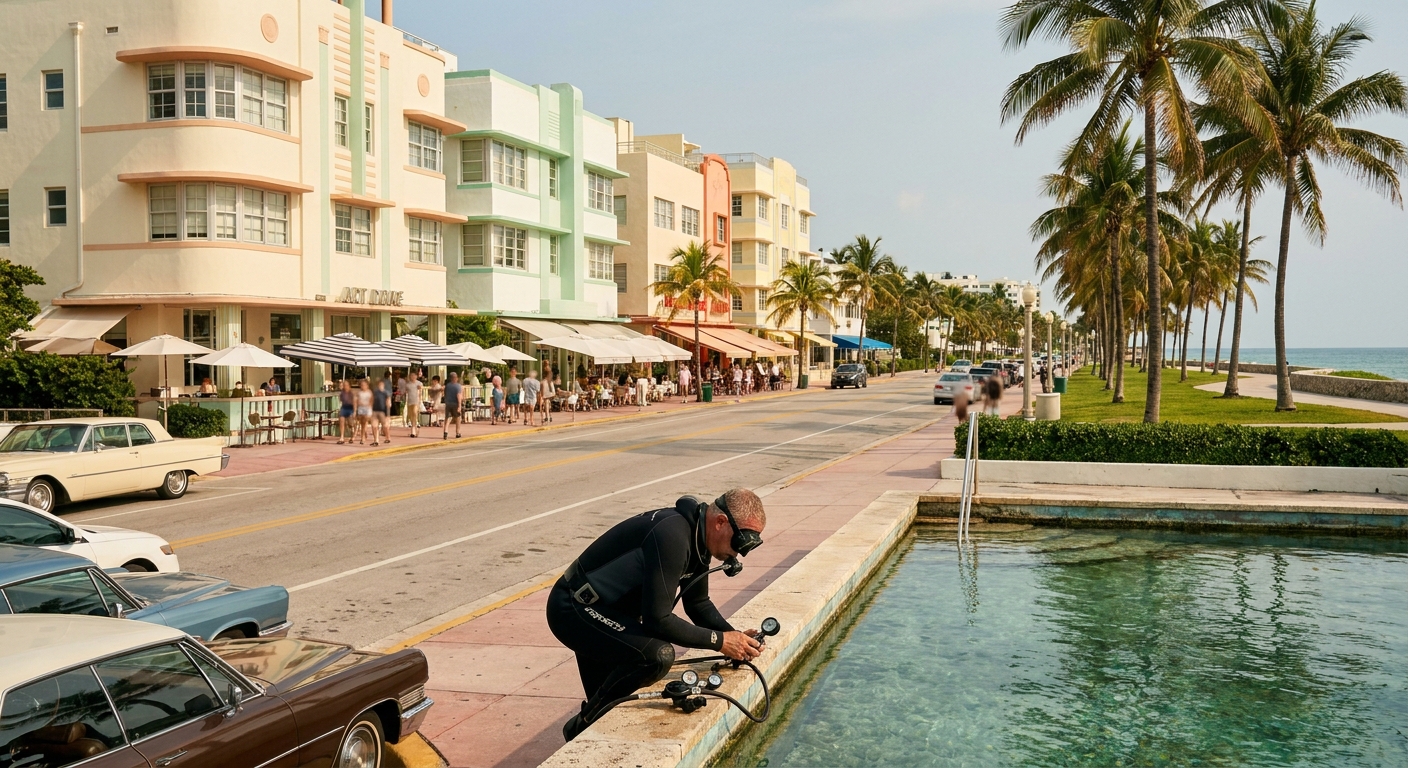
73.2 °F (22.9 °C) is the figure that decides what you wear. For a swimmer arriving out of August heat it lands as a short shock and then stops mattering. For a diver it drains heat steadily over a dive, which is why exposure suits turn up in water that swimmers call pleasant. In January the gauge gives close to the same reading and the same water feels warm, since only the air has moved. Check station 02319302 the morning you drive: temperature and flow both publish there.
Can you swim at Madison Blue Spring?
Florida’s Department of Environmental Protection publishes an annual inventory of what every state park actually contains, 374 pages of it in the 2024 edition. Madison Blue Spring State Park appears there with no designated swimming area, and with no canoe, kayak or tube launch either. That is a record of what the state counts as a facility, and it carries no statement about what a visitor may or may not do at the water’s edge. The park’s own rules page refused our automated reads on 11 September 2026, so the authority on posted signage is the ranger station.
For a day built around a roped area and a cooler, the practical effect is plain: no ramp to put a kayak in at, no tube concession, nothing in the inventory that promises a marked swim zone for children. Families who want those facilities counted should check park by park before the drive, and our guide to Florida’s springs is where to start. This is far enough off the interstate that a phone call first costs nothing.
What is there to do at Madison Blue Spring?
| What you came to do | What our sources show | What that means on the day |
|---|---|---|
| Dive the vent | 72 cubic feet per second leaving it, 73.2 °F on 11 Sep 2026 | Visibility and comfort; certification rules come from the park |
| Swim a marked area | No designated swimming area in the 2024 state inventory | Nothing roped, nothing counted; ask the ranger station |
| Launch a kayak or canoe | No launch listed in the same inventory | No ramp to use |
| Float a tube | No tube launch listed | Leave the tubes at home |
| Check before driving | USGS station 02319302 publishes temperature and flow | Five minutes at the kitchen table |
Divers come for the vent, and the 72 cubic feet per second leaving it is what keeps the water legible down there. Cave diving is its own discipline with its own certifications, and the requirements that apply inside this park come from the park, which is exactly the page that answered our reads with a 403 on 11 September 2026. Anyone planning a dive is calling ahead for gate times and staging anyway, so put the fee and the access rules on the same call.
There is a version of this stop for people who never get in the water. Flow at 72 cubic feet per second makes a visible boil at the surface, the limestone rim shows every ledge through it, and a polarizing filter does more for a photograph here than any lens. Pair it with a second spring and the morning becomes a day; our springs roundup lists the others worth the detour.
Florida law keeps a protected class called Outstanding Florida Springs. Statute 373.802(5) defines it as every historic first-magnitude spring, as the Florida Geological Survey determines them, plus six springs named by hand in the text. Whether Madison Blue sits inside that class is the Survey’s determination, and one instantaneous flow reading describes one morning, so we leave the classification where the statute puts it. What the definition does tell you is the standing these springs carry in state law.
How busy does Madison Blue Spring get?
We could not read a visitor count, a parking capacity or a closing time for Madison Blue Spring. The state park site answered our automated reads with a 403 on 11 September 2026, and we would rather say so than hand you a figure lifted from another park. Fees and hours in Florida vary by park and by season, so a price you found for a spring two counties away does not transfer to this gate.
Crowding does not touch the clarity. At 72 cubic feet per second the water at the vent is replaced faster than feet can cloud it, so a busy bank looks much the same underwater as an empty one. Divers still care about company for other reasons, since staging gear and entering an overhead environment both go better with room to work.
Summer heat brings the cars. The gauge gives 73.2 °F in September and close to the same figure in midwinter, so the water offers a swimmer the identical welcome in both, and it is the air temperature that fills a parking lot. A cool-season morning should buy you the same water with fewer people on the bank, which is our judgment rather than a count. The statewide curve sits in our month-by-month view of Florida.
The plan that survives all of that is short. Phone the park for the fee, the opening window and whether the gate closes when the lot fills, then read station 02319302 the same morning for temperature and flow. If the spring is one stop in a longer loop, our Florida road-trip routes show what else sits along that stretch of the north.
Is Madison Blue Spring worth visiting?
Sources & data for this guide
- Water temperature 73.2 °F (22.9 °C) and flow 72 cubic feet per second, instantaneous reading · U.S. Geological Survey, National Water Information System, station 02319302 Madison Blue Spring · checked Sep 13, 2026
- No designated swimming area, no canoe, kayak or tube launch · Florida Department of Environmental Protection, Recreational Facilities Inventory 2024 (PDF, 374 pages) · checked Sep 13, 2026
- Definition of Outstanding Florida Springs, including the Florida Geological Survey’s role · Florida Statutes 373.802(5), leg.state.fl.us · checked Sep 13, 2026
- Entrance fee, opening hours and manatee numbers are not carried here: floridastateparks.org returned 403 to our automated reads, and the FWC manatee page renders client-side · checked Sep 13, 2026
- Cave-diving character, exposure-suit notes and crowd advice are editorial; certification and access rules are set by the park · call before you drive.
For a certified cave diver the answer needs no hedging. A vent pushing 72 cubic feet per second into water that holds 73.2 °F through the whole calendar is most of the reason the sport has a home in north Florida, and the temperature keeps the surface interval comfortable when the air has other ideas.
For a family that pictured a roped swim area, a tube rental and a ramp, the 2024 inventory counts none of those here, and the park’s own page would not open to us. That makes this a weak first stop on a springs trip with small children. Our Florida-with-kids guide and the springs roundup are where to look next.
Put the two gauge figures side by side and you get what photographers drive for. Replacement at 72 cubic feet per second keeps sediment from hanging in the water column, and 73.2 °F lets you stand in it long enough to frame a shot without your hands shaking. Morning light on the rim does the rest.
If manatees were part of the picture, we carry no count for this spring, and the FWC page that would give one renders client-side, so we could not read it. The trip where manatees are the whole point has its own rules and its own springs, and the manatee guide handles them.
Madison Blue rewards one kind of visitor and turns most others around, and the useful moment to learn which you are is before the drive, on the phone, rather than at the gate. Write down two things: the ranger station’s number for the fee and the closing hour, and USGS station 02319302 for the water. Then get in. The gauge gave 73.2 °F on 11 September 2026 and gives close to it in February.