
WAKULLA SPRING · EDWARD BALL WAKULLA SPRINGS STATE PARK · NORTH FLORIDA
Nearly everyone who drives to Wakulla Spring wants the same thing, which is to get in. A U.S. Geological Survey gauge sits on the spring, station 02327000, and on September 11, 2026 it read 70.3 °F (21.3 °C). That is the temperature of a gasp. Shoulders rise, breath shortens, and about a minute later the body gives up the argument and the clarity takes over.
In the walking sense the park is tiny. Florida’s own facilities inventory credits it with 0.2 miles of hiking trail and 300 parking spaces, a ratio that tells you what the day is built around: water, a boat, a swimming area, and shade. Nobody comes here for the trail mileage.
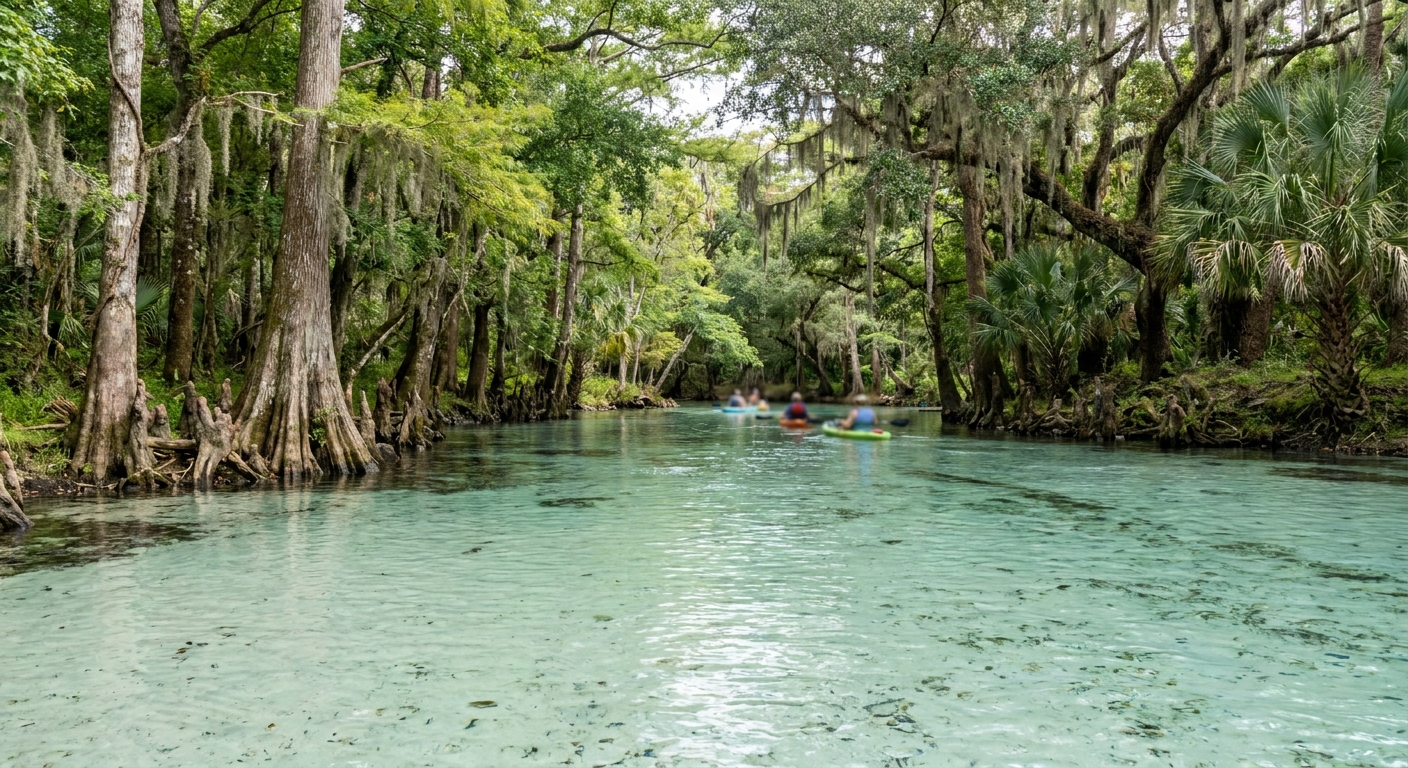
THE SPRING AT A GLANCE · WAKULLA SPRING
Come for water reading 70.3 °F (21.3 °C) and a single designated swimming area, arrive early enough to fit inside a 300-space lot, and count the 0.2 miles of trail as a stretch rather than a hike.
70.3 °F (21.3 °C) AT THE GAUGE · 1 SWIMMING AREA · 300 PARKING SPACES · 0.2 MILES OF TRAIL
Go for: cold clear water you can swim in every month of the year, a river boat tour that does the sightseeing your legs would not, and 285 feet of boardwalk with two platforms over the water.
Think twice before: planning a walking day here, or expecting a warm swim: 0.2 miles of trail runs out fast, and 70.3 °F feels colder the hotter the air is.
Water: USGS station 02327000 · Facilities: Florida DEP inventory, 2024 · full sources at the end
On this page
- Water temperature before you get in70.3 °F (21.3 °C) at the gauge
- Where swimming is allowed1 designated area, and what the state says about the cave
- What there is to do besides swim0.2 miles of trail, 285 feet of boardwalk, 2 platforms
- Parking on a summer Saturday300 spaces, then a closed gate
- Is the drive worth it?The verdict, plus what Florida law protects
- Other Florida springsThe statewide springs guide
One thing to settle before you drive: our sources carry no entrance fee and no opening hour for this park, and no manatee count either. Florida’s park fees vary by park and by season, so a price found at another spring does not transfer here. The state park site returned an error to our automated reads on September 11, 2026, and the state’s manatee page loads in the browser rather than in the page we can read. We would rather send you to the phone than hand you a number we could not check.
How cold is Wakulla Spring?
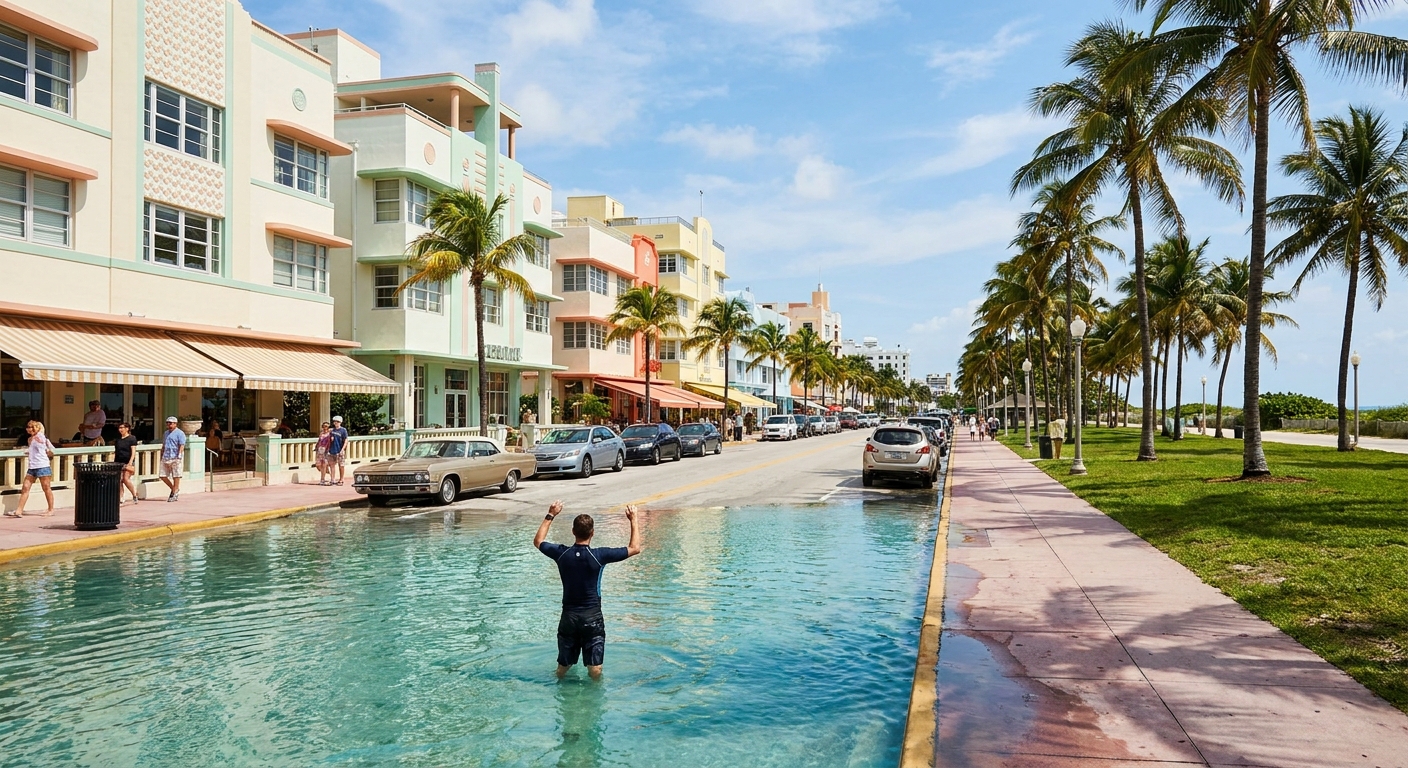
That 70.3 °F reading holds close to the same figure all year, because a spring has no seasons and the air above it does. In July the contrast does the work: step off a 95-degree parking lot and the water feels like a plunge pool. In January the same water can look warmer than the air and steam a little at dawn. Take the number for what it is, a single instantaneous reading from one day at one gauge, not a monthly average. Swimmers should plan on a towel and a warm shirt even in August.
Can you swim at Wakulla Spring?
Yes, in one place. Florida’s facilities inventory credits Edward Ball Wakulla Springs State Park with 1 designated swimming area, and that singular is the operating rule of the day. Swimming happens where the park puts it, not wherever the bank looks inviting. With a lot capped at 300 spaces and one area to hold everyone in it, a July afternoon concentrates people into a small square of water while the rest of the river stays empty.
The deep part is not yours, and the state is blunt about it. Florida’s own springs pages name Wakulla Springs for deep cave diving by researchers and scientists, describing springs as a chance to probe depths where few will ever go. That is a permitted scientific activity, not an upgrade a strong swimmer can talk their way into. Recreational visitors stay in the designated area. If the cold water on your list is really about wildlife, our guide to swimming with manatees covers where that is organized.
What is there to do at Wakulla Spring?
| What the state counts | Size | What it means on the ground |
|---|---|---|
| Hiking trail | 0.2 miles | A stretch between swims, not a morning |
| Boardwalk | 285 feet | The dry way to be over the water |
| Observation platforms | 2 | Where the long looking happens |
| Designated swimming area | 1 | Everyone swims in the same place |
| Parking spaces | 300 | The day’s real ceiling |
Start from the trail figure and the visit plans itself. Two tenths of a mile is ten minutes at a stroll, so hikers looking for a half day of forest should book that elsewhere. What fills the hours here is the river: the park’s boat tour carries you out over water clear enough to watch fish hold position on the bottom. Our sources do not carry its fare or its departure times, so ask at the park when you arrive.
The 285 feet of boardwalk and 2 observation platforms are the other half of the day, and they suit the people who are not swimming. Grandparents, camera carriers and anyone waiting out the cold-water shock all end up on them. Because the boardwalk is short, the traffic on it turns over quickly, and a platform that looks full at eleven usually frees up within a few minutes.
Pack for a water day rather than a hiking one: towels for two swims, something with sleeves for the shivering half hour in between, and lunch, since your car may be your only pantry. Families comparing this against a beach week will find the trade-offs in our Florida with kids guide, and the wider spring circuit in the springs guide.
How busy does Wakulla Spring get?
300 parking spaces. That figure, not a posted schedule, is what runs a summer Saturday at Wakulla Spring. When the lot fills, the gate closes, and cars behind it wait for someone to leave. A family that drove ninety minutes has no standing in that queue beyond its arrival time.
So arrive with the first wave on any hot weekend, and treat a midday arrival between Memorial Day and Labor Day as a gamble. Weekdays are the quiet version of the same park, and the cool months thin the crowd without changing the water by more than a degree or so. For the statewide pattern of school breaks and holiday weeks, see when to visit Florida.
Read the number carefully. The 300 comes from Florida’s Recreational Facilities Inventory for 2024, a 374-page count of what parks hold, and it counts spaces rather than visitors. Nobody publishes, in anything we could read, how often the lot reaches capacity or how long the gate stays shut once it does. Plan around the ceiling, not around a probability we do not have.
What fills those spaces is the air temperature, not the spring. A 96-degree afternoon in the Tallahassee area sends people toward 70-degree water, and everyone within an hour has the same idea at the same hour. Overcast days and the first cool snap of fall empty the lot fastest. If you are stitching this into a longer drive, our Florida road trip guide handles the sequencing.
Is Wakulla Spring worth visiting?
Sources & data for this guide
- Water temperature, 70.3 °F (21.3 °C) · USGS National Water Information System, station 02327000 Wakulla Spring, instantaneous value · read Sept 11, 2026
- 300 parking spaces, 1 designated swimming area, 0.2 miles of trail, 285 feet of boardwalk, 2 observation platforms · Florida Department of Environmental Protection, Recreational Facilities Inventory, 2024 annual report (PDF, 374 pages) · read Sept 11, 2026
- Outstanding Florida Springs definition · Florida Statutes 373.802(5) · read Sept 11, 2026
- Deep cave diving for researchers and scientists · Florida DEP, Visit a Spring · read Sept 11, 2026
- Editorial admission: we have no entrance fee, no opening hour and no manatee count for this park. On Sept 11, 2026 floridastateparks.org returned a 403 to our automated reads and the state’s manatee page rendered only in-browser, so neither could be read. Call the park before you drive.
Worth it, with the trip shaped correctly. You are driving for a swim in 70.3-degree water, a boat ride on a clear river, and a couple of hours on 285 feet of boardwalk. Anyone arriving with hiking boots and a full afternoon of walking in mind will be back at the car by lunch, wondering where the rest of the park went.
There is a legal layer worth knowing about too. Florida law defines a category called Outstanding Florida Springs, and the statute builds it two ways: every historic first-magnitude spring as the Florida Geological Survey determines them, plus six springs named by hand in the text. Deciding which springs land in that first group is the survey’s job, done on records rather than on a single day’s reading, and it is not a calculation for a visitor with a flow number in hand.
The state’s own framing sets expectations better than any brochure. Florida writes about Wakulla Springs in the language of research diving, springs that let scientists probe depths where few will ever go. What that means at the rope line is simple enough: the part of this spring that made it famous is measured by people with permits, and the part you get is a designated swimming area with cold water and a good view of the bottom.
Pair it rather than build a whole day on it. One spring plus a second stop travels better than four hours at a 0.2-mile trail, and our springs guide lays out which ones combine. Coming from farther afield, getting around Florida explains why the northern springs belt needs a car in a way that Miami Beach never does.
Set your alarm for the lot, not the water. The spring will read about 70.3 °F whenever you show up, in July or in January, and the only variable you control is whether one of the 300 spaces is still free when you reach the gate. Get in, breathe through the first ten seconds, then swim out far enough to watch fish hold still on the bottom. That is the whole reason people drive here, and it does not need a warmer month.