
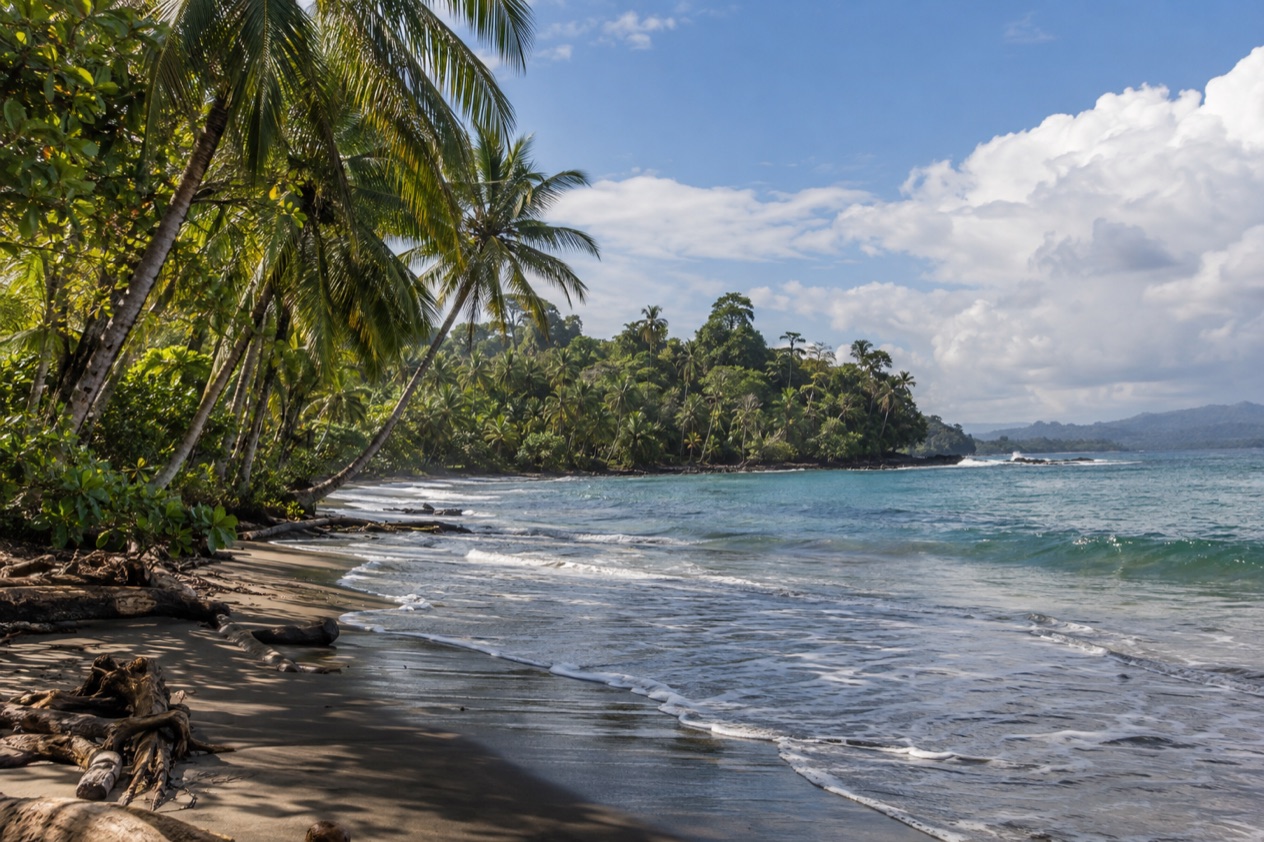
In May the rain drums on tin roofs in Puerto Viejo, then stops, and the whole town steps back out to the road. Bicycles splash through puddles on the way to Playa Cocles, the smell of coconut rice and bubbling rondón drifts from open kitchens, and the jungle behind the beach turns a deeper green. It is the start of the green season on the southern Caribbean coast, a month for warm water, quieter streets and plans that bend around the showers.
What is the weather like in Puerto Viejo de Talamanca in May?
May is hot, humid and rainy, with showers on most days and sunshine in between. The air barely changes from April, but the sky does, and the sea is a shade warmer.
| Month | Average high (°F) | Average low (°F) | Rain days | Sea (°F) |
|---|---|---|---|---|
| April | 81.6 | 71.9 | 14.4 | 84.8 |
| May | 81.8 | 73.0 | 24.2 | 86.5 |
| June | 81.7 | 72.8 | 27.4 | 86.7 |
The early hours frequently make up the finest stretch of the day. The sun can be strong by eight o’clock, the beaches are bright and the heat is easy to bear with a breeze off the water. Plan the beach, the bike ride and the jungle walk for the early hours, because the showers can arrive at any time and sometimes settle in for an afternoon or a whole gray day.
Rain here comes in two styles. One is a short, warm downpour that empties the street and leaves steam rising from the road. The other is a long, soft, steady rain that blurs the horizon.
A few days bring a heavy burst, so dirt roads can turn to mud and small rivers run brown. The calendar marks May as the start of the green season, and on this coast that means the dry gaps get shorter.
Evenings stay warm enough for shorts and a light shirt, and nobody needs a sweater. Days run about twelve and a half hours long, so dinner is usually eaten after dark with the sound of frogs and insects from the garden. Wear quick-drying clothes, sandals that can get wet and a light rain jacket, since an umbrella is a nuisance on a bicycle.
Can you swim in Puerto Viejo de Talamanca in May?
Yes, the water is bath-warm, but whether it is safe to enter depends on the day’s conditions. The sea is at its warmest of the early year, and a swim after a hot morning feels easy.
Conditions vary a lot from beach to beach. Playa Cocles and the stretch toward Salsa Brava have waves that attract surfers, and the reef break at Salsa Brava is strictly for experienced ones. Playa Negra, with its dark sand, can be rough in the middle but is pleasant for walking.
Farther along the coast, the beaches around Punta Uva often have gentler corners, with palms leaning over the sand, and snorkelers look for the reef when the water is clear. After heavy rain, rivers and runoff can cloud the sea, so visibility changes from day to day.
Rip currents along this shoreline pose a serious threat, killing several American visitors each year, but most beaches have neither lifeguards nor any caution about the dangerous conditions. Ask the hotel or a surf school about current conditions, follow any posted warnings, and stay out of the water if you are unsure. Bring a rash guard for the sun and a dry bag for the afternoon showers.
What to do in Puerto Viejo de Talamanca in May
May has one fixed date on the calendar, Labor Day on May 1, a national holiday. Costa Ricans take it as a long weekend, and the beaches and the main street fill with families from the Central Valley. Beyond that, the month belongs to the green season: the forest is loud, the rivers are full and the town runs on its usual slow, reggae-soaked rhythm.
Food is the easiest way into the local culture, which is strongly Afro-Caribbean. Hunt down rice and beans cooked in coconut milk, rondón (a leisurely stew of fish or meat with coconut and root vegetables), patacones, plus fried fish and chicken with a touch of spice.
Pan bon, a sweet spiced bread, shows up at bakeries, and the little roadside stands sell fresh fruit and coconut sweets. A rainy afternoon suits a long lunch at a covered open-air restaurant.
Beaches and the bike ride along the coast
The classic Puerto Viejo day is a bicycle ride from the center along the coastal road, past Playa Cocles, Playa Chiquita and on toward Punta Uva. Bikes are rented all over town, and the road is flat and shaded in places, with cafes, chocolate stands and small lodges where you can stop. Start early, when the light is soft and the sand is nearly empty.
Each beach has a different mood. Cocles is wide and busy with surfers, Chiquita is quieter with pockets of jungle, and Punta Uva feels like a postcard, with palms, rocks and a bay that is often gentler.
Carry a light rain jacket in a bag, because the showers are quick and you may well wait one out under a roof. It suits most travelers who are comfortable on a bike, and the heat makes the morning hours the best choice.
Chocolate, jungle and Indigenous culture
The hills behind town are cacao country, and guided visits to small farms show how the beans are fermented, dried, roasted and turned into chocolate. May’s wet air makes the forest feel alive, with birds, leaf-cutter ants, frogs and sometimes monkeys or sloths, though wildlife is never guaranteed. Guided walks are how most visitors spot animals, and the guides know where to look.
The Talamanca region is also home to Bribri and Cabecar communities, and some offer cultural visits that include food, medicinal plants and stories about cacao. These are best treated as a half-day outing, ideally in the morning when the trail is cooler. Wear shoes that can handle mud, and expect a damp, green, sensory walk rather than a postcard view.
Day trips to Cahuita and Manzanillo
North of town, Cahuita National Park combines a long white beach with a forest trail beside the sea, where raccoons, howler monkeys and birds are possible sightings. South, the Gandoca-Manzanillo area has quiet beaches and a small fishing-village feel. Each works well for a day trip when the weather seems calm, and before setting out, check the latest rules on the park’s official page.
In the warmer months, sea turtles come ashore to nest on certain Caribbean beaches, though sightings are never guaranteed. Choose an organized outing rather than wandering the beach alone at night. On a gray day, take a slow lunch in Cahuita and walk the trail in the lull between showers.
In the evening the center comes alive. Bars play reggae, calypso and a little salsa, and the main street is dotted with food carts, hammocks and small shops selling crafts and hot sauce. The mood is relaxed rather than rowdy, and the rain only makes the porches and awnings fill up with people.
A two-day itinerary for Puerto Viejo de Talamanca in May
Day 1 is for the coast. Rent a bicycle first thing and ride toward Punta Uva while the air is still fresh, stopping at Playa Cocles to watch the surfers and at Playa Chiquita for a coconut.
Eat lunch around midday at a beachside kitchen, with rice and beans, fish and fruit, and let the first shower pass. The afternoon fits a slow ride back, a nap in a hammock and a short walk along Playa Negra.
If the rain sets in, head for the chocolate shops and craft stalls in the center. At night, pick a reggae bar and a plate of rondón, and watch the street fill with people after dark.
Day 2 is for the green side. Start early with a guided cacao-farm walk or a nature walk in the hills behind town, when the birds are loudest and the trail is coolest. Wear shoes that can get muddy and bring a rain jacket. The walk usually ends with chocolate tasting, which makes a good late breakfast.
After lunch, take a short trip to Cahuita for the national park trail and its beach, or to the quieter Manzanillo side if you want fewer people. If the sky turns dark, the rain card is a cooking class, a long coffee in a covered cafe, or an afternoon at a local bakery sampling pan bon. Return for a simple dinner of grilled fish in town and an early night.
Is Puerto Viejo de Talamanca busy in May?
No, May is generally one of the calmer months, with a pause between the dry-season visitors and the summer travelers. The beaches have space, the restaurants rarely turn people away and the town feels like itself.
The exception is the Labor Day weekend, when Costa Rican families arrive and rooms near the beach fill up first. If your trip touches that weekend, book early, ideally as soon as your flights are set. For the rest of the month, check current lodging availability rather than relying on a fixed booking window.
In a quiet month you can line up a rental car or bike with less fuss, and tables at restaurants rarely require a reservation. Ask providers directly how far ahead to reserve surf lessons, guided walks and cultural visits. For parks and trails, check the official page for current rules before you go, since conditions and access can change after heavy rain.
The mood is slower. Shops open late, a few small places close for a rest, and the pace suits visitors who want hammocks, books and unhurried evenings. Do not expect a festival crowd, because the town’s energy comes from its bars, kitchens and music rather than from big events.
What to pack for Puerto Viejo de Talamanca in May
Pack for heat and wet, and favor things that dry fast and can be rinsed in a sink.
- A light rain jacket, because showers arrive at any hour and an umbrella is awkward on a bike.
- Quick-drying shirts and shorts, since the air stays damp and cotton dries slowly.
- Sandals that can get wet, plus closed shoes for muddy trails.
- Sunscreen and a hat for the bright mornings on the beach.
- Insect repellent for evenings and jungle walks.
- A dry bag for your phone and wallet on the bike.
Good to know before you go
The U.S. State Department rates Costa Rica Level 2, ‘Exercise increased caution,’ due to crime; it says petty crime is common throughout Costa Rica and that violent crime also affects tourists, including armed robbery, homicide and sexual assault.
May 1 is Labor Day, a national holiday, so banks and some shops close and buses and beach roads are busier than usual. The green season begins with the first regular afternoon rains, which affects dirt roads and some trails, so give yourself extra time if you are driving. Bicycles are the easiest way to get around town, and an early start makes the most of the dry hours.
Cash and cards are both used in town, but small stands and roadside stops are easier with some change on hand. Keep valuables out of sight on the beach and when you lock up your bike, since petty crime is something to think about anywhere in the country.
Puerto Viejo de Talamanca in May vs April and June
Moving the trip to April brings a drier coast, with more sunny hours for the beach and fewer interrupted plans. The sea is a little cooler but still easy to enjoy, and the roads and trails are in better shape. It is also a month closer to the dry-season crowds, so rooms can be harder to find around Easter and the holiday weeks.
Moving to June brings the rain closer to daily. The sea is as warm as in May, the forest is at its lushest and the town is even quieter, but long gray spells are more likely. Some travelers will love the empty beaches and the full rivers, while others will find that the days are too wet for surfing, snorkeling and long bike rides.
If you want beach hours and the best chance of a dry day, shift toward April. If you like a green, quiet coast and can plan around showers, May is a fair middle choice. Choose June if your priorities are warm water, space and a flexible schedule, and you do not mind a day spent under a roof.
Is May a good time to visit Puerto Viejo de Talamanca?
Yes, May suits travelers who enjoy a lush, relaxed Caribbean town and do not need a guaranteed dry day. The sea is warm, the crowds are thin and the food, music and jungle walks work well in any weather.
It is a good month for cyclists, cooks, chocolate lovers, wildlife watchers with patience and anyone who likes a place that feels lived in. It is less ideal for travelers who want full days of sunshine, long boat trips or reliable snorkeling, or who dislike humidity and mud. Those visitors may prefer an earlier month or the Pacific side.
The moment you get there, grab a bike, pedal to the closest beach before noon, and get to know how the water acts around here prior to taking a dip. Then book a guided walk or cacao visit for a day that looks changeable. What makes May special here is the sound of rain on a tin roof, the steam from the road after a shower and the smell of coconut rice from a kitchen with the doors wide open.
Sources
- Open-Meteo / ECMWF ERA5, normals 1991-2020 computed for the grid cell at 9.6558N 82.7541W, checked October 8, 2026
- Open-Meteo Marine API, average 2015-2024, checked October 8, 2026
- sunrise-sunset.org, sunrise and sunset calculated for the 15th of the month, checked October 8, 2026
- U.S. Department of State, Costa Rica Travel Information, Safety and security (https://travel.state.gov/content/travel/en/international-travel/International-Travel-Country-Information-Pages/CostaRica.html), checked October 8, 2026
- U.S. Department of State, Costa Rica Travel Advisory, issued April 1, 2026 (https://travel.state.gov/content/travel/en/traveladvisories/traveladvisories/costa-rica-travel-advisory.html), read via the State Department open data API on October 8, 2026
- U.S. Department of State, Costa Rica Travel Information, Entry and exit requirements (https://travel.state.gov/content/travel/en/international-travel/International-Travel-Country-Information-Pages/CostaRica.html), checked October 8, 2026
To plan your stay
- Things to Do in Puerto Viejo de Talamanca: Beaches, Cahuita Day Trips, Caribbean Food and Reggae Nights
- Where to Stay in Puerto Viejo de Talamanca: Town Center, Playa Cocles, Punta Uva and Cahuita
- Best Time to Visit Puerto Viejo de Talamanca: Weather, Sea and Seasons
- Puerto Viejo de Talamanca in April: Weather, Caribbean Beaches, Holy Week and What to Do