
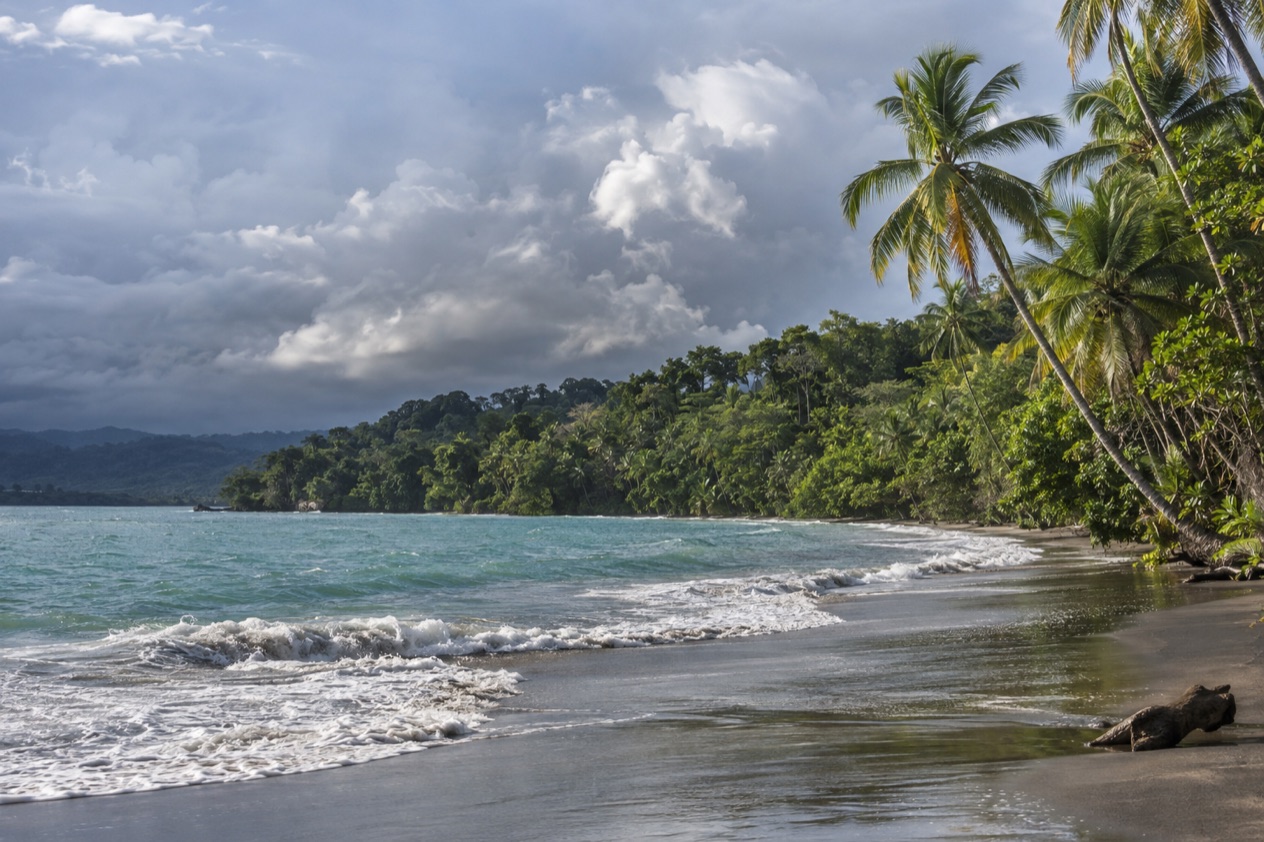
In November, Puerto Viejo wakes to the sound of bicycle bells on the dirt lanes and reggae drifting out of open doorways, while the jungle behind the beach steams after a night of rain. Cooks fry plantains and simmer rice and beans in coconut milk, and the surf rolls in warm and loud. This is the Caribbean coast in its greenest, quietest stretch, a good month for travelers who like their beaches with a little drama and a lot of space.
What is the weather like in Puerto Viejo de Talamanca in November?
November is warm, humid and wet here, with rain on most days and sunshine in between the showers.
| Month | Average high (°F) | Average low (°F) | Rain days | Sea (°F) |
|---|---|---|---|---|
| October | 81.3 | 72.3 | 26.3 | 86.9 |
| November | 79.9 | 72.0 | 23.1 | 85.0 |
| December | 79.3 | 71.2 | 18.5 | 83.4 |
The day’s finest hours tend to arrive early, gentle and luminous, as warmth climbs toward midday. On this coast, rain does not stick to the neat afternoon rhythm you find on the Pacific side.
It can arrive at dawn, in the middle of the night or all afternoon, and some days it comes as a long steady downpour that turns the lanes to mud. Plenty of days still offer long dry windows, so plan around the sky rather than the clock.
You can still wear a T-shirt and sandals in the evening, and the nights feel muggy instead of cool. Clothes dry slowly, so lightweight fabrics that wick moisture work better than cotton. The light is lovely after a shower, when the sea turns a deep green and the forest glistens, and the days are a little under twelve hours long, so dusk falls early in the evening.
Can you swim in Puerto Viejo de Talamanca in November?
The water truly feels like a warm bath, letting you linger as long as you want, but what really matters are the waves and currents.
The sea along this stretch of the Caribbean sometimes grows choppy, and those rip currents stand among the most lethal dangers, taking the lives of several American visitors each year. Since lifeguards and cautions about risky conditions are absent at most beaches, check the water before entering, find out from your hotel which beach is calmer that day, and remain close to the shore.
Playa Cocles is known for its strong surf and draws surfers, while Punta Uva has a quieter, more sheltered feel with a calmer cove on some days. Conditions change from one day to the next, and none of them is guaranteed.
Visibility for snorkeling can drop after heavy rain, so treat it as a bonus on clear days.
What to do in Puerto Viejo de Talamanca in November
November is not festival season in town, but it has a calendar marker: November 2 is All Souls’ Day (Dia de los Difuntos), a national holiday, so some shops and offices may be quiet that day. Otherwise the month is about the everyday rhythm of the place: beaches between showers, long lunches and slow evenings.
The town itself is the first attraction. Rent a bicycle, as locals do, and roll along the coast road past small restaurants, craft stalls and wooden houses painted in bright colors.
You can see Afro-Caribbean heritage in the music, in the neighborhood slang that surrounds you, and in the cooking, above all rice and beans cooked in coconut milk, often paired with fish or chicken in a spicy sauce. Look for patacones, fried plantain slices, and coconut sweets sold by vendors.
Playa Cocles and the surf beaches
When travelers imagine a beach here, Playa Cocles is the one they see: sand stretching far, palms at its back, and a handful of cafés plus surf schools a short walk or bike ride from town. In November the waves are often big enough to draw surfers, and watching them from the sand is a pleasure on its own, especially in the morning light.
It suits surfers, beach walkers and people-watchers more than casual swimmers. Because most beaches do not have lifeguards or warnings about unsafe conditions, check conditions before entering the water. After a rain, the beach can be littered with driftwood, which makes for good beachcombing.
Punta Uva and the quiet coves
Farther along the coast, Punta Uva is a favorite for its calmer, more tucked-away feel. Jungle comes right to the edge of the sand, and on gentler days the water can look inviting for a paddle or a snorkel. It is a good place for a picnic and for a long afternoon spent doing very little.
Carry water and snacks for a picnic at Punta Uva. Rent a bike for the ride or take a taxi from town. It suits couples, families who like a slower pace and anyone who wants the Caribbean without the surf crowd.
Rainforest, wildlife and wet-weather days
The wet weather makes the forest loud and green. The air is alive with birds, frogs and insects, and a guided walk can make sloths, monkeys and other animals easier to spot. Animals are chances, not promises, but the jungle around town is rich enough that a patient walk often pays off.
When rain settles in, shift to indoor pleasures: a chocolate or coffee tasting, a cooking class built around coconut and plantain, a long lunch at a café with a covered porch, or a browse through the craft stalls. Boots or sturdy sandals help on muddy trails.
A two-day itinerary for Puerto Viejo de Talamanca in November
Day 1 starts early, because mornings are usually the brightest part of the day. Have a Caribbean breakfast of gallo pinto, the rice and beans mix, with eggs and strong coffee, then rent a bike and ride to Playa Cocles to watch the surf.
In the afternoon, when clouds often gather, wander the town itself, browsing craft stalls and cafés. If it rains, settle on a covered terrace with a cold drink. Head back toward town for dinner at a small place serving Caribbean dishes, and finish with reggae in a bar.
Day 2 heads south to Punta Uva. When morning arrives, ride a bicycle or take a cab, then walk along the beach, check that day’s conditions with your lodging or a surf shop, and explore the forest’s edge. Pack a picnic or eat at a modest café nearby.
On the way back, stop at a chocolate or coffee tasting if you have the energy, or book a guided forest walk for the late afternoon. Rain card: if the sky turns heavy, swap the beach for a cooking class or a long, slow meal. Dinner can be a different kind of place from the night before, perhaps something with a vegetarian or seafood focus.
Is Puerto Viejo de Talamanca busy in November?
No, November is one of the quieter months here, with wet weather keeping crowds modest.
The big holiday rush comes later in the year, so rooms are generally easier to find now and restaurants rarely have long waits. Surf spots are not packed, and the beaches feel spacious. Travelers who like a calm, local feel tend to enjoy this stretch.
The habit that serves well anywhere is to book earlier for the holiday weeks and later for quiet ones. November falls in the latter group, so you can usually keep plans flexible. Still, the town is small, so a favorite lodging near the beach is worth securing ahead if you have a firm preference.
The November 2 holiday may make for a slower day in town, with some businesses closed. Weekends bring a few more Costa Rican visitors. Otherwise you will mostly share the lanes with other bicycles, a few surfers and travelers who chose the green season on purpose.
What to pack for Puerto Viejo de Talamanca in November
Think warm, wet and humid, and pack light layers that dry fast.
- Bring along a light rain shell or poncho, since showers can arrive at any time.
- Choose fast-drying clothing, since cotton stays soaked in the humid air
- Bring sandals plus closed shoes that have traction for trails that are muddy.
- A rash guard and sunscreen for the sea and the bright hours
- Tuck a dry bag in your pack to keep your phone and camera protected.
- Pack bug spray for the woods and after dark.
Good to know before you go
The U.S. State Department rates Costa Rica Level 2, ‘Exercise increased caution,’ due to crime; it says petty crime is common throughout Costa Rica and that violent crime also affects tourists, including armed robbery, homicide and sexual assault.
The Atlantic hurricane season, which covers the Caribbean Sea, runs from June 1 to November 30, so November is its final month. Heavy rain can slow travel and make roads muddy, so leave buffer time between plans. November 2 is a national holiday, and some services may be closed or limited. Rip currents are very dangerous, and most beaches do not have lifeguards, so check conditions before swimming.
Puerto Viejo de Talamanca in November vs October and December
Moving a month earlier, to October, brings more rainy days and slightly warmer conditions, with the sea a touch warmer. It suits travelers who do not mind the damp and want the greenest, emptiest version of the coast.
Moving a month later, to December, tends to bring fewer rainy days, a slightly cooler sea and more visitors as the holiday season begins. Rooms fill earlier, and the town has a livelier feel. Beach days are easier to count on.
Choose November if you want a calm, green town with room to spare and can live with showers. Shift to December if you would rather have more dry hours and a bit more energy in the streets. Stay with October only if the quiet matters more than the weather.
Is November a good time to visit Puerto Viejo de Talamanca?
Yes, for travelers who enjoy a lush, laid-back coast and do not need guaranteed sunshine.
It will suit surfers, wildlife lovers, cyclists and anyone happy to read, eat and wander between showers. It is less ideal for those who want a fixed schedule of beach days or who are anxious about wet weather and strong surf.
On arrival, drop your bags, rent a bicycle and ride along the coast road to get your bearings, then watch the surf at Playa Cocles from the sand before you decide where to swim. November here means green hills, warm sea, plates of rice and beans in coconut milk, and a town where the loudest sounds are the waves and the reggae.
Sources
- Open-Meteo / ECMWF ERA5, normals 1991-2020 computed for the grid cell at 9.6558N 82.7541W, checked October 8, 2026
- Open-Meteo Marine API, average 2015-2024, checked October 8, 2026
- sunrise-sunset.org, sunrise and sunset calculated for the 15th of the month, checked October 8, 2026
- U.S. Department of State, Costa Rica Travel Information, Safety and security (https://travel.state.gov/content/travel/en/international-travel/International-Travel-Country-Information-Pages/CostaRica.html), checked October 8, 2026
- NOAA National Hurricane Center, Climatology (https://www.nhc.noaa.gov/climo/), checked October 8, 2026
- U.S. Department of State, Costa Rica Travel Advisory, issued April 1, 2026 (https://travel.state.gov/content/travel/en/traveladvisories/traveladvisories/costa-rica-travel-advisory.html), read via the State Department open data API on October 8, 2026
To plan your stay
- Things to Do in Puerto Viejo de Talamanca: Beaches, Cahuita Day Trips, Caribbean Food and Reggae Nights
- Where to Stay in Puerto Viejo de Talamanca: Town Center, Playa Cocles, Punta Uva and Cahuita
- Best Time to Visit Puerto Viejo de Talamanca: Weather, Sea and Seasons
- Puerto Viejo de Talamanca in October: Weather, Caribbean Sea and What to Do