
On the evening of September 14, children walk the streets of Puerto Viejo with paper lanterns, the faroles, glowing orange and green against the dark and the smell of rain. Reggae drifts from a bar, bicycles weave around the puddles, and the jungle behind the beach hums after the afternoon shower. September here is a green, slow, warm month for travelers who like the Caribbean coast unhurried and don’t mind a little water from the sky.
What is the weather like in Puerto Viejo de Talamanca in September?
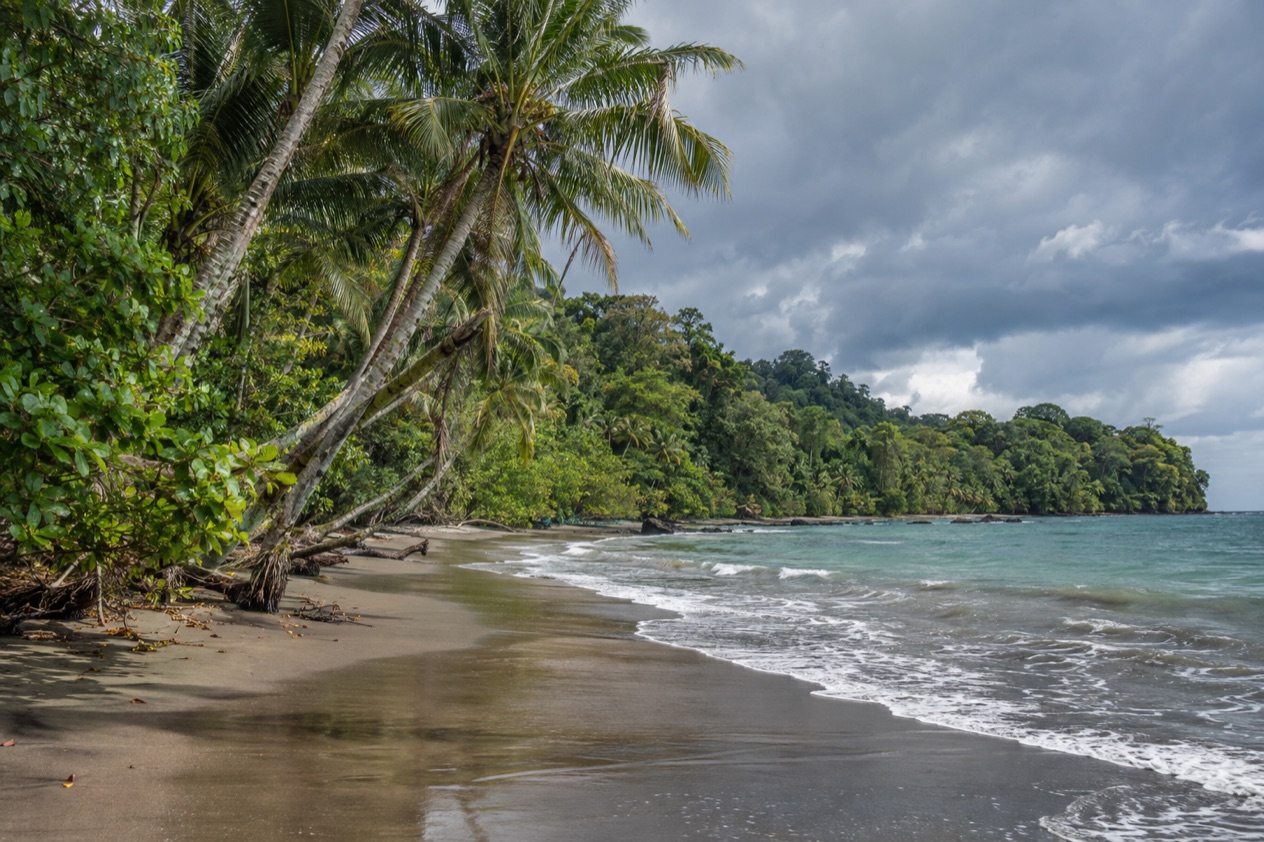
September brings heat, humidity, and lush greenery, and while rain falls on most days, it seldom lasts from morning to night. Along the southern Caribbean coast, the seasons follow a rhythm all their own, and this ranks among the milder chapters.
| Month | Average high (°F) | Average low (°F) | Rain days | Sea (°F) |
|---|---|---|---|---|
| August | 81.6 | 72.4 | 26.6 | 85.7 |
| September | 82.0 | 72.4 | 24.9 | 87.1 |
| October | 81.3 | 72.3 | 26.3 | 86.9 |
Often the day’s finest hours come early, bright and steamy and still, when sunlight gilds the palms. Showers tend to arrive as warm, heavy bursts that can last an hour or two, then clear and leave the air washed. Plan beach time, bike rides and walks early, and keep the afternoon flexible for a long lunch under a roof.
Shorts and sandals work fine in the evening warmth, and the nights stay mild. The rain adds up over the month, yet a downpour of an inch or more falls on only a day or two, so most rain is the passing kind. With a bit more than twelve hours of light, evening arrives quickly, which makes the Independence Day lanterns simple to spot.
Dress light, in quick-drying fabrics, and expect everything to feel slightly damp. Sunscreen still matters, since the sun can come through hard between clouds. The Caribbean side tends to be drier in September and October than the Pacific coast, which is the reason many travelers choose it now.
Can you swim in Puerto Viejo de Talamanca in September?
You can linger in the bathwater-warm sea for as long as you want, with no chill to drive you out.
Conditions vary by beach and by day. Playa Cocles can have strong surf and is known with surfers, while the coves toward Punta Uva are usually gentler, with a line of palms and green forest right behind the sand. Playa Negra, with its dark volcanic sand, is a favorite for a quiet stroll. After a heavy rain the water can turn cloudy near river mouths, which affects snorkeling.
Several U.S. tourists die each year because of rip currents, a lethal danger, and at most beaches nobody is on duty to guard swimmers and no signs caution them about hazardous conditions. Ask locals about the day’s conditions before getting in, stay where you can easily touch bottom, and never swim alone. Families with small children and nervous swimmers do best at the calmer coves, a place to wade, float or play, with children kept within arm’s reach.
What to do in Puerto Viejo de Talamanca in September
The big moment of the month is Independence Day. On the evening of September 14 the Desfile de Faroles sends children through town with paper lanterns, and on September 15 school bands and flags take over the main street. It is a small-town celebration, home-made and affectionate, and it is a lovely moment to be standing on the roadside with a cold drink.
Food is the other pleasure. Rondón, a stew of fish, root vegetables and spices in coconut milk, is what Caribbean cooking here is all about, plus rice and beans simmered in coconut milk, patacones, and fresh fish with plenty of Caribbean spice grilled. Sweet coconut cakes and tropical fruit juices fill the stalls. Small family kitchens and beachside shacks often serve the best plates.
Bike the coast road
Bicycles are the town’s signature, and the flat road from Puerto Viejo toward Playa Cocles and Punta Uva is the classic ride. Rental shops line the center, and many lodgings lend bikes. Along that route you will find little cafes, chocolate stands, paths leading to the beach, and sections of jungle where birds appear and howler monkeys can be heard.
Go early, before the afternoon clouds gather, and pack a rain jacket in a small bag. Stop at a beach for a swim, continue to Punta Uva for the coves, and turn back when the sky darkens. It suits most fitness levels because the terrain is mostly level, though the humidity makes it feel longer than it is.
Rainforest, chocolate and wildlife
The green season suits the forest. Guided walks give most visitors their shot at seeing sloths, frogs, toucans and monkeys, while trails and reserves around town stay lush, and these sightings are always chances rather than promises. Local chocolate tours show cacao from pod to bar and fit nicely on a wet afternoon, since much of the visit is under cover.
Trails can be muddy, so wear shoes with grip you don’t mind staining. Early morning is generally the most active time for birds and monkeys. Bring insect repellent, because the damp air favors mosquitoes, especially near dusk.
Beaches and the town itself
Spend time in town too. Souvenir stalls sell handmade jewelry and bright clothing, bars play reggae and calypso, and murals and painted wooden buildings give the center its look. Afro-Caribbean culture is felt in the music, the food and the language you hear on the street.
Playa Negra suits a walk at low-key hours, Cocles suits watching surfers, and Punta Uva suits a long afternoon in the shade of the trees. Rainy hours are well spent in a cafe with a book or in a yoga class, which many small lodges offer.
A two-day itinerary for Puerto Viejo de Talamanca in September
Day 1 starts early with coffee and a rental bike. Have a late lunch at a beachside shack, such as a plate of rice and beans with grilled fish.
When the afternoon rain comes, head back to town for a chocolate tour or a long rest in a cafe. At dusk, wander the main street for souvenirs and a Caribbean dinner of rondón or fresh fish, then listen to live music in a bar. If it is the evening of September 14, step out for the lantern parade.
Day 2 begins with a guided forest walk in the first hours, when animals are most active.
Afternoon is for the rain card: a cooking class, a yoga session, or a slow hour with tropical juice and a book. If the sky clears, walk the shoreline at sunset. Finish with dinner at a family-run restaurant, and on September 15 look for school bands and flags along the main road.
Is Puerto Viejo de Talamanca busy in September?
No, September is a quiet month in Puerto Viejo, one of the calmer stretches of the year.
The rainy feel keeps crowds modest, so beaches are easy to find space on, restaurants rarely have lines and rooms are generally easy to get. Local families celebrate Independence Day, which brings a bit of extra life to the center around September 14 and 15, but it is more neighborly than touristy.
Even so, it is a good habit to book your room a few weeks ahead if you want a particular lodge, and earlier if your dates include the Independence Day weekend. Rental bikes are rarely a problem. If you plan a guided walk or a chocolate tour, reserve it the day before, since small operators run limited groups.
The calm has a cost: some small businesses slow down or take a break in the low season, so confirm dinner plans in the afternoon. It also has a charm, since you get long stretches of beach nearly to yourself and unhurried conversations with the people who run the guesthouses.
What to pack for Puerto Viejo de Talamanca in September
Think light, quick-drying and waterproof, because the day will probably include both sun and rain.
- A light rain jacket, for the warm afternoon downpours.
- Bring clothes that dry fast, because in this humidity nothing takes its time to dry.
- Sandals and closed shoes with grip, for the beach and muddy trails.
- Insect repellent, for the forest and the evenings.
- Sunscreen and a hat, for the bright hours between showers.
- For bike rides, bring a dry bag so your phone and camera stay protected.
Good to know before you go
The U.S. State Department rates Costa Rica Level 2, ‘Exercise increased caution,’ due to crime; it says petty crime is common throughout Costa Rica and that violent crime also affects tourists, including armed robbery, homicide and sexual assault.
September falls in the Atlantic hurricane season, which runs from June 1 to November 30 and peaks around September 10. That means watching forecasts for your flights and keeping some flexibility in your plans. Entry rules for Americans include a passport valid for the length of your stay and a return ticket or proof of onward travel, and visitors may be allowed to stay up to 180 days without a visa, though that is not guaranteed.
Puerto Viejo de Talamanca in September vs August and October
Going a month earlier brings a very similar feel, with slightly more rain and a sea a touch less warm. August is a busier vacation month for many travelers, so rooms and tables can be tighter than in September. The Independence Day lanterns are not part of it, however.
Moving to October keeps the warm sea and the green forest, with a little more rain overall. The town stays quiet, and the hurricane season is still running. You lose the lantern parade and the flag-waving of mid-September.
If you want the festival and the calmest beaches, stay with September. If your schedule is fixed by school or work, August or October offers nearly the same coast, so choose the one that fits your calendar rather than the weather.
Is September a good time to visit Puerto Viejo de Talamanca?
Yes, for travelers who like a green, easygoing coast, warm water and few other visitors. It suits couples, surfers, people who like slow mornings on a bike and anyone who wants to feel the local culture rather than a busy resort scene.
For anyone who counts on dry days being guaranteed, or who intends to put in long outdoor hours on a set timetable, it suits them less. Rain is part of the rhythm, and flexibility will pay off.
The moment you arrive, hop on a bike, ride to the nearest beach at sunrise, and check with the locals about the surf conditions. Then let the day follow the weather. What stays with you from September is the lantern evening, small paper lights moving down a wet street while the Caribbean hums in the dark.
Sources
- Open-Meteo / ECMWF ERA5, normals 1991-2020 computed for the grid cell at 9.6558N 82.7541W, checked October 8, 2026
- Open-Meteo Marine API, average 2015-2024, checked October 8, 2026
- sunrise-sunset.org, sunrise and sunset calculated for the 15th of the month, checked October 8, 2026
- U.S. Department of State, Costa Rica Travel Information, Safety and security (https://travel.state.gov/content/travel/en/international-travel/International-Travel-Country-Information-Pages/CostaRica.html), checked October 8, 2026
- NOAA National Hurricane Center, Climatology (https://www.nhc.noaa.gov/climo/), checked October 8, 2026
- U.S. Department of State, Costa Rica Travel Advisory, issued April 1, 2026 (https://travel.state.gov/content/travel/en/traveladvisories/traveladvisories/costa-rica-travel-advisory.html), read via the State Department open data API on October 8, 2026
- U.S. Department of State, Costa Rica Travel Information, Entry and exit requirements (https://travel.state.gov/content/travel/en/international-travel/International-Travel-Country-Information-Pages/CostaRica.html), checked October 8, 2026
To plan your stay
- Things to Do in Puerto Viejo de Talamanca: Beaches, Cahuita Day Trips, Caribbean Food and Reggae Nights
- Where to Stay in Puerto Viejo de Talamanca: Town Center, Playa Cocles, Punta Uva and Cahuita
- Best Time to Visit Puerto Viejo de Talamanca: Weather, Sea and Seasons
- Puerto Viejo de Talamanca in August: Weather, Caribbean Beaches, Things to Do and Crowds